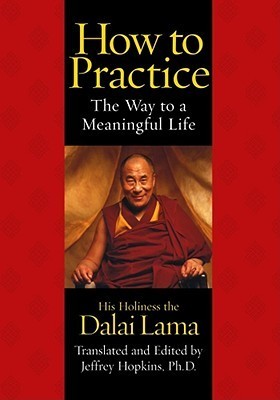
As human beings, we all share the desire for happiness and meaning in our lives. According to His Holiness the Dalai Lama, the ability to find true fulfillment lies within each of us. In this very special book, the spiritual and temporal leader of Tibet, Nobel Prize winner, and bestselling author helps readers embark upon the path to enlightenment with a stunning illumination of the timeless wisdom and an easy-access reference for daily practice. Divided into a series of distinct steps that will lead spiritual seekers toward enlightenment, How to Practice is a constant companion in the quest to practice morality, meditation, and wisdom. This accessible book will guide you toward opening your heart, refraining from doing harm, and maintiaining mentaltranquility as the Dalai Lama shows you how to overcome everyday obstacles, from feelings of anger and mistrust to jealousy, insecurity, and counterproductive thinking. Imbued with His Holiness' vivacious spirit and sense of playfulness, How to Practice offers sage and practical insight into the human psyche and into the deepest aspirations that bind us all together.
Jetsun Jamphel Ngawang Lobsang Yeshe Tenzin Gyatso (born Lhamo Döndrub), the 14th Dalai Lama, is a practicing member of the Gelug School of Tibetan Buddhism and is influential as a Nobel Peace Prize laureate, the world's most famous Buddhist monk, and the leader of the exiled Tibetan government in India.
Tenzin Gyatso was the fifth of sixteen children born to a farming family. He was proclaimed the tulku (an Enlightened lama who has consciously decided to take rebirth) of the 13th Dalai Lama at the age of two.
On 17 November 1950, at the age of 15, he was enthroned as Tibet's ruler. Thus he became Tibet's most important political ruler just one month after the People's Republic of China's invasion of Tibet on 7 October 1950. In 1954, he went to Beijing to attempt peace talks with Mao Zedong and other leaders of the PRC. These talks ultimately failed.
After a failed uprising and the collapse of the Tibetan resistance movement in 1959, the Dalai Lama left for India, where he was active in establishing the Central Tibetan Administration (the Tibetan Government in Exile) and in seeking to preserve Tibetan culture and education among the thousands of refugees who accompanied him.
Tenzin Gyatso is a charismatic figure and noted public speaker. This Dalai Lama is the first to travel to the West. There, he has helped to spread Buddhism and to promote the concepts of universal responsibility, secular ethics, and religious harmony.
He was awarded the Nobel Peace Prize in 1989, honorary Canadian citizenship in 2006, and the United States Congressional Gold Medal on 17 October 2007.
"Na jei pasirodys, kad mano samprotavimai jums praversti negali, tiesiog numokite į šią knygelę ranka" - paskutinis šios knygos sakinys.
Visiškai nenumosiu ir parašysiu 2,5* ,nes didžioji dalis knygos turinio liko nesuprasta arba suprasta dalinai. Nepraktikuoju ir neplanuoju praktikuoti budizmo artimiausiu metu, tad aiškinimai apie dvasines praktikas, jų aprašymai kelyje nušvitimo link man buvo visiškai neaktualios ir dažnai nesuvokiamos.
Kas buvo pasakyta apie gerumą, atjautą, dvasinį tobulėjimą buvo geras priminimas daryti gerus darbus, rūpintis artimu, lavinti kantrybę, išmokti nuraminti sąmonę. Šitai man jau buvo aktualiau, tad iš tų nedideliu suprantamų man ištraukų pasiėmiau, kiek galėjau.
Į visą kitą kaip patarė pati jo šventenybė Dalai Lama - numosiu ranka :)
This entire review has been hidden because of spoilers.
“Užuot pykę, puoselėkime gilaus rūpesčio jausmą, pagarbą tiems, kurie suteikia mums rūpesčių, nes sukurdami tokias išbandymo reikalaujančias aplinkybes, jie siūlo mums neįkainojamų galimybių praktikuoti toleranciją ir kantrybę.”
Jau seniai domiuosi rytų filosofija, dvasinėmis praktikomis, joga, meditacija, todėl labai mėgstu tokias knygas. Tačiau šią knygą man skaityti sekėsi sudėtingai, nežinau ar vertimas, ar ne, tačiau sunku buvo suvokti bendrą esmę, visiškai neįtraukė ir nesudomino.
Susilaikysiu nevertintama, nes labai mažai išmanau apie budizmą ir Tibeto kultūrą. Tiesiog stengsiuosi laikytis pagrindinio budizmo moralės principo: "Padėti kitiems, o jeigu tai neįmanoma, tai bent nedaryti žalos".
Mano nuomone ši knyga pravers tiems, kurie jau yra susipažinę išsamiau su budizmo apraiška ir yra nusiteikę sistemingai to siekti.
Pasisėmiau daug gerų minčių. Per visą knygą eina mintis "Po pirmo padėk kitiems, tada sau". Šis teiginys tiktų tam kas jaučia, kad jiems trūksta atjautos, supratimo apie tai kaip gali jaustis žmogus. Rašoma apie materialumo atsisakymą bei apie paprastą gyvenimą neiškeliant savęs. Nuo knygos vidurio tekstai pasudėtingėja. Iš šios knygos pasiėmiau kas man reikalinga.