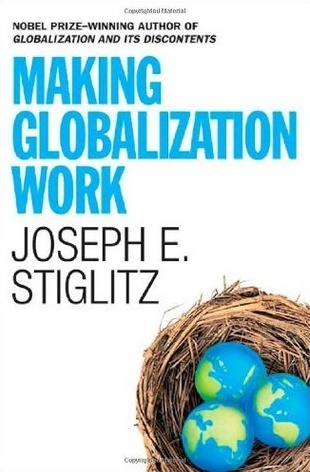
“A damning denunciation of things as they are, and a platform for how we can do better.”―Andrew Leonard, Salon Four years after he outlined the challenges our increasingly interdependent world was facing in Globalization and Its Discontents , Joseph E. Stiglitz offered his agenda for reform. Now in paperback, Making Globalization Work offers inventive solutions to a host of problems, including the indebtedness of developing countries, international fiscal instability, and worldwide pollution. Stiglitz also argues for the reform of global financial institutions, trade agreements, and intellectual property laws, to make them better able to respond to the growing disparity between the richest and poorest countries. Now more than ever before, globalization has gathered the peoples of the world into one community, bringing with it a need to think and act globally. This trenchant, intellectually powerful book is an invaluable step in that process. This paperback edition contains a brand-new preface.
Joseph Eugene Stiglitz, ForMemRS, FBA, is an American economist and a professor at Columbia University. He is a recipient of the Nobel Memorial Prize in Economic Sciences (2001) and the John Bates Clark Medal (1979). He is also the former Senior Vice President and Chief Economist of the World Bank. He is known for his critical view of the management of globalization, free-market economists (whom he calls "free market fundamentalists") and some international institutions like the International Monetary Fund and the World Bank.
In 2000, Stiglitz founded the Initiative for Policy Dialogue (IPD), a think tank on international development based at Columbia University. Since 2001, he has been a member of the Columbia faculty, and has held the rank of University Professor since 2003. He also chairs the University of Manchester's Brooks World Poverty Institute and is a member of the Pontifical Academy of Social Sciences. Professor Stiglitz is also an honorary professor at Tsinghua University School of Public Policy and Management. Stiglitz is one of the most frequently cited economists in the world.
"Il mio lavoro in questo campo (40 anni di ricerca sull'economia di mercato) aveva messo in dubbio l'efficienza del mercato e alcuni concetti base della globalizzazione, come per esempio che il libero commercio favorisca di per sé il benessere".
"La mia ricerca aveva messo in luce le gravi pecche delle teorie economiche del Fmi, il c.d. fondamentalismo del mercato secondo cui i mercati, da soli, sarebbero in grado di condurre all'efficienza economica".
"...persino l'Fmi ha finito per concordare con il mio pdv, e cioè che consentire una circolazione incontrollata dei capitali speculativi è estremamente rischioso". Peccato nulla sia stato fatto per controllarli, i capitali sperculativi.
"La mia ricerca sull'economia dell'informazione ha dimostrato che ogniqualvolta l'informazione è imperfetta, in particolare in presenza di ASIMETTRIE - cioè quando alcuni sono a conoscenza di cose che altri ignorano (vale a dire sempre) -, la ragione per cui la mano è invisibile è perché non c'è".