The Knowledge Deficit: Closing the Shocking Education Gap for American Children – Why Curriculum Matters: Essential Tools for Parents and Teachers to Build Reading Comprehension
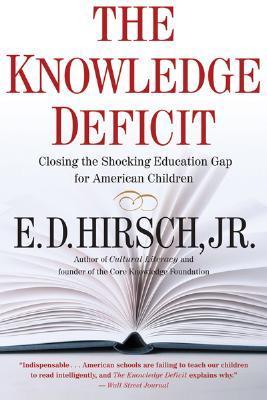
The Knowledge Deficit illuminates the real issue in education today -- without an effective curriculum, American students are losing the global education race. In this persuasive book, the esteemed education critic, activist, and best-selling author E.D. Hirsch, Jr., shows that although schools are teaching the mechanics of reading, they fail to convey the knowledge needed for the more complex and essential skill of reading comprehension. Hirsch corrects popular misconceptions about hot issues in education, such as standardized testing, and takes to task educators' claims that they are powerless to overcome class differences. Ultimately, this essential book gives parents and teachers specific tools for enhancing children's abilities to fully understand what they read.
E. D. Hirsch, Jr. is the founder and chairman of the Core Knowledge Foundation and professor emeritus of education and humanities at the University of Virginia. He is the author of several acclaimed books on education in which he has persisted as a voice of reason making the case for equality of educational opportunity.
A highly regarded literary critic and professor of English earlier in his career, Dr. Hirsch recalls being “shocked into education reform” while doing research on written composition at a pair of colleges in Virginia. During these studies he observed that a student’s ability to comprehend a passage was determined in part by the relative readability of the text, but even more by the student’s background knowledge.
This research led Dr. Hirsch to develop his concept of cultural literacy—the idea that reading comprehension requires not just formal decoding skills but also wide-ranging background knowledge. In 1986 he founded the Core Knowledge Foundation. A year later he published Cultural Literacy: What Every American Needs to Know, which remained at the top of the New York Times bestseller list for more than six months. His subsequent books include The Schools We Need, The Knowledge Deficit, The Making of Americans, and most recently, How to Educate a Citizen: The Power of Shared Knowledge to Unify a Nation.
In How to Educate a Citizen (September, 2020), E.D. Hirsch continues the conversation he began thirty years ago with his classic bestseller Cultural Literacy, urging America’s public schools, particularly in Preschool – Grade 8, to educate our children using common, coherent and sequenced curricula to help heal and preserve the nation.
Una lettura più interessante che piacevole, pur essendo sufficientemente scorrevole e con alcuni momenti particolarmente riusciti. Hirsch affronta il tema dell'istruzione con una partecipazione personale evidente: è profondamente impegnato nella missione di migliorare l'educazione dei bambini e fa spesso riferimento alla propria esperienza, alla fondazione che ha creato e al progetto del Core Knowledge Curriculum, ma riesce a farlo con equilibrio, senza eccessivo protagonismo. Ne emerge l'impressione di una persona colta, preparata e sinceramente appassionata all'argomento. La tesi centrale del libro è che la scuola contemporanea, in particolare quella statunitense, sulla quale Hirsch concentra la propria analisi, attribuisca un'importanza eccessiva alle competenze generali, trascurando le conoscenze effettive, spesso liquidate come semplice nozionismo. L'autore sostiene questa posizione attraverso dati, studi e riflessioni pedagogiche, anche se personalmente ritengo che la ricerca in campo educativo debba essere affrontata con una certa cautela: non è raro trovare studi utilizzati a sostegno di posizioni anche molto diverse. Ho trovato convincente soprattutto l'idea che le conoscenze non siano un elemento accessorio dell'istruzione, ma una condizione fondamentale per sviluppare una comprensione più profonda del mondo. È una posizione verso la quale ero già orientata prima della lettura e che questo libro ha contribuito a rafforzare, senza per questo farmi dimenticare l'importanza delle competenze o delle differenze individuali nei processi di apprendimento. Il limite principale, per quanto mi riguarda, è la forte concentrazione sul sistema scolastico americano, che rende alcuni passaggi meno coinvolgenti per chi, come me, legge da un contesto diverso. Nel complesso, comunque, un saggio stimolante, che offre spunti interessanti anche a chi non condivide necessariamente tutte le posizioni dell'autore.