« Jardins et routes : ce titre paisible surprend, appliqué à un journal de la « drôle de guerre » et de la campagne de France de septembre 1939 à juillet 1940. C’est que l’auteur, glorieux soldat de la guerre précédente, a, selon sa devise, « mûri dans les tempêtes », et que ce quadragénaire s’intéresse, ni à la technique de la destruction ni à la recherche de la supériorité, mais à ce qui survit après toutes les batailles : le fleuve, les roseaux, les rigueurs intemporelles d’un hiver presque semblable aux autres ; le calme des vastes plaines françaises et la splendeur des jardins, à peine troublés par l’agitation et le passage des guerriers et des fugitifs ; les témoignages d’une très ancienne civilisation, qui a connu bien d’autres épreuves et en connaîtra encore. » (Henri Plard)
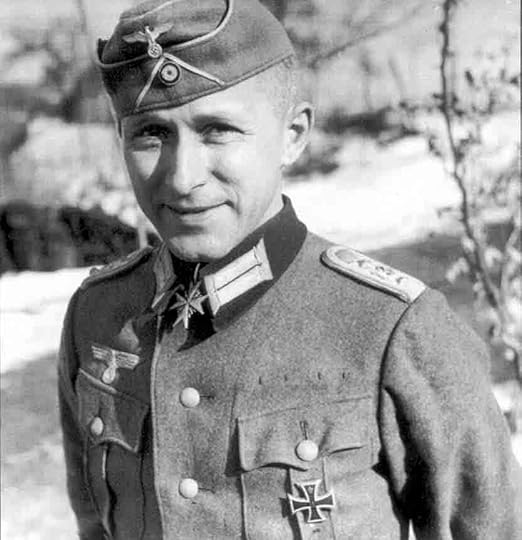
Ernst Jünger was a decorated German soldier and author who became famous for his World War I memoir Storm of Steel. The son of a successful businessman and chemist, Jünger rebelled against an affluent upbringing and sought adventure in the Wandervogel, before running away to briefly serve in the French Foreign Legion, an illegal act. Because he escaped prosecution in Germany due to his father's efforts, Junger was able to enlist on the outbreak of war. A fearless leader who admired bravery above all else, he enthusiastically participated in actions in which his units were sometimes virtually annihilated. During an ill-fated German offensive in 1918 Junger's WW1 career ended with the last and most serious of his many woundings, and he was awarded the Pour le Mérite, a rare decoration for one of his rank.
Junger served in World War II as captain in the German Army. Assigned to an administrative position in Paris, he socialized with prominent artists of the day such as Picasso and Jean Cocteau. His early time in France is described in his diary Gärten und Straßen (1942, Gardens and Streets). He was also in charge of executing younger German soldiers who had deserted. In his book Un Allemand à Paris , the writer Gerhard Heller states that he had been interested in learning how a person reacts to death under such circumstances and had a morbid fascination for the subject.
Jünger appears on the fringes of the Stauffenberg bomb plot to assassinate Adolf Hitler (July 20, 1944). He was clearly an inspiration to anti-Nazi conservatives in the German Army, and while in Paris he was close to the old, mostly Prussian, officers who carried out the assassination attempt against Hitler. He was only peripherally involved in the events however, and in the aftermath suffered only dismissal from the army in the summer of 1944, rather than execution.
In the aftermath of WW2 he was treated with some suspicion as a closet Nazi. By the latter stages of the Cold War his unorthodox writings about the impact of materialism in modern society were widely seen as conservative rather than radical nationalist, and his philosophical works came to be highly regarded in mainstream German circles. Junger ended his extremely long life as a honoured establishment figure, although critics continued to charge him with the glorification of war as a transcending experience.
Jünger continues to fascinate in the elusive way he blends the archetypes of warrior, craftsman, prophet, aristocrat, dandy, scholar, hermit … Gärten und Strassen (Gardens and Streets) is not any longer available as a separate volume as it has been bundled together with other war-time diaries in the first tome of Strahlungen. As far as I am aware of it hasn’t been in available in English either.
Despite the innocuous title, these diary pages cover the outbreak of the Second World War and Jünger’s involvement as a Wehrmacht officer in the invasion of Belgium and France in the spring of 1940. The record starts in the spring of 1939, shortly after Jünger’s move to a new house in Kirchhorst, near Hannover. In these days he was working on his On the Marble Cliffs, a book that has been widely understood as an oblique critique on the Nazi regime. About the ‘Cliffs' proper we learn nothing from these diary pages. The author only talks about his project in the most circumspect way.
Soon the war erupts and Jünger is called to serve. After a short training stint he spends the winter on a defensive post on the Rhine redoubts near Rastatt. From May 1940 onwards his infantry unit is swept up in the ‘Westfeldzug’. However, Jünger and his men never come to be involved in battle. The Blitzkrieg unfolds at a speed that infantry units are barely able to keep up with. The campaign takes him as far as Bourges, south of Paris and back up to the Lorraine, after which he returns to Germany.
Jünger’s observations captivate by virtue of the unsettling contrast between his "salamandrian sense of peace" and self-control and the shocking scenes of carnage (“… a monstrous foyer of death” …) that he witnesses as German troops pour into French territory. The composure not only radiates from the crystalline prose typical for this author, but also from the many finely chiseled and dazzling observations of personal encounters, books read, scenes from the natural world and works of art that Jünger passes along the way. In the chaos of a military campaign Jünger himself remains an unperturbed gentleman-warrior. The contrast between chaos and order is also reflected in his idiosyncratic philosophical outlook that meshes a Platonic streak with a thoroughly modern sensibility as regards the foundational role of the human subject as basis for truth.
"Heraclitus is right: No one crosses the same river twice. The mystery of such change is that it corresponds to changes in our inner being - we form the world, and what we experience is not subject to chance. Things are attracted and chosen by our condition: the world is as we are. So each one of us is able to change the world - that is the tremendous meaning given to human beings. And that is why it is so important that we work on ourselves."
"Thus in nature, in growth, all measures are already preformed that human art can invent. Our freedom lies in the discovery of the preformed - in our creative acts we penetrate into Creation. The highest thing we can achieve in this way is an inkling of the unchangeable measure of beauty."
"Sto pensando di dare al capriccio un titolo nuovo, e cioè "Sulle scogliere di marmo". Forse vi si esprime ancor meglio l'unità di bellezza, altezza e pericolo così come la intendo io. Intento a questo lavoro, guardando dalla finestra, ho visto sulla strada i cannoni affrettarsi l'uno dietro l'altro verso est, quasi come in guerra alla vigilia di un grande combattimento. [...] Tutti segnali che indicano guerra in tempi brevi; farò bene a mettere in conto di dover presto interrompere il lavoro. [...] In tutti i casi, la penna dovrà riposarsi, perfino sul diario. Toccherà agli occhi, invece, farsi carico del lavoro, perché gli spettacoli non mancheranno."
Il primo della trilogia di diari di Ernst Jünger relativi alla seconda guerra mondiale, 'Giardini e Strade', è un documento molto diverso dai suoi diari giovanili, scritti durante il primo conflitto mondiale: vi troviamo una maturità diversa, di autore, di padre e di uomo che si è slegato dalla visione eroica del combattimento che l'ha sempre caratterizzato. In 'Giardini e Strade' si trova molto di più di ciò che vi si cerca: il diario, che comincia cinque mesi prima dello scoppio del conflitto, racconta la vita quotidiana a Kirchhorst, i progressi di scrittura del capolavoro 'Sulle scogliere di marmo' (interessantissimi se si è letto il romanzo), la 'caccia sottile', per poi concentrarsi sulla partenza, la lontananza da casa, il cameratismo e la vita quotidiana dei suoi soldati. Non vi si trovano quasi scene di battaglia: le immagini, evocate dalle parole, mostrano solo il prima e il dopo: gli effetti del combattimento sui soldati, sui prigionieri, sulle città occupate, sugli animali morti lasciati a marcire ai bordi delle strade. Trapela l'umanità di un capitano che non ci pensa due volte a conservare il senso di umanità dei prigionieri — molti dei quali, come Mounsier Albert, lo ricorderanno a vita — e dei civili che gli hanno offerto alloggio.
Forse la massima espressione di Jünger, la più vivida e accessibile, è proprio quella che si ritrova nei suoi diari. I suoi occhi sono una lente d'ingrandimento che scende a fondo nei perché dell'uomo, della vita, della morte e del tempo. Ogni pagina è ricca di metafore che fanno riflettere, di massime nelle quali, pensandoci bene, ci ritroviamo pienamente; e chi ha letto almeno uno dei suoi diari conosce bene cosa si prova.
"Al cospetto dei morti di Montmirail avevo la sensazione che questi filtri mancassero — il quadro cadeva cioè fuori dalla cornice della storia. Ho visto così l'assoluto, la spina dorsale, e ho avvertito la presenza di forze di cui da lungo tempo conosciamo soltanto i nomi astratti — non sono eterne, eppure il loro dominio durerà finché durerà il tempo. Ne ho avvertito il trionfo spaventoso."
În iarna lui 1633, Societatea olandeză a Groenlandei depunea în insula Sfântul Mauriciu, din Oceanul Arctic, şapte marinari cu scopul de a efectua observaţii ştiinţifice despre iarna şi astronomia polară, în vara anului următor, o flotă de baleniere se reîntoarce spre a-i recupera. Nu mai găseşte decât şapte cadavre şi un jurnal. În aceeaşi perioadă, Galilei trăgea consecinţele cosmografiei copernicane, în care, izgonit din centru, omul e lăsat pradă haosului pe un glob care zboară „în adâncimile spaţiului cu viteza proiectilelor”, iar pe continent se desfăşurau marile confruntări legate de problema liberului arbitru. Cu aceste relatări se deschide, sub forma unui Cuvânt introductiv, de factură programatică, seria jurnalelor din perioada 1939 – 1948 ale lui Ernst Jünger. Referinţele nu sunt deloc întâmplătoare. Deceniul al patrulea al secolului al XVII-lea reprezintă pentru scriitor un moment istoric de răscruce, în care din punct de vedere politic se pun bazele unor puteri de rang inferior, iar la nivelul conştiinţei umane se face virajul către raţionalism şi perceperea din ce în ce mai acută a primejdiilor ţintind integritatea fiinţei umane, în aceste condiţii, destinul matrozilor morţi la datorie capătă, în viziunea lui Jünger, valoare emblematică: pentru situaţia existenţială a omului modern pe de-o parte, pentru propria sa situare în lume, şi în special în cel de al doilea război mondial, pe de altă parte. Tot astfel, jurnalul găsit pe insula Sfântul Mauriciu e interpretat ca expresie a lumii moderne, copernicane, descentrate, sfâşiate de spaima alunecării în haos. Ca semne distinctive ale noii literaturi sunt revendicate, parte explicit, parte implicit, îndepărtarea spiritului de obiect, a autorului de lume, sporul de luciditate, confruntarea cu suferinţa şi moartea, singurătatea, capacitatea vizionară de a prevedea alunecarea în catastrofe istorice şi metafizice, în fine, viteza de înregistrare a unor percepţii din ce în ce mai variate pentru care jurnalul se dovedeşte a fi cea mai adecvată formă literară. E limpede că avem aici a face cu un demers autoscopic, cu o definire mandatată (jurnalul matrozilor) a propriilor opţiuni spirituale, etice şi poetologice.
Днями закінчив «Сади та Дороги» - перший з шести томів щоденників Юнгера, в якому він описує 1939-1940 роки. Дуже сильно вражений. З одного боку під час читання відчуваєш неймовірний резонанс з автором - його філософськими роздумами, філологічними спостереженнями, мовознавчими замальовками. Речі, які взагалі не очікуєш почути від людини, відомої як офіцера штурмових підрозділів першої світової. Якось зовсім особливо торкає його пристрасть до колеоптерології - вивченню та колекціонуванню різних жуків. Все це розкриває дуже глибоку цікаву людину, створюючи інтенсивний інтуїтивний звʼязок між читачем та автором. А коли звʼязок стає особливо глибоким та близьким - Юнгер у складі окупаційної армії - і читачем, який вже давно крокує поруч із ним - входить у Францію і бачить навколо кров, смерть, трупи і розруху, які ця армія і створила. І далі все як в українських новинах: жінки, що ховають своїх чоловіків посеред двору, залишені міни, на яких підриваються діти - жахливі картини чи то 1940, чи то 2022.
І такі гойдалки від абзацу до абзацу. Але післясмак раптово виходить дуже цілісний, людяний та життєствердний. Хочеться любити людей та годувати безхатніх тварин. Неймовірно сильний автор.
«Сады и дороги» — это первая часть дневников Эрнста Юнгера времён Второй Мировой войны, которые все вместе называются «Излучения». Но не стоит в них искать документального отражения времени, которыми были даже слегка перенасыщены беллетризированные дневники времён Первой Мировой «В стальных грозах» того же автора. По крайней мере, точно не следует этого делать в «Садах и дорогах». Это именно, что излучения времени, которые улавливает Юнгер, но не его хроника.
Юнгер, судя по всему, вообще писал все свои дневники с очевидным прицелом для публикации, поэтому в авторское письмо вторгался отбор и сокрытие. Из «Садов и дорог» выкинуты Гитлер и Черчилль, выверенное описание мира и войны. Здесь всё только про ощущения — ощущения очень смелого, холодного и объективного наблюдателя.
Юнгер сосредоточен на своих мыслях, на их рождении, эволюции и затухании. Война и личная жизнь, да и вся мировая история, не говоря о явлениях, которые мы сейчас называем hype, с холодным цинизмом низведены до солипсического восприятия, где описание пойманных в полях Франции жуков ничуть не менее важно, чем элегические размышления об исторической судьбе города Седана или описания гибели двух ребятишек, которые заигрались с разбросанными боеприпасами.
Мне импонирует такой взгляд на мир, а потому я считаю Юнгера своим проводником в 2020-е годы.
On croit rentrer dans la campagne (militaire) de France, et on entre dans la ... campagne de France tout court. Ernst Jünger ne perd rien de ses fulgurances, mais passe trop de temps à observer les insectes ou les coquillages. Son esprit se meut dans des considérations très éthérées, pendant que le monde s'embrase autour de lui. Cela le rend sympathique, voire touchant. Mais la lecture est assez frustrante : il semble passer volontairement à côté de l'histoire en cette année 1940 (il faut dire que le hasard des ordres hiérarchiques ne l'aura pas mené au feu, cette fois-ci). Il nous livre des descriptions très précises d'ammonite fossilisées, qu'il découvre au hasard d'un champ, alors que l'annonce de l'armistice lui arrache à peine un commentaire. Il aura passé une première guerre mondiale sur tous les fronts, blessé quatorze fois et toujours de retour en première ligne, et sa deuxième guerre mondiale à s'extasier sur des papillons, puis à lire la bible à Paris pendant 4 ans. Rien que pour cela, cet auteur contrasté mérite d'être lu par ceux qui ne le connaissent pas encore.