

What do you think?
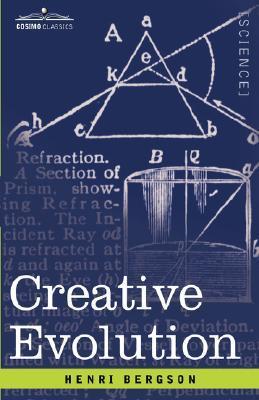
Creative Evolution
While intelligence treats everything mechanically, instinct proceeds, so to speak, organically. If...we could ask and it could reply, it would give up to us the most intimate secrets of life. -from Chapter II Anticipating not only modern scientific theories of psychology but also those of cosmology, this astonishing book sets out a impressive goal for itself: to reconcile human biology with a theory of consciousness. First published in France in 1907, and translated into English in 1911, this work of wonder was esteemed at the time in scientific circles and in the popular culture alike for its profound explorations of perception and memory and its surprising conclusions about the nature and value of art. Contending that intuition is deeper than intellect and that the real consequence of evolution is a mental freedom to grow, to change, to seek and create novelty, Bergson reinvigorated the theory of evolution by refusing to see it as merely mechanistic. His expansion on Darwin remains one of the most original and important philosophical arguments for a scientific inquiry still under fire today. French philosopher HENRI BERGSON (1859-1941) was born in Paris. Among his works are Matter and Memory (1896), An Introduction to Metaphysics (1903), and The Two Sources of Morality and Religion (1932). He was awarded the Nobel Prize for Literature in 1927.
472 pages, Paperback
First published January 1, 1907
About the author
Henri Bergson
567 books869 followersPopular and accessible works of French philosopher and writer Henri Louis Bergson include
Creative Evolution
(1907) and
The Creative Mind
(1934) and largely concern the importance of intuition as a means of attaining knowledge and the élan vital present in all living things; he won the Nobel Prize of 1927 for literature.
Although international fame and influence of this late 19th century-early 20th century man reached heights like cult during his lifetime, after the Second World War, his influence decreased notably. Whereas such thinkers as Maurice Merleau-Ponty, Jean Paul Sartre, and Lévinas explicitly acknowledged his influence on their thought, Bergsonism of Gilles Deleuze in 1966 marked the reawakening of interest. Deleuze recognized his concept of multiplicity as his most enduring contribution to thinking. This concept attempts to unify heterogeneity and continuity, contradictory features, in a consistent way. This revolutionary multiplicity despite its difficulty opens the way to a re-conception of community, or so many today think.
Although international fame and influence of this late 19th century-early 20th century man reached heights like cult during his lifetime, after the Second World War, his influence decreased notably. Whereas such thinkers as Maurice Merleau-Ponty, Jean Paul Sartre, and Lévinas explicitly acknowledged his influence on their thought, Bergsonism of Gilles Deleuze in 1966 marked the reawakening of interest. Deleuze recognized his concept of multiplicity as his most enduring contribution to thinking. This concept attempts to unify heterogeneity and continuity, contradictory features, in a consistent way. This revolutionary multiplicity despite its difficulty opens the way to a re-conception of community, or so many today think.
Ratings & Reviews
Friends & Following
Create a free account to discover what your friends think of this book!
Community Reviews
Displaying 1 - 4 of 4 reviews
January 22, 2022
Fantastico! Uno dei più straordinari filosofi dello scorso secolo prende in mano il dibattito sull'evoluzione e critica le posizione deterministiche e finaliste di Darwin e Lamarck affermando che la vita ha avuto inizio e si è sviluppata attraverso uno slancio vitale comune a tutte le specie sulla terra, che ha preso migliaia di direzioni differenti in base alla lotta tra vita (flusso creativo) e materia (leggi fisiche) che sono l'una opposta all'altra. Nel libro viengono trattate molte tematiche come l adistinzione tra istinto ed intelligenza e quale ruolo gioca la coscienza in entrambe le realtà. La realtà come un flusso di coscienza che è maggiore negli organismi con il sistema nervoso più sviluppato, ma non è il cervello. Bergson critica anche la presa di visione dei creazionisti, affermando che in verità le cose che noi vediamo non esistono, ma ci sono unicamente azioni e movimento.

August 2, 2020
Questo libro apparso oltre un secolo fa, nel 1907, solo in apparenza sembra un trattato di filosofia per i suoi lineamenti sistematici e universali. Si tratta, in realtà, di un libro fatto di semplici e solenni meditazioni che si collegano a due o tre intuizioni di grande ed affascinante profondità. Di fatto, ognuno che legge questo libro, e anche chi non lo legge, puoi rendersi conto quanto sia faticoso capire la natura degli uomini e delle loro cose.
E' il cervello a dircelo, con le difficoltà che tutti conosciamo, a farlo funzionare nel modo migliore. Che cos'è la vita è il problema che Bergson affronta a viso aperto, con tranquilla disinvoltura: la vita, o forse meglio dire, la materia vivente, contrapposta alla fissità immobile, meccanica della materia inerte. Continuità di mutamento, attività incessante ed imprevedibile, conservazione del passato nel presente, durata del tempo. La materia vivente condivide per Bergson tutti i suoi attributi con la coscienza. Lui sostiene che soltanto per la materia vivente esiste il tempo, per questa ragione la vita è un continuo divenire, flusso ininterrotto, libera e perpetua creazione, corrente di coscienza che si insinua nella materia asservendola a sè ma anche rimandone limitata e condizionata.
Gli scontri con la vita con la materia segnano la grande strada su cui cammina l'evoluzione dell'universo. L'intelligenza umana, capace di rappresentare a se stessa soltanto ciò che è immobile e quindi soltanto la morte, potrà forse capire le leggi della materia, potrà matematizzare e fisicizzare il mondo, ma non potrà mai capire la vita. "Vi sono cose, lui dice, che solo l'intelligenza può cercare, ma che per suo conto non potrà mai trovare. Queste cose, solo l'istinto sarebbe capace di trovarle, ma l'istinto non le cercherà mai".
E' il cervello a dircelo, con le difficoltà che tutti conosciamo, a farlo funzionare nel modo migliore. Che cos'è la vita è il problema che Bergson affronta a viso aperto, con tranquilla disinvoltura: la vita, o forse meglio dire, la materia vivente, contrapposta alla fissità immobile, meccanica della materia inerte. Continuità di mutamento, attività incessante ed imprevedibile, conservazione del passato nel presente, durata del tempo. La materia vivente condivide per Bergson tutti i suoi attributi con la coscienza. Lui sostiene che soltanto per la materia vivente esiste il tempo, per questa ragione la vita è un continuo divenire, flusso ininterrotto, libera e perpetua creazione, corrente di coscienza che si insinua nella materia asservendola a sè ma anche rimandone limitata e condizionata.
Gli scontri con la vita con la materia segnano la grande strada su cui cammina l'evoluzione dell'universo. L'intelligenza umana, capace di rappresentare a se stessa soltanto ciò che è immobile e quindi soltanto la morte, potrà forse capire le leggi della materia, potrà matematizzare e fisicizzare il mondo, ma non potrà mai capire la vita. "Vi sono cose, lui dice, che solo l'intelligenza può cercare, ma che per suo conto non potrà mai trovare. Queste cose, solo l'istinto sarebbe capace di trovarle, ma l'istinto non le cercherà mai".

August 26, 2018
Più si va avanti con le pagine più diventa un testo, al massimo, simpatico e da non prendere "seriamente". Specie dal secondo capitolo in poi.

Read
September 28, 2022“La strada che percorriamo nel tempo è cosparsa dei resti di tutto quello che cominciavamo a essere, di tutto quello che saremmo potuti diventare”
Displaying 1 - 4 of 4 reviews