From behind the closed door, the man shouts, 'Be on your way - you have no business here!' 'Open up, I am the messenger of Death'.
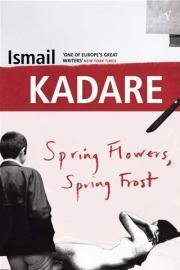
As spring arrives in the Albanian mountain town of B, some strange things are emerging in the thaw. Bank robbers strike the National Bank. Old terrors are dredged up from the shipwreck of history. And ultra-explosive state secrets are threatening to flood the entire nation. Mark, an artist, finds the peaceful rhythms of his life turned upside down by ancient love and modern barbarism and by the particular brutality of a country surprised and divided by its new freedom.
Ismail Kadare (also spelled Kadaré) was an Albanian novelist and poet. He has been a leading literary figure in Albania since the 1960s. He focused on short stories until the publication of his first novel, The General of the Dead Army. In 1996 he became a lifetime member of the Academy of Moral and Political Sciences of France. In 1992, he was awarded the Prix mondial Cino Del Duca; in 2005, he won the inaugural Man Booker International Prize, in 2009 the Prince of Asturias Award of Arts, and in 2015 the Jerusalem Prize. He has divided his time between Albania and France since 1990. Kadare has been mentioned as a possible recipient for the Nobel Prize in Literature several times. His works have been published in about 30 languages.
Ismail Kadare was born in 1936 in Gjirokastër, in the south of Albania. His education included studies at the University of Tirana and then the Gorky Institute for World Literature in Moscow, a training school for writers and critics.
In 1960 Kadare returned to Albania after the country broke ties with the Soviet Union, and he became a journalist and published his first poems.
His first novel, The General of the Dead Army, sprang from a short story, and its success established his name in Albania and enabled Kadare to become a full-time writer.
Kadare's novels draw on Balkan history and legends. They are obliquely ironic as a result of trying to withstand political scrutiny. Among his best known books are Chronicle in Stone (1977), Broken April (1978), and The Concert (1988), considered the best novel of the year 1991 by the French literary magazine Lire.
In 1990, Kadare claimed political asylum in France, issuing statements in favour of democratisation. During the ordeal, he stated that "dictatorship and authentic literature are incompatible. The writer is the natural enemy of dictatorship."
Anche se l'inizio mi era sembrato promettente e anche se è ben scritto alla fine la sensazione prevalente che mi ha lasciato è di confusione. Non ho ben capito dove volesse andare a parare e soprattutto pur accennando a un argomento che mi interessava molto, il Kanun, la trama resta di fatto monca ma non nel genere "finale aperto" nel genere "senza finale". L'affresco dell'Albania intorno al 2000 è interessante e pieno di potenziale ma purtroppo in questo romanzo resta sprecato.
Questo è un piccolo libro che sono contenta di aver preso a caso, perchè racconta di un Albania appena uscita dalla dittatura e che, inciampando e rallentando, inizia il suo cammino verso quella che sembra una democrazia, qualsiasi cosa significhi attualmente la parola. In Albania la Kanun (credo bedda in italiano) è una faida che le famiglie si tramandano da generazioni ed è in una di queste che il protagonista, un pittore, si ritrova a causa della sua fidanzata, in un paese sospeso tra antico e moderno, così vicino e allo stesso tempo così lontano. Ho cercato un po' di informazioni, ma non credo che questo libro sia stato tradotto in italiano, e comunque questo scrittore vive in Francia dal 1990 dopo aver richiesto asilo politico e essere stato più volte proposto come premio Nobel. Dal suo romanzo si dipartono una serie di storie e di leggende parallele alla trama del romanzo e non a caso abbiamo una serie di capitoli doppi, uno spaccato delle tradizioni del paese dell'aquila a due teste ed una revisione del mito di Edipo e di Prometeo. Esisterà veramente il Book of blood, dove vengono riportate tutte le faide familiari ancora aperte? Attraverso i sogni del protagonista passato e presente si confondono lasciando anche il povero lettore un po' spaesato, in una trama che alterna momenti di profonda disperazione a situazioni veramente esilaranti.
This entire review has been hidden because of spoilers.