

What do you think?
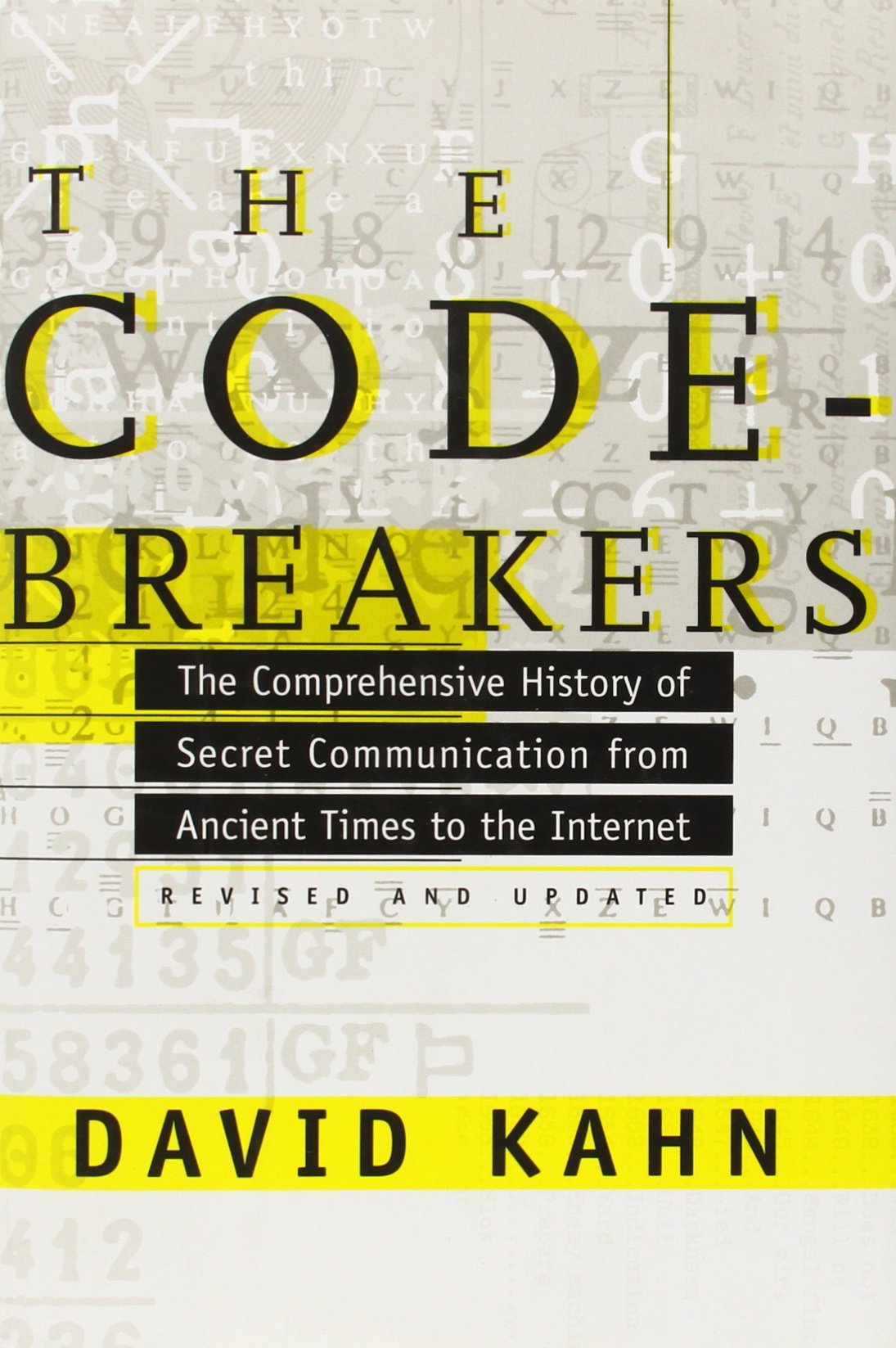
The Codebreakers: The Comprehensive History of Secret Communication from Ancient Times to the Internet
The magnificent, unrivaled history of codes and ciphers—how they're made, how they're broken, and the many and fascinating roles they've played since the dawn of civilization in war, business, diplomacy, and espionage—updated with a new chapter on computer cryptography and the Ultra secret.
Man has created codes to keep secrets and has broken codes to learn those secrets since the time of the Pharaohs. For 4,000 years, fierce battles have been waged between codemakers and codebreakers, and the story of these battles is civilization's secret history, the hidden account of how wars were won and lost, diplomatic intrigues foiled, business secrets stolen, governments ruined, computers hacked. From the XYZ Affair to the Dreyfus Affair, from the Gallic War to the Persian Gulf, from Druidic runes and the kaballah to outer space, from the Zimmermann telegram to Enigma to the Manhattan Project, codebreaking has shaped the course of human events to an extent beyond any easy reckoning. Once a government monopoly, cryptology today touches everybody. It secures the Internet, keeps e-mail private, maintains the integrity of cash machine transactions, and scrambles TV signals on unpaid-for channels. David Kahn's The Codebreakers takes the measure of what codes and codebreaking have meant in human history in a single comprehensive account, astonishing in its scope and enthralling in its execution. Hailed upon first publication as a book likely to become the definitive work of its kind, The Codebreakers has more than lived up to that it remains unsurpassed. With a brilliant new chapter that makes use of previously classified documents to bring the book thoroughly up to date, and to explore the myriad ways computer codes and their hackers are changing all of our lives, The Codebreakers is the skeleton key to a thousand thrilling true stories of intrigue, mystery, and adventure. It is a masterpiece of the historian's art.
Man has created codes to keep secrets and has broken codes to learn those secrets since the time of the Pharaohs. For 4,000 years, fierce battles have been waged between codemakers and codebreakers, and the story of these battles is civilization's secret history, the hidden account of how wars were won and lost, diplomatic intrigues foiled, business secrets stolen, governments ruined, computers hacked. From the XYZ Affair to the Dreyfus Affair, from the Gallic War to the Persian Gulf, from Druidic runes and the kaballah to outer space, from the Zimmermann telegram to Enigma to the Manhattan Project, codebreaking has shaped the course of human events to an extent beyond any easy reckoning. Once a government monopoly, cryptology today touches everybody. It secures the Internet, keeps e-mail private, maintains the integrity of cash machine transactions, and scrambles TV signals on unpaid-for channels. David Kahn's The Codebreakers takes the measure of what codes and codebreaking have meant in human history in a single comprehensive account, astonishing in its scope and enthralling in its execution. Hailed upon first publication as a book likely to become the definitive work of its kind, The Codebreakers has more than lived up to that it remains unsurpassed. With a brilliant new chapter that makes use of previously classified documents to bring the book thoroughly up to date, and to explore the myriad ways computer codes and their hackers are changing all of our lives, The Codebreakers is the skeleton key to a thousand thrilling true stories of intrigue, mystery, and adventure. It is a masterpiece of the historian's art.
1200 pages, Hardcover
First published January 1, 1967
About the author
David Kahn
71 books70 followersA specialist on the history of cryptography and military intelligence, David Kahn worked as a reporter and op-ed editor for Newsday until his retirement in 1998, and was selected in 1995 as scholar-in-residence at the National Security Agency. Kahn earned a D.Phil in modern German history from Oxford University in 1974 under the supervision of the then-Regius professor of modern history, Hugh Trevor-Roper.
Librarian Note: There is more than one author in the GoodReads database with this name. See this thread for more information.
Librarian Note: There is more than one author in the GoodReads database with this name. See this thread for more information.
Ratings & Reviews
Friends & Following
Create a free account to discover what your friends think of this book!
Community Reviews
Displaying 1 - 1 of 1 review

November 7, 2025
He leído decenas, si no cientos, de ensayos en mis casi 50 años de vida, ya sea por gusto, por formación o por motivos profesionales. Instrumentos musicales, composición, análisis cinematográfico, historia económica, monetarismo, teoría económica, teoría de juegos, divulgación científica, gastronomía, cocina, viajes, arte, literatura, biografías... algunos de ellos de disciplinas altamente especializadas. Y ninguno de ellos llega al nivel de detalle de su disciplina como lo hace este libro de Kahn sobre criptología clásica. Es impresionante. 980 páginas sobre la historia de la criptología (que Kahn acertadamente distingue de criptografía) y sus diversas aplicaciones en letra apretada y página extensa, y otras 155 de notas y bibliografía dan cuenta de la magnitud de este clásico insuperable. Para muestra el capítulo inicial de 67 páginas que describe con una minuciosidad apabullante la cronología del descifrado del código japonés por parte de Estados Unidos en las postrimerías de Pearl Harbor.
Denso, a veces derivativo o directamente anticuado, la información histórica que recoge lo convierte en una referencia fundamental en la materia y en un interesante punto de partida para seguir profundizando en técnicas o autores concretos.
Denso, a veces derivativo o directamente anticuado, la información histórica que recoge lo convierte en una referencia fundamental en la materia y en un interesante punto de partida para seguir profundizando en técnicas o autores concretos.
Displaying 1 - 1 of 1 review