

What do you think?
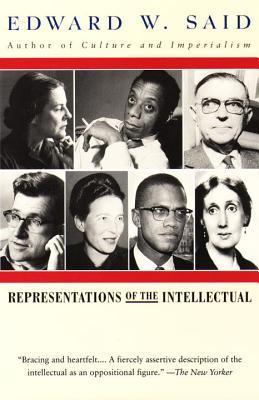
Representations of the Intellectual
Celebrated humanist, teacher, and scholar, Edward W. Said here examines the ever-changing role of the intellectual today. In these six stunning essays - delivered on the BBC as the prestigious Reith Lectures - Said addresses the ways in which the intellectual can best serve society in the light of a heavily compromised media and of special interest groups who are protected at the cost of larger community concerns. Said suggests a recasting of the intellectual's vision to resist the lures of power, money, and specialization. in these powerful pieces, Said eloquently illustrates his arguments by drawing on such writers as Antonio Gramsci, Jean-Paul Sartre, Regis Debray, Julien Benda, and Adorno, and by discussing current events and celebrated figures in the world of science and politics: Robert Oppenheimer, Henry Kissinger, Dan Quayle, Vietnam, and the Gulf War. Said sees the modern intellectual as an editor, journalist, academic, or political adviser - in other words, a highly specialized professional - who has moved from a position of independence to an alliance with powerful institutional organizations. He concludes that it is the exile-immigrant, the expatriate, and the amateur who must uphold the traditional role of the intellectual as the voice of integrity and courage, able to speak out against those in power.
BBC episodes presented by Edward Said: http://www.bbc.co.uk/programmes/p00gm...
BBC episodes presented by Edward Said: http://www.bbc.co.uk/programmes/p00gm...
121 pages, Paperback
First published January 1, 1994
About the author
Edward W. Said
244 books4,523 followers(Arabic Profile إدوارد سعيد)
Edward Wadie Said was a professor of literature at Columbia University, a public intellectual, and a founder of the academic field of postcolonial studies. A Palestinian American born in Mandatory Palestine, he was a citizen of the United States by way of his father, a U.S. Army veteran.
Educated in the Western canon, at British and American schools, Said applied his education and bi-cultural perspective to illuminating the gaps of cultural and political understanding between the Western world and the Eastern world, especially about the Israeli-Palestinian conflict in the Middle East; his principal influences were Antonio Gramsci, Frantz Fanon, Aimé Césaire, Michel Foucault, and Theodor Adorno.
As a cultural critic, Said is known for the book Orientalism (1978), a critique of the cultural representations that are the bases of Orientalism—how the Western world perceives the Orient. Said’s model of textual analysis transformed the academic discourse of researchers in literary theory, literary criticism, and Middle-Eastern studies—how academics examine, describe, and define the cultures being studied. As a foundational text, Orientalism was controversial among the scholars of Oriental Studies, philosophy, and literature.
As a public intellectual, Said was a controversial member of the Palestinian National Council, because he publicly criticized Israel and the Arab countries, especially the political and cultural policies of Muslim régimes who acted against the national interests of their peoples. Said advocated the establishment of a Palestinian state to ensure equal political and human rights for the Palestinians in Israel, including the right of return to the homeland. He defined his oppositional relation with the status quo as the remit of the public intellectual who has “to sift, to judge, to criticize, to choose, so that choice and agency return to the individual” man and woman.
In 1999, with his friend Daniel Barenboim, Said co-founded the West–Eastern Divan Orchestra, based in Seville, which comprises young Israeli, Palestinian, and Arab musicians. Besides being an academic, Said also was an accomplished pianist, and, with Barenboim, co-authored the book Parallels and Paradoxes: Explorations in Music and Society (2002), a compilation of their conversations about music. Edward Said died of leukemia on 25 September 2003.
Edward Wadie Said was a professor of literature at Columbia University, a public intellectual, and a founder of the academic field of postcolonial studies. A Palestinian American born in Mandatory Palestine, he was a citizen of the United States by way of his father, a U.S. Army veteran.
Educated in the Western canon, at British and American schools, Said applied his education and bi-cultural perspective to illuminating the gaps of cultural and political understanding between the Western world and the Eastern world, especially about the Israeli-Palestinian conflict in the Middle East; his principal influences were Antonio Gramsci, Frantz Fanon, Aimé Césaire, Michel Foucault, and Theodor Adorno.
As a cultural critic, Said is known for the book Orientalism (1978), a critique of the cultural representations that are the bases of Orientalism—how the Western world perceives the Orient. Said’s model of textual analysis transformed the academic discourse of researchers in literary theory, literary criticism, and Middle-Eastern studies—how academics examine, describe, and define the cultures being studied. As a foundational text, Orientalism was controversial among the scholars of Oriental Studies, philosophy, and literature.
As a public intellectual, Said was a controversial member of the Palestinian National Council, because he publicly criticized Israel and the Arab countries, especially the political and cultural policies of Muslim régimes who acted against the national interests of their peoples. Said advocated the establishment of a Palestinian state to ensure equal political and human rights for the Palestinians in Israel, including the right of return to the homeland. He defined his oppositional relation with the status quo as the remit of the public intellectual who has “to sift, to judge, to criticize, to choose, so that choice and agency return to the individual” man and woman.
In 1999, with his friend Daniel Barenboim, Said co-founded the West–Eastern Divan Orchestra, based in Seville, which comprises young Israeli, Palestinian, and Arab musicians. Besides being an academic, Said also was an accomplished pianist, and, with Barenboim, co-authored the book Parallels and Paradoxes: Explorations in Music and Society (2002), a compilation of their conversations about music. Edward Said died of leukemia on 25 September 2003.
Ratings & Reviews
Friends & Following
Create a free account to discover what your friends think of this book!
Community Reviews
Displaying 1 - 6 of 6 reviews

February 26, 2025
En el marco de unas conferencias para la BBC de una media hora cada una, Edward Said reflexiona sobre lo que implica ser intelectual; lo de los ensayos sobre literatura clásica no sé por qué lo pone, dado que es sobre la función como revulsivo comprometido que debe tener el intelectual. De preferencia amateur, en el sentido de que no tiene un sueldo al que supeditar sus opiniones. Interesante, sin duda.

May 21, 2020
Lectura densa en algunos momentos, con reflexiones bastante en la línea de mi propio pensamiento, aunque discrepo en un par de ellas. Buen libro para afianzar una posición personal respecto al trabajo del intelectual en la sociedad, ya que además de dar sus propias reflexiones personales, enuncia también las reflexiones de otras mentes intelectuales con ideas divergentes, lo cuál puede servir también como punto de partida para investigar más sobre el tema.
August 1, 2024
Ta bien. Yo le recomendaría a quien quiera leerlo, de ser posible, vaya y escuche las conferencias directamente del archivo de la BBC, que está en youtube.

Read
June 16, 2025leído para tener tema d conversación con un minito pq me daba vergüenza solo haber leido el orientalismo. intelectual o horny? nunca lo sabré
January 1, 2026
Fue una lectura muy agradable, quizá no siempre habló del intelectualismo pero sí de la función que debería cumplir en sociedad.
La mirada del autor definitivamente está marcada por la experiencia de ser un migrante.
La mirada del autor definitivamente está marcada por la experiencia de ser un migrante.

October 24, 2014
Me agrada Said, se ve que fue un hombre muy inteligente. Además, de sus conocimientos y estudios, me parece un hombre con mucha intuición. En este libro se plantea la figura del intelectual - este ser erudito que puede opinar sobre cualquier cosa - en la sociedad. Habla sobre diferentes intelectuales, por ejemplo, de Theodor Adorno (el incomprendido). También plantea la diferencia entre el intelectual amateur y el profesional (el primero habla de todo y opina sin tener siquiera un conocimiento general del asunto; el segundo está comprometido con sus ideas y sabe que sus palabras tienen repercusión en la sociedad). Además, da su opinión sobre el intelectual que se vuelve fanático político o religioso y sus ideales son un vaivén. En los varios ensayos que hay en el libro, se abarca una amplia perspectiva de, lo que se podría llamar, diferentes intelectuales.
Es interesante ver a estos hombres (y también mujeres) catedráticos, académicos, tener un compromiso consigo mismos como seres humanos, pero también con la sociedad donde habitan, con aquellas personas que admiran sus opiniones y estudios. Estos intelectuales pueden rebelarse contra las injusticias o contra los gobiernos porque tienen poder mediante la palabra, tienen poder para que haya una toma de conciencia: con su voz se pueden generar debates y también opiniones, por eso son tan marginados y peligrosos.
Me gusta Said porque me abre los ojos a temas árabes que ni por asomo yo leería. Quedé fascinada con este libro, aunque quizás en una futura re-lectura pueda darle menos puntuación. Es recomendable si les interesa un análisis de estudios culturales.
Es interesante ver a estos hombres (y también mujeres) catedráticos, académicos, tener un compromiso consigo mismos como seres humanos, pero también con la sociedad donde habitan, con aquellas personas que admiran sus opiniones y estudios. Estos intelectuales pueden rebelarse contra las injusticias o contra los gobiernos porque tienen poder mediante la palabra, tienen poder para que haya una toma de conciencia: con su voz se pueden generar debates y también opiniones, por eso son tan marginados y peligrosos.
Me gusta Said porque me abre los ojos a temas árabes que ni por asomo yo leería. Quedé fascinada con este libro, aunque quizás en una futura re-lectura pueda darle menos puntuación. Es recomendable si les interesa un análisis de estudios culturales.
Displaying 1 - 6 of 6 reviews