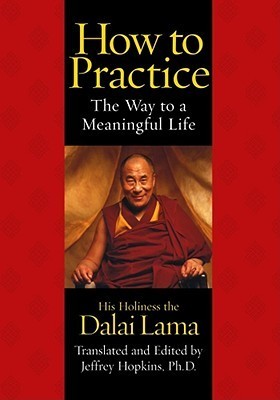
As human beings, we all share the desire for happiness and meaning in our lives. According to His Holiness the Dalai Lama, the ability to find true fulfillment lies within each of us. In this very special book, the spiritual and temporal leader of Tibet, Nobel Prize winner, and bestselling author helps readers embark upon the path to enlightenment with a stunning illumination of the timeless wisdom and an easy-access reference for daily practice. Divided into a series of distinct steps that will lead spiritual seekers toward enlightenment, How to Practice is a constant companion in the quest to practice morality, meditation, and wisdom. This accessible book will guide you toward opening your heart, refraining from doing harm, and maintiaining mentaltranquility as the Dalai Lama shows you how to overcome everyday obstacles, from feelings of anger and mistrust to jealousy, insecurity, and counterproductive thinking. Imbued with His Holiness' vivacious spirit and sense of playfulness, How to Practice offers sage and practical insight into the human psyche and into the deepest aspirations that bind us all together.
Jetsun Jamphel Ngawang Lobsang Yeshe Tenzin Gyatso (born Lhamo Döndrub), the 14th Dalai Lama, is a practicing member of the Gelug School of Tibetan Buddhism and is influential as a Nobel Peace Prize laureate, the world's most famous Buddhist monk, and the leader of the exiled Tibetan government in India.
Tenzin Gyatso was the fifth of sixteen children born to a farming family. He was proclaimed the tulku (an Enlightened lama who has consciously decided to take rebirth) of the 13th Dalai Lama at the age of two.
On 17 November 1950, at the age of 15, he was enthroned as Tibet's ruler. Thus he became Tibet's most important political ruler just one month after the People's Republic of China's invasion of Tibet on 7 October 1950. In 1954, he went to Beijing to attempt peace talks with Mao Zedong and other leaders of the PRC. These talks ultimately failed.
After a failed uprising and the collapse of the Tibetan resistance movement in 1959, the Dalai Lama left for India, where he was active in establishing the Central Tibetan Administration (the Tibetan Government in Exile) and in seeking to preserve Tibetan culture and education among the thousands of refugees who accompanied him.
Tenzin Gyatso is a charismatic figure and noted public speaker. This Dalai Lama is the first to travel to the West. There, he has helped to spread Buddhism and to promote the concepts of universal responsibility, secular ethics, and religious harmony.
He was awarded the Nobel Peace Prize in 1989, honorary Canadian citizenship in 2006, and the United States Congressional Gold Medal on 17 October 2007.
Ginge es nach meiner ganz persönlichen Wertung, wäre es wohl ein 2-Sterne-Rating geworden. Da ich aber weiss, dass dieses Buch für die Zielgruppe bestimmt wegweisend sein kann, und es in der Bibliothek ausserdem wahrscheinlich am falschen Ort gelandet ist, gebe ich dennoch drei Sterne.
Ich fand das Buch bei den Biographien und nahm es deshalb mit. Wie dieser Titel in der genannten Kategorie gelandet ist, ist mir ein Rätsel. Auf jeden Fall ist es keine Biographie, sondern eine spirituelle und meditative Unterweisung. Wer sich also auf einem tieferen Niveau mit dem Buddhismus befasst, für den ist dieses Buch perfekt.
Für mich jedoch war es absolut nichts. Es gab mir ein paar Inputs (Jeder möchte geliebt werden. Auch der nervige Kunde an der Kasse.), aber da ich mit dieser Art von Spiritualität und Meditation nichts am Hut habe, war die Lektüre mich eher zäh und langweilig.
Der Dalai Lama ist noch immer eine faszinierende Persönlichkeit für mich, und an ein paar Stellen gibt er auch hier Persönliches von sich. Somit war das Lesen nicht ganz umsonst, aber 90% davon war einfach nicht meins.
Auch für Einsteiger in die Meditation ist dieser Titel wohl eher schon etwas zu hoch. Ich lokalisiere die Zielgruppe bei jenen, die bereits Erfahrung mit Buddhismus, Meditation etc. haben. Man muss dafür nicht unbedingt den genannten Glauben annahmen und/oder Mönch/Nonne werden - der Dalai Lama richtet sich auch explizit an Laien im Alltag, aber weitergehendes Interesse sollte vorhanden sein.
Für jene Leute ist dieses Werk ein hilfreicher Begleiter im Alltag, der ihnen viele Tipps und Hilfestellungen zur Hand gibt.
Der Buddhismus ist mir weniger Religion, viel mehr Ratgeber. Wer über den Rand der hineingewachsenen Ideologie hinausblicken möchte, der ist im Einstieg mit diesem Buch gut beraten. Die Schriften des 14. Dalai Lama (Tendzin Gyatsho), darf man als Lehrbücher betrachten.