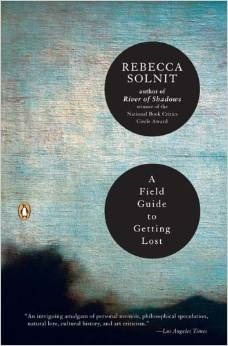
Whether she is contemplating the history of walking as a cultural and political experience over the past two hundred years (Wanderlust), or using the life of photographer Eadweard Muybridge as a lens to discuss the transformations of space and time in late nineteenth-century America (River of Shadows), Rebecca Solnit has emerged as an inventive and original writer whose mind is daring in the connections it makes. A Field Guide to Getting Lost draws on emblematic moments and relationships in Solnit's own life to explore the issues of wandering, being lost, and the uses of the unknown. The result is a distinctive, stimulating, and poignant voyage of discovery.
Writer, historian, and activist Rebecca Solnit is the author of more than twenty books on feminism, western and indigenous history, popular power, social change and insurrection, wandering and walking, hope and disaster, including Call Them By Their True Names (Winner of the 2018 Kirkus Prize for Nonfiction), Cinderella Liberator, Men Explain Things to Me, The Mother of All Questions, and Hope in the Dark, and co-creator of the City of Women map, all published by Haymarket Books; a trilogy of atlases of American cities, The Faraway Nearby, A Paradise Built in Hell: The Extraordinary Communities that Arise in Disaster, A Field Guide to Getting Lost, Wanderlust: A History of Walking, and River of Shadows: Eadweard Muybridge and the Technological Wild West (for which she received a Guggenheim, the National Book Critics Circle Award in criticism, and the Lannan Literary Award). Her forthcoming memoir, Recollections of My Nonexistence, is scheduled to release in March, 2020. A product of the California public education system from kindergarten to graduate school, she is a columnist at the Guardian and a regular contributor to Literary Hub.
Jedna z nejzajímavějších esejistických knih za posledních pár let: bloudění a toulání; dětský pohled na svět a středověké malby; modrá, modrá, modrá; Hitchcockovo Vertigo a ztráta sebe sama; Yves Klein a ztráta půdy pod nohama; indiánské kmeny a ztráta rodinné a kolektivní paměti; člověk a vymírání druhů... historie, filozofie, poezie a inspirace pro další čtení, toulání a bloudění - to vše v plynulém, působivém a hodně osobním psaní.
-----
“...to be lost is to be fully present, and to be fully present is to be capable of being in uncertainty and mystery.” (p. 6)
“…to forget the past is to lose the sense of loss… the art is not one of forgetting but letting go.” (p. 23)
“…a relationship is a story you construct together and take up residence in, a story as sheltering as a house.” (p. 135)
“…only when the honey turns to dust are you free.” (p. 136)
“Nonfiction seems to me photographic; it poses the same challenge of finding form and pattern in the stuff already out there and the same ethical obligations to the subject. Fiction like painting lets you start with a blank canvas…” (p. 144)
“Or maybe there’s one thing to say, about the capitalism of the heart, the belief that the essences of life too can be seized and hoarded, that you can corner the market on confidence, stage a hostile takeover of happiness.” (p. 181)
Po Wanderlust: A History of Walking jsem se s radostí pustila do další knihy zaměřené na pohyb v prostoru od Solnit. Jenže "průvodci ztracením" se bohužel rozutíkaly myšlenky do všech možných směrů a Solnit tak stvořila vskutku dílo hodné svého názvu. Ztracené. Jednotlivé kapitoly totiž nemají velkou logickou návaznost. Tam, kde Wanderlust systematicky postupuje kapitolu po kapitole a míchá myšlenky Solnit s jejími zdroji ve velmi zajímavé čtení, je "průvodce" směsí jejích vzpomínek, zamyšlení, několika odkazů a rozborů toho, co se za ztracení dá považovat a jak ho dosáhnout. Její počáteční teze, že ztracení by mělo být vědomé, zmizí někde v polovině "průvodce" a pak už se volně ztrácíme i v podvědomí. Zkrátka a dobře, jednotlivé eseje na téma ztracení více či méně dobře fungují, naštěstí je ale tahle sbírka poměrně krátká a Solnit má svůj styl, který je pro čtenáře zajímavý. Jen tady mohl více zaúřadovat editor.