

What do you think?
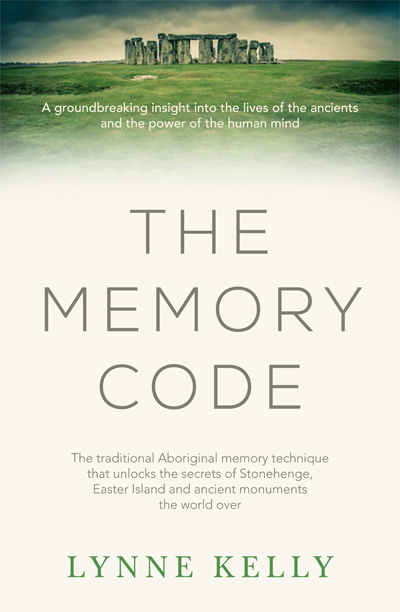
The Memory Code
Lynne Kelly has discovered that a powerful memory technique used by the ancients can unlock the secrets of the Neolithic stone circles of Britain and Europe, the ancient Pueblo buildings in New Mexico and other prehistoric stone monuments across the world. We can still use the memory code today to train our own memories.
In the past, the elders had encyclopaedic memories. They could name all the animals and plants across the landscape, and the stars in the sky too. Yet most of us struggle to memorise more than a short poem.
Using traditional Aboriginal Australian songlines as the key, Lynne Kelly has identified the powerful memory technique used by indigenous people around the world. She has discovered that this ancient memory technique is the secret behind the great stone monuments like Stonehenge, which have for so long puzzled archaeologists.
The stone circles across Britain and northern Europe, the elaborate stone houses of New Mexico, the huge animal shapes at Nasca in Peru, and the statues of Easter Island all serve as the most effective memory system ever invented by humans. They allowed people in non-literate cultures to memorise the vast amounts of practical information they needed to survive.
In the past, the elders had encyclopaedic memories. They could name all the animals and plants across the landscape, and the stars in the sky too. Yet most of us struggle to memorise more than a short poem.
Using traditional Aboriginal Australian songlines as the key, Lynne Kelly has identified the powerful memory technique used by indigenous people around the world. She has discovered that this ancient memory technique is the secret behind the great stone monuments like Stonehenge, which have for so long puzzled archaeologists.
The stone circles across Britain and northern Europe, the elaborate stone houses of New Mexico, the huge animal shapes at Nasca in Peru, and the statues of Easter Island all serve as the most effective memory system ever invented by humans. They allowed people in non-literate cultures to memorise the vast amounts of practical information they needed to survive.
318 pages, Paperback
Published July 1, 2016
About the author
Lynne Kelly
22 books155 followersMy new book, The Knowledge Gene was published in Australia and NZ in 2024. It is the culmination of all my work on knowledge systems and memory. It is the scientific evidence humans are all genetically encoded to use our uniquely human skills in music, art, spatial abilities, story and performance to store and convey knowledge - and have been doing so for at least 70,000 years! We all have so much more potential that we are using.
I did a PhD on the way indigenous cultures memorise vast amounts of information when they don't use writing. Knowledge and Power in Prehistoric Societies was published by Cambridge University Press in 2015 and explains the implications for archaeology, offering new interpretations for the purpose of monuments around the world including Stonehenge, the statues of Easter Island and the huge images on the desert at Nasca.
The Memory Code (2016) presented this approach for the general reader. There was an overwhelming response to the book, asking how to implement the memory methods in contemporary life. That is the theme of Memory Craft.. Songlines: the power and promise is co-authored with Indigenous writers, Margo Neale and leads the First Knowledges series. Songlines for Younger Readers was published in 2023, leading the children's series. Both Songlines books have been shortlisted for major awards.
I grew up in Melbourne, Australia, and now live in rural Castlemaine. I started writing as a child and am the author of ten books for schools written during my teaching career, and a novel, Avenging Janie. I then started writing popular science, publishing three books, The Skeptic's Guide to the Paranormal, Crocodile: evolution's greatest survivor and Spiders: learning to love them.
I did a PhD on the way indigenous cultures memorise vast amounts of information when they don't use writing. Knowledge and Power in Prehistoric Societies was published by Cambridge University Press in 2015 and explains the implications for archaeology, offering new interpretations for the purpose of monuments around the world including Stonehenge, the statues of Easter Island and the huge images on the desert at Nasca.
The Memory Code (2016) presented this approach for the general reader. There was an overwhelming response to the book, asking how to implement the memory methods in contemporary life. That is the theme of Memory Craft.. Songlines: the power and promise is co-authored with Indigenous writers, Margo Neale and leads the First Knowledges series. Songlines for Younger Readers was published in 2023, leading the children's series. Both Songlines books have been shortlisted for major awards.
I grew up in Melbourne, Australia, and now live in rural Castlemaine. I started writing as a child and am the author of ten books for schools written during my teaching career, and a novel, Avenging Janie. I then started writing popular science, publishing three books, The Skeptic's Guide to the Paranormal, Crocodile: evolution's greatest survivor and Spiders: learning to love them.
Ratings & Reviews
Friends & Following
Create a free account to discover what your friends think of this book!
Community Reviews
Displaying 1 - 1 of 1 review

May 3, 2020
O autorce a této knize jsem se dozvěděl díky podcastu S. Carrolla (Mindscape). K přečtení mne inspirovala především ústřední myšlenka paměťových paláců a s nimi spojených paměťových technik. Přijde mi naprosto fascinující představa, že je možné si díky těmto technikám zapamatovat (uložit do paměti), jak autorka uvádí, encyklopedické znalosti. Autorka uvádí příklady aplikace těchto technik na vlastní zkušenosti a doplňuje, že způsob vnímání takto uložených informací se významně liší od vnímání informací zaznamenávaných písemně.
O to zajímavější je podle mého autorkou předestíraná myšlenka, že starověké a prehistorické (orální) kultury měly tyto metody dokonale zvládnuté. Původní kočovné národy tak ukládaly veškeré znalosti a vědomosti nezbytné k přežití do okolní krajiny. Pomocí metody loci kódovaly vědomosti vždy do krajiny, kterou tak dobře znaly (resp. do významných krajinných prvků). Poté, co se kultury lovců sběračů usadili a postupně se z nich staly zemědělské kultury více fixované na půdu v konkrétní oblasti, nebylo nadále možné či praktické procházet rozlehlá území za účelem aktivizace zakódovaných vědomostí. Lidé proto začali koncentrovat krajinné monumenty poblíž jejich usedlostí do uměle vytvořených monumentů, které nadále sloužily jako paměťová místa, do nichž byly zakódované stovky let nastřádaných vědomostí. Autorka předestírá svoji teorii, že za tímto účelem vznikly prehistorické monumenty jako Stonehenge a další impozantní místa ve Velké Británii, Irsku a Francii. Autorka dále uvádí, že obdobné monumenty za stejným účelem vznikaly po celé zeměkouli. V Severní Americe, Latinské Americe (Mexiko, Peru, Chile) a Polynésii.
Bohužel, přestože paměťové techniky a paměť je ústředním motivem knihy, drtivou většinu obsahu reálně tvoří detailní popis jednotlivých archeologických nalezišť a monumentů.
O to zajímavější je podle mého autorkou předestíraná myšlenka, že starověké a prehistorické (orální) kultury měly tyto metody dokonale zvládnuté. Původní kočovné národy tak ukládaly veškeré znalosti a vědomosti nezbytné k přežití do okolní krajiny. Pomocí metody loci kódovaly vědomosti vždy do krajiny, kterou tak dobře znaly (resp. do významných krajinných prvků). Poté, co se kultury lovců sběračů usadili a postupně se z nich staly zemědělské kultury více fixované na půdu v konkrétní oblasti, nebylo nadále možné či praktické procházet rozlehlá území za účelem aktivizace zakódovaných vědomostí. Lidé proto začali koncentrovat krajinné monumenty poblíž jejich usedlostí do uměle vytvořených monumentů, které nadále sloužily jako paměťová místa, do nichž byly zakódované stovky let nastřádaných vědomostí. Autorka předestírá svoji teorii, že za tímto účelem vznikly prehistorické monumenty jako Stonehenge a další impozantní místa ve Velké Británii, Irsku a Francii. Autorka dále uvádí, že obdobné monumenty za stejným účelem vznikaly po celé zeměkouli. V Severní Americe, Latinské Americe (Mexiko, Peru, Chile) a Polynésii.
Bohužel, přestože paměťové techniky a paměť je ústředním motivem knihy, drtivou většinu obsahu reálně tvoří detailní popis jednotlivých archeologických nalezišť a monumentů.
Displaying 1 - 1 of 1 review