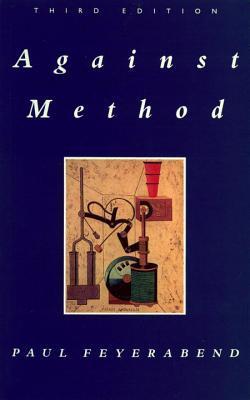
Modern philosophy of science has paid great attention to the understanding of scientific ‘practice’, in contrast to concentration on scientific ‘method’. Paul Feyerabend’s acclaimed work, which has contributed greatly to this new emphasis, shows the deficiencies of some widespread ideas about the nature of knowledge. He argues that the only feasible explanations of scientific successes are historical explanations, and that anarchism must now replace rationalism in the theory of knowledge.
The third edition of this classic text contains a new preface and additional reflections at various points in which the author takes account both of recent debates on science and on the impact of scientific products and practices on the human community. While disavowing populism or relativism, Feyerabend continues to insist that the voice of the inexpert must be heard. Thus many environmental perils were first identified by non-experts against prevailing assumptions in the scientific community. Feyerabend’s challenging reassessment of scientific claims and understandings are as pungent and timely as ever.
Paul Karl Feyerabend was an Austrian-born philosopher of science best known for his work as a professor of philosophy at the University of California, Berkeley, where he worked for three decades (1958–1989).
His life was a peripatetic one, as he lived at various times in England, the United States, New Zealand, Italy, Germany, and finally Switzerland. His major works include Against Method (published in 1975), Science in a Free Society (published in 1978) and Farewell to Reason (a collection of papers published in 1987). Feyerabend became famous for his purportedly anarchistic view of science and his rejection of the existence of universal methodological rules. He is an influential figure in the philosophy of science, and also in the sociology of scientific knowledge.
Tak tuhle knížku jsem neměl číst, ale už není cesty zpátky. Zjistil jsem, že finálnost a dokonalost současných fyzikálních teorií musí být jen iluzí. A také že kritický racionalismus je často spíš překážkou vědeckého pokroku, než jeho nejlepším nástrojem. Teď by to chtělo nějaký protijed na zklidnění mysli. :-)