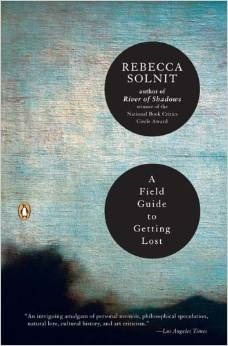
Whether she is contemplating the history of walking as a cultural and political experience over the past two hundred years (Wanderlust), or using the life of photographer Eadweard Muybridge as a lens to discuss the transformations of space and time in late nineteenth-century America (River of Shadows), Rebecca Solnit has emerged as an inventive and original writer whose mind is daring in the connections it makes. A Field Guide to Getting Lost draws on emblematic moments and relationships in Solnit's own life to explore the issues of wandering, being lost, and the uses of the unknown. The result is a distinctive, stimulating, and poignant voyage of discovery.
Writer, historian, and activist Rebecca Solnit is the author of more than twenty books on feminism, western and indigenous history, popular power, social change and insurrection, wandering and walking, hope and disaster, including Call Them By Their True Names (Winner of the 2018 Kirkus Prize for Nonfiction), Cinderella Liberator, Men Explain Things to Me, The Mother of All Questions, and Hope in the Dark, and co-creator of the City of Women map, all published by Haymarket Books; a trilogy of atlases of American cities, The Faraway Nearby, A Paradise Built in Hell: The Extraordinary Communities that Arise in Disaster, A Field Guide to Getting Lost, Wanderlust: A History of Walking, and River of Shadows: Eadweard Muybridge and the Technological Wild West (for which she received a Guggenheim, the National Book Critics Circle Award in criticism, and the Lannan Literary Award). Her forthcoming memoir, Recollections of My Nonexistence, is scheduled to release in March, 2020. A product of the California public education system from kindergarten to graduate school, she is a columnist at the Guardian and a regular contributor to Literary Hub.
A partir de l'experiència del nomadisme, l'autora plasma diverses reflexions diferents a cada capítol. Algunes m'han semblat més interessants que d'altres, però en general no m'han apassionat
La lectura d'aquest llibre ve a dir que no perdre's significa no viure, que no saber com perdre's ens porta a la "destrucció", per això he estat una mica distant en llegir-lo. No obstant, la lectura barreja reflexions de diferents personalitats i pensadors, el que la fa en alguns moments interessant i curiosa.
Jo que sempre estic disponible, porte temps obsessionada amb la idea de perdre's i este llibre que aborda lo desconegut de manera ampla, m'ha paregut una lectura deliciosa
Sempre he pensat que perdre's és bonic, sortir-se del camí traçat i descobrir que, més enllà, també hi ha coses molt interessants. I no parlo només en un sentit espacial, geogràfic. També perdre's en un sentit mental o espiritual, per aconseguir fugir de les rutines i descobrir allò que ens és desconegut. Si us interessa, la Rebecca us ho explicarà millor, d'una forma poètica a vegades, en forma de memòries o més periodística d'altres.
M'encanta la forma com la Solnit és capaç de passar dels records i experiències personals a temes relacionats amb la història, amb el canvi climàtic, la cartografia, els pioners... El llibre explora diferents i amplis significats del concepte de perdre's, a partir de moltes idees que a priori no tenen connexió, però que en aquests assajos acaben tenint tot el sentit. Una absoluta delícia.
És el primer llibre autobiografic o de reflexions que llegeixo i m'ha agradat molt. M'ha semblat molt fàcil de llegir i molt interessant la forma en què està estrucutrat i escrit. És com una reflexió d'un tema dins del cap de l'escriptora. L'únic inconvenient que he trobat ha sigut que l'últim quart del llibre ha perdut una mica el fil i potser he sigut jo la que estava perduda amb el llibre.