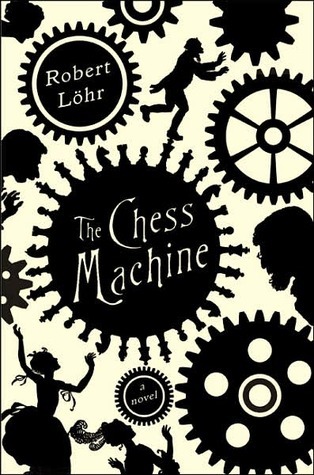
Vienna 1770—Baron Wolfgang von Kempelen unveils a strange and amazing invention, the Mechanical Turk, a sensational and unbeatable chess-playing automaton. But what the Habsburg court hails as the greatest innovation of the century is really nothing more than a brilliant illusion. The chess machine is secretly operated from inside by the Italian dwarf Tibor, a God-fearing social outcast whose chess-playing abilities and diminutive size make him the perfect accomplice in this grand hoax.
Von Kempelen and his helpers tour his remarkable invention all around Europe to amaze and entertain the public, but despite many valiant attempts and close calls, no one is able to beat the extraordinary chess machine. The crowds all across Europe adore the Turk, and the success of Baron von Kempelen seems assured. But when a beautiful and seductive countess dies under mysterious circumstances in the presence of the automaton, the Mechanical Turk falls under a cloud of suspicion, and the machine and his inventor become the target of espionage, persecution, and aristocratic intrigue.
Robert Löhr was born in Berlin and grew up there and in Bremen and Santa Barbara, California. He trained as a journalist at the Berlin School of Journalism, then worked for Sat. 1 News and for the Berlin daily paper Der Tagesspiegel, Berliner Zeitung, Neue Zeit, and Taz, and finally as a correspondent for the Washington Post. After spending many years writing screenplays, musicals, plays, and short stories, Löhr decided to try his hand at a novel. The Chess Machine, also know as The Secrets of the Chess Machine, is his first.
És un llibre diferent del que acostumo a llegir, però era impossible que em resistís a un llibre que té per títol "La máquina de ajedrez".
La història està bé, és entretinguda. Segurament hi ha massa personatges amb problemes, i tot és massa recargolat, però com a mínim es llegeix bé.
La traducció és una altra història. Començant pels àlfils, que es tradueixen per "oficials" o "bisbes" (i és indiferent, a vegades és un, a vegades l'altre), a peons que arriben a la última fila i en comptes de "coronar", es "canvien" per dames. Entenc que en un altre tipus de llibre on hi surt tangencialment el tema dels escacs es pugui arribar a cometre un error d'aquests (tot i que no s'hauria de fer), però en un llibre que s'anomena "La máquina de ajedrez" és de jutjat de guàrdia.
La història està basada en la història real de l'inventor del turc, tot i que dubto que tot plegat fos tan recargolat. Però està bé com a novel.la històrica i d'entreteniment (tot i que no per gaire res més).