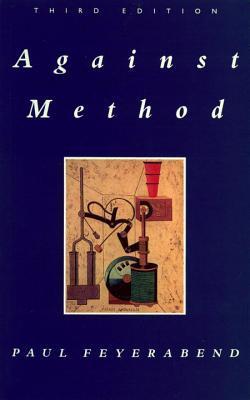
Modern philosophy of science has paid great attention to the understanding of scientific ‘practice’, in contrast to concentration on scientific ‘method’. Paul Feyerabend’s acclaimed work, which has contributed greatly to this new emphasis, shows the deficiencies of some widespread ideas about the nature of knowledge. He argues that the only feasible explanations of scientific successes are historical explanations, and that anarchism must now replace rationalism in the theory of knowledge.
The third edition of this classic text contains a new preface and additional reflections at various points in which the author takes account both of recent debates on science and on the impact of scientific products and practices on the human community. While disavowing populism or relativism, Feyerabend continues to insist that the voice of the inexpert must be heard. Thus many environmental perils were first identified by non-experts against prevailing assumptions in the scientific community. Feyerabend’s challenging reassessment of scientific claims and understandings are as pungent and timely as ever.
Paul Karl Feyerabend was an Austrian-born philosopher of science best known for his work as a professor of philosophy at the University of California, Berkeley, where he worked for three decades (1958–1989).
His life was a peripatetic one, as he lived at various times in England, the United States, New Zealand, Italy, Germany, and finally Switzerland. His major works include Against Method (published in 1975), Science in a Free Society (published in 1978) and Farewell to Reason (a collection of papers published in 1987). Feyerabend became famous for his purportedly anarchistic view of science and his rejection of the existence of universal methodological rules. He is an influential figure in the philosophy of science, and also in the sociology of scientific knowledge.
sabíeu q dir-te paul karl feyerabend es com dir-te pol carles vespreig??? no es krisseig (ala mireu rima i per cert si no sabeu q vespreig es tardeo sou espanyols)
te coses molt interessants com la idea de la contrainducció o el principi d'autonomia o la relació entre la justificació de recerca i resultat però mentre llegia el llibre estave una mica carrie bradshaw perque no podia evitar preguntar-me si el "tot s'hi val" (anything goes a l'original) no era una idea de fet com a molt liberal i justament a l'altre capítol parlant de teatre a l'alemanya de la postguerra equipara el teatre nazi amb el teatre de la resistència nazi lol lmao lèl vaig exclamar!! anything goes es el laissez-faire cientific
per cert ok que a l'època que va escriure el llibre l'adquisició del llenguatge no estava tan estudiada i la lingüística no tenia tanta pluralitat de veus i tal però me fa gràcia q vulgui relacionar l'anarquisme científic amb això quan està estudiadíssim q l'adquisició del llenguatge se fa molt per imitació jeje justament el que ell critica que fa la ciència quan replica mètodes teories etc
la filosofia de vegades és com tindre un pòdcast no?? que vas yappejant amb tu sol fins que algú diu "odm vessares"
i per cert ell diu anarquisme científic jo més bé en diria anarcocapitalisme científic el "tot s'hi val" avui dia ens ha portat a tindre gent arreu del món investigant les mateixes coses amb paraules diferents i no té sentit!!!