A spider has made her home among the green hills and valleys of a lettuce leaf. It is a perfect den, just the right size, with a dewdrops pool nearby that will catch moths on moonlit nights. How is the spider to know that the lady intends to eat that very lettuce for lunch one day?
Faith McNulty was an American nonfiction author, probably best-known for her 1980 book The Burning Bed. She was born "Faith Corrigan" in New York City, the daughter of a judge. Young Faith attended Barnard College for one year, then attended Rhode Island State College. But she dropped out of college once she got a job as a copy girl at the New York Daily News. She later went to work for Life magazine. She worked for the U.S. Office of War Information in London during World War II.
McNulty was a wildlife writer at The New Yorker magazine for several years. In 1980, a collection of her New Yorker work was published as The Wildlife Stories of Faith McNulty. For many years, she edited the annual New Yorker compilation of the year's best children's books.
She also frequently wrote children's books on wildlife, including How to Dig a Hole to the Other Side of the World in 1979 and When I Lived with Bats in 1998. Her 1966 book The Whooping Crane: The Bird that Defies Distinction was written for adults.
Her husband, John McNulty, was also a writer for The New Yorker and with Thomas Wolf, Truman Capote, and Gay Talese, a major figure in the development of the literary genre of creative nonfiction, which is also known as literary journalism or literature in fact. After her husband died in 1956, she remarried, to Richard Martin, a set designer and an inventive designer of set props.
The Burning Bed told the true story of Francine Hughes, who set fire to the bedroom in which her husband was sleeping. Hughes defended herself by saying that her husband had been abusing her for 13 years. The jury at her trial ruled that she had been temporarily insane, and she was found not guilty.
"I can remember my father in his nightshirt, digging for worms for the baby robin in the bathroom. That's the kind of household it was; I had woodchucks in the bathroom, cats, squirrels, chipmunks," McNulty once said.
Toward the end of her life, she wrote a weekly column for The Providence Journal on a local animal shelter run by the Animal Welfare League. Her mother had founded the Animal Welfare League in southern Rhode Island. McNulty had long been known for taking in stray animals at her farm.
She suffered a stroke in 2004. She died at her farm in Wakefield, Rhode Island.
Does watching the Reading Rainbow episode count as reading this? Okay, well, Levar Burton read this to me via television waves when I was 5 and I've never forgotten it, even though I'd forgotten the title until I found a copy in a used bookstore the other day. So technically I didn't read it until today (Thanksgiving 2015). Just as perfect as I remember. The Lady reminds me of my mother, and if I didn't know any better, I'd think it was based on her. (Even kinda looks like my mother in her 30s, too.) She taught me a special fondness for spiders, and we named them all George. Regardless of my personal connection, a gentle and informative book that inculcates the love of nature and respect for living creatures.
Enjoyed on openlibrary.org. I love that it doesn't shy away from nature's realities. And that this is a different kind of spider - how many of us know that not all spiders weave webs? I would have adored this when I was a child. It's an important story, beautifully told... and almost spiritual.
This is a good book to teach children about perspective and compassion. A lady finds a spider in her garden after the reader learns about the spider's world. Instead of destroying the spider, the lady considers this world and then puts it back where it came from. There is a lot of detail and understanding. Awesome.
I love this simple book about the life of a beautiful little spider on a head of lettuce in a garden. I usually read it aloud at school during the Halloween season, as a contrast to the spooky spiders of the season. It also makes a great read aloud when teaching about insects, growing food, or sharing our world with other species. The illustrations are beautiful realistic drawings that help young readers understand more fully.
Okay, I adore this book. Not many people consider the importance of treating spiders kindly, and I have lived my whole life trying to champion this cause. The whimsical illustrations and masterful storytelling elevate the reading experience so much, which is wonderful because perhaps this book can open people’s eyes to the lives of spiders and allow them to see why these lives are significant. Loved this so much.
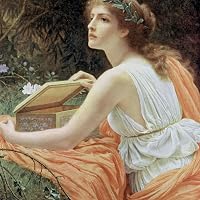
This book was a marvelous surprise! I adored it! What a gentle, wise, lovely book. On first glance, it doesn’t look like much (especially compared to the cover art we are seeing in the 2020s) but if you pause for a moment and really look at the expression on the lady’s face, you will feel her gentle curiosity and reverence for the little spider hiding in that head of lettuce. And that’s what this book is about – pausing to really see and contemplate nature, no matter how small. I love that the story begins from the spider’s perspective and we feel how marvelous her world is (though to us only a head of lettuce) with its hills of green and valleys of green and a green cave – a leafy den perfect for her home. There is even a little pool that collects in a leaf! When the lady picks the head of lettuce, we aren’t outraged – because we have seen how carefully and lovingly the lady has tended her garden all summer. But, oh, the poor spider, what will happen to her!? Spoilers ahead, but I do think that children who are okay with some mild peril will be happy with the way the book ends
That lady didn't kill the spider... the lady picked the lettuce that the spider was on and washed it. It was good to wash vegetables because they could have bugs and dirt. She rescued the spider that God made.