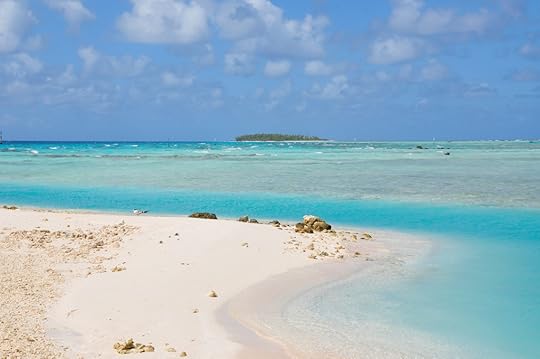
Fiction from the violent days of the early century, set among the atolls of French Oceania and the high islands of Samoa, Fiji, Pitcarn and "the terrible Solomons."
John Griffith Chaney, better known as Jack London, was an American novelist, journalist and activist. A pioneer of commercial fiction and American magazines, he was one of the first American authors to become an international celebrity and earn a large fortune from writing. He was also an innovator in the genre that would later become known as science fiction.
London was part of the radical literary group "The Crowd" in San Francisco and a passionate advocate of animal rights, workers’ rights and socialism. London wrote several works dealing with these topics, such as his dystopian novel The Iron Heel, his non-fiction exposé The People of the Abyss, War of the Classes, and Before Adam.
His most famous works include The Call of the Wild and White Fang, both set in Alaska and the Yukon during the Klondike Gold Rush, as well as the short stories "To Build a Fire", "An Odyssey of the North", and "Love of Life". He also wrote about the South Pacific in stories such as "The Pearls of Parlay" and "The Heathen".
My introduction to the fiction of Jack London is South Sea Tales, an immersive collection of short stories that rustled palm trees in my imagination and at times seemed to blow the aroma of banana leaves from the page. Originally published in South Sea Tales (1911), House of Pride and Other Tales of Hawaii (1912), A Son of the Sun (1912) and posthumously, On the Makaloa Mat (1919), these picturesque stories came after the Klondike Tales which London is so renowned and were the culmination of an exhausting two-year voyage the author made through Polynesia and Melanesia with his wife, Charmian, beginning in 1907.
Literature that predates The Beatles performing on The Ed Sullivan Show is hit or miss with me; it's often difficult for me to identify with the characters or process the writing style of some of the 19th or 20th century's most acclaimed novelists. Sometimes the serum turns me into Dr. Jekyll, other times it's Mr. Hyde and I want to sail the book through the nearest window. Based on these stories, Jack London is definitely a pharmacist who has me hooked. Of the sixteen stories presented here, my two favorite offer heady adventure which London enthusiastically mixes with culture, geography, history, meteorology and seamanship into the action.
-- The Seed of McCoy. Chief magistrate and governor of Pitcairn Island and a descendant of the mutineers from the Bounty who settled there, McCoy boards the ailing Pyrenees, a tall ship that has been on fire for two weeks. Hoping to save the hull, the captain is searching for a beach to scuttle the ship and McCoy volunteers to lead them to an ideal spot. The voyage goes on longer and longer while the ship grows hotter and hotter. A fire is one of the deadliest events a sailor can encounter aboard his ship and London does a tremendous job ratcheting tension, while the islander McCoy handles each obstacle in his typically unruffled island manner.
He spoke to the sailors, and at the first sound of his dove-like cooing voice they paused to hear. He extended to them his own ineffable sense of serenity and peace. His soft voice and simple thoughts flowed out to them in a magic stream, soothing them against their wills. Long forgotten things came back to them, and some remembered lullaby songs of childhood and the content and rest of the mother's arms at the end of the day. There was no more trouble, no more danger, no more irk, in all the world. Everything was as it should be, and it was only a matter of course that they should turn their backs upon the land and put to sea once more with hell fire hot beneath their feet.
-- The House of Mapuhi. In what is in my opinion the jewel of the collection, London visits the low lying atoll of Hikueru, where an islander named Mapuhi has found a magnificent pearl. Rather than name a money price for the traders who flock to him, Mapuhi--as directed by his wife Tefara and mother Nauri--holds out for a very specific house to be built for them. The white man pulls a fast one on Mapuhi, but nature intervenes when a killer hurricane descends on the atoll, covering it with the tide and scattering Mapuhi and his family. Worse than a fire aboard a ship is an island being swallowed by the sea and London hurls the reader through this story breathlessly.
-- In A Son of the Sun, The Devils of Fuatino and The Feathers of the Sun, London jettisons literary import for strict pulp fiction, with dashing trader David Grief sailing from island to island and finding adventure. The situations that Grief must extricate himself from are exciting and the locales colorful, but these pieces--originally running in the Saturday Evening Post--are anticlimactic and easy to forget once London shows how Batman, I mean, Han Solo, I mean, Grief, gets himself out of trouble. These inspired a syndicated TV series, Captain David Grief, also known as The Jack London Stories that ran for 39 episodes from 1957-60.
Of his many schooners, ketches and cutters that nosed about among the coral isles of the South Seas, David Grief loved most the Rattler--a yacht-like schooner of ninety tons with so swift a pair of heels that she had made herself famous, in the old days, opium-smuggling from San Diego to Puget Sound, raiding the seal-rookeries of the Bering Sea, and running arms in the Far East. A stench and an abomination to government officials, she had been the joy of all sailormen, and the pride of the shipwrights who built her. Even now, after forty years of driving, she was still the same old Rattler, fore-reaching in the same marvelous manner than compelled sailors to see in order to believe that punctuated many an angry discussion with words and blows on the beaches of all the ports from Valparaiso to Manila Bay.
-- The rest of the stories are picturesque and deeply sensuous to varying degrees--Good-bye, Jack addresses the leper colony of Molokai, albeit from the perspective of the white man, while Koolau the Leper dramatizes the siege of Molokai from the point of view of the afflicted--but tend to drift away without the engine driven narratives of the adventure tales. Still, London's facility with the natural world, politics, destiny and how a man struggles against some if not all three is evident throughout. I quite often got the feeling I was being transported to the South Seas, such as with this description at the beginning of The Bones of Kahekili:
From over the lofty Koolau Mountains, vagrant wisps of the trade wind drifted, faintly swaying the great, unwhipped banana leaves, rustling the palms, and fluttering and setting up a whispering among the lace-leaved algarroba trees. Only intermittently did the atmosphere so breathe—for breathing it was, the surprising of the languid, Hawaiian afternoon. In the intervals between the soft breathings, the air grew heavy and balmy with the perfume of flowers and the exhalations of fat, living soil.
From here on out, whenever I shop for groceries at Trader Joe's, I'll appreciate that Polynesian motifs go beyond interesting health elements and great value to include colonization, labor exploitation, small pox, leprosy and the occasional run-in with headhunters. It might give me something to do other than stress myself out over the lack of parking outside their markets.
I recommend South Sea Tales for anyone planning a trip to the Hawaiian Islands or who wishes they could ditch work and take a trip to there. London is no tourist; it seems clear from his writing that he left something of himself on each beach he landed and strives to do the same for the reader with an impressive multitude of study. Based on this, I'll definitely make the trip to London's Klondike Tales.
Most readers or casual observers of Jack London recognize his masterpiece The Call of the Wild and the adjoining tales about the Klondike. Others may also recognize The Sea Wolf or White Fang. South Sea Tales is a collection of eight stories thematically set in and around the South Pacific.
As brutal and stark as his cold north stories, these short stories evoke the same primitive lusts and hungers but in a warmer setting. Also evident is London’s casual racism. This may have been simply a product of his time and place, but if a modern reader is particularly sensitive to racial slurs, especially the N word, then that reader may want to skip this collection.
The House of Mapuhi – may have inspired Steinbeck’s The Pearl and is also similar in style and voice to Hemingway or Conrad.
The Whaletooth – missionaries and cannibals on Fiji. When I was in Iraq, I found myself at Christmas time in Kirkuk. The air base hosted a very nice Christmas dinner and talent show of sorts. A sight and sound I will never forget, and I am sure remains with all of the folks there that night, was the contingent of Fijians who arrived to sing. The shortest of them was six feet tall and they were all huge, dark, barrel chested men with corded muscles standing out on their arms. Dressed simply in brown work clothes, they entered in s straight line and formed up in front of the dining facility. With a brief queue, they broke into a Christmas song but sang in their native tongue. The combined baritone of the group made the ground vibrate and I worried about the integrity of the windows. They may have sung two or three songs, all in the same timbre, accepted with bright smiles our standing ovation, and quietly filed out in a single line. Very, very impressive. Reading this story, with a scene of a giant Fijian swinging a fatal war club, I could not help thinking of our gentle giant visitors and their beautiful performance.
Mauki – a particularly brutal story about the peculiar institution. All the classic London themes are here, somewhat evocative of his short story, “The Mexican”.
"Yah! Yah! Yah!" – colonial brutality and race relations in the South Seas, London as racist? Maybe, or maybe not, this is somewhat sympathetic to the islanders.
The Heathen – tale of bad weather and an odd couple that results. London may have been a racist, but here is another story where the islander demonstrates more humility and virtue than the westerners and / or the Christians. Was London using the unreliable narrator or was he a Nietzchian genocidalist?
The Terrible Solomons – This also could have been titled Guadalcanal Diary of a Different Sort or Corporate Recruiting Gone Wrong. Here is one where London demonstrates that he may have been, after all, a racist. Something also to consider about London was his penchant for literary violence. I read The Iron Heel, a carbon copy, Polaroid negative take on the dystopian genre as London was also a radical socialist. Many of his apologists want us to remember the rugged, inspirational and lovable tale of Buck in Call of the Wild, but want the serious, modern western reader to forget about Wolf Larson and may not even know about The Terrible Solomons. A must read for a true London student and one to even the score for his objective biographers.
The Inevitable White Man – Not for the racially sensitive as London drops the N word as often as the F bomb is dropped in The Big Lebowski. Some critics will say that here London shows his true stripes, still others may show that London accurately documented a brutal tale set in a harsh time and place. There is no mistake, though, about his philosophic leanings.
The Seed of McCoy – The editors, in my humble opinion, saved the best for last. This one is the least violent story of the collection and the one most reminiscent of Joseph Conrad, particularly Youth. This is a simple sailing the seas story with some twists. Go to a globe and spin it to have the Pacific Ocean facing you. The vast blue side of the globe is spotted with little dots of brown and green and one of them, almost in the middle of the blue between the Chilean coast and the eastern coast of Australia and almost due south of distant Hawaii is tiny Pitcairn Island. Yes, the same island populated by the HMS Bounty mutineers. Our adventure begins here and London tells a gem from there.
En Los relatos de los Mares del Sur Jack London nos hace volver a la adolescencia. Fue como estar leyendo nuevamente las aventuras de “20.000 leguas de viaje submarino” o “La isla del tesoro”.
En este caso, tiene un condimento especial. O quizás yo he pasado hace mucho la joven edad. ¿Porqué? Encontré historias donde las fuerzas de la naturaleza derrotan al hombre, donde la violencia del hombre le ganan a la ética y la moral. Hay un contenido social por detrás. Muy interesante.
Los ideales de la “civilización” moderna con el capitalismo a cuestas han destruido todos los ecosistemas posibles y millones de vida. Acá se denuncian esas acciones. London estuvo por la polinesia entre 1907 y 1909. Algo debe haber visto y aprendido.
(Review Provisória) ==3,5== (desafio #abrilcontosmil) Um bom livro de contos que nos transporta para os mares do Sul e nos leva a viver várias aventuras sempre com o mar como pano de fundo. Estes foram tempos duros e violentos e as aventuras que Jack London nos conta são tão exóticas e diferentes quanto os cenários onde ocorrem. Um dos temas mais abordados nos contos é o do choque entre culturas: a cultura do civilizado, "demónio branco" dominador, colonizador, missionário, evangelizador e esclavagista, versus o "negro selvagem", perigoso, livre, pagão e canibal. Gostei muito como Jack London se manteve imparcial ao contar estas histórias, claramente inspiradas nas suas próprias viagens e aventuras marítimas. Gosto sempre de ler as histórias que este escritor-aventureiro escreveu e este pequeno livrinho foi mais uma boa experiência de leitura que me fez recuar um pouco, relembrando algumas das minhas leituras juvenis.
The House of Mapuhi A great typhoon sweeps over a small atoll, leaving the inhabitants shaken and tossed about, only to realize that nothing, really, has changed. 4/5
The Whale Tooth It's always a good idea to listen to the advice of those who are wiser than you, even when you have the hand of God on your side. 3/5
Mauki The tale of the son of a chief who is taken away to be a slave and then a plantation worker, Mauki, is full of the kind of detail that makes the South Sea Tales come alive and a pleasure to read. 5/5
"Yah! Yah! Yah!" A tale of the horrible, horrible reprisals that occur when the natives cross the white man. 4/5
The Heathen I loved this story of how two men can become brothers and in doing so force them to become the men the other has always known them to be. 5/5
The Terrible Solomons Essentially, this is the early 20th century version of "Boys in the Hood." You know, "If you've never been to the ghetto, don't ever come to the ghetto, because you wouldn't understand the ghetto," only in sailor talk. 4/5
The Inevitable White Man Inevitable is a strange word to describe an ethnicity but, after reading this story, it becomes the only one that seems even remotely capable of encompassing all of Europe's attitude towards the less charted regions of the world and why they claimed dominion over them. 5/5
The Seed of McCoy Almost more of a prose poem than a story, the gentle telling of this story belies its desperate stakes as a captain races to get his ship onto a soft, sandy bed, before the fire in her hold consumes her. 4/5
"La misión del hombre blanco es colonizar el mundo y bastante tiene con eso. ¿Cree que le queda tiempo para entender a los negros?"
Me han encantado estos relatos de ficción histórica situados en Hawaii u otras islas colonizadas. Son un retrato fantástico de la colonización y sus efectos adversos, poniéndonos en la piel de los nativos y ayudándonos a comprender el férreo amor que sentían hacia su cultura, tan vulnerable con la llegada de los colonizadores. Jack London hace un buen trabajo en evitar que empaticemos con los seres más irracionales de estos relatos, además de denunciar la injusticia de aquellos pueblos a los que llamaban "asalvajados" los seres más crueles de nuestro planeta. Una gran denuncia hacia el racismo con tintes feministas y mucha historia por aprender.
Surely one proof of the merit of a set of short stories is that one finds them still relevant and enjoyable more than a century after the time when they were penned. Admittedly, some may find London's language objectionable today but any such judgment can hardly be fair. Regardless of all that, it's clear that London was intensely aware of the unfairness and brutality with which Europeans and Americans exploited the natives of the South Pacific and the East Indies. He saw each of the natives as individuals and people whose lives mattered; and his stories focus on their courage, tenacity and resourcefulness, especially in the face of terrible conditions, both natural and man-made. Each of the eight tales has something special to offer and of course London was a great story teller. For me, the best of the lot are "The Seed of McCoy" (a harrowing adventure aboard a ship with its sealed hold on fire as its crew, tossed about by shifting winds and currents, desperately seeks an island upon which to beach and salvage their craft) and "The Heathen" (a wonderful character study and an exploration of friendship, perseverance and courage). It must have been over 60 years ago that I first read these stories and I found it equally satisfying re-reading them today.
I enjoyed this collection a lot more than I thought I would. Some stories are much better than others, as is the case in general with these sorts of collections, but on the whole, I thought each story had something of interest to offer. What surprised me the most was London’s portrayal of the harsh realities of colonialism and how the islanders suffer from colonial greed and brutality. The sympathy to the islanders was what drew me to many of these stories, since these are, to some extent, criticisms of the colonial way.
Favorites from this collection: The House of Mapuhi, Mauki, “Yah! Yah Yah!” The Inevitable White Man. There were no stories in this collection that I straight up disliked, but those four were ones that I greatly enjoyed. London’s depiction of the islands effortlessly drew me in; they were so detailed and vibrant, that I felt as if I were there. I also loved his characters; they felt so real, that I can’t help but think that they must have been based on real people.
Definitely pick it up if you’re a London fan; if you’re at all interested in colonial writings, this is something to check out as well. I wouldn’t say it’s a must-read, but it’s interesting and provides some insight to life in the colonized islands.
I sometimes wonder what makes a great short story. Seems like many authors think it is to push the story forward, to streamline the story so that it is a real page turner. London takes his time to fully develop the character. It is almost as if the conflict and the resolution of conflict is purely incidental to the story. Even these sometimes exotic characters are universal in their character make up. I happen to read this book of short stories while I was in Hawaii. Certainly that added to the richness of the story, but a plane ticket to Hawaii is not a prerequisite to enjoying this book! Read it. Especially if you are a Jack London fan.
La escritura de London me encanta. Su facilidad para plasmar emociones y describir catástrofes es evidente y me es muy fácil sumergirme en los mundos que relata. Este libro, sin embargo, me dejó bastante indiferente.
Yo leí una versión que tiene solo seis cuentos: - "La casa de Maphui" - "El diente de ballena" - "Mauki" - "¡Ajá! ¡Ajá!" - "El idólatra" - "La hoguera"
De los seis solo me gustaron tres ("Mauki", "El idólatra" y "La hoguera") y, de esos, solo amé el último. El resto me pareció bastante meh. Las historias que cuentan no me parecieron interesantes, y si lo fueron, cerraron con un final insatisfactorio que me dejó mal sabor. Lo que pasa es que London usa recursos de novelas para escribir cuentos: presenta muchísimos personajes en poco tiempo, hay muchas aventuras consecutivas y los eventos transcurren en varios lugares distintos. La conclusión que saco de todo esto es que London es tremendo escritor, pero que no es tan buen cuentista como lo es novelista.
Diversos relatos apasionantes nos adentran en el universo aventurero de London. Es ta vez no son las montañas inhóspitas de Alaska, sino las remotas islas polinesias, repletas de caníbales, de blancos inevitables, y sobretodo, plasmadas a través de los recuerdos de los viajes de London, historias transformadas en relatos inolvidables.
Came back to this one with the recent warm weather, after being introduced to it during a Pacific literature course by prof Mandy Treagus some years ago.
London's prose is great, he knows how to create a vibe, and his perspective on this part of the world is very of its time. They can seem contradictory, London seems to be at once a passionate socialist critic of imperialism and racist exploitation, and a seeming believer in the scientific racism common to the time, the way he explores these themes can feel a bit inconsistent from one story to the next, which could even be due to something as simple as him being in the tropics and sick while writing these.
My fave is the House of Mapuhi, the description of that storm is unforgettable
Estos cuentos aventureros, a veces nostálgicos y otras violentos, ofrecen una visión ambivalente del colonialismo: en ocasiones lo idealizan, en otras lo critican, y en algunos casos —lamentablemente— caen en estereotipos racistas. Sin embargo, cada relato destaca por su trama bien definida, sus personajes memorables y, sobre todo, por un dominio excepcional de los escenarios, que casi se convierten en protagonistas por derecho propio.
En general, todos son de gran calidad, pero si tuviera que elegir uno, me quedaría con Koolau, el leproso: combina aventura, profundidad psicológica y un retrato crudo de la exclusión social.
I had only read Jack London's Klondike tales, Call of the Wild & White Fang, previously so I didn't know quite what to expect of South Sea Tales. It was kind of magical & drew a picture of life in the South Seas Islands shortly after they had been discovered by the white men who began exploiting them for the wealth of native products--copra, pearl shell, fish & sea creatures. There was still cannibalism practiced despite the arrival of missionaries who tried to convert the natives to Christianity. The stories are full of adventure, humor, danger, & amazing events as well as sailing ships & hurricanes. I read them as avidly as an adolescent boy dreaming of becoming a sailor on the high seas & discovering tropical islands. I really enjoyed this book.
-1 "LA CASA DI MAPUHI": Alessandro Raoul di lavoro fa il "Sopraccarico", l'uomo, mandato in giro per le isole ad acquistare le materie prime (perle, polpa di cocco, coralli) da rivendere in un secondo momento, fa tappa nell’atollo di Hikueru dove Mapuhi, un abile pescatore di perle, ne ha trovata una colossale, come pagamento peró non chiede denaro ma una casa da condividere con la moglie, la figlia e l’anziana madre. Spaventato dalla richiesta Raoul se ne andrà e farà la sua comparsa Toriki, un losco trafficante che con un abile trucco riuscirà a far sua la perla facendo piombare la famiglia nella più totale disperazione. L’arrivo peró di un uragano che si abbatterà con tutta la sua violenza sul pacifico atollo spazzando via tutto, cambierà le carte in tavola, la forza distruttrice del vento farà infatti vivere all’anziana madre di Mapuhi un’esperienza ai limiti della sopportazione umana che peró riaccenderà quelle speranze che si credevano infrante dopo la "vendita" della perla a chi non la meritava.
-2 "IL DENTE DI BALENA": A Viti Levu, una delle isole più grandi dell’arcipelago delle Fiji, vive John Starhurst, un giovane missionario che vuole portare il Vangelo anche nelle parti più remote dell’isola, sconsigliato da tutti e soprattutto da Ra Vatu un indigeno con cui in passato il missionario si scontró per la religione, per i pericoli che questa scelta comporta, primo fra tutti i cannibali, il giovane affiancato da Nalau, un indigeno convertito al Cristianesimo, parte comunque per questa missione. I due, lungo il loro peregrinare nei vari villaggi che incontreranno, saranno peró seguiti segretamente da Erirola, cugino di Ra Vatu, che recherà con se un dente di balena, oggetto prodigioso per le tribù dell’isola e che obbliga chi lo possiede a fare ció che gli viene chiesto da chi ne ha fatto dono. Come interferirà questa cosa nel destino del missionario? E perchè Ra Vatu ha mandato in segreto il cugino negli stessi villaggi attraversati dai due "esploratori" con questo mistico dente di balena?
-3 "MAUKI": In una delle isole più selvagge dell'arcipelago delle Salomone vive un giovane aitante, caparbio, eccentrico e scaltro, il suo nome è Mauki, fatto prigioniero a sette anni da una tribu nemica, viene poi venduto per alcune casse di tabacco, come schiavo, ad una goletta di bianchi. Si ritroverà così contro la sua volontà a disboscare terreni impervi, costruire strade e ponti, affumicare noci di cocco, far parte di equipaggi di baleniere e persino a fare il maggiordomo, ma la volontà di fuggire è talmente viva in lui che ogni momento è quello giusto per tentarla ma, purtroppo per il giovane, ogni tentavito va a vuoto e ad ogni cattura gli vengono comminati anni in più di lavori forzati passando dai tre iniziali agli oltre otto, questo peró non ferma la sua indomita volontà che lo porta a non desistere sino a che i suoi padroni, disperati, decidono di relegarlo in uno degli atolli più lontani e dispersi che esistano, atollo comandato da un bianco di nome Bunster, uomo esageratamente violento, sadico, dispotico e crudele. I sogni di libertà cullati ardentemente da Mauki saranno definitivamente svaniti?
-4 "HA! AH! AH!": Nell’atollo di Oolong vive un uomo, un trafficante scozzese di nome McAllister, che, nonostante ormai anziano, infermo e dedito all’uso smodato di alcol, riesce comunque a governare il territorio, abitato da bellicosi indigeni, con il pugno di ferro, prendendosi anche spesso gioco degli stessi con pretese assurde e ridicole. Alla richiesta del personaggio che narra questa storia, dei motivi che hanno permesso ad un anziano alcolizzato di sopraffare più di 3000 indigeni giovani e forti, il capo tribù racconterà una storia che svelerà questo mistero, una storia su cui, fra le tante cose accadute, aleggerà spesso una sinistra risata.
-5 "IL PAGANO": Charley, giovane commerciante di perle, si trova su una goletta che subirà una triste sorte, verrà prima decimata dal vaiolo e poi farà naufragio a causa di un terribile uragano che vi si abbatterà sopra. Da questo disastro si salveranno solo due persone, lui e un indigeno di nome Otoo. Dopo quell’esperienza i due vivranno assieme a stretto contatto per ben diciassette anni e il pagano riuscirà, con la sua ammirazione per il giovane bianco, a far diventare Charley un uomo migliore sotto tanti aspetti e un capace uomo d’affari che si troverà a gestire pian piano un piccolo impero nelle isole attorno a Bora Bora, Otoo sarà per lui un’ombra, un protettore, un consigliere, un amico e un socio ma sino a dove si spingerà l’affetto che lega i due naufraghi ormai uniti come fratelli?
-6 "LE TERRIBILI SALOMONE": Bertie Arkwirght, un giovane inesperto, ingenuo, sensibile e dalla fervida immaginazione, vuole visitare a tutti i costi le Isole Salomone per scoprire se ció che tanti dicono e cioè che questi luoghi infestati da tagliatori di teste, cannibali e malattie siano realmente così spaventosi e pericolosi come vengono narrati. Durante il viaggio che lo porterà verso la sua meta, farà la conoscenza del Capitano Malu, un anziano lupo di mare che grazie alla sua capacità commerciale e alla sua scaltrezza è riuscito a costruirsi un piccolo impero e sarà proprio con una delle sue imbarcazioni che il giovane avventuriero vivrà l’esperienza più emozionante e terrificante della sua vita. Ma le "Terribili Salomone" saranno davvero così come dicono o lo scaltro capitano ci ha messo il suo zampino?!
-7 "L’INEVITABILE UOMO BIANCO": Durante una chiacchierata fra comandanti di navi sul motivo \"dell’inevitabilità\" dell’arrivo dei bianchi in qualunque luogo e della riuscita degli stessi in qualunque avventura, il vecchio ed esperto capitano Woodward racconterà, per dar forza alla sua idea, un’esperienza vissuta in prima persona con protagonista un uomo di nome Sextorph, incapace in qualsiasi cosa, pur se tanto volenteroso di provare, ma implacabile come tiratore. Il palcoscenico della storia sarà una nave, i protagonisti due bianchi e un’orda di indigeni assetati di sangue e "l’invitato speciale" un fucile e l’inevitabile e implacabile presenza dell’uomo bianco.
-8 "IL DISCENDENTE DI MCCOY": Il "Pirenei", una nave trasportante frumento, è da giorni in balia di un pericolo letale, sotto coperta infatti cova un incendio che rischia di distruggere l’intera imbarcazione, per questo motivo il Capitano Davenport decide di farla incagliare per permettere così di inondare d’acqua i boccaporti e spegnere l’incendio. La prima isola che peró incontrerà non è adatta al suo scopo ma sulla stessa avrà la fortuna di incontrare McCoy, un anziano bianco dai modi pacifici e dalla voce soave, governatore di quel lembo di terra, lo stesso, estremamente esperto di quelle zone oceaniche si renderà disponibile ad accompagnare lo sfortunato capitano verso un isola adatta allo scopo. Il viaggio, parso da principio facile, non si rivelerà peró tale, infatti fra errori di calcolo, correnti contrarie, venti, piogge e nebbie la nave non riuscirà a trovar posa in diverse isole, portando tutto l’equipaggio a credere di essere quasi in balia di una maledizione. Riuscirà l’esporto e pacifico McCoy a tener a bada gli uomini e soprattutto a trovar la terra giusta per incagliarvi la nave o tutto sarà ormai perso irrimediabilmente?
"Racconti del Mare del Sud" è una raccolta di brani pubblicata nel 1911 e che vede "sfilare" otto racconti scritti fra il 1908 e il 1910. In queste storie, tutte ambientate fra mari, navi, isole e atolli, potremo incontrare tribù di cannibali, vecchi lupi di mare, venditori di perle, missionari, cacciatori di teste e tutta quella variegata umanità che nell’iconografia e nell’immaginario collettivo popolano quelle zone. Gli otto racconti, seppur non particolarmente lunghi (mediamente 30/40 pagine), sono scritti in maniera convincente, i personaggi risultano ben caratterizzati e credibili, le storie decisamente accattivanti e le descrizioni dei luoghi meravigliose, tutti questi elementi permettono al lettore di immergersi con facilità nella narrazione venendone avvolto completamente. Un buon libro, sulla falsa riga de "Il figlio del Lupo" e "I figli del gelo", questi totalmente ambientate nelle gelide terre ammantate di neve del Klondike, che riesce a lasciare piacevoli emozioni nel lettore.
A theme current in much of London's work is a Darwinian struggle to survive. His works epitomize a sort of literary naturalism. And never more so than in the collection of stories contained in South Sea Tales. Probably the most notable of them is the last one in the collection, "The Seed of McCoy," where a schooner in distress anchors outside Pitcairn's Island, the home of the descendants who mutinied aboard the HMS Bounty. During the course of the story, McCoy recounts the fate of the mutineers, and the captain of the endangered schooner realizes it is the blood of those men that runs through McCoy's veins and is all that stands between him and death. "The Seed of McCoy" is also one of London's best pure adventure tales, with disaster nipping at the heels of the crew and captain unceasingly until the very end.
As South Sea stories go, these are among the very best. But always look beneath the mere adventure to the motivations that power London's stories. The White Man's Burden, the natural virtues of the Wild Men of the islands, the overwhelming forces of nature--they are all there commenting on our ability to survive.
I had forgotten what a great pleasure good Jack London can be. This is a light hearted clutch of adventure in the South Pacific. The Stevenson was more naturalist, more anthropologist. London throws in the occasional Melanesian word, dwells for a few sentences on canibal lire and then is off to an extended drinking story.
Like Conrad he is horrified by the treatment of the natives; the physical abuse, the exploitation of their labor, the cheating they receive on the true value of their products and labor.
A special mention here for The Heathen. I read a lot of the South Sea literature when I was twelve. I may well have read these stories before, but they all seemed new and fresh. The Heathen is about the bond of friendship between an American adventurer and a south sea native (head hunter and cannibal).
Of the sixteen stories in the Modern Library edition of Jack London's South Sea Tales, four in particular struck me. My synopses...
1) A seven-inch centipede nearly spoils a dinner party in Kona, Hawaii by falling into into Dottie Fairchild's coiffure.
2) A burning ship is unable to land at Pitcairn, and the captain lets aboard the island's chief magistrate, casual and soft spoken, to calm the near-mutinous crew and guide the vessle through the treacherous archipelago to safe landing at another island.
3) David Grief, the millionaire owner of holdings and ventures throughout the Solomon Islands, sails the South Seas for excitement and harasses small-timers who owe him money.
4) A scientist who lands on Guadalcanal to find a rare butterfly risks fever and headhunters, as a strange, recurring, island-filling sound turns his curiosity to stories of a giant red object that's feared and protected by the island's leaders and is possibly thousands of years old from another world.
All sixteen stories are set in or near remote, uncivilized islands. Though written a hundred years ago, each story is surprisingly contemporary. The variety of plots compensate for the dry, unemotional language.
I'm grateful I gave this collection a try. Each story gave me an enjoyable escape, took me on exotic adventures I could safely return from.
This collection also includes a story titled The Heathen. Written in 1910, two main characters--a pearl buyer of European descent and a native of Bora Bora--get in and out of adventures, sometimes saving each other's lives.
I first read the story in 1979 when I entered Catholic high school. Why did Jack London title it The Heathen? Mr. Governale, teacher of freshman English, wanted each student to figure it out. He assigned it as an essay question.
The school wasn't in Hawaii or the South Seas. It was in a northwest suburb of Chicago. No heathens on my block. Everyone around was German, or Italian, or Polish. Why the title The Heathen? My essay focused on the guy from Bora Bora and a line from the story about his not being baptized. Governale graded it and handed it back. I didn't give the answer he wanted.
My missing the point stayed with me.
In 2002 I bought my copy of The South Sea Tales to again read The Heathen and get the answer right. Even at 37 years old I didn't get much more out of it. But now I'm middle aged and I've survived (less exotic) adventures of my own. Now I can write the answer that Governale was looking for.
The pearl buyer of European descent was more of a heathen than the guy from Bora Bora.
This entire review has been hidden because of spoilers.
This is a weird one to rate. I got this book mainly to read about the history of Oceania. I also love Jack London's other books The Call of the Wild and White Fang. Although I'm still drawn to his writing style, I wasn't really into this one. Out of the 8 stories here, I only liked The Heathen (mainly because of the ridiculous ending) and The Seed of McCoy. The others I just didn't care for. I think as I'm discovering my reading preferences anthologies are a genre I consistently have trouble getting into.
I will say this was interesting to read about an early 20th century Western perspective on the cultures of Polynesia and Melanesia. There is obviously the racism (and lots of the N word) but I was also surprised to find a bit of admiration or respect for the islanders. It's very strange reading a hundred year old book like this and seeing how different people viewed each other.
Overall, I only liked 2 out of 8 short stories. London's writing is still great but be prepared for some outdated language and viewpoints. I'm giving it a 2/5. I think maybe anthologies and short stories just aren't my thing so I'm going to move away from those for a while.
These wonderful tales instantly transport you to the islands and communities of the South Pacific. So entertaining and evocative, they are also sometimes horrifically gory and (since they are of a past era) in places the language is politically incorrect.
These short stories by London are quite good and easy to read. Only one or two misses for me in the bunch. The best story here is The Red One, a stranger and bleaker tale than London's normal fare and worth seeking out separately.
Büyük serüvenlerin yazarı Jack London’un kısa hikayeleri de mükemmel. 19.yy sonlarında Pasifik bölgesindeki ada topuluklarında yerel halk ile sömürgeciler arasında geçen hikayelerin ana teması emperyalizmle egzotik toplumlar arasındaki amansız mücadele. Yerli halk kurban, yabancıların zorba olduğu bir dönem ve coğrafya. Siyahla beyazın amansız mücadelesi. Kaybeden her zaman olduğu gibi insanlık…
The best story in this collection, hands down, is "The House of Mapuhi" for being harrowing yet human, and for never going in the direction I was expecting. Fantastic read.
The next best was "The Seed of McCoy" about an on-fire ship trying to find a safe place to beach in a dangerous archipelago.
As for the rest...well, buckle up for some highly uncomfortable reading. London illustrates a brutal side of colonialism that is hard to stomach, and while he's clearly critiquing it, the gleeful violence occasionally confused me as to what the author was actually wanting to get across.