A thrilling parable of death and deception from the Booker-shortlisted Galgut. On a lonely stretch of road a man picks up a hitchhiker. The driver is a minister on his way to a new rural congregation. The passenger, a fugitive. When the minister realizes this, the fugitive kills him. He assumes his vestments and identity, only to discover that one of his first duties as the new minister is to preside over his victim's funeral. As the fugitive and the local police chief play a tense game of cat and mouse, culminating in a pursuit across the desolate veldt, Damon Galgut gives us a spare, devastating combat for man’s most prized attribute: freedom
Damon Galgut was born in Pretoria in 1963. He wrote his first novel, A Sinless Season, when he was seventeen. His other books include Small Circle of Beings, The Beautiful Screaming of Pigs, The Quarry, The Good Doctor and The Impostor. The Good Doctor was shortlisted for the Man Booker Prize, the Commonwealth Writers' Prize and the Dublin/IMPAC Award. The Imposter was also shortlisted for the Commonwealth Writers' Prize. He lives in Cape Town.
Non è difficile percepire sin dall’inizio echi di J.M.Coetzee, secondo me soprattutto del suo La vita e il tempo di Michael K. Così come del clima confuso e incerto post-apartheid. Apartheid che era stato abolito da poco quando questa novella è stata pubblicata (solo nel suo paese – per l’uscita fuori dal Sudafrica bisogna aspettare fino al 2003) e solo l’anno prima (1994) Mandela era diventato presidente vincendo le prime elezioni democratiche. Il titolo originale The Quarry ha doppio significato, vuol dire sia la cava che la preda. La scelta italiana sembra puntare verso il thriller – e leggendo probabilmente le prede aumentano, non rimane una sola – ma la cava è il luogo clou della breve vicenda.
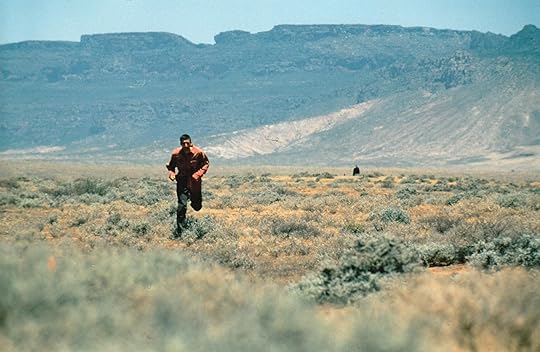
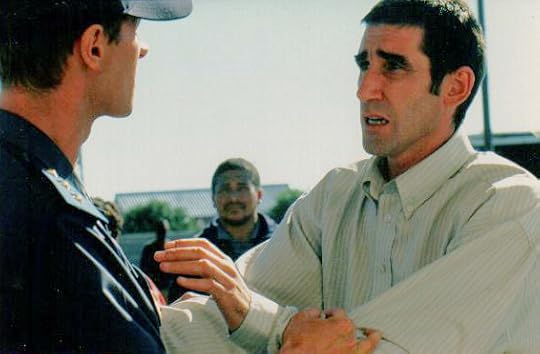
Il primo adattamento cinematografico è del 1998, una coproduzione belga, ma la storia è comunque ambientata in Sudafrica. John Lynch è il nome maggiore in cartellone e interpreta ovviamente il finto prete. La regia è di Marion Hänsel.
Galgut sottrae e scarnifica, vuole restare ambiguo, non dare troppe spiegazioni, aumentare il senso di incertezza, scelta stilistica che rispecchia il clima di cui sopra. Così l’uomo con cui apre il racconto rimane fino alla fine senza nome, così come il luogo dove è ambientata l’azione. E indefinita rimane la ragione per cui l’uomo sta fuggendo fino al suo incontro col prete. La stessa struttura riflette questa intenzione: le scarse centoquaranta pagine sono scandite in 56 capitoletti, molti di mezza pagina se non meno, sempre più brevi man mano che ci si avvicina alla fine. I soggetti in scena sono più maschere che personaggi, e forse la palma del personaggio più riuscito la darei al paesaggio (il veld), autentico luogo della mente.
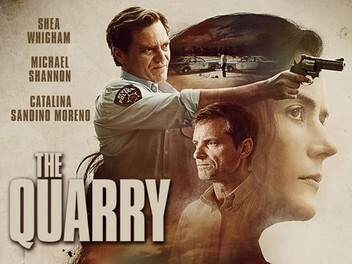
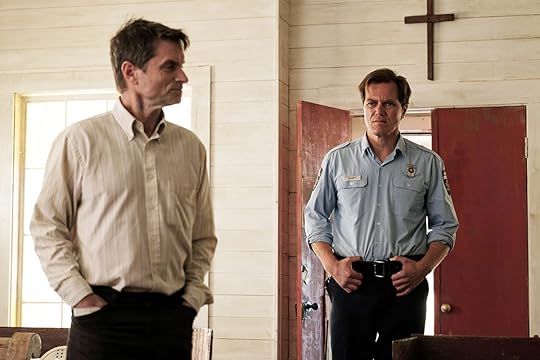
Il secondo è del 2020, americano, sposta l’azione in West Texas. La regia è di Scott Teems e gli attori sono Shea Whigham e Michael Shannon, quest’ultimo nel ruolo del poliziotto.
Ho visto il film americano, che sposta l’azione dal Sudafrica post-apartheid al West Texas. Un Texas occidentale verde e rigoglioso come quello a est. Il cast è il punto di forza del film: eccellenti e perfetti sia Michael Shannon che Shea Whigham. Il primo riesce a dare anima a un personaggio più marginale. Pur restando nella sospensione – vedi il primo incontro con la ‘preda’ riversa a bordo, intuita più che vista dall’interno del furgone - allo spettatore arrivano le informazioni che servono. Ottima atmosfera, per un risultato al di sopra delle mie aspettative, che mi ha davvero positivamente sorpreso.
Well, this is clearly a much earlier work of Galgut’s. While I was thoroughly impressed by The Promise, which I read less than a year ago, this one was just decent. It’s not one I’d proclaim a must-read. The twenty-six years between publication dates of the two novels made a huge difference. Galgut most definitely honed his storytelling skills as well as his superb mastery of characterization. The plot of The Quarry was compelling enough to keep me going though, and the stripped-down prose suited the stark landscape quite well. I have to admit, I was drawn in more at the start and then again towards the very end.
The main character has no name, just ‘the man’; and he has no backstory whatsoever. All we can surmise is that he is on the run, having made an escape of some sort. There is no development of any of the characters, though some of the descriptions will stay with me quite well.
“Then he came out of the grass at the side of the road and stood without moving… There were blisters on his feet that had come from walking and blisters in his mouth that had come from nothing, except his silence perhaps, and bristles like glass on his chin… He looked like a figure fired in a kiln, still smoking slightly and charred.”
The man takes on the identity of another man, a minister, placing himself in a precarious situation where he is in plain view of the entire town, including the police chief. The quarry of the title refers to two definitions - a physical, open excavation site, as well as someone or something being hunted or chased. More than one individual is on the run and being hunted, including an escaped circus animal. I thought it was clever the way Galgut made use of the term quarry as well as the way he demonstrated the innate need for freedom in both humans and other animals.
“He told them that the world was a prison, that they were all prisoners in it. He told them that they could escape the prison of the world and that there was freedom beyond it…”
This is a short book, so to say anything more would ruin it if you did in fact decide to pick this up. I’d say it’s either a good starting place, before reading Galgut’s masterpiece, or it’s one for his biggest fans who may be interested to see how his writing developed over time. I’m glad I read it – it’s short, though not at all sweet!
“It felt that his whole life had been expended in motion, had consisted of no substance but flight…”
OK five stars is probably too much - there are flaws here, and no humour, but bloody hell did this grip. It's not even Galgut's best work (it's an early novel, pre- Good Doctor). Characters are left undeveloped, there's a passing circus which seems to be there for colour alone, but it's unputdownable, closely observed, brilliantly written.
Humans stripped down to their elements, murder, assumed identity, and the quarry - both a place and the plot of the book, as a policeman chases his suspect. You feel the thirst, the heat, and the hunger, everything presses in on you.
Galgut's novel seems reminiscent of early Coetzee and perhaps Camus as well. He's a prose-poet novelist; the novel is short with brief chapters and often unconventional in its use of sentence structure and punctuation. The novel is above all atmospheric: the landscape is bleak and barren, the So African township hardly peopled. A murder has been committed and an identity assumed, but Galgut is not one to analyze character motivation or psychology. Instead characters are elemental, almost animal-like in this harsh landscape. Dialogue is almost nonexistent. "The Quarry" is both the description of a place in the novel and its main character, a brilliant title. I've only just finished reading this novel, but I have the feeling it will long stay with me: the mark of a good writer.
Adam kaçıyor, neden kaçtığını o bile unutuyor. Şehirleri arkasında bırakıyor, yüzlerini aklına kazıdığı insanları da. Duruluyor ama yine rahata ermiyor çünkü o suçlu ve durması artık mümkün değil. . Geçen sene okuduğum kitaplar arasında Damon Galgut’ın Vaat’i de vardı. 2021 Booker Ödülü’nü kazanan bu eserden çok etkilenmiştim, kurgusundan-hikayenin sarsıcılığından. Taşocağı’na da bu yüzden hevesle başladım. Kitabın ilk sayfalarında bocaladım, ad-mekan-zaman verilmeden kaçan bir ‘adam’ vardı sadece. Sonra düğümler açıldı. Ancak giriş-gelişme-sonuç beklenebilecek bir hikaye değildi bu. O ‘adam’ın hislerine odaklanmamızı istiyordu yazar. Özellikle suçluluk duygusuna.. Yazarın erken dönem eserlerinden Taşocağı, Vaat kadar ‘derli toplu’ olmasa da etkileyici, hızlı akan ve merakla okunan bir kitap. Yazarın dilimize çevrilen diğer kitaplarını da (İyi Doktor ve Yabancı Bir Odada) hemen edinip okumak istiyorum. . Hasan Can Utku çevirisi, Barış Şehri kapak tasarımıyla ~
A taut and ominous novel, or novella really, though it feels expansive and complete. Like a South African version of "Child of God," though even more spare and less over-the-top in its grotesquerie... eerie and mysterious and compelling.
3.5 A fugitive on the run, a priest traveling to take up his duties in a new church, a murder and an exchange of identities. In rural South Africa, a Police Captain will make it is mission to correct this wrong. The writing is sparse, not a wasted word, and it fits in with the sparsely populated village, actually adds to the atmosphere of bleakness, of people and scenery.
The story covers only a certain time period, so there is no in depth characterization, we know only what needs to be known. Mans elemental desire for freedom, freedom at any costs regardless of what has to be done to achieve this desire. This bleakness is juxtaposed against that of a traveling circus which should bring delight and joy but instead an animal escapes. Not just a facet of human nature to desire freedom but also that of a wild caged animals, as well. There are also two thieves, brothers who also seek escape, from justice and from despair. All will cross paths but one will not survive.
I love how this author puts words together and the internal dilemmas he creates.
Update: Oh, I clean forgot to ask if anybody on goodreads gets the thing about the moles. I'm DESPERATE, please explan it to me.
I’m with Jessica on this one. The Guardian review at the time said shades of Hardy, Steinbeck, Faulkner, but it isn’t. It is existential, for Jessica it evokes Camus, I’d say Frisch too. The facile description, as the Guardian review goes on, of this as a ‘crime story’ beggars belief. Well, unless that’s how you’d label The Outsider too. Or The Bible.
Het boek begint en eindigt met een man op de vlucht, maar het is niet dezelfde man. Ze dwalen door een desolaat Zuid-Afrikaans landschap. Galgut heeft weinig woorden nodig om de sfeer hiervan op te roepen. Ook de personages zijn erg zwijgzaam. Het is een boek vol symboliek, de dominee heet Niemand, het stadje heet Nergenshuizen, er is een zonsverduistering en de Engelse titel 'The Quarry' betekent zowel groeve als: 'iemand die opgejaagd wordt'. De eerste preek van 'de dominee' gaat over ontsnappen uit de wereld waarin we gevangen zijn. Ik vond het een intrigerend, spannend, ietwat surrealistisch, prachtig verhaal. Maar je moet er wel moeite voor doen èn je wordt er niet vrolijk van.
Such a small book, but it packs a big punch. Even though we don’t know the protagonist’s name, se get to know his emotions and his motivations. The plot starts slow, but the it gets tighter and tighter. It follows the protagonist and we get to suspect he is a get away from the justice. He meets someone, and he makes a decision that changes his life. It is a reflection on crime and punishment, class, guilt, and how far one can go on living a lie.
This is my second Damon Galgut, and definitely not the last.
It was a good novel, made me feel like I’m in English.. but it was good. 3.5/5. Although if u were to ask me about it, i probably wouldn’t know unless I read it again.
Wat een boek! Het beste van de 3 werken die ik tot nu toe las van de Zuidafrikaanse Damon Galgut. "Toen kwam hij uit het gras aan de kant van de weg en bleef daar roerloos staan. Hij wiegde zachtjes heen en weer op de bal van zijn voeten. Er zaten blaren op zijn voeten die waren ontstaan door het lopen en blaren in zijn mond die nergens door waren ontstaan, of het moet door zijn zwijgen zijn geweest, en stoppels als glas op zijn kin." Zo begint het boek en ik was meteen verloren. Een naamloze man is op de vlucht. Hij ontwijkt alles en iedereen, slaapt in velden langs de weg. Waarvoor hij wegvlucht is niet duidelijk. Dan wordt hij toch opgemerkt door een dominee op weg naar zijn nieuwe aanstelling in een township. Enzovoort. Het verhaal op zich vind ik niet zo belangrijk, tenminste dat is niet wat de roman voor mij zo bijzonder maakt. Het is de manier waarop het wordt verteld, de stijl en de taal die het zo bijzonder maken. Sober en toch beeldend. In elk geval volstaat mijn taal niet om dit uitzonderlijke werk te beschrijven. De originele Engelse versie verscheen in 1995 en de Nederlandse vertaling in 2010. Het werd verfilmd door Marion Hänsel. Maar nergens kan je nog een nieuw exemplaar van dit boek vinden. Noch op papier, noch als e-book. Al die goede boeken die zo snel verdwijnen, dat vind ik erg jammer. Gelukkig is er nog steeds de bibliotheek!
In una strada solitaria del sud Africa, senza case né persone, due uomini si incontrano. Si partirà così per un tormentato viaggio e seguirà una serie di eventi che si alterneranno rapidamente uno dopo l’altro, senza soluzione di continuità. Inseguimenti, sparatorie, giochi psicologici portati al limite della follia. La scrittura è schietta, scarna ma contemporaneamente affilata come la lama di un bisturi. Descrizioni di odori e suoni si alternano. Verso la fine la scrittura ha dei cambi di registro: manca la punteggiatura (anche le maiuscole)La preda è la spietata storia di una caccia all’uomo dove il senso di colpa e la redenzione passano totalmente in secondo piano rispetto alla sensazione straniante, claustrofobica, a tratti onirica e ossessiva.
“Non era più sicuro che ci fosse una differenza tra loro o che fossero separati l’uno dall’altro e si spostarono insieme sulla superficie del mondo e il sole tramontò e si fece buio e continuarono a duettare. Si muovevano nella notte in vaghi contorni come i sogni che il suolo stava facendo.” (Citazione)
Selv om han har holdt på i noen år, er Damon Galgut en av de nye stjernene på littersturhimmelen. Da han vant Bookerprisen i 2021 (?) med The Promise, ble han en å virkelig regne med. For meg som liker afrikanske forfattere, gjorde det ingen ting at han lever og skriver i Cape Town.
The Quarry er imidlertid den første boken han ga ut, og Galgut er ikke helt oppe på stjernenivå enda. En slags ørkenfabel om en fengselsflyktning, en lokal politimann og en småskurk som etter noen merkelige begivenheter i en liten småby hvor som helst som forsvinner ut i ødemarken, på flukt og på jakt etter rømninger, løper i sirkler og så ender de opp ved utgangspunktet.
Galgut skriver veldig bra, økonomisk og enkelt. Men historien er veldig spesiell, og innimellom er det vanskelig å henge med i hvem han skriver om, når alle nøkkelpersonene omtales som han, ham uten andre tydelige markører blir det vanskelig å følge med, spesielt når kapitlene er så korte at du ikke rekker å skifte karakter før neste karakter overtar.
Det sagt, historien om mann på flukt som dreper pastor på vei til sin første menighet, overtar pastorens plass i menigheten i den lille byen ved havet, er spesiell og triggende nok til at det ble en kort og fornøyelig leseøkt. Men Damon Galgut var ikke helt i bane på stjernehimmelen enda.
This entire review has been hidden because of spoilers.
Grāmatas apraksts šķita gana intriģējošs, tomēr tie arī faktiski ir visi grāmatas notikumi, kas tikai vēl ir izstiepti uz 190 lappusēm. Diemžēl pamatīga vilšanās, jo, lai gan brīžiem teksts ir ar gana tēlainu aprakstu, tomēr tas mijas ar "sacirstiem" teikumiem un tekstu, kas pilnībā neaizrauj, kā arī lielā daļā nav izsekojams, ar kuru varoni notiek konkrētie notikumi. Autora valoda ir vienmuļa, garlaicīga un ārkārtīgi smagnēja. It kā kaut kas notiek, bet tas viss ir pasniegts tik garlaicīgā veidā, ka jebkāda interese ir vienkārši nokauta. Manuprāt, stāstu būtu bijis iespējams ļoti interesanti attīstīt, bet beigās ir izdevies nebaudāms savārstījums, kā kāds visu laiku skrien pa "sausu un neauglīgu zemi", dialogi aprobežojas ar "jā - nē" utt. Iespējams sliktākais darbs, kāds ir lasīts..
Not a fan of this one. It reminded me of Blood Meridian but also The Stranger because it was oddly anhedonic and written in a stilted/staccato fashion (Then this happened. Then that happened). The first half of the book was fine, but then everything gets a bit weird after that and Galgut tries to be arty by doing away with punctuation and writing extremely short chapters. This quote sums up the book really: "It felt that his whole life had been expended in motion, had consisted of no substance but flight..." That's all the book is - characters who are constantly on the move, escaping, being hunted, just moving for the sake of it... no background, no reason for the reader to care about them.
Atmospheric tale in the hot summer in South Africa. It's a dark and slow burner book with a lot of short chapters. It's not a crime story like I thought in the beginning but a chase one. It's an intense game of a cat and a mouse with an arson fire, murderers and thieves. A bit heavy for the time I read it during quarantine when I need a lighter one as a crime story.
Damon Galgut's genius is stunningly developed and on full display in rich and complex novels like The Imposter and The Good Doctor. In these books he creates compelling drama by placing a protagonist, whose moral compass drifts as circumstances change, into a situation that is morally ambiguous to start with and becomes more so as the story progresses. The Quarry is similar but the characters and situations remain sketchy throughout. The novel begins with an unnamed man wandering along a road in a harsh, unforgiving landscape. Whatever quest he is on is left unspecified, though we learn before too long that he is a criminal on the run from the authorities. When he encounters a minister who is driving to a town to take up a new post, we can almost predict what is going to happen. He murders the minister, buries the body in a disused quarry and assumes the man's identity (and ministry). From this point the story mostly concerns itself with retribution, and when events conspire to expose him, the man once again goes on the run. The primary weakness of this book is glaring. Galgut never attempts to place his characters in a broader emotional context. The outpost town where the central action takes place is filled with loners and misfits, all of whom remain shadowy and emotionally distant from the reader. The only hints of human empathy arise between Valentine and Small, two petty thieves who are brothers. If the novel is compelling at all, it is because of the terse language that Galgut employs to effectively evoke a uniquely desolate South African landscape. That said, even a second tier novel by Damon Galgut is more interesting than most other writer's successful novels. The Quarry, impeccably written and maddeningly enigmatic, is a confident work by a writer who knows how to use story and language in painterly fashion to create the effect he wants. The problem is that in this case the effect he wants is one that will leave some readers cold.
This was an assigned book for a class I was taking about point of view in fiction writing. I do think it's an interesting book to look at if you're interested in studying uses of perspective. The style of the book is pretty unusual, and it's the type of story where there's not really a clear protagonist/antagonist and the author doesn't seem to take any sides. Because of that though, it also kind of keeps the reader at a certain distance from the characters and I didn't feel much sympathy for them, for that reason. It also got confusing, especially towards the end––partly due to the fact that one of the main characters doesn't have a name, and that made it difficult to keep track of who was who. Over all, I wasn't blown away by it but I did think it was an intriguing book to study and discuss.
Damon Galgut writes beautifully. He writes poetry in sentences. The vastness, the desolation, the rawness of South Africa…all so poignant in his writing. The story almost seems to take second place to the words, to the aura of the book. On a long stretch of road, one man picks up another. Violence occurs. What happens next is deadly. It haunts the characters. It haunts the reader. After reading previous books by Galgut I knew that this book would absorb me. So I blocked out my world and entered the novel, reading it in one sitting, without interruptions...as only a Galgut book should be read.
Why isn't Damon Galugt an international phenomenon? This short novel isn't as brilliant as his masterpiece, The Good Doctor, but it's still impressive. It's a parable about sin, guilt, and non-redemption. The barebones story strains under its symbolism, but the climax leads to a vertigo-inducing view of the bottomless vortex of human condition.
çok keyif aldığım metinlerden biri oldu. suçluluk duygusu ve vicdana dair galgut gerçekten nefis bir metne imza atmış. kaç zamandır okumak istediğim bir yazardı ve kendi adıma doğru bir başlangıç oldu. gözden kaçmamalı, rafta kalmamalı.
I've just finished this and, for the first time in a very long time, I found myself actually looking forward to picking a book up again. I've always favoured the Hemingwavian [is that a word?] style of writing over the Dickensian. I think it takes real skill to write in a simplistic fashion without it becoming childlike. And Galgut makes a pretty good fist of it. He's not quite there. Some of his synonyms are a bit contrived, but he does write well.
It would probably have been a 5-star rating from me but for one literary device device which was OK at the start but became a bit confusing towards the end of the tale. According to the missus, who has read it [I haven't] this is a major feature of Cormac McCarthy's the road; namely that the protagonist is never named. He's only ever referred to as "the man" or "he".
As I said, that was fine for most of the book. But, towards the end, one of the other characters, who previously had been named, also begins being referred to merely as "he" as well. It works for a bit as both characters are in different locations and undergoing different things. But then there comes a point where both are converging on the township at the centre of the storyline and I lost track of which one was which because the story jumps from one to the other from [short] chapter to chapter, with each only ever referred to as "he". So....
Maybe I'm just being dense and missed some kind of contextual clue, or maybe this was a deliberate trick by the author to create a bit of a mystery ending. But it messed with my noggin and I finished the book a bit irritated at not knowing what happened to which character... having really enjoyed it up to that point.
E-📖 3.5⭐️ The premise was good, a man murders another and assumes his identity. But, there was a disconnect for me. The first half was very good, there was potential for redemption and the writing was interesting and unconventional (lack of punctuation, etc). Then it turned. I just didn’t get it. The writing became even more unconventional leaving me unable to track which “he” of four male characters was the subject. The author used so many good words and had some really stellar sentences, and then there were huge clunkers. Also, the overuse of describing everything as metallic was beyond annoying. Friends, we aren’t talking about 3-4 uses of the word over 169 pages, but 22!!! Everything from grass to the sound of gonging to the look of gravel, and glow of the sky. 🤦🏻♀️ And yes, from the timeline you can see I kept turning the pages; hope springs eternal in my world, and I was so hoping the story would turn back around and I might get some clarification, redemption, or something different. This was a treadmill of a read…significant effort to go nowhere, IMO. This author went on to become a Booker prize winner in 2021, so I may give that book a try. But for now, I can’t recommend this one, but YMMV.