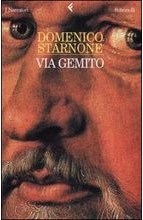
Having recently read Starnone's Ties, Tricks, and Trust, which are much shorter and more direct, though similarly psychologically fraught, diving into Via Gemito was like being smacked by a tsunami; the history of this family, of this father, Federi, and his mother Rusine, of Naples in the war and post-war years, of a man as a father, husband, but most importantly as an artist, fighting against everything with fists and words and screams and slaps, to get what he wants, to fulfill what he considers his destiny - to be a great and recognized artist, and what comes with that is personal mythmaking, considering himself a man destined for greatness, always moving forward when it does not fully or permanently find him. It's the eldest son, Mimi, for short, whose recollections these are, as he tries to understand who his father was, why he was as he was, the working of his parents' marriage, and, to a minor degree, himself. We learn little about him as an adult, on this trip back to Naples, taking himself to the apartments where they once lived, the train stations where his father worked, the shops, the hospital, etc., except he wants to exorcise his own feelings, wants to figure out what was true and what was confabulation so insistently practiced by his father. The rage leaps off the page, the stories repeated and repeated, in what is clearly at least a semi-autobiographical work. It is not a relaxing read, there is so much of it, and yet despite all his horrific traits, his self-absorption, I eventually found myself sympathizing and empathizing with Federi. To know what you should do with your life, to be hamstring by one's own choices, to have to battle - and lose - against corrupt practices, always being an outsider despite what is clear and great talent, it would be hard for most people not to simply give up. Here, his family became his punching bags, and this is a brutal and edifying portrait of this man in his time.
Thanks to Netgalley and Europa Editions for the ARC.