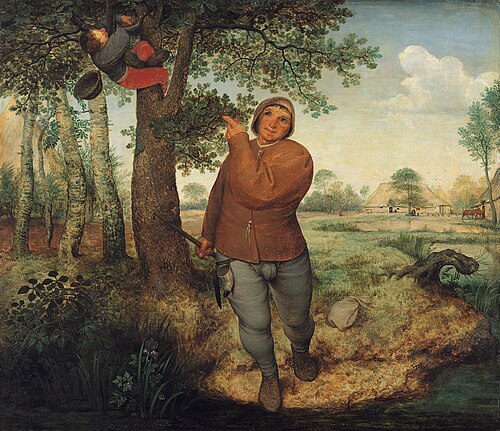
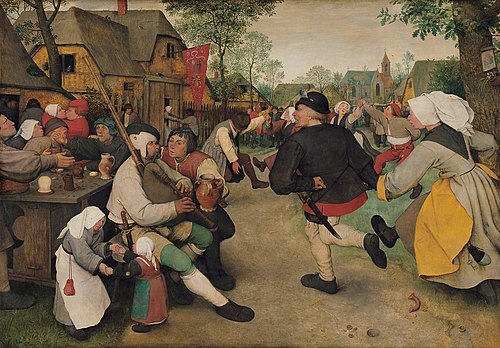
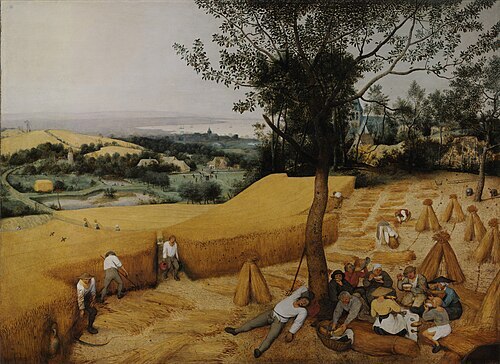
“Unlike the Italian Renaissance painters, Bruegel saw man small. His lumpish creatures, mostly peasants and middle-class folk, are neither noble nor godlike and are often prey to strong drink and thieving habits. Muffled in clumsy clothes against the northern cold, they carouse in fear for their own brief mortality, sometimes find themselves pursued by demons and often dance, as men will do in terrifying times, within the shadow of the gallows.”
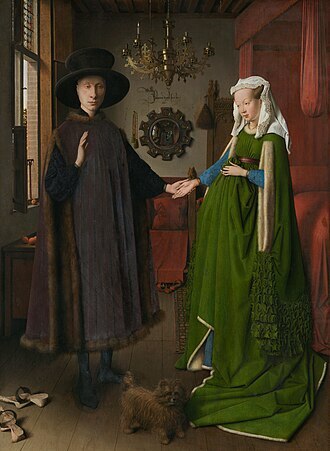
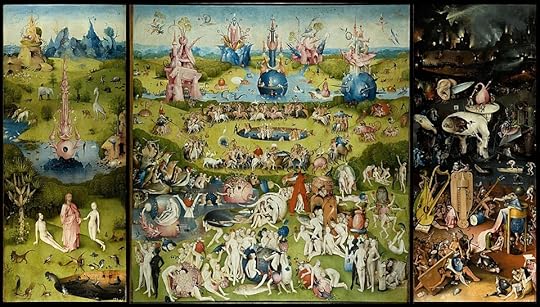
The biographical info included here is really interesting, but I skimmed through it because I mostly got this to pore over the pictures, including those of Bruegel’s Flemish predecessors. Some of my favorites:
The Marriage of Giovanni Arnolfini and Jeanne Cenami, 1434 Jan Van Eyck (This one's for you, Deb.)
I picked this up by chance in a second hand bookshop to try and show my friend some examples of Northern Renaissance art... and then I couldn't bring myself to leave it! This might sound like stating the obvious, but sometimes it's just lovely to have some really good quality, large images - especially when with the internet it's so easy to google a painting and get a blurry thumbnail idea of it... So that's what I really recommend this old book for, just beautiful images by Bruegel and his contemporaries. There's a fair amount of text that mentions some key ideas as well.
I've always enjoyed Bruegel's active paintings, filled with scenes of everyday life among his Flemish country folk, while sometimes dramatic, life-changing events are happening in miniature, barely observable among the teeming populace. With wonderful reproductions, this book covers these and other Bruegel paintings of landscapes and those illustrating common proverbs of his day. Timothy Foote's text situates Bruegel in the history of the low countries during the religious and political upheaval of the mid-16th century, as well as providing rich analysis of the art works themselves.
I bought this entire series many long years ago and am just now getting around to reading them. This is the first in the series. It is enjoyable not only because of the excellent illustrations and the biographical information regarding the artist in the title, but because the author fills in the historical content of the times which explains much about the artistic output of the era. It also covers other artists in the same locale and times. For example, there was an excellent section on Hieronymus Bosch who I've always considered mentally disturbed (which is still possible); however, I was informed that his work was mainly the result of the religious fervor of the Middle Ages. Bruegel's early work was somewhat identical to his as well, but as this wonderful book explains and illustrates, he grew through at least three periods ending with the marvelous works he created at the end of his life.
I enjoyed this book about Bruegel. I always knew that he was a great painter of the Northern Renaissance but this book expanded my knowledge of his importance. I was very appreciative of the explanation of the culture and dynamics of Flemish life during Bruegel's time and why that would influence his art. Also, the description about the use of proverbs helped make many of his paintings even more remarkable.
I've never heard of a 'northern Renaissance', let alone Pieter Bruegel. I was also befuddled by the nightmarish imagery of Hieronymus Bosch's paintings that still influence art today. But this book set a lot of that right. Insightful, surprising, and very interesting - not to mention full of lavish images of artworks, I really enjoyed it.
Another diversion from Rabelais in my literature seminar, this one to illustrate the Rabelaisian world. This Time-Life series first published 50 years ago contains gorgeous reproductions and close-ups of details of the artworks. The commentary by a Harvard historian comprehensively sets the artist and his works in their "world."
This is an in depth book about the influences on Bruegel's work and what made him such an amazing painter. I enjoyed learning about the historical events that occurred during the time he painted and how it affected what he painted. Very enjoyable.