Science is humanity's greatest achievement. It ranges from the study of the universe itself to the smallest particles of matter contained within it - and everything in between. It explores everything from the big bang to theories about the end of the universe.
If you want to better understand our physical world, as most of us do, gaining a basic understanding of science itself is profoundly important - yet many are intimidated by the breathtaking scope of such an endeavor.
Now an award-winning science teacher has taken out the intimidation, harnessing that breathtaking scope into a series of 60 exciting, comprehensive, and accessible lectures that let you explore and understand the wealth of ideas, discoveries, and principles in all of the physical and biological sciences. You learn that understanding science comes from understanding not only its component disciplines - each of which has its own theories, pioneers, problems, and fundamental questions - but of knowing how these disciplines work with one another to create an entire mosaic of human knowledge.
The lectures have been crafted to make those relationships crystal-clear, with an integrated approach that takes you through all of the major disciplines that fall under the umbrella of "science," including physics, chemistry, Earth science, geophysics, and biology.
Each lecture covers one of the 60 fundamental principles of the scientific world - offering you new knowledge and insight into topics such as the scientific method, gravitation, atoms, the big bang, plate tectonics, volcanoes, proteins, ecosystems, and electricity.
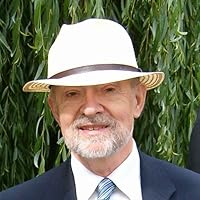
Robert M. Hazen, Senior Research Scientist at the Carnegie Institution of Washington’s Geophysical Laboratory and the Clarence Robinson Professor of Earth Science at George Mason University, received the B.S. and S.M. in geology at the Massachusetts Institute of Technology (1971), and the Ph.D. at Harvard University in earth science (1975). The Past President of the Mineralogical Society of America, Hazen’s recent research focuses on the possible roles of minerals in the origin of life. He is also Principal Investigator of the Deep Carbon Observatory.
Y’all remember that time that our boy Archimedes, one of the greatest minds of classical antiquity, was alleged to have, (between harnessing the power of the sun for the betterment of death ray culture), traced, in his personal sandbox, the outlines of an hentai character so mesmerizing that he remained transfixed even as the tip of a Gladius balanced the weight of his hearty scrotum on its broad back and tangibly menaced the continuation of his genius? “Noli turbare circulos meos!” He is reported to have said. Which, roughly translated, means: “Do not disturb my waifus!” The Roman soldier, nonplussed by the golden ratios of the inscribed figure, and perhaps a tad irate at having been admonished by this total fucking nerd, proceeded to run him through. An action that would become emblematic of the destruction and bowdlerization of Greek and Hellenistic culture at the hands of unrepentant dude-bros for years to come. Who thought nothing of the platonic forms of anime, or the chiaroscuro of their lascivious lordosis dappling the cave wall in sundry seductions. Whose vitriolic hatred of weebs still yet hamstrings the pursuit of cat girl technology by demanding more practical applications than Nyaan this and Nyaan that. Who couldn’t give a Twi’lek’s sultry, prehensile lekku about giving the galaxy a decent rimjob if it doesn’t reciprocate with designs for better aqueducts. Who daily imbibe tonics of fermented elbow grease in order to lift themselves by their necks, like some wild-eyed, eight-foot-tall-maniac, to tap the back of their favorite head against the barroom wall and, in the seminal dialectics of Jack “It’s all in the reflexes” Burton; looks you crooked in the eye and ask you if ya paid your dues, and you just stare that big sucker right back in the eye, and you remember what ol' Jack Burton always says at a time like that: "Have ya paid your dues, Jack?" "Yessir, the check is in the mail."
Wait, that’s the wrong course. Now, before you go arm yourself with pugio, hasta, javelins, and Gaius Marius paraphernalia, please note that I took severe umbrage with this mischaracterization of the Romans as well. Rest assured, I left remarks of such semantic turpitude regarding this Götterdämmerung of historical inaccuracies that the scribes responsible, to a man, lost the ability to ingest solid food and have subsisted on bruschetta purée to this very day. Apologies, ladies and gentlemen, apologies all around.
Have you ever, while playing a game of Dungeon’s & Dragon’s under the notorious player-hating DM, Ragnar Neckbeard, reached deep within yourself to draw upon scientific reserves and found, standing in the radiant meadows of your Empirical Elysium, Robert. M. Hazen, with a hand outstretched, saying: “Walk with me, child.” ?
Phoebe Fingerbang Fetching & Furtive Fugitive: “Crunk’s (the formerly stupid, but supremely martially gifted orc barbarian) determination to kill me over imagined crimes is unshaken, Dr. Hazen. As a matter of fact, far from causing him to re-examine his lurid ideations of my demise, the crown of intellect I surreptitiously placed upon his head has only magnified the obsession and augmented his ability to direct his (formerly murderously erratic) attention towards actions which maximize the utility function of his (now thoroughly goal oriented) behavioral algorithms.”
Dr. Hazen: “First, those crimes were quite real. Second, I did warn you that the relationship between intelligence and gentility was much shakier than your gambit required. But raw computational power is only half the story, he still remain scientifically illiterate does he not?”
Phoebe Fingerbang Frustrated & Flummoxed: “He remains as ignorant of the world’s mechanistic nature as the day he was born, Dr. Hazen. It’s good that he hasn’t discovered your brilliant course on the broad sweep of scientific progress.”
Dr. Hazen: “Then we will proceed as follows...”
Pan to the scene of the final battle. Fields of potatoes stretch as far as the eye can see, linked together by copper filaments and punctured with galvanized nails, creating the largest tater battery The Realms have ever known. Phoebe Fingerbang Felicitously Framed Femme Fatale stands poised amid electrified spud array seemingly unarmed as Crunk approaches, his resplendent tiara flashing an incandescent Morse with each heavy footstep. A battle axe resting easily across his watermelon deltoids.
Phoebe Fingerbang Fierce Firebrand of Firm Flanks: “In some strange way, I’ve come to pity you, Crunk. You’ve a genius intellect, all the potential in the world, and yet your systems are running archaic software. You know nothing of: The Nature of Science. The Scientific Method. The Ordered Universe. Celestial and Terrestrial Mechanics. Newton’s Laws of Motion. Universal Gravitation. The Nature of Energy. The First Law of Thermodynamics. The Second Law of Thermodynamics. Entropy. Magnetism and Static Electricity. Electricity. Electromagnetism. The Electromagnetic Spectrum Part I. The Electromagnetic Spectrum Part II. Relativity. Atoms. The Bohr Atom. The Quantum World. The Periodic Table of Elements. Introduction to Chemistry. The Chemistry of Carbon. States of Matter and Changes of State. Phase Transformations and Chemical Reactions. Properties of Materials. Semiconductors and Modern Microelectronics. Isotopes and Radioactivity. Nuclear Fusion and Fission Reactions. Astronomy. The Life Cycle of Stars. Edwin Hubble and the Discovery of Galaxies. The Big Bang. The Ultimate Structure of Matter. The Nebular Hypothesis. The Solar System. The Earth as a Planet. The Dynamic Earth. The Plate Tectonics Revolution. Earthquakes, Volcanos and Plate Motions Today. Earth Cycles-Water. The Atmospheric Cycle. The Rock Cycle. What Is Life? Strategies of Life. Life’s Molecular Building Blocks. Proteins. Cells-The Chemical Factories of Life. Gregor Mendel, Founder of Genetics. The Discovery of DNA. The Genetic Code. Reading the Genetic Code. Genetic Engineering. Cancer and Other Genetic Diseases. The Chemical Evolution of Life. Biological Evolution - A Unifying Theme of Biology. The Fact of Evolution - The Fossil Record. Charles Darwin and the Theory of Natural Selection. Ecosystems and the Law of Unintended Consequences. The Ozone Hole, Acid Rain, and the Greenhouse Effect. Science, the Endless Frontier. But you could have, by spending a measly 30 mins a day during your commute to the blacksmith, all these wonders would’ve opened up to you.”
Crunk, leaning forward and examining a potato: “Awfully dry weather, Fingerbang.”
Phoebe Fingerbang Flippantly Formulating: “Really, Crunk? All this beauty around you and you can still only focus on the rawest qualia? You don’t understand how small you are or how powerful you could be.”
Crunk smiles and kicks a withered tuber: “I think you’ll find the juice in them taters was mighty crucial to yer plan.”
It is great sadness that I can only give this course 3 stars. There is so much to learn here, lots that I had forgotten from public school and college science classes, and lots I never knew to begin with. Robert M. Hazen is an excited presenter. He loves his subject, and he is great st making you love and understand it too.
However, this course was published in 1998, and is hopelessly out of date. Hazen talks about satellites yet to be launched in his time that are long gone by now, future medical advances that are standard practice. For instance, did you know the were developing a drug that can actually allow hair to regrow? Yeah, I knew that. Minoxidil, commonly known as Rogaine.
His final chapters on the possibilities of catastrophic climate change nearly made me weep, as the jury was still out when this course was developed. I sit in my house, quarantined from a virus possibly caused by human encroachment on animal habitat, watching the third day of rain, hundreds of miles inland, btw, from a hurricane for which they have run out of names. Oh, yes, the West Coast is on fire.
Definitely well overdue for an update. Science marches on. And there may be life on other planets in our solar system. Hurray!
It is extremely rare for me to listen/read a book more than once. That alone should say how I felt about this lecture series. Prof Hazen does a fantastic job of summarizing the whole length and breadth of the physical sciences. He ties together the various disparate scientific disciplines (physics, astronomy, biology, geology, ecology, etc...) in a very reasonable way where one field leads directly into the next. The content was sufficiently in depth as to be interesting and educational, but not so deep as to be unintelligible to the layperson. I'd highly recommend this series to anyone who wants a good overview of the whole landscape of scientific knowledge.
Incredible. I felt a childlike wonder as I came to know the history, complexity, and beauty of the universe and all the life in it. By the grace of brevity, Hazen puts scientists in conversation with one another. I was surprised how much creativity, poetry, and religion led to new discoveries. I loved hearing about Michael Faraday, a Sandemanian who believed that God’s word and God’s works would never contradict one another. With a confidence that science is how to uncover the character of God, Faraday developed electromagnetic induction, the foundation of our electric power system. Edwin Hubble’s story was also compelling. He had a degree in law, yet an obsession with the stars led to the largest leap in astronomy since Galileo. Surely, his cross-curricular thinking helped him think different than those scientists already entrenched in the field. As promised in the title, Hazen brings a lot of joy to science. I should have counted how many times he said, “I don’t know if it’s true, but it certainly makes for a great story,” and “Do this with your kids.” Most impactfully, Hazen convinced me that the only thing stopping the progression of science is a lack of good questions.
This is an audiobook, part of the Great Courses Series, which I downloaded from the Audible Service. The Professor/Lecturer opened saying the course was intended to give non-scientists a broad overview introduction to the physical sciences. Since I was trained and worked as a professional scientist I already knew everything in the lecturers, but I really was entertained by the course because I am so interested in the material. I think every literate adult should also be interested in this overview in order to have at least a basic understanding of the physical and biological world we live in.
"The Joy of Science" by Robert M. Hazen is a Great Courses lecture series that introduces a broad range of scientific topics at a level accessible to those with a high school or early college education. It aims to make both scientific knowledge and the scientific method more approachable for the general public.
The lecture begins with the emergence of modern science, highlighting major breakthroughs by Galileo and Newton and laying the groundwork in mechanics. It then branches into other areas of physics, such as electromagnetism and thermodynamics. From there, the series transitions into more actively researched subjects, including astronomy and cosmology. It also examines both the history and future of our solar system as a separate topic. Drawing from Hazen's expertise, the series also offers a unique and insightful treatment of Earth science and paleontology.
Chemistry is covered briefly, primarily to set the stage for the biology sections, which delve into essential topics like cell biology, genetics, evolution, and human physiology. This logical progression of topics helps build a cohesive understanding of science as an interconnected discipline.
One of the lecture's greatest strengths is its ability to make complex topics understandable to a general audience. Although there are occasional factual inaccuracies, the content serves well as an introduction and as a roadmap for deeper exploration. Another strength is the attention given to explaining scientific methodology. The course recounts the lives of notable scientific figures, describes the processes behind key discoveries, and discusses pivotal debates within the scientific community. These stories add narrative variety and convey critical insights into what science is—and what it is not. Unfortunately, the book missed the opportunity of tying all narratives on methodology together at the end with a systematic review or summary, which would have reinforced these valuable lessons more effectively.
Hazen's personal enthusiasm for science is another highlight of the lecture. His relatable tone and willingness to share personal anecdotes make the material more engaging and resonate strongly with readers who are curious about science but may not have formal training.
Overall, "The Joy of Science" is an excellent entry point for anyone looking to gain a foundational understanding of the sciences. It also serves as a refreshing overview for professionals interested in areas outside their specialization. While the lecture succeeds in clarifying many essential concepts, readers should be mindful of occasional inaccuracies and double-check for high-stakes or technical applications.
These 60 lectures were first published in 2001, and, most likely, took as much as a year or more to produce...there are a lot of data presented. Much of the material is basic, foundational physics, chemistry, geology, etc., sprinkled with the histories of the men and women who were the vanguard of the scientific method from the beginning (in their own particular fields). But, alas, many topics presented by Dr Hazen are sorely out of date...through no fault of anyone. That's why I rated the course a 4 instead of a 5.
Having said that, I feel that revisiting or reviewing the basic concepts from which our current world has benefited is both useful and vital for our developing minds. In my case, much of the material in the lectures was covered (and certainly in not as much detail) more than 50 years ago in high school (and y'all think the 20 year old lecture series needs updating), and even worse, topics in my own profession (earth sciences) have moved from geosynclines and eustacy to seafloor spreading, subduction and black smokers in the last 40 years. Clearly, these lectures give an interested and motivated student the chance to review the basics and criticize the shortcomings...all the while learning. If the lectures are/were out of date, do a little homework and prove to yourself that, in this dynamic, ever-changing world, we can, using the well-established scientific method, simply 'google' for the answers...something that the good Professor Hazen could dream of in 1999-2000.
Like visiting an old friend, these lectures allow us to get to know our scientific roots and revel in the progress we've made. Dr Hazen, with his extraordinary organizational skills and high-energy lecture style, makes learning enjoyable and rewarding.
Recommended as a wonderful survey course, especially during a sale with coupon in hand...lately it been a real bargain.
I bought this as an audiobook. It is basically one of the courses available on the subscription website "the great courses " but sold as an audio book via Audible. I don't think it exists as a printed book although there is a related textbook you can get separately intended for use in high school - but which is not at all required. I really enjoyed this book. My science education at high school was poor and wanted to understand the fundamentals of physics and chemistry and it was absolutely perfect for this. It is quite detailed and technical - it's a science course after all - but the lecturer is very engaging and I found most topics very digestable and possible to understand for the first time in my life. The lecturer gave lots of real life examples of the concepts he was using and also provided great not technical analogies to explain some of the more difficult concepts. If you are looking to get a basic grounding in every aspect of science then this will hit the spot. I was able to go from almost zero knowledge to being able to talk confidently about the basic principles on topics such as atoms, electricity, chemical bonding, radioactivity and so on. It has really opened up a new world for me.
I think that life has changed a lot in the last hundred years and today one of the most important issues that have affected everything is science.
He who has no idea of science is really an illiterate.
To learn a little I recommend the course "The Joy of Science" by Robert M. Hazen produced for The Great Courses
In this course you will learn things like:
- What is science, basic physics, thermodynamics, entropy, electricity and magnetism. - The bases of atomic theory and how it affects basic chemistry. - Different properties of materials. - A bit of basic astronomy, theories of the beginning of the universe and the earth. - The earth, its evolution and the foundations of life. - DNA and issues related to evolution.
Science has no borders, we know we don't know many things, but there are many things we don't know we don't know.
This is an introduction to the breadth of science from the small to the huge, from the fundamental to the emergent, and from geographic to life sciences. It's a very good book if you're interested just how far and wide the net of science has been cast over the years. There's not a lot of depth on any one topic, but if you're looking for a refresher or a reminder of why science captivates so many of us, this is a great starting point.
When you read or listen to scientific lectures from almost a quarter of a century ago the content will tend to be a little out of date! This is more at the fault of the reader/listener than the lecturer, author or producer. Keep in mind that this is an older scientific publication. It is still very good and well worth it. If this is an issue for you, I recommend seeking a more current version or course! Enjoy!
Great book that pairs well with the science exam requirements for educators. Some of the material is a little outdated (genetics/DNA comes to mind) but the majority of it is relevant. I really enjoyed the book and thought the lecturer did a great job of applying education skills like listing learning objectives of the lecture beforehand and summarizing the important points at the end of lectures.
Very good, thorough and easily understood explanations of complex material. Comprehensive. Four stars rather than 5 due to my library copy of the audiobook being so out of date. There are 2 newer editions of this and I suspect they will be much better with the more recent material and findings.
Wow what a robust overview of the scientific method, from its history to the amazing contributions of understanding it has given us toward the known universe we inhabit, this lecture did not disappoint. Becoming scientifically literate should be one of the first goals of anyone who seeks truths and an understanding of the reality we experience.
One of my personal life goals is to learn and understand as many truths about this world and my life as I can. Truth can be hard to pin down and to identify in an objective manner and many of my life questions may not have objectively true answers as they merge into the realm of the unknown and perhaps even the superstitious. So find great comfort in the scientific approach to life’s big questions.
“Science, requires that we follow the methods that assume there is nothing beyond the natural world—or that we, in other words, do not rely upon any supernaturalism. Science does make assumptions about the world. There is, for example, an objective reality. If we weren’t living in an objectively real universe, then it would not be possible to investigate how that universe works.Science also assumes that the world is predictable and, therefore, ultimately knowable. Furthermore, science does not dictate that these things are true, but it requires the assumption that they are true.”
“There is not a single scientific method; it’s a collection of methods. At the core of scientific methods is the notion of hypothesis testing, or formulating an idea in a manner that it can be theoretically and practically subjected to objective testing. This includes the notion that the idea must be able to be proven false.”
“Science also needs to be understood as a human endeavor. Therefore, science is imperfect and messy, has many false steps, and is plagued with bias and error. Fortunately, science is also self-correcting, which is perhaps its strongest feature.”
“A claim must either be within or without the boundary of scientific investigation. Science can only be agnostic toward claims that cannot be tested, although philosophically it can be concluded that such hypotheses are unnecessary. For example, Occam’s razor can be invoked also to favor parsimony.”
One of the many Great Courses series offered by The Teaching Company. This one is in 6 sets I believe. Each set contain 6 CD'S with usually 2 lectures on each CD. Of the courses offered on DVD, the # of discs may vary. I usually get the CD courses from my library, and so far I've enjoyed almost all the ones I've ordered. This is one of the best. There are a few lectures I've skipped, because I wasn't interested, but you can always backtrack, and re-listen as you wish. One of the best features is that each set contains a very complete lecture guidebook.
Not as good as Bill Bryson's, A short history of nearly everything. These are actually video lectures. With only audio, little difficult to picturise. Every time, I have to watch related videos in YouTube to understand more. Looks like it was done in twentieth century. Little outdated.
Still, it has many topics to offer. It would definitely make a good video lecture.
This is the accompanying book to the Teaching Company course of the same name. Robert Hazen is a delight, extremely enthusiastic and earnest about science, infectious as all get out. Under his guidance, science truly is joyful.
Should get a five for general exposition. Extremely informative and particularly for the layman but also clarify many areas for someone who is quite familiar with science.