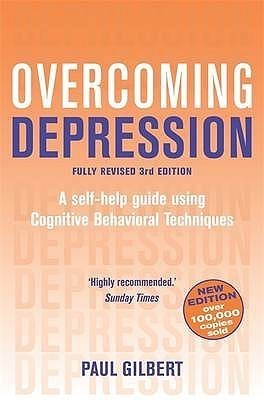
Overcoming app now available via iTunes and the Google Play Store.A Books on Prescription TitleBreak free from the hell of depressionIf you suffer from depression you are far from alone. Depression is very common, affecting over 300 million people around the world. Written by Professor Paul Gilbert, internationally recognised for his work on depression, this highly acclaimed self-help book has been of benefit to thousands of people including sufferers, their friends and families, and those working in the medical profession.This fully revised third edition has been extensively updated and rewritten to reflect over ten years of new research on understanding and treating depression, particularly the importance of developing compassionate ways of thinking, behaving and feeling. It contains helpful case studies and new, easy-to-follow, step-by-step suggestions and exercises to help you understand your depression and lift your mood.
Firstly I would like to say that this review is predicated on the assumption that self-help books are best reviewed in comparison to other self-help books. On that note, this is a no-nonsense, evidence-based introduction to cognitive behavioral therapy techniques and how they relate to common themes and issues in clinical depression. Unfortunately the vast majority of self-help books are short, careerist essays on "Positivity," and despite some good writing and the best of intentions tend to come off as incredibly glib or trite.
I have just finished reading this book, it took me nearly 6 months. It took me nearly 6 months because it consistently challenges you, every other page is an epiphany. Even the front cover is uncomfortably "in your face." This book is successful though because it spends a great deal of time exploring the WHY's of clinical depression, it delves into the evolutionary and social aspects of depression and offers you understanding, compassion and forgiveness. I have never read a self help book that says anything like: "So you feel like shit today, that's fine, your not alone, your not a bad person and all those negative feelings are understandable, logical reactions because of your biology and experiences - lets look at some of those in more detail."
This is surprisingly taxing, the authors writing is not the prettiest of prose or most lyrical of poetry but is instead candid and to the point, it can be incredibly disarming. He is often very honest about his own experiences and this provides an insight and sense of understanding which I have not found in other self-help books. Sometimes the web of emotion and behavior one might experience and feel totally wrapped up in are laid out with such startling simplicity and warm acceptance that you have to put the book down and walk away. For example, I had never considered how difficult relationships with teachers as a child would underpin a complex and lifelong sense of perfectionism as well as overwhelming anxiety when starting a new class or trying to learn a new skill. Understanding exactly how emotions work, and how our experiences can shape them and lead our minds to create thematically linked emotional/behavioral symbionts is at first quite frightening, suddenly years of fear or anxiety make sense! You see how past experiences, biology and normal human emotional logic intersect to result in certain moods, styles of thinking or behaving.
The book is large and I think it is fair that other reviews criticize its technicality and size on the basis that when depressed, few people feel like tackling a large book. However I pushed through and I think it was well worth it; the volume and more technical details are smoothed over by a clear and rhythmic structure. Chapters explore ideas in great depth and with many examples and cross references to build your understanding, the author offers a compassionate voice to guide you through some of these more difficult ideas and as you explore ideas about yourself, life and others you can refer to a multiplicity of exercises and examples to support yourself. Every chapter and section ends with bullet points, summaries and clear explanations of how things link together, open ended exercises and questions to think about and nice segways into further chapters. The book also includes a full appendices of worksheets and charts, ideas for creating your own flashcards and an extensive further reading list (which I hope to sink my teeth into next!)
Underlying all of this is Compassion, compassionate thoughts, feelings, behaviors etc. The author shows a great deal of wisdom when exploring uncomfortable and emotionally charged concepts, balancing them with perfectly timed, warm notes of love and reason.
I honestly cannot stress enough the difference this book has made, I am going to read it again, even slower and with a highlighter, I think I will probably keep this book close for the rest of my life. It is worth the read for anyone who would like to get a better understanding of why we feel the way we do and how we can work with ourselves towards a more compassionate and "in-control," state of mind.
This is a really valuable book and I think it would help if everyone read, regardless of whether they think they are depressed or not. It’s based on Cognitive Behavioural approachsd to managing depression. The logic goes like this, thoughts, feelings and behaviour are all connected. Change one, and others will change. Therefore by getting control of your thoughts you feel differently, and by changing behaviour you can get more control of thoughts and as you feel differently so thoughts and behaviour can change. Negative thoughts and feelings supported by unhelpful behaviour create depressive cycles. These can be broken. The book acknowledges that some depression may be genetic or about body chemistry or caused by external issues. Having control of your thoughts will, at the very least, make it easier to spot if it’s not really your thinking that is the problem. It may also help you find the motivation and confidence to seek medical help for genetic and biological depression and make changes to alleviate depression caused by external factors. Bad relationship and how we react to it causes a lot of depression. Workplace stress, social stress, a history of poor parenting, inability to communicate, misunderstanding others, feeling entitled to revenge, and other facets of relationship difficulty, are caused by and exacerbate depression. This is the reason I think everyone should read this book. Not only does it give depressive people a chance to tackle depressive cycles, but it allows everyone to consider how they manage their own thoughts, feelings and reactions. The onus should not be on the unhappy people always to change themselves in order to cope with life’s shitheads. However, all too often the unhappy person ends up on medication, and the person who is bullying them to mask deep insecurity, for example, goes unchallenged and gets no help. The one thing this book made me wonder is why we are not teaching, in schools, the basics of good thinking, healthy relationship and behaviour management. Books like this make it evident that we have the knowledge. How much misery, illness, crime, bullying, and future bad parenting could we eradicate simply by teaching thought and behaviour management as a curriculum subject? I think we have an underlying cultural belief that the sick person is the wrong one who needs fixing. As depression and other mental health problems increase, we need to consider that we are creating and perpetuating a sick and abusive culture, that is bound to cause to depression to many within it. We need to collectively change our beliefs about what depression is, ad what it means. I also think we need to be culturally less tolerant of mental cruelty, abuse and toxic behaviour. The exercises, explanation and whatnot are brilliant. They won’t fix you however, unless you commit to working with them. This takes self discipline and motivation – something it has to be acknowledged a depressed person may be short of. But, it’s a place to start, and any step, any considering of options, can be a great help. So even if you don’t feel able to do much, do something, and see if it can inspire you just a little bit to do more. That way lies freedom.
I suppose it's impossible to rate a book on depression--either you are depressed and nothing is ever good enough or you are not depressed and it's difficult to focus on a topic that's not useful. Ha ha.
The first part of the book had compelling explanations for the phenomenon. The practical parts of the book was thorough but that made it repetitive in places. In some ways, it is a very basic book, which can be a positive trait for when life seems extra complicated.
A great introduction to CBT (Cognitive Behavioural Therapy) and its uses in the treatment of depression, providing valuable insights and concrete helpful advice. There is a degree of repetition (e.g. many references all-or-nothing thinking) but I guess this is unavoidable in a self-help book, where the same techniques and strategies are applied to different scenarios. I found the later chapters on shame, guilt, anger and forgiveness are both well developed and compelling. The problem here is that, life being what it is, it will not respect our 'shoulds' and 'oughts'. Some people feel that we should not have to die, and instead of coming to terms with it, they rage about the fact that life 'shouldn't be like this.' Sometimes our 'shoulds' stop us from doing the emotional work we need to do in order to come to terms with things as they are and work out the best solutions for dealing with them.
Reading this became a real monkey on my back, I've been plugging away at it for pretty much a year. And I think in honesty any real therapeutic value got diluted by it, however finishing it is a major achievement for me because it clears my mind with regards starting reading a new book on the subject that might be more helpful.
And in fairness some of it was very helpful, it helped me sort out a lot of the self-bullying language that depression uses, likewise the all-or-nothing thinking, and other little tricks it uses to hook your brain into thinking the way it wants you to think.
So it wasn't a waste of time. It just... should never have taken me so long to read.
(And the reason for that is complex and related to my home situation at the time I was trying to focus on getting better and being distracted by other events.)
I suspect I could have saved years of self help book purchases if I'd recognised that depression may be an issue for me and read this about 20 years ago. It's got an accessible style and is not patronising despite the authors credentials.
I have found this exceptionally helpful and started doing the exercises as I was working through, now going back and back to the ones as they become more relevant. As my depression has lifted keeping going got harder but I persevered and the bits at the end and dipping back to the early sections seem more relevant to maintenance now I feel more chipper.
Depression is insidious. I only clued into being affected by it again close to a month ago. I thought through a lot of work, I had put that behind me, but based on some huge life events, it obviously creeped its way back in and snuck up on me without my even knowing it.
Once I realised what was happening, I looked for some new techniques to dealing with depression and found this book.
I think it's a highly worthwhile read to anyone who is suffering or has suffered from depression. For those of you who know people with depression, the first section about what depression actually is, is valuable to treat such people with understanding and compassion. The rest of the book and techniques are all about learning to treat yourself with compassion.
This book was a nice opportunity to understand the principles of Cognitive Behavioural Therapy as well as understanding that kindness and compassion are the keys to many of life's locked doors.
I finally did it, I finished the book! It took me 11 months. I'm absolutely amazed by how good and helpful it was. I have to admit, in the beginning I struggled a little and it didn't seem to go anywhere, but then I changed my strategy and started taking notes and really working through all the exercises. I wrote down all the useful things. I only read a few pages every day so I could thoroughly process all the new information. I started reading this as a deeply depressed person, but now I'm free from the hell of depression and know how to deal with it. Thanks to this book I didn't have to go to therapy (again) - this book was my therapy. I almost felt like I became friends with the author and he was the one compassionate friend I could turn to every day. I really felt his compassion and understanding and will definitely read more books by him and recommend this one to all the depressed people. It had such simple and basic truths about human nature and almost all the topics were so relatable. It was definitely repetitive, but for someone who is depressed, this works better than a bunch of new information put together in a short book. Perhaps the writing could have been smoother, but it didn't really bother me that much. I liked the fact that Gilbert was very honest about his struggles with writing. I liked the case studies as well. This book gets 5 stars from me. Whenever I finish a book I try to think what I will do with it next (because I don't want to keep all the books) and I decided I will keep this one and will probably read it again.
Η κατάθλιψη ειναι μια πολυ συνηθισμένη αρρώστια τα τελευταία χρόνια, πολλα ειναι τα συμπτώματα της κατάθλιψης. Το σημαντικό μάθημα που πήρα απο το βιβλίο ειναι οτι και να περνάς ειτε νιώθεις μονος ειτε εγκλωβισμένος για οποιαδήποτε λόγο δεν εισαι μονος αυτο δεν σημαίνει οτι είναι εύκολο να το ξεπεράσεις αλλα δεν ειναι και ακατόρθωτο. Η κατάθλιψη ειναι μια ψυχολογική κατάσταση που σχετίζεται νε βιολογικές αλλαγές και ο τρόπος της σκεψης μας παίζει σημαντικό ρολο γι αυτο το λογο το να μάθουμε να ελέγχουμε τις σκέψεις μας θα βοηθήσει να σταματήσουμε να σκεφτόμαστε αρνητικα με αποτέλεσμα λιγότερα αρνητικά συναισθήματα. Η αλήθεια ειναι ότι αυτο το βιβλίο με βοήθησε να κατανοήσω περισσότερο τους ανθρώπους που πάσχουν απο κατάθλιψη, οτι ειναι πιο ευαίσθητοι και τις περισσότερες φορές δεν σκέφτονται με λογική. Επειδή η κατάθλιψη ειναι μια ασθένεια που αντιμετωπίζεται δύσκολα υπάρχουν διάφορες τεχνικές που βοηθάνε και πιστεύω ότι τέτοια βιβλία σαν αυτό βοηθάνε πολυ κόσμο, φυσικά ορισμένες φορές χρειάζεται και η βοήθεια ειδικού. Τέλος αυτές τις τεχνικές μπορω να τις χρησιμοποιήσω και εγω οταν δεν αισθάνομαι καλα με τον εαυτό μου τωρα που κατανόησα οτι ολα βρίσκονται στο μυαλό μας και οτι η λύση σε κάθε πρόβλημα ειναι η θετική, ήρεμη και λογική σκέψη, αυτο που χρειάζεται ειναι να εισαι ξεκάθαρος με το ποιος εισαι και τι θες. Εμενα προσωπικά με βοηθάει να ακουω μουσική, να κάνω διαλογισμό με αποτέλεσμα να εχω θετικές σκέψεις.
Depression silently burdens minds, affecting emotions and daily life. Compassion, therapy, and support can help illuminate the path to healing. oral testosterone treatment may help alleviate depression by improving mood, boosting energy, and enhancing overall hormonal balance effectively. Overcoming Depression provides practical tools, insights, and strategies to help readers reclaim joy and emotional balance effectively.
I found this book highly informative. This book does make use of CBT principles which I found were well explained. He talks about how anger is related to depression, which I think is interesting since we typically don't seem to associate anger with depression. I recommend reading this book. There is a lot of useful information on understanding depression and how it affects us in daily life. I like how the author compares it to having a broken leg and that the practices are basically physiotherapy for the brain.
I thoroughly recommend this book to anyone suffering from depression. the helpful,compassionate and sensible advice is a huge comfort. It certainly helped me
Депресиращо ръководство как да се отървем от депресията от раздела на когнитивно-поведенческите терапии. Излишни бяха залитанията в еволюционната психология и намеците, че депресираните хора са като бета-маймуни, тормозени от алфа-маймуните... Поставя и добри въпроси, затова 3 звезди.
Very practical book and easy to read. Even though I had no depression at the time of reading it, I enjoyed the book and I learnt a lot from its pages (e.g. possible reasons for onset of depression, many different types of depression, etc.)!
This is a re-read for me, and I find this book really helpful, reminding me of the tools I can use to help ease the intensity of my Depression. It’s a very good resource for anyone with Depression or Anxiety health related issues📚
This was my my very first book about depression so it is quite hard for me to rate this since I don´t have comparison, but it was definitely helpful, written with much needed empathy and willingness to help people with their first step out of the darkest parts of their lives.
skipped a few bits that weren't applicable, some of the info is a bit outdated bc it's from the 90s lol was overall interesting in bits (my copy is also like 300 pages rather than the 600+ it says here I did not manage to tank 600 pages in 2 days)
Some useful ideas . Recognising faulty thinking and encouraging self compassion. A little repetitive so could have been condensed to a shorter version.
Really good book. Like how it’s normalised depression and was interesting to see how depression serves a function in our evolution. Some helpful self help material to signpost too also.
This book provides practical guide for patients in depression. The organization of the book is logically done. Choices of words are not intimidating. The advice offered drawn from the author's practices with the patients and himself is very helpful. Overall, this book is well written. The book focuses on the author's approach to depression treatment by cognitive therapy. There are other therapies available including those based on psychoanalysis and mindfulness practice. Cognitive therapy from my reading of the book, is a bridge between the latter two. It acknowledge the importance of patients early experiences effects on their adulthood depressions which is the core of psychoanalysis. And in the practice of cognitive therapy, patients are asked to monitor their negative thoughts which links it to mindfulness practice. Mindfulness teaches people to be more mindful in catching daily mind activities not limited to thoughts. I'm going to far. My point is, the book is not a comprehensive picture on depression treatment rather it focuses on one of the approaches available. As a practical book, not many arcane terms can be found in this book. The book do provide sort of theoretical backgrounds to a shallow but useful level. I learned quite a few things from the first few chapters including long term depression will lead to real changes in the brain, the central insight of cognitive therapy is I think therefore I am, neurotransmitters change drastically when mood changes. The author was careful not to make the book too technical. The book also shows the compassionate heart of the author to the patients in suffering. Reading through the words, one really gets to understand the caring attitudes of the author by its detailed description, kind advice of skipping certain chapters, concluding points at the end of each chapter. He's aware that the book is read probably by people whose mind abilities are largely handicapped by the ongoing depression. Even though I started reading this book in the hope to find some remedy to my own psychological situations, I gradually get to think I'm not in depression by comparing to the symptoms and patient examples in the book. I'm just tired from the long hours working and cannot shut my mind off. But I'm still grateful to the author for his contributions to the world.