A colorful history of the National Geographic Society traces its evolution from its 1888 beginnings to its evolution into the esteemed and iconic American institution of the present day, profiling the Grosvenor family dynasty that created the institution's photography-based monthly and examining the inner workings of the magazine's innovative articles and the explorations they have covered. 30,000 first printing.
Explorers House charts the history of the National Geographic Society and its famous magazine, National Geographic, from its beginning in 1888 through the early years of the 21st century (the book was published in 2004). The author, a former executive editor of the magazine, has written a very thorough and intimate portrait not only of the Society and the magazine, but also of the five generations of the Hubbard-Bell-Grosvenor family that dominated the Society for most of its history.
I enjoyed reading the book and learning about the National Geographic Society and its long history. I think many other readers would enjoy the book too, especially those who have or had a connection with the National Geographic Society and the magazine. The amount of detail in the book may be too much for some readers’ tastes, but I enjoyed it very much.
Explorers House: The National Geographic & the World It Made by Robert Poole, Executive Editor at the National Geographic for more than 20 years, documents the long history of this iconic American institution with a global reach, a magazine that considered itself 1st & foremost a society of elected members rather than mere journal subscribers.
Poole's exhaustive march in following the magazine from its founding in 1888 to the present, observes the many changes in marketing outreach, mode of scientific inquiry, cover design and enhancements in camera, film & printing techniques. Absent is almost any real inclusion of photos or examples of the prose that made the National Geographic without a rival, at least for the 1st century of its existence.
There is however voluminous detail of the Grosvenor family & the administrative hierarchy of the magazine through the years, including the many factional & family squabbles. For even during the high-water point for the magazine, the National Geographic was a family enterprise, with the Grosvenors a journalistic "Royal Family" making the operation quite inbred, even while gradually gaining a global audience.
Early on, the inventor Alexander Graham Bell comes on the scene at the National Geographic Society, founded by Gardiner Hubbard & Alexander Melville Bell, compromising the latter Bell's scientific career.
One of my earliest memories in reading the magazine as a young boy involved the notice of ads for southern hotels in the back of issues of the journal with the notation "clientele carefully restricted". This seemed a bit cryptic to me at the time but Robert Poole offers testimony that while aiming for cross-cultural coverage with its photo images, the National Geographic Society retained a rather racist & anti-Semitic stance through much of its history, including during the reign of Gilbert Grosvenor, whose father "regarded Jews as another tribe, strange & apart, not equal to his own social order."
Founded as a Not-for-Profit venture & initially an obscure learned organization, for most of its history, the National Geographic subscribers had to be "nominated" for membership, though the process of nomination was always rather informal and absent were any initiation rituals or secret oaths. And there seems to have been an ongoing intramural contest over whether photo images or textual coverage would reign supreme within the National Geographic.
Change never came easy at the magazine, even as reading habits & social norms began to alter. It was said that the "National Geographic's way is to hold up the torch, not to apply it". This time-honored approach meant that the changing racial climate in the United States was largely ignored and the author makes note of staff members working late on a story about hyenas, seemingly oblivious to the deteriorating conditions outside their windows on the evening when D.C. was in flames in the aftermath of the Martin Luther King assassination.
There is coverage of the 1st successful Everest expedition, Robert Peary's exploration of the Arctic, the search for Machu Picchu by Hiram Bingham & the quest to recover the H.M.S. Bounty at Pitcairn Island.
Fast forward to the occasion of the centennial celebration of the National Geographic in 1988, when Jacques Cousteau, former astronaut & Senator John Glenn, Jane Goodall, Richard Leakey, Sir Edmund Hillary, President George H.W. Bush and other dignitaries + the ruling elite of the N.G. gathered to pay tribute to the enduring legacy of the National Geographic magazine & the institution behind it.
The National Geographic has played at least a small role in the lives of many of us and today it is a much-expanded operation, with other magazines, including one aimed at children and book & television-film media divisions, as well as the core magazine, the subscriber base for which appears much diminished due to changing social tastes and the move away from print and towards digital media.
While I enjoyed Robert Poole's rendering of the long history of the National Geographic in Explorers House: National Geographic & the World It Made, I was disappointed that the actual core content of the magazine was treated almost as an afterthought.
*The author's father, the late Robert K. Poole was my Peace Corps Director when I served as a volunteer in Kenya.
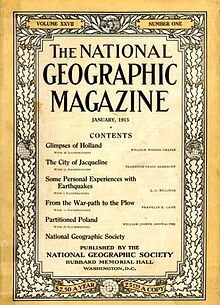
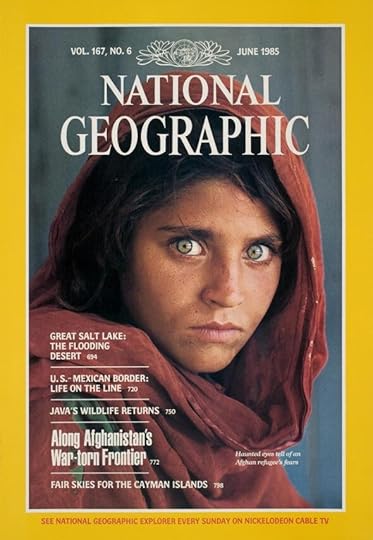
**Within my review are a photo image of the author, Robert Poole + 3 covers from the magazine's long history. The last & one of the most iconic National Geographic covers, from June 1985 portraying the "Green-eyed Afghan girl", features an Afghan named Sharbat Gulla, who in Nov. 2021 has just been permitted to flee Afghanistan for asylum in Italy.
Poole's book gives an interesting and personal account of the family dynasty that ran the National Geographic Society, starting with its founding by Alexander Graham Bell and Gardiner Greene Hubbard in 1888. Poole's narrative focuses primarily on biographical details of the families as they related to world events covered by the Society. This book will be of interest to anyone who wants to learn more about how National Geographic began and grew since its inception, especially with respect to editing, subscription and content decisions.
This book will be less interesting to professional historians seeking to understand how the Society fit in with broader themes in the 20th century American social and culture landscape. Poole often takes an overly fond, forgiving, or heroic view of the family members, which obscures important aspects of the publication's role in communicating ideas about science, race and various cultural others. At one particularly grating moment, Poole explains how Bell's eugenicist views can be compared to other funny views he had about things like telepathy and spiritualism, and can thus be separated from his other scientific beliefs and goals. This sort of contextualizing does a deep injustice to America's racist history. The racist views of the editors cannot be combed away from the content of the publication, and their importance is not comparable to other positions that we now view as pseudoscientific. This is not to say that Bell and others were not men of their time, but I disapprove of the move to try to purify the past to make it palatable to modern moral standards.
As a final note, I find it odd that a book so focused on a discussion of photography didn't contain a single photo from the journal, and didn't at all engage with the rhetoric surrounding something like Susan Sontag's reflections from On Photography, which interrogates the relationship between images and politics.
4.5 stars This isn't merely a history of a magazine--or perhaps it's not a history of a mere magazine? Advertising, inventions, expeditions, scientific curiosity, racism, Nazis, Everest expeditions, ALEXANDER GRAHAM BELL, family legacies/family drama, appealing to the masses vs. the educated elite, the gradual technological shifts within the world of photography, office politics, the Depression, war(s), and--above all--cooperation to create an empire of enduring legacy and an ever-expanding bevy of entertaining and informative magazines, television programs, movies, atlases, maps, and everything else they've got going on.
A former NatGeo editor, Poole mainly explores the creation and continuity of the society (primarily the magazine) through following the co-mingling of the Bell and Grosvenor families in great detail. He addresses the Society's faults and blemishes (mainly the nepotism (natch) and racism (unexpected--by me--from a people so connected to societies and peoples beyond their own milieu) practiced, which I appreciated).
Bell's wonderful wife, Mabel, was very concerned that whoever wrote her husband's biography show his weaknesses as well as his strengths. She loved him a great deal, but the whole man--not just the palatable parts. Though he seriously sounds like a pretty stand-up guy--warm-hearted, energetic, and more practical than one would expect in a certified genius. Poole seems to do the same here--revealing the flaws as well as the triumphs experienced by the society and its makers.
It's very readable and well-written. I obviously never even opened it when I bought it 10+ years ago or else I would've plunked down and gone on a tear. Though maybe you have to be in the right mood? I was well primed, having just traveled down the River of Doubt in the Amazon with Theodore Roosevelt in Candice Millard's must-read book. Also, it made me want to rewatch The Secret Life of Walter Mitty.
And yes, I am now a member of the National Geographic Society. Not a subscriber, but a member, mind you. (Having sold many, many B&N memberships, that bit of marketing rumination of "member" vs. "subscriber" mentality cracked me up.)
The Grosvenor family dynasty is not adequate fodder for a page turning biographical history but one talent the generations did share was the marketing genius to transform National Geographic Magazine into a huge commercial success. When subscriptions dipped add in a few voluptuous natives and sales rebound.
What was news to me was that the magazine's writers sometimes served under CIA cover, that the Society provided the FBI office space to monitor the near-by Soviet Embassy, and that the Grosvenors were rabidly anti-Semitic and the Society remained off-limits to African-Americans well into the '60's and '70's.
A significant portion of the narrative covers National Geographic's role in promoting Robert Peary's controversial claim that he was the first explorer to reach the North Pole. The claim was contested by another explorer, Frederick Cook. Apparently neither of them actually did reach the North Pole, but the National Geographic, as Peary's sponsor, orchestrated public acceptance of Peary's claim and of course, the National Geographic sold millions recording the North Pole exploration. The power of friends in high places, money, and marketing prowess.
This was pretty nifty, essentially a biography of the family that had the reins of the National Geographic Society and magazine for most of its history, starting with Alexander Graham Bell and then continuing with his son-in-law, grandson, and great-grandson. It's easy to see the continuity of the philosophies and leadership that created the institution that is National Geographic. Well, it IS literally an institution, but in the cultural icon sense as well. Is there anyone in America who wouldn't be able to identify a National Geographic at 50 yards? And inasmuch as I personally have fond memories of National Geographic (and World - honestly, I still bring up trivia facts I learned from reading World), the author is candid about the aspects of the organization's history that probably weren't quite so endearing for the people involved. The focus of this book is really on the people -- mostly the Grosvenor family and other key managers, but some nice anecdotes about writers and photographers as well. There's some good information about the innovative ways the magazine used photography, although that aspect is merely touched upon because that's a huge topic that could really rate its own book. The Machu Picchu discovery pictures and the 1930s Berlin "It's So Tidy!" spread got mentions ... but, I wanted more.
Grade: A very strong B+, and probably more like A- based on subject matter for very hardcore fans of National Geographic. Recommended: Clearly, to people who like National Geographic, and probably also to people who are interested in business or media history.
buku sejarah yang ditulis secara komprehensif oleh seorang redaktur yang terlibat selama kurang lebih 20 tahun bersama national geographic. tidak sekedar "membesarkan" nama NatGeo yang memang sudah besar, Robert M Poole juga menuliskan kejadian - kejadian yang tidak menyenangkan atau bahkan konflik yang pernah terjadi di dalam tubuh NatGeo, atau juga bentrokan antara sisi idealis redaktur muda yang bertemu dengan sisi bisnis seorang presiden NatGeo Society.
kurang lebih itu yang bisa saya tangkap selama membaca buku ini, sampai saat ini baru sampai chapter 10, sudah sekitar 5 bulan gak kelar2 bacanya, maklum bahasa inggris pas2an, trus di seling sama baca buku lain. overall, buku ini enak dibaca, gaya penulisan sangat lugas tidak bertele namun tetap menyampaikan detail pada beberapa kejadian.
Buku ini mengisahkan sejarah NatGeo sejak awal, dari era Keluarga Grosvernor turun ke masa Alexander Graham Bell hingga Era Awal 90-an
In 2001, Robert M. Poole retired as executive editor of National Geographic after a twenty-one-year career. It's fitting that Poole authored this detailed and critical history of the National Geographic Society http://www.nationalgeographic.com/ and its founding family. In 1888 inventor of the telephone, Alexander Graham Bell and blue-blood Bostonian, Gardiner Hubbard, co-founded the National Geographic Society http://en.wikipedia.org/wiki/National... By Fall of he same year, they launched the first issue of the National Geographic magazine with articles on volcanism and botany. The Society organization grew, but the magazine stalled until Gilbert H. Grosvenor, a young schoolteacher, signed on as editor. The Grosvenor family and the magazine have been linked ever since. (lj)
The best part of this book in my opinion was the historical connections surrounding Alexander Graham bell. The other thing that I really enjoyed about the book was when it delved into the background of some of the stories and the characters that produced those stories during Geographic's golden years. I am not sure if I was more disappointed in the way the book handled the modern era or the sad decline of the magazine itself. This book tried to cover a lot of ground and really only whetted my appetite for more information on a number of topics.
This one is for all those National Geographic Society members out there who receive their regular issue and place it on a shelf or on the coffee table, unread. You can do the same with this book and not miss anything - it focuses overwhelmingly on the family that runs the society and the tedium of running the magazine, with little about the topics contained in the average issue. Lots of periodicals have received their due with great corporate histories - the New York Times, Time, Playboy, the New Yorker - but National Geographic is not one of them.
While this was an interesting history of the National Geographic Society, one thing bothers me about this book; the title. I still think there needs to be an apostrophe somewhere in "Explorers."