

What do you think?
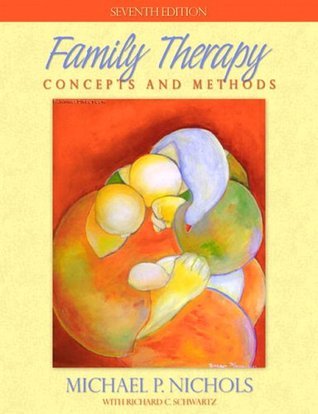
Family Therapy: Concepts and Methods
The Seventh Edition of this bestselling book continues to be the most comprehensive and timely book available, now with greater emphasis on the clinical practice of family therapy.
528 pages, Hardcover
First published April 1, 1984
About the author
Michael P. Nichols
28 books10 followersLibrarian Note: There is more than one author by this name in the Goodreads database.
Ratings & Reviews
Friends & Following
Create a free account to discover what your friends think of this book!
Community Reviews
Displaying 1 - 30 of 35 reviews

December 4, 2008
The cover changes with every edition, so MFT students may not recognize it except by title. This is probably the best summary text for marriage and family therapy (MFT) out there and is used in just about every MFT training program--including the one I teach at, NCU.

May 2, 2015
یکی از بهترین کتاب های خانواده درمانی . به علاقه مندان روانشناسی بسیار توصیه می کنم . البته اگه تدریس می کنین و می خواین این کتاب رو برای یک ترم انتخاب کنین تروخدا کلشو درس ندین!!!!چون دانشجو رسما هیچی نمی فهمه اون وقت . کسایی هم که می خوان کتابو بخونن بهتره به جای اینکه به فکر تموم کردنش باشن به فکر این باشن که مکاتب مختلف رو عمیقا بفهمن و در کنارش مقالات مرتبط رو هم بخونن .

Read
December 11, 2021sorry to Minuchin or whatever but I NEVER want to work with families in session lol

July 17, 2024
I may have dropped out of grad school…. And this is my last class before it’s officially over… and yes I’m counting this towards my goal even though it’s a textbook… but that’s because I actually enjoyed reading this! I think family and couple therapy is really interesting and seeing the different dynamics and situations that can occur were fascinating to me. It also validated me in some ways or made me go “oh… this all makes sense now.” The only thing that I would change would be that it doesn’t have inclusive language. Of course, all textbooks usually don’t but I do love inclusivity and saying he/she when there are other identities beyond the binary and these issues affect them as well… I just wish people would change it. Especially when new editions of textbooks come out all the time and yet, they still don’t change that part.

August 3, 2014
این کتاب را برای امتحان پی اچ دی مجبورم که بخوانم. ترجمه اش را میخوانم خیلی بد است. ترجمه اش را میگویم. این را این جا اضافه کردم تا یادم بماند چقدر برای خواندنش سختی می کشم و ایضا حالی که خوب نیست شاید روزی این جا را خواندم و به حالی که موقع خواندنش داشته ام خنده ای کردم! به امید آن روز.

November 20, 2011
Yay! Semester is over :)
July 25, 2024
Read this for class. I'm not sure if I'll be doing family/couples therapy, hopefully with my upcoming internship I'll get more experience in this area. But every client has a family so this is important information. Really appreciated how the chapters are broken down into the specifics of each family counseling model. The table that they have in chapter 14 (I think) is specially useful. I'm hoping this will help me in taking the NCE also.
February 27, 2018
This book was concise and consistent in its information on methodologies into Marriage and Family Therapy. A thorough textbook, that prepares you well.
September 29, 2018
Excellent overview and great resource.

January 12, 2019
An excellent text.

April 25, 2021
Good info on theories but the dated language and examples were impossible to look past

December 14, 2021
I really liked this book to understand the concepts of family therapy however the index is not correct which was frustrating!

July 30, 2022
Used this book for teaching and I felt it was a straightforward, well written text. I would recommend for anyone interested in a good overview of different family theories.
March 12, 2023
For a textbook, it wasn't as dry as I thought it would be. Lots of good examples, but some of the case scenarios were long, perhaps longer than they had to be.

March 13, 2026
I read this as part of my graduate studies. It was very informative.

January 2, 2009
Good try but laborious reading that characterizes any generic psychology textbook. The prose is dry and uninteresting, which is a shame considering family therapy can easily make for some of the more interesting writing in the field. The book takes a broad perspective, and so has an advantage over, say, Minuchin who has his own theory or typical psychotherapy books which may have a chapter overview on family therapy.
I never read The Family Crucible, but I've heard that does a good job illustrating the practice of family therapy. I would recommend Shifting the Center even though it's a sociology anthology that explores issues of family and kinship. I have found that often a missing crucial piece in therapy of any kind is a good understanding of the real life conditions and issues of people in treatment, and while Shifting the Center is not about treatment, it does raise awareness of many important issues in treatment, and especially family treatment. For that reason, I recommend it before Family Therapy. I'm sure there are better books out there, or that have yet to be written, that blend the two. I'm just waiting to find them.
I never read The Family Crucible, but I've heard that does a good job illustrating the practice of family therapy. I would recommend Shifting the Center even though it's a sociology anthology that explores issues of family and kinship. I have found that often a missing crucial piece in therapy of any kind is a good understanding of the real life conditions and issues of people in treatment, and while Shifting the Center is not about treatment, it does raise awareness of many important issues in treatment, and especially family treatment. For that reason, I recommend it before Family Therapy. I'm sure there are better books out there, or that have yet to be written, that blend the two. I'm just waiting to find them.

August 5, 2020
I'll have to read this again I'm sure, but it's a great way to get a flyby of the history of MFT, and the development of multiple theories. Three of the most helpful things about the layout of this book -
1) The consistency in chapter layout, with each chapter having the same sections about the History, Goals, and Process of the chapters chosen therapy model/system
2) Case studies within the chapters to give real world application and examples of the theories as you were learning and reading about them
3) Summaries at the end of each chapter.
Also, Nichols is a witty writer, which is obviously a difficult endeavor in a school textbook about theories of Marriage and Family Therapy. But I enjoyed how he would throw in a joke about human relationships or the development of social sciences every once in a while, it kept the reading enjoyable and actually gave me more affinity for the book as a whole.
This is al my opinion. Read the book and form your own. (Though to be honest, I’m not sure why you would read this if you didn’t have to. But hey, what do I know?)
1) The consistency in chapter layout, with each chapter having the same sections about the History, Goals, and Process of the chapters chosen therapy model/system
2) Case studies within the chapters to give real world application and examples of the theories as you were learning and reading about them
3) Summaries at the end of each chapter.
Also, Nichols is a witty writer, which is obviously a difficult endeavor in a school textbook about theories of Marriage and Family Therapy. But I enjoyed how he would throw in a joke about human relationships or the development of social sciences every once in a while, it kept the reading enjoyable and actually gave me more affinity for the book as a whole.
This is al my opinion. Read the book and form your own. (Though to be honest, I’m not sure why you would read this if you didn’t have to. But hey, what do I know?)

October 14, 2009
It is definitely packed full of facts, but comparing it to :THeory-Based Treatment Planning for Marriage and Family Therapists" by Gehart and Tuttle (shich I am reading at the same time for the same Family Therapy class) I find this book confusing. I have taken to reading the chapter in the Gehart and Tuttle before I read the chapter in this book about the same theory just to make sure I understand what I am reading about. I also find there are a lot of, "culturisms" in this book...I know that isn't a word, but I can't think of the right one...lots of American slang and metaphors that I wonder if my classmates from other countries are understanding. To me, that is unprofessional in a textbook.

August 11, 2014
I found myself frequently frustrated by the Family Therapy textbook. Nichols seemed more interested in some theories than others, and more knowledgeable. In some instances, he provides helpful explanations and case studies, and in others he either leaves them out, or uses examples that leave the student more confused than before.
He editorializes and uses snarky descriptions of models of therapy which he dislikes or of which he disapproves. He completely leaves out Feminist theories, and spends most time addressing the most well-known ones, ie, psychodynamic, behavioral, structural, etc.
Altogether, this was very mixed and if I were planning to go into family therapy, I would definitely be looking for other sources of guidance.
He editorializes and uses snarky descriptions of models of therapy which he dislikes or of which he disapproves. He completely leaves out Feminist theories, and spends most time addressing the most well-known ones, ie, psychodynamic, behavioral, structural, etc.
Altogether, this was very mixed and if I were planning to go into family therapy, I would definitely be looking for other sources of guidance.

August 24, 2010
I originally ordered the 2nd edition off of Amazon and then switched to the 7th - HUGE difference! The 7th edition was so well organized, well-written, and relate-able. It was probably one of the only 'textbooks' that I looked forward to reading. Yes, at times it was a bit brief, but in a way it's intended for a grad school version of a survey course and so you can't expect it to go into extreme details.

September 5, 2013
The information provided in the book was definitely good and I learned a lot from the book, the discussions about what we read and the instructors lectures which were based on the principles found in the book. A majority of the book talked about the different approaches to family therapy with chapters in the front of the book which discussed the history of family therapy and at the end of the book which discussed the need for more research.
February 17, 2008
This is a basic beginners family therapy textbook featuring classic therapists like Murray Bowen, Philip Guerin, Jay Haley, Salvador Minuchin, Carl Whitaker, Don Jackson, Milton Erickson, and Neil Jacobson.
November 15, 2015
Helpful Theoretical Read
This book was helpful in my growth and understanding of the theoretical models of family therapy. However, the layout of the book makes it a very difficult and time consuming book to read.
This book was helpful in my growth and understanding of the theoretical models of family therapy. However, the layout of the book makes it a very difficult and time consuming book to read.
December 18, 2015
Nichols misses the boat on actually paying attention to power dynamics and issues of cultural diversity. This book was woefully sexist and heteronormative. I'm hoping someone who is attuned to this century will someday write a marriage and family therapy basic text.

November 7, 2007
excellent overview of systems theory. An easy read for a text book and gives lots of good case examples.

April 12, 2008
This appears to be a solid text book for beginning family therapy students. Tons of practical information, and recommendations for further reading round out the necessary berevity of the text.

January 30, 2009
the best text book i've seen on family therapy
September 15, 2009
As far as textbooks go, this one wasn't too bad. I also loved the class and that helps.
August 23, 2010
I'm teaching from this text this fall. It's an excellent overview of family systems therapy.
And I'm not done re-reading it, but I'm taking it off my reading list in Goodreads anyway, for now.
And I'm not done re-reading it, but I'm taking it off my reading list in Goodreads anyway, for now.

January 5, 2011
Good information but basic textbook dryness.
Displaying 1 - 30 of 35 reviews