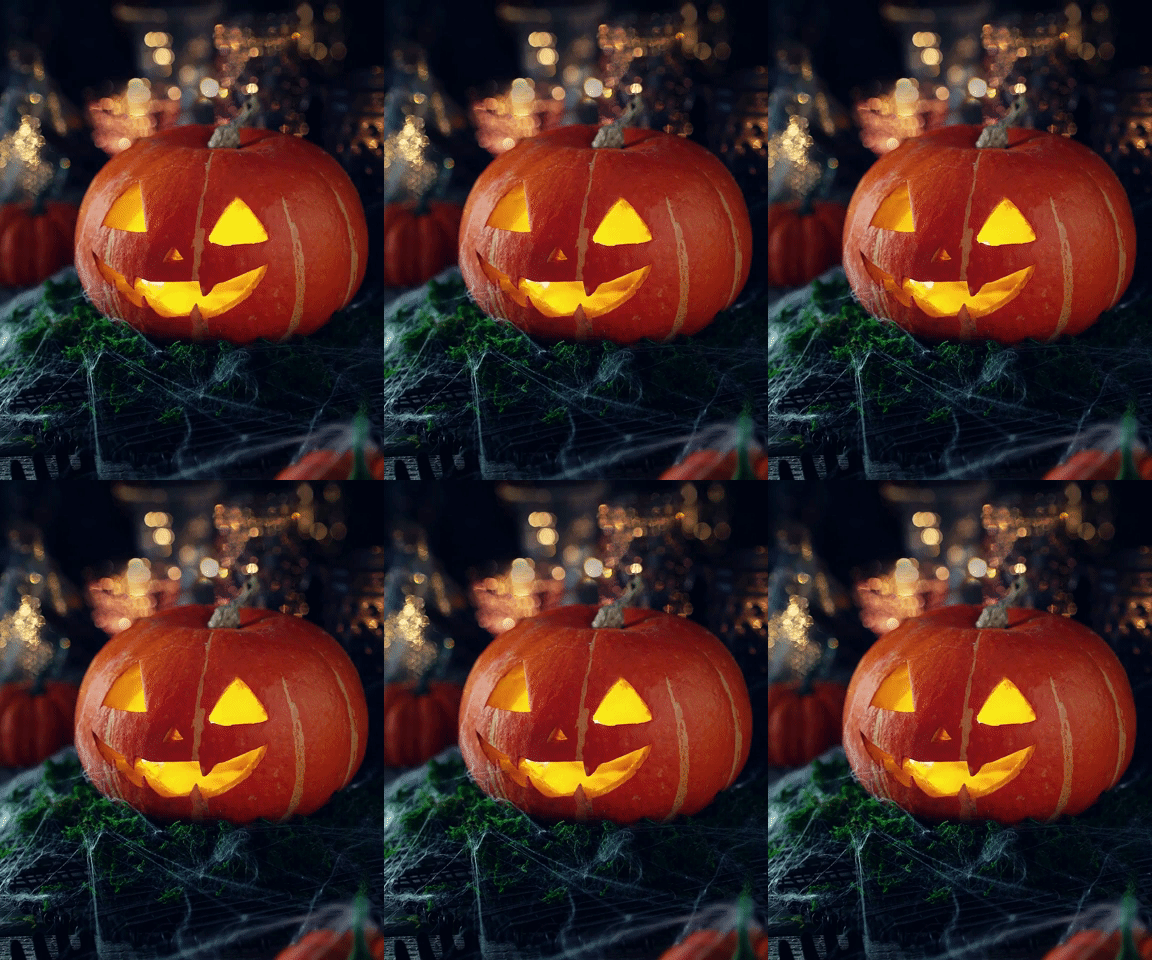
On Halloween night, we dress up in costumes, go trick-or-treating, and carve jack-o'-lanterns. But what is really behind these holiday traditions?
It all started with a greedy man named Jack, who made a pact with the wrong person. When it comes time for Jack to repay his debt, the deal doesn't quite end as he expected. . . .
Katherine Tegen weaves together legend and tradition to tell the story of one of Halloween's most popular icons. With vibrant and dazzling illustrations from Brandon Dorman, The Story of the Jack O'Lantern answers one of the mysteries of that spooky night.
Author Katherine Tegen spins a pourquoi tale based on Irish folklore in this spooky Halloween picture-book, which explains how the custom of carving jack-o-lanterns came to be. It is the story of Jack, a mean-spirited, unpleasant, dishonest character, who never loses an opportunity to steal from others. When a strange man with unusual feet and hands offers to buy his dinner one night at the pub, a debt to be paid on the day of Jack's death, that foolish man accepts. But when the devil comes to collect his due, Jack uses a pumpkin to escape the first blow, and is condemned to wander the earth, entering neither heaven nor hell, and guided by that glowing carved gourd...
As the author's brief afterword makes plain, The Story of the Jack O'Lantern is inspired by Irish folklore and folk customs, which were brought to the Americas by Irish immigrants in the 19th century, and which were adapted in this new world, eventually becoming the American custom of carving a jack-o-lantern to mark Halloween. The ancient Celts carved various root vegetables (usually turnips), and placed an ember in them, to ward of evil spirits on Samhain. This custom is referenced in the Irish folktale about Stingy Jack, who fools the devil, but is eventually condemned to wander the earth with a carved turnip. I enjoyed Tegen's tale, which is delightfully creepy, and found Brandon Dorman's artwork intensely expressive, and very spooky. The cover image on this one really drew me in! The folklorist in me does wish that Tegen had given a textual source, so that I could track down a more traditional retelling of this story, but leaving that quibble aside, this is one I'd recommend, both to those looking for truly spooky children's tales at Halloween, and to young folklore enthusiasts.
This is an Irish folktale about the beginnings of Halloween and the tradition of carving pumpkins. Like most fairy tales, there is some fear woven into the story, so it would be better read to older children or those who don't get frightened easily. There is talk of death, the devil, and scaring evil things away on Halloween night. The pictures are wonderful and would be good for a group or individual setting.
Not a winner for us. I liked the story a little more when I read it was based on Irish tales. I don't think the suggested age range (3-8) is appropriate (it's too scary for three-year-olds; 5-8 would be better).
Use this one for 3rd-4th graders to talk about folklore. This is a little creepy about how Jack was an evil person who was tricked by the devil and now eternally walks the earth with a turnip/pumpkin.
I had seen this book in my library's catalog and went on here to check it out. I had read a review saying it was too dark for children, and I agree with that. This is not your average Halloween book. This is an Irish tale, which explains the darkness.
This didn't explain how jack 0'lanterns originated to me at all. A mean, thieving man named Jack went around taking whatever he wanted. A man told him he could eat as much he desired, and he would foot the bill, as long as Jack paid him back on the day he died. This night was Halloween and I wondered at the significance of it being Halloween, because there were no celebrations at all and it didn't seem to be Halloween in any way. Then years later on Halloween, Jack stole some pumpkins and was going to eat them. The stranger showed up and said it was payback time, and threw a burning hot coal at Jack. He shielded himself with the pumpkin and it caused a mouth to form in the pumpkin, glowing from the coal. Which was a little much for me, because it wouldn't be in the shape of a mouth.
He vowed that when Jack died he'd never find rest and would search endlessly for a home. He ended up dying many years later and he carried around a pumpkin to light his way, prompting him to be called "Jack of the lantern," or "Jack O'Lantern."
The only line I really liked was "On Halloween, some people believe ghosts and spooks will leave their graves and wander the earth again." The author wrote that we dress in costumes to scare spirits away, which I liked that explanation, but this is supposed to be a tale about the jack o'lantern, not costumes, so it seemed to be branching off-topic.
We also supposedly light a lantern to remember what happened to Jack, which I didn't really see the connection, because Jack's pumpkin only had a smile, not a whole face...Idk, it just didn't come together and make sense for me.
The Irish tales feature Jack, a man who tricked the devil, but eventually got his due for being such a bad person. This Jack didn't trick the devil though. It explained that he wandered earth without being able to go to either heaven or hell, and used a carved turnip as a lantern.
I really liked the lore from Ireland, that for hundreds of years people would carve vegetables: turnips, gourds, and potatoes to scare spirits away. When Irish people moved to America in the 1800s they brought their tales with them. Since pumpkins were common in America, and were easier to carve, they started using those. In the 1900s Americans started carving all these faces, which is still done today. That was the best part of the book. Without that the tale didn't really add up.
The illustrations are so animated and like something out of a movie. They really could be a movie, so it was a nice experience looking at this kind of artwork. I enjoyed the pages with the dark blue night sky and all of the stars, with the row of pumpkins lit up with all these different expressions, the most.
The devil element brought a very dark element to this. He was described as having strange hands and feet, and the images showed cloven feet in boots and monster-ish, three-fingered hands like something belonging to a beast. I think this would be scary for kids, because of the images of the devil and him trying to kill Jack, talking about his death, and not going to heaven. Definitely not for every kid and this might give some nightmares.
This entire review has been hidden because of spoilers.
Simple retelling of the Jack of the Lantern story. I especially liked the snippet of history at the end (not a part of the story). I do think it would be a little scary for small ones.
I read this to my four year old daughter and we both enjoyed it. Based loosely on the ancient Irish legend of Jack who was too bad for Heaven and too wicked for Hell. Instead of the turnip from the legend she used a pumpkin which though understandable is not part of the original legend. The pictures were very well done which made up a little for the story.