

What do you think?

Die Entdeckung der Currywurst
Eine wunderbare Liebesgeschichte im Hamburg der letzten Kriegstage. In Erinnerung an seine Kindheit macht sich der Erzähler auf die Suche nach der ehemaligen Besitzerin einer Imbissbude am Hamburger Großneumarkt. Er findet die hochbetagte Lena Brücker in einem Altersheim und erfährt die Geschichte ihrer »schönsten Jahre« und wie es zur Entdeckung der Currywurst kam. Der Bogen spannt sich weit zurück in die letzten Apriltage des Jahres 1945 ...
187 pages, Paperback
First published January 1, 1993
About the author
Uwe Timm
88 books116 followersUwe Timm was the youngest son in his family. His brother, 16 years his senior, was a soldier in the Waffen SS and died in Ukraine in 1943. Decades later, Uwe Timm approached his relationship with his father and brother in the critically acclaimed novel In my brother's shadow.
After working as a furrier, Timm studied Philosophy and German in Munich and Paris, achieving a PhD in German literature in 1971 with his thesis: The Problem of Absurdity in the Works of Albert Camus. During his studies, Timm was engaged in leftist activities of the 1960s. He became a member of the Socialist German Student Union and was associated with Benno Ohnesorg. From 1973 to 1981 he was a member of the German Communist Party. Three times Timm has been called as a writer-in-residence to several universities in English-speaking countries: in 1981 to the University of Warwick, in 1994 to Swansea and in 1997 to the Washington University in St. Louis. He has also been a lecturer at universities in Paderborn, Darmstadt, Lüneburg and Frankfurt.
Timm started publishing in the early 1970s and became known to a larger audience in Germany after one of his children's books, Rennschwein Rudi Rüssel, was turned into a movie. Today he is one of the most successful contemporary authors in Germany. His books Die Entdeckung der Currywurst (The Invention of Curried Sausage) and Am Beispiels meines Bruders (In my brother's shadow) can both be found on the syllabi of German schools. His readers usually appreciate Timm's writing style, which he himself calls "die Ästhetik des Alltags" ("the aesthetics of everyday life"). Timm imitates everyday storytelling by using everyday vocabulary and simple sentences and generally tries to imitate the way stories are orally told. His works often indirectly link with each other by taking up minor characters from one story and making this character the main character of another work. For example, a minor character like Frau Brücker from Johannisnacht is taken up as a main character in his book Die Entdeckung der Currywurst. Timm's works also tend to have autobiographical features and often deal with the German past or are set in the German past.
After working as a furrier, Timm studied Philosophy and German in Munich and Paris, achieving a PhD in German literature in 1971 with his thesis: The Problem of Absurdity in the Works of Albert Camus. During his studies, Timm was engaged in leftist activities of the 1960s. He became a member of the Socialist German Student Union and was associated with Benno Ohnesorg. From 1973 to 1981 he was a member of the German Communist Party. Three times Timm has been called as a writer-in-residence to several universities in English-speaking countries: in 1981 to the University of Warwick, in 1994 to Swansea and in 1997 to the Washington University in St. Louis. He has also been a lecturer at universities in Paderborn, Darmstadt, Lüneburg and Frankfurt.
Timm started publishing in the early 1970s and became known to a larger audience in Germany after one of his children's books, Rennschwein Rudi Rüssel, was turned into a movie. Today he is one of the most successful contemporary authors in Germany. His books Die Entdeckung der Currywurst (The Invention of Curried Sausage) and Am Beispiels meines Bruders (In my brother's shadow) can both be found on the syllabi of German schools. His readers usually appreciate Timm's writing style, which he himself calls "die Ästhetik des Alltags" ("the aesthetics of everyday life"). Timm imitates everyday storytelling by using everyday vocabulary and simple sentences and generally tries to imitate the way stories are orally told. His works often indirectly link with each other by taking up minor characters from one story and making this character the main character of another work. For example, a minor character like Frau Brücker from Johannisnacht is taken up as a main character in his book Die Entdeckung der Currywurst. Timm's works also tend to have autobiographical features and often deal with the German past or are set in the German past.
Ratings & Reviews
Friends & Following
Create a free account to discover what your friends think of this book!
Community Reviews
Displaying 1 - 30 of 370 reviews

July 22, 2021
STORIA SENZA EROI
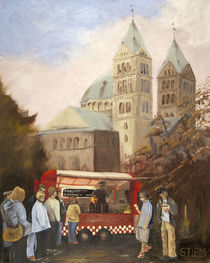
Gene Stirm: Currywurst Wagon a Speyer.
Al Millerntor la notte prima una casa era stata presa in pieno da una bomba incendiaria. Il cumulo delle macerie era ancora caldo. I cespugli nei giardini fuori porta erano fioriti a causa dell’improvvisa vampata di calore, quelli troppo vicini alle macerie si erano seccati, alcuni rametti si erano proprio carbonizzati.

Sotto forma di una specie di inchiesta – l’io narrante vuole dimostrare che la teutonica currywurst (la wurst è la salsiccia, femminile – da noi invece ha cambiato sesso, wurstel è diventato maschile) è nata ad Amburgo proprio in quel chiosco nella Großneumarkt platz dove lui andava da bambino, la prima volta con suo padre, poi più e più volte da solo (ah, la madeleine!) – Uwe Timm racconta una storia che racconta la Storia.

Lena Brücker, la donna che per almeno quattro decenni ha mandato avanti il chiosco, e che l’io narrante ritiene (con ragione, si direbbe a fine lettura – e in modo tanto casuale da avvalorare il titolo, scoperta più che invenzione) la creatrice della currywurst, ormai diffusa in gran parte della Germania e da tutti, tedeschi inclusi, erroneamente ritenuta tipica berlinese, è un’anziana signora pressoché cieca che vive in una casa di riposo. Il narratore va a trovarla, si fa riconoscere, le chiede se può intervistarla, le chiede la storia della nascita della currywurst. E l’anziana donna, ormai cieca, continuando a sferruzzare un golf con il davanti riccamente ornato, non si tira indietro, non lesina né racconti né confidenze. E, quindi, i narratori sono due: Lena e l’intervistatore, dietro il quale è facile riconoscere un perfetto alter ego dello stesso Timm.
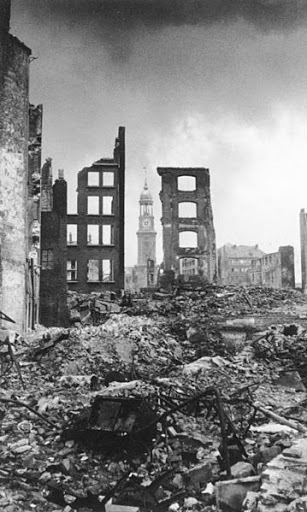
Alle domande seguono le risposte. Ma il narratore aggiunge ricerche in biblioteca e intervista ad altri possibili testimoni.
Ne viene fuori una storia deliziosa e gioiosa su come sia nato la currywurst, quintessenza di “estetica del quotidiano”: ma soprattutto su un periodo della vita di Lena, a fine guerra (seconda mondiale), verso la fine di quegli orribili dodici anni che furono spacciati per millenari e che in effetti per gli effetti furono così orridi da esserlo, quando viveva lavorando all’Ufficio annonario, abitava da sola, il marito era missing-in-action o qualcosa del genere (ex contrabbandiere e puttaniere, grazie alla sua capacità di suonare col pettine un’infinità di motivi musicali finiva col rimediare donne e alcol gratis ogni sera), i figli, sia la femmina che il maschio, via da casa. E Lena accoglie in casa un giovane soldato, e dopo una notte insieme lui, che ha sedici anni meno di lei, decide di restare. Decide di disertare.

Sono gli ultimi giorni di guerra, gli inglesi alle porte, sono sull’altra sponda del fiume, i russi stanno prendendo Berlino, lui è un marinaio, ma adesso vogliono mandarlo a terra a sparare ai carrarmati inglesi, e lui proprio non se la sente di morire con la guerra agli sgoccioli per un incarico che non è il suo. Diserta. Dopo una notte d’amore.
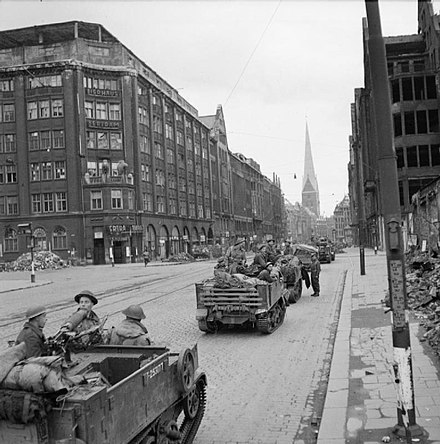
Resteranno insieme quattro settimane. Durante le quali la guerra finisce e la semidistrutta Amburgo passa in mano agli inglesi. Lena lo nasconde in casa, ma allo stesso tempo gli nasconde la verità, cioè che ormai potrebbe uscire per strada, la guerra è finita, lui non è più da considerare disertore. Lei ha quarant’anni, lui ventiquattro, fanno bene e volentieri l’amore insieme, ogni notte, più volte, e ogni volta è diversa. Per Lena è il periodo più felice della vita.

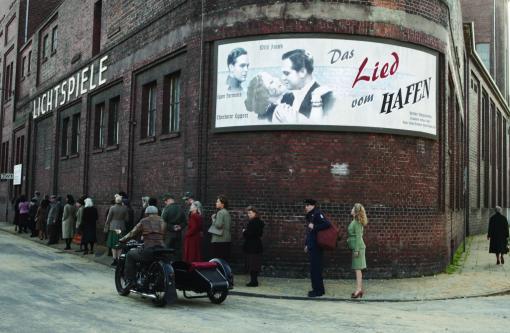
È Barbara Sukowa che interpreta Lena Brücker nel film omonimo del 2008 diretto da Ulla Wagner.
Insieme, accanto, intorno, intrecciata a questo deliziosa e tenera storia di qualcosa che è prossimo all’amore – amore da solitudine, amore per necessità, amore all’ultima spiaggia, ultimo treno della vita, ma comunque, amore – c’è la storia del finire di quella tremenda guerra, di quel terrificante periodo storico per l’Europa e il mondo, e forse ancora più per il popolo tedesco: il mercato nero, il coprifuoco, il rifugio antiaereo, la caccia per procurarsi il sostentamento, i baratti, le rappresaglie, gli spioni, le foto sui giornali che confermano le voci - i lager esistono, la gente è stata gassata! - il ritorno della speranza, avventurieri, ma anche profittatori, inventarsi imprenditrice prendendo un misero chiosco, inventarsi per caso una ricetta nuova, mantenere la famiglia…

Per un momento mi fermai a riflettere, è permesso chiedere a questa donna qui che ha quasi ottantasette anni che cosa intende quando dice che era un bravo amante?
Le chiesi se potevo farlo farle una domanda personale. Forza. Ma che cosa intende con: bravo amante? Smise per un attimo di fare la maglia. Lui non aveva mai fretta. Lo facevamo a lungo. E poi poteva farlo tante volte. Eh sì, e poi esitò ancora per un po’, e anche tutte le volte in modo diverso. Annuii con la testa, malgrado lei non potesse vedere – e malgrado, non ho difficoltà a confessarlo, quel “modo diverso” mi incuriosisse, e mi incuriosiva anche, mentirei se dicessi il contrario, quante volte.
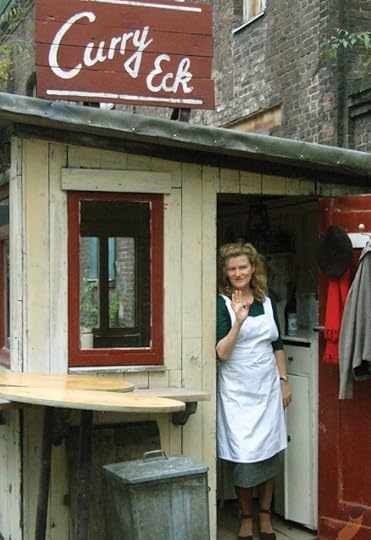
Gene Stirm: Currywurst Wagon a Speyer.
Al Millerntor la notte prima una casa era stata presa in pieno da una bomba incendiaria. Il cumulo delle macerie era ancora caldo. I cespugli nei giardini fuori porta erano fioriti a causa dell’improvvisa vampata di calore, quelli troppo vicini alle macerie si erano seccati, alcuni rametti si erano proprio carbonizzati.
Sotto forma di una specie di inchiesta – l’io narrante vuole dimostrare che la teutonica currywurst (la wurst è la salsiccia, femminile – da noi invece ha cambiato sesso, wurstel è diventato maschile) è nata ad Amburgo proprio in quel chiosco nella Großneumarkt platz dove lui andava da bambino, la prima volta con suo padre, poi più e più volte da solo (ah, la madeleine!) – Uwe Timm racconta una storia che racconta la Storia.
Lena Brücker, la donna che per almeno quattro decenni ha mandato avanti il chiosco, e che l’io narrante ritiene (con ragione, si direbbe a fine lettura – e in modo tanto casuale da avvalorare il titolo, scoperta più che invenzione) la creatrice della currywurst, ormai diffusa in gran parte della Germania e da tutti, tedeschi inclusi, erroneamente ritenuta tipica berlinese, è un’anziana signora pressoché cieca che vive in una casa di riposo. Il narratore va a trovarla, si fa riconoscere, le chiede se può intervistarla, le chiede la storia della nascita della currywurst. E l’anziana donna, ormai cieca, continuando a sferruzzare un golf con il davanti riccamente ornato, non si tira indietro, non lesina né racconti né confidenze. E, quindi, i narratori sono due: Lena e l’intervistatore, dietro il quale è facile riconoscere un perfetto alter ego dello stesso Timm.
Alle domande seguono le risposte. Ma il narratore aggiunge ricerche in biblioteca e intervista ad altri possibili testimoni.
Ne viene fuori una storia deliziosa e gioiosa su come sia nato la currywurst, quintessenza di “estetica del quotidiano”: ma soprattutto su un periodo della vita di Lena, a fine guerra (seconda mondiale), verso la fine di quegli orribili dodici anni che furono spacciati per millenari e che in effetti per gli effetti furono così orridi da esserlo, quando viveva lavorando all’Ufficio annonario, abitava da sola, il marito era missing-in-action o qualcosa del genere (ex contrabbandiere e puttaniere, grazie alla sua capacità di suonare col pettine un’infinità di motivi musicali finiva col rimediare donne e alcol gratis ogni sera), i figli, sia la femmina che il maschio, via da casa. E Lena accoglie in casa un giovane soldato, e dopo una notte insieme lui, che ha sedici anni meno di lei, decide di restare. Decide di disertare.
Sono gli ultimi giorni di guerra, gli inglesi alle porte, sono sull’altra sponda del fiume, i russi stanno prendendo Berlino, lui è un marinaio, ma adesso vogliono mandarlo a terra a sparare ai carrarmati inglesi, e lui proprio non se la sente di morire con la guerra agli sgoccioli per un incarico che non è il suo. Diserta. Dopo una notte d’amore.
Resteranno insieme quattro settimane. Durante le quali la guerra finisce e la semidistrutta Amburgo passa in mano agli inglesi. Lena lo nasconde in casa, ma allo stesso tempo gli nasconde la verità, cioè che ormai potrebbe uscire per strada, la guerra è finita, lui non è più da considerare disertore. Lei ha quarant’anni, lui ventiquattro, fanno bene e volentieri l’amore insieme, ogni notte, più volte, e ogni volta è diversa. Per Lena è il periodo più felice della vita.
È Barbara Sukowa che interpreta Lena Brücker nel film omonimo del 2008 diretto da Ulla Wagner.
Insieme, accanto, intorno, intrecciata a questo deliziosa e tenera storia di qualcosa che è prossimo all’amore – amore da solitudine, amore per necessità, amore all’ultima spiaggia, ultimo treno della vita, ma comunque, amore – c’è la storia del finire di quella tremenda guerra, di quel terrificante periodo storico per l’Europa e il mondo, e forse ancora più per il popolo tedesco: il mercato nero, il coprifuoco, il rifugio antiaereo, la caccia per procurarsi il sostentamento, i baratti, le rappresaglie, gli spioni, le foto sui giornali che confermano le voci - i lager esistono, la gente è stata gassata! - il ritorno della speranza, avventurieri, ma anche profittatori, inventarsi imprenditrice prendendo un misero chiosco, inventarsi per caso una ricetta nuova, mantenere la famiglia…
Per un momento mi fermai a riflettere, è permesso chiedere a questa donna qui che ha quasi ottantasette anni che cosa intende quando dice che era un bravo amante?
Le chiesi se potevo farlo farle una domanda personale. Forza. Ma che cosa intende con: bravo amante? Smise per un attimo di fare la maglia. Lui non aveva mai fretta. Lo facevamo a lungo. E poi poteva farlo tante volte. Eh sì, e poi esitò ancora per un po’, e anche tutte le volte in modo diverso. Annuii con la testa, malgrado lei non potesse vedere – e malgrado, non ho difficoltà a confessarlo, quel “modo diverso” mi incuriosisse, e mi incuriosiva anche, mentirei se dicessi il contrario, quante volte.

Read
August 2, 2011I haven't read the translation but I do feel the need to make absolutely clear that Currywurst is not curried sausage. The Wurst is never curried, it may be served in a curried tomato sauce, or in tomato sauce with a dusting of curry powder on top but the Wurst is uncurried, a plain, traditional Wurst chopped into slices. I know that translation is the art of failure, but the translator failed too far in this case. For added annoyance towards the end of the novel the author describes the invention of that cheering snack - from which it is absolutely clear that one isn't talking about curried sausage meat.
Anyway I recalled this novel the other day as I was walking up hill, I saw a greybeard dragging a bicycle out on to the pavement when past him flew a schoolboy, legs pumping the pedals of his own bike, as I drew level with the old man he could no longer contain his need to explain, at length, the multiple deficiencies of school boys, all due to their fearlessness, this led him to abruptly begin talking about the Hitler Youth , while his accent wasn't local, I assumed he hadn't been a member personally, but unbidden the image of schoolboys clutching panzerfausts popped into my head and I smiled one of those smiles that one keeps in reserve for social situations when one strives to be polite even when not happy and bade him a good day remarking that he'd have some work to do to catch the boy up, since in the manner of old men he was hard of hearing - although quick to talk to strangers about the Hitler youth and the fearlessness of schoolboys - I had to repeat my comment at a louder volume.
The thin spring sunshine and that thought brought this novel back to mind since it begins in the dying days of the thousand year Reich with a young service man impressed for rapid training with a panzerfaust. Various military personnel on leave in Hamburg are instructed to dig holes, sit in them with these anti-tank weapons and instructed to wait until an enemy tank is directly overhead before discharging their ordinance. Our main character asks the Sergeant instructor how then they get out of the hole. The question goes down about as well as one about Russia at a White House press conference. The silence proves sufficiently eloquent to remind the character of the joy to be found in life beyond a strict adherence to duty. At which point the novel is ready to kick off, to eventually terminate in a tour de force cock and bull story of black market trading which leads to the invention of the Currywurst, which emerges as the true hero of Postwar Germany, symbolic of how despite unpromising beginnings, and incompatible ingredients, the end result can be be quite surprising. And tasty. Fun and fantastic evocation of the rubbleworld of post war Germany.
A delectable short novel.
Anyway I recalled this novel the other day as I was walking up hill, I saw a greybeard dragging a bicycle out on to the pavement when past him flew a schoolboy, legs pumping the pedals of his own bike, as I drew level with the old man he could no longer contain his need to explain, at length, the multiple deficiencies of school boys, all due to their fearlessness, this led him to abruptly begin talking about the Hitler Youth , while his accent wasn't local, I assumed he hadn't been a member personally, but unbidden the image of schoolboys clutching panzerfausts popped into my head and I smiled one of those smiles that one keeps in reserve for social situations when one strives to be polite even when not happy and bade him a good day remarking that he'd have some work to do to catch the boy up, since in the manner of old men he was hard of hearing - although quick to talk to strangers about the Hitler youth and the fearlessness of schoolboys - I had to repeat my comment at a louder volume.
The thin spring sunshine and that thought brought this novel back to mind since it begins in the dying days of the thousand year Reich with a young service man impressed for rapid training with a panzerfaust. Various military personnel on leave in Hamburg are instructed to dig holes, sit in them with these anti-tank weapons and instructed to wait until an enemy tank is directly overhead before discharging their ordinance. Our main character asks the Sergeant instructor how then they get out of the hole. The question goes down about as well as one about Russia at a White House press conference. The silence proves sufficiently eloquent to remind the character of the joy to be found in life beyond a strict adherence to duty. At which point the novel is ready to kick off, to eventually terminate in a tour de force cock and bull story of black market trading which leads to the invention of the Currywurst, which emerges as the true hero of Postwar Germany, symbolic of how despite unpromising beginnings, and incompatible ingredients, the end result can be be quite surprising. And tasty. Fun and fantastic evocation of the rubbleworld of post war Germany.
A delectable short novel.

May 14, 2018
Di La volatilità dell'amore -altro romanzo di Timm- m'era piaciuto lo stile economico, mentre m'aveva annoiato il tema: il protagonista che ripensa alle sue vicende sentimentali. Il giudizio finale era sospeso tra l'apprezzamento della scrittura e la noia per il contenuto intimistico.
Naturalmente anche in questo romanzo c'è una vicenda sentimentale, ma occupa uno spazio marginale nell'economia del racconto. La vita è un puzzle, l'amore un tassello e l'autore, pur nella brevità della novella, riesce a inserire tanti altri elementi facendo sembrare il romanzo più ampio di quello che sia in realtà. Un'amburghese sopravvive agli anni della guerra, ospita un giovane disertore (maga greca, cinque lettere, inizia per C), caccia un marito fedifrago e mette in piedi un chiosco di currywurst, inciampando nella combinazione ketchup/curry.
La struttura narrativa mi è cara: il protagonista ritrova una donna che vendeva currywurst nel quartiere. Ma il currywurst non è un cibo come un altro: è il cibo della sua infanzia in un quartiere povero nell'Amburgo del dopoguerra! Come ogni cibo dell'infanzia è capace di richiamare i ricordi: così parte un racconto che dura ben due settimane. Gli anni della guerra e del primo dopoguerra, un intreccio fatto di gente comune, guardiani del quartiere, mercato nero, diserzione, l'orrore dei campi. Timm conferisce una sorprendente vividezza alla narrazione, quella vividezza che appartiene alle storie vere. Ma questo è chiaramente un romanzo. Si intuisce da una piccola ingenuità seminata verso la fine (forse volontariamente). Sul finale, si legge che a un personaggio gli affari andavano bene. Peccato che l'unica testimone afferma di non aver mai parlato col commerciante in questione, quindi da dove arriva quest'informazione? Un caso di narratore onnisciente "involontario" in un romanzo dove il narratore onnisciente non è proprio previsto, una svista che apre per un attimo le quinte mostrando come funziona il gioco di prestigio.
Sabato interrompo la lettura nel punto in cui la donna ha messo in piedi una complessa serie di scambi al mercato nero (una spilla in cambio di legname, scambiato con delle pelli di scoiattolo siberiano che diventano una pelliccia da cui rivavare il wiskey per pagare le salsicce, più olio, ketchup e curry). Vado a fare la spesa con gli ingredienti in testa e meccanicamente afferro una bottiglia di ketchup, apparentemente attratto dal marchio "Mutti"; il pomeriggio dello stesso giorno arrivo al punto in cui l'anziana racconta finalmente com'era "inciampata" nella ricetta e io mi rendo conto di avere una bottiglia di ketchup in frigo, un wurstel tirolese avanzato e una boccetta di curry dimenticata in alto. Quindi interrompo la lettura, rosolo le fette di wurstel, scaldo il ketchup e aggiungo il curry. Verso la salsa sui wurstel in un piattino e mi accingo a finire il romanzo.
E qui avviene una specie di piccolo miracolo: mi succede di partecipare intimamente e in diretta alle emozioni raccontate nel romanzo: per l'autore, la magia del currywurst consiste in una combinazione sorprendente ottenuta mischiando elementi apparentemente incompatibili. Il sapore della salsa si espande nel palato [cit.] lasciando un'impressione di dolce, amaro, piccante e acidulo che esalta la salsiccia.
La magia, per me è un'altra: che per un attimo (infinito) questa schifezza immonda mi sia sinceramente piaciuta.
Naturalmente anche in questo romanzo c'è una vicenda sentimentale, ma occupa uno spazio marginale nell'economia del racconto. La vita è un puzzle, l'amore un tassello e l'autore, pur nella brevità della novella, riesce a inserire tanti altri elementi facendo sembrare il romanzo più ampio di quello che sia in realtà. Un'amburghese sopravvive agli anni della guerra, ospita un giovane disertore (maga greca, cinque lettere, inizia per C), caccia un marito fedifrago e mette in piedi un chiosco di currywurst, inciampando nella combinazione ketchup/curry.
La struttura narrativa mi è cara: il protagonista ritrova una donna che vendeva currywurst nel quartiere. Ma il currywurst non è un cibo come un altro: è il cibo della sua infanzia in un quartiere povero nell'Amburgo del dopoguerra! Come ogni cibo dell'infanzia è capace di richiamare i ricordi: così parte un racconto che dura ben due settimane. Gli anni della guerra e del primo dopoguerra, un intreccio fatto di gente comune, guardiani del quartiere, mercato nero, diserzione, l'orrore dei campi. Timm conferisce una sorprendente vividezza alla narrazione, quella vividezza che appartiene alle storie vere. Ma questo è chiaramente un romanzo. Si intuisce da una piccola ingenuità seminata verso la fine (forse volontariamente). Sul finale, si legge che a un personaggio gli affari andavano bene. Peccato che l'unica testimone afferma di non aver mai parlato col commerciante in questione, quindi da dove arriva quest'informazione? Un caso di narratore onnisciente "involontario" in un romanzo dove il narratore onnisciente non è proprio previsto, una svista che apre per un attimo le quinte mostrando come funziona il gioco di prestigio.
Sabato interrompo la lettura nel punto in cui la donna ha messo in piedi una complessa serie di scambi al mercato nero (una spilla in cambio di legname, scambiato con delle pelli di scoiattolo siberiano che diventano una pelliccia da cui rivavare il wiskey per pagare le salsicce, più olio, ketchup e curry). Vado a fare la spesa con gli ingredienti in testa e meccanicamente afferro una bottiglia di ketchup, apparentemente attratto dal marchio "Mutti"; il pomeriggio dello stesso giorno arrivo al punto in cui l'anziana racconta finalmente com'era "inciampata" nella ricetta e io mi rendo conto di avere una bottiglia di ketchup in frigo, un wurstel tirolese avanzato e una boccetta di curry dimenticata in alto. Quindi interrompo la lettura, rosolo le fette di wurstel, scaldo il ketchup e aggiungo il curry. Verso la salsa sui wurstel in un piattino e mi accingo a finire il romanzo.
E qui avviene una specie di piccolo miracolo: mi succede di partecipare intimamente e in diretta alle emozioni raccontate nel romanzo: per l'autore, la magia del currywurst consiste in una combinazione sorprendente ottenuta mischiando elementi apparentemente incompatibili. Il sapore della salsa si espande nel palato [cit.] lasciando un'impressione di dolce, amaro, piccante e acidulo che esalta la salsiccia.
La magia, per me è un'altra: che per un attimo (infinito) questa schifezza immonda mi sia sinceramente piaciuta.

May 26, 2020
Die Entdeckung der Currywurst scheint in dieser Geschichte lange keine große Rolle zu spielen. Als der Ich-Erzähler, der in seiner Kindheit auf dem Hamburger Großneumarkt häufig eine Currywurst verspeiste, sich zu Frau Brücker aufmacht, die damals den Stand betrieb, will er genau diese Entdeckungsgeschichte hören. Was ihm Frau Brücker stattdessen erzählt, ist eine Geschichte der letzten Tage des NS-Regimes und eine ungewöhnliche Liebes- und Lebensgeschichte.
Ganz am Ende erfährt man doch noch die märchenhaft anmutende Geschichte der Currywurst, die weder ohne Frau Brückers Liebesgeschichte noch ohne den Schwarzmarkt der Nachkriegszeit denkbar wäre.
Ob die Geschichte wahr ist? Im Grunde gibt der Erzähler schon zu Beginn einen Hinweis:
Die meisten bezweifelten, daß die Currywurst erfunden worden ist. Und dann noch von einer bestimmten Person? Ist das nicht wie Mythen, Märchen, Wandersagen, den Legenden, an denen nicht nur einer, sondern viele gearbeitet haben? Gibt es den Entdecker der Frikadelle? Sind solche Speisen nicht kollektive Leistungen?
Und ja, ich zerstöre jetzt diese Review, die mit diesem Zitat optimal enden würde. Aber eine andere Stelle ließ mich schmunzeln. Frau Brücker hat in Kriegs- und Nachkriegszeit gelernt, aus der Mangelwirtschaft kulinarisch das Beste herauszuholen. Erst da begann ihr gar das Kochen Spaß zu machen. Mit Erinnerungen und Gefühlen hat das zu tun, mit Gewürzen und natürlich viel Erfindungsreichtum. So findet man folgende Sätze in der Novelle, die auch einer Werbung für Veganes entspringen könnten, tatsächlich aber etwas mit Nachkriegsnot zu tun hat:
Sie musste sich was überlegen. Vielleicht Kalbswürste aus Weißkohl.
Geht denn das?
Klar, alles ne Frage des Abschmeckens.
Ganz am Ende erfährt man doch noch die märchenhaft anmutende Geschichte der Currywurst, die weder ohne Frau Brückers Liebesgeschichte noch ohne den Schwarzmarkt der Nachkriegszeit denkbar wäre.
Ob die Geschichte wahr ist? Im Grunde gibt der Erzähler schon zu Beginn einen Hinweis:
Die meisten bezweifelten, daß die Currywurst erfunden worden ist. Und dann noch von einer bestimmten Person? Ist das nicht wie Mythen, Märchen, Wandersagen, den Legenden, an denen nicht nur einer, sondern viele gearbeitet haben? Gibt es den Entdecker der Frikadelle? Sind solche Speisen nicht kollektive Leistungen?
Und ja, ich zerstöre jetzt diese Review, die mit diesem Zitat optimal enden würde. Aber eine andere Stelle ließ mich schmunzeln. Frau Brücker hat in Kriegs- und Nachkriegszeit gelernt, aus der Mangelwirtschaft kulinarisch das Beste herauszuholen. Erst da begann ihr gar das Kochen Spaß zu machen. Mit Erinnerungen und Gefühlen hat das zu tun, mit Gewürzen und natürlich viel Erfindungsreichtum. So findet man folgende Sätze in der Novelle, die auch einer Werbung für Veganes entspringen könnten, tatsächlich aber etwas mit Nachkriegsnot zu tun hat:
Sie musste sich was überlegen. Vielleicht Kalbswürste aus Weißkohl.
Geht denn das?
Klar, alles ne Frage des Abschmeckens.

April 7, 2021
I don’t think I have this plot line totally figured out. But hopefully I will finally understand it after I read other reviews. (Actually after reading the two reviews I think I understood it after all…)
Is this somewhat of a memoir from Uwe Timm? He dedicates the book to a relative…perhaps his father, Hans Timm (1899-1958). The narrator of the story talks about his father knowing the central character of the novella, Lena Brucker.
So that seems to be a pretty crucial question that one should have figured out by book’s end—what type of book am I reading here (fiction, nonfiction)—my guess is that this is fiction.
The mystery that is answered in this book is: who and how was curried sausage invented. The narrator visits an older Lena Brucker in a nursing home where she resides, and she starts telling him the story of how it was invented…over multiple days…. she obviously likes storytelling because the mystery is not revealed until p. 209 of the 217-page book. That makes sense…. that a mystery is not revealed until books’ end, but this was a somewhat boring read, so that a lot of the preceding pages I was just wanting her to get on with the story. Some of what transpired up until then was interesting (life in Germany in World War Two, and shortly after the Germans had surrendered and early post-war Germany) and was necessary as a prequel to the revealing of the mystery, but it was not worth the number of pages, in my humble opinion, that lead up to its denouement.
This was a best-seller in Germany when it came out. Perhaps I would like curried sausage more than this book. 😬
Reviews:
https://lizzysiddal.wordpress.com/201...
https://readasaurus.blogspot.com/2020... Note: this is scary...reading this review was like reading my review all over again, although said slightly differently. Maybe I have met my doppelgänger! 😮
Is this somewhat of a memoir from Uwe Timm? He dedicates the book to a relative…perhaps his father, Hans Timm (1899-1958). The narrator of the story talks about his father knowing the central character of the novella, Lena Brucker.
So that seems to be a pretty crucial question that one should have figured out by book’s end—what type of book am I reading here (fiction, nonfiction)—my guess is that this is fiction.
The mystery that is answered in this book is: who and how was curried sausage invented. The narrator visits an older Lena Brucker in a nursing home where she resides, and she starts telling him the story of how it was invented…over multiple days…. she obviously likes storytelling because the mystery is not revealed until p. 209 of the 217-page book. That makes sense…. that a mystery is not revealed until books’ end, but this was a somewhat boring read, so that a lot of the preceding pages I was just wanting her to get on with the story. Some of what transpired up until then was interesting (life in Germany in World War Two, and shortly after the Germans had surrendered and early post-war Germany) and was necessary as a prequel to the revealing of the mystery, but it was not worth the number of pages, in my humble opinion, that lead up to its denouement.
This was a best-seller in Germany when it came out. Perhaps I would like curried sausage more than this book. 😬
Reviews:
https://lizzysiddal.wordpress.com/201...
https://readasaurus.blogspot.com/2020... Note: this is scary...reading this review was like reading my review all over again, although said slightly differently. Maybe I have met my doppelgänger! 😮

March 5, 2019
Ho un debole per Uwe Timm e le sue storie e, come altre, anche questa per me merita il massimo dei voti. Mi piace il suo modo di raccontare, una prosa secca, semplice ma non scarna, ed efficace quanto mai. In questa Scoperta c'è un bel contrasto generazionale fra i due protagonisti. Lui, giovane, indaga in maniera razionale, direi quasi scientifica, sull'origine della ricetta della salsiccia al curry. Lei, vecchia, cieca ma ancora capace di narrare i suoi ricordi con passione, è la creatrice della ricetta. Ma la currywurst è solo un bel pretesto, un fil rouge per ricreare la storia di un amore breve, intenso ma impossibile che si interseca con i fatti della vita quotidiana dei tedeschi, ormai allo stremo, nella Amburgo del 1945, con inglesi e americani che bussano alla porta.

July 26, 2021
Una signora anziana, non vedente, in una casa di riposo.
I lunghi pomeriggi trascorrono con il lavoro a maglia.
Lei è Lena Brucker, e aveva un chiosco di salsicce ad Amburgo.
La voce narrante, un vicino di casa di Lena, ricostruisce con lei la storia di una pietanza legata alla sua infanzia: il sapore e il profumo della currywurst.
E questo è lo spunto, il pretesto, per raccontare una storia di vita: gli anni difficili in Germania dopo la sconfitta di Hitler, la miseria, lo sfacelo della guerra persa e il brusco risveglio dei tedeschi di fronte alle testimonianze del genocidio con la volontà di risorgere in un lento ritorno alla vita "normale".
E di pomeriggio in pomeriggio, la storia di Lena conquista e affascina, complice la storia passionale con un giovane disertore arrivato per caso e trattenuto nelle sue giornate finché è stato possibile.
I lunghi pomeriggi trascorrono con il lavoro a maglia.
Lei è Lena Brucker, e aveva un chiosco di salsicce ad Amburgo.
La voce narrante, un vicino di casa di Lena, ricostruisce con lei la storia di una pietanza legata alla sua infanzia: il sapore e il profumo della currywurst.
E questo è lo spunto, il pretesto, per raccontare una storia di vita: gli anni difficili in Germania dopo la sconfitta di Hitler, la miseria, lo sfacelo della guerra persa e il brusco risveglio dei tedeschi di fronte alle testimonianze del genocidio con la volontà di risorgere in un lento ritorno alla vita "normale".
E di pomeriggio in pomeriggio, la storia di Lena conquista e affascina, complice la storia passionale con un giovane disertore arrivato per caso e trattenuto nelle sue giornate finché è stato possibile.

September 9, 2017
واقعا بعضی از قسمتهای کتاب به حدی حفرههای غیر منطقی داشت که باورم نمیشد این کتاب رو یه اثر قوی بشه دونست!
همین طور خیلی از قسمتها احتمالا فقط برای کسایی که توی شرایط جنگی بودن قابل درک بود، نویسنده نتونست اون حس رو به درستی به مخاطب منتقل کنه.
همین طور خیلی از قسمتها احتمالا فقط برای کسایی که توی شرایط جنگی بودن قابل درک بود، نویسنده نتونست اون حس رو به درستی به مخاطب منتقل کنه.

March 20, 2018
کتاب شاهکاره
اما ترجمه به شدت افتضاحه
ترجمه نشر چشمه رو اصلا نخونید
اما ترجمه به شدت افتضاحه
ترجمه نشر چشمه رو اصلا نخونید

October 15, 2021
Con l'espediente narrativo di raccontare la nascita di una pietanza (la currywurst del titolo), l'autore ci racconta la storia di una donna di Amburgo alla fine della seconda guerra mondiale. Una donna che non si arrende alla solitudine, ai soprusi, alle difficoltà.
Se vogliamo è una storia consolatoria: il romanzo mostra poche brutture della guerra, non ci si sofferma particolarmente e il carattere indipendente della protagonista contribuisce a non pestare sul pedale del tragico. Anzi, a volte fa quasi sorridere.
E scalda il cuore, proprio come una buona salsa al curry.
Se vogliamo è una storia consolatoria: il romanzo mostra poche brutture della guerra, non ci si sofferma particolarmente e il carattere indipendente della protagonista contribuisce a non pestare sul pedale del tragico. Anzi, a volte fa quasi sorridere.
E scalda il cuore, proprio come una buona salsa al curry.

May 13, 2026
Das ist keine Liebesgeschichte, auch wenn sie als solche beworben wird: Die Romantisierung der Tatsache, dass hier eine Frau einen Mann quasi gefangenhält und gaslightet, damit sie ihre sexuelle Beziehung zu ihm aufrechterhalten kann, ist gelinde gesagt problematisch - man stelle sich vor, die Geschlechterrollen wären vertauscht... Lena Brücker wird dafür aber nicht verurteilt, immerhin ist sie einsam, aber pragmatisch, und Bremer, den sie als Fahnenflüchtigen in den letzten Tagen des 2. Weltkriegs versteckt hält, hat ihr immerhin auch Frau und Kind verschwiegen. Dieser Aspekt der moralischen Relativierung zieht sich durch. Aus der rückblickenden Erzählperspektive, einer Rahmenhandlung, in der der Ich-Erzähler sich von Frau Brücker von der Entdeckung der Currywurst erzählen lässt, scheint eine nicht unproblematische Nostalgisierung der letzten Kriegstage und der frühen Nachkriegszeit durch. In vielem fühlte ich mich selbst an Erzählungen meiner Großeltern erinnert, für die der Krieg zwar eine ziemlich lästige Sache war, die das aber in keiner Weise mit persönlicher Schuld oder gar Bedauern verknüpften: Der Krieg, insbesondere die Nachktiegszeit wird als Zeit der Bewährung verstanden, wo man sich halt durchwurschtelt, aber dann doch auch Stolz auf seine Erfolge ist. Nazis sind die anderen, und das mit den Juden war schon irgendwie nicht so schön, hatte doch aber mit uns nichts zu tun. Schon seltsam, dass ein Autor, der in "Rot" oder "Heißer Sommer" so seine 68er-Sozialisation vor sich herträgt, hier dieses Ära-Adenauer-Narrativ reproduziert.
Erzählerisch ist das zweifellos gut gemacht, Timm erzählt äußerst plastisch und beobachtet genau, manchmal zu genau, was für einige Längen in diesem doch recht kurzen Buch sorgt. Inhaltlich allerdings finde ich vieles problematisch.
Erzählerisch ist das zweifellos gut gemacht, Timm erzählt äußerst plastisch und beobachtet genau, manchmal zu genau, was für einige Längen in diesem doch recht kurzen Buch sorgt. Inhaltlich allerdings finde ich vieles problematisch.

July 25, 2019
نمیدونم چی شد که حدود دو ماه این کتاب دستم بود و تموم نمیشد؛ فک کنم چون درون مایه داستان برام حیرتانگیز نبود تا بخوام با دل و جون تمومش کنم.
یهداستان عاشقانه در خلالِ جنگ؛ عشقی که سویه متقاوتی داشت، طوری که تونستم هم خودخواهی بدونمش، هم منفعتطلبی.
بخش جالب کتاب برای من نگاه عمقی و جامعهشناسانه بهلایه های زیرینِ آلمانِ زمان جنگ بود.
شخصیت ها تو ذهن من خوب شکل گرفتن، خط داستان خوب پیش میرفت که فک کنم دوتا ستاره برای همه نقاط قوت کتاب کافی باشه.
یهداستان عاشقانه در خلالِ جنگ؛ عشقی که سویه متقاوتی داشت، طوری که تونستم هم خودخواهی بدونمش، هم منفعتطلبی.
بخش جالب کتاب برای من نگاه عمقی و جامعهشناسانه بهلایه های زیرینِ آلمانِ زمان جنگ بود.
شخصیت ها تو ذهن من خوب شکل گرفتن، خط داستان خوب پیش میرفت که فک کنم دوتا ستاره برای همه نقاط قوت کتاب کافی باشه.

January 31, 2019
|\| | |_ @ ® > M0127324:
کشف سوسیس کاری
انتظار مواجهه با کتابی سبک تر و فانتزی تر داشتم..
کتاب خیلی خوبی بود، تم داستانی و روایی ش عالی بود.
رسما عاشقانه ای تلخ در بحبوحه جنگ بود و چسبید بهم.
فقط ویرایش کتاب خیلی اشکال داشت و ترجمه هم به شکلی محسوس، از جذابیت کتاب کم کرده بود.
برام عجیب بود، کتابی به این زیبایی چرا باید این قدر کند پیش بره، که تشخیصم اینه تنها دليلش فونت کوچک وطراحی و صفحه بندی خسته کننده کار و ویرایش و ترجمه نه چندان جالبشه.
با اطمینان کامل نمره چهار رو به ش میدم.
کشف سوسیس کاری
انتظار مواجهه با کتابی سبک تر و فانتزی تر داشتم..
کتاب خیلی خوبی بود، تم داستانی و روایی ش عالی بود.
رسما عاشقانه ای تلخ در بحبوحه جنگ بود و چسبید بهم.
فقط ویرایش کتاب خیلی اشکال داشت و ترجمه هم به شکلی محسوس، از جذابیت کتاب کم کرده بود.
برام عجیب بود، کتابی به این زیبایی چرا باید این قدر کند پیش بره، که تشخیصم اینه تنها دليلش فونت کوچک وطراحی و صفحه بندی خسته کننده کار و ویرایش و ترجمه نه چندان جالبشه.
با اطمینان کامل نمره چهار رو به ش میدم.

August 29, 2021
è evidente che esistano due Uwe Timm, che per combinazione fanno entrambi gli scrittori ad Amburgo. L’ho scoperto perché non è possibile che l’autore del mattone Rosso, che mi ha annoiata fino ad un millimetro dalla catalessi, sia lo stesso che ha scritto questa storia vitale, tenera, allegra, commovente e originale.

February 13, 2014
Lena Brücker is the heroine of Uwe Timm's 1993 novella, The Invention of Curried Sausage or Die Entdeckung der Currywurst in German. A kind of sausage any German has enjoyed in their youth and beyond. Now old and blind, living in a nursing home, Lena shares her memories of the last weeks in Hamburg in April/early May 1945 with the much younger narrator. For decades, Lena owned one of the food stalls in downtown Hamburg, and her specialty was "curried sausage". One of the many customers was young Uwe Timm himself. Even as an adult he returned to her stall whenever he was in Hamburg: hers were the best and most flavourful. Why? Did Lena in fact discover the "curried sausage" that became a standard snack at outdoor stalls all across Germany ever since? When on one occasion he could not find her he tracked her down to the nursing home. He wanted to know if she was indeed the person who "invented" or discovered the curried sausage for the German market as he always had believed. And so, in many conversations, interrupted by coffee and cake, and by her counting her knitting pattern, they engage in a dialog about those days and her life in Hamburg when he was a small child.
Timm's fictionalized portrait of Lena Brücker is touching and affecting. He takes his own childhood recollections and what he had learned from and about the real Lena as the basis for this story. At one level his novella is a very domestic story, an almost daily account of Lena's thoughts and emotions, her efforts to keep herself out of trouble in those last days of the war. At another level Lena's account interpreted by Timm provides a insightful portrayal of the community life around Lena: people torn by the conflicting political beliefs and messages - surrender or fight to the last. Suspicious of each other, fearful of neighbours and crude officials, and, yes for some, it meant fear for their lives. Others managed through complicity and small acts of defiance to unsettle the local authorities. For Lena, these memories are vivid, but nothing comes close to her domestic situation after she encounters a young soldier, not older than her own son, who she offered shelter during a storm... Bremer, the soldier, turns into the other major figure in the story. He is confronted with two options: obey orders and risk almost certain death or hide and face being discovered as a deserter with the inevitable consequences.
How did Lena "invent" the curry sauce for her sausages? Well, you have to read the book to find out... Lena's need to tell her personal story is paramount and so she takes the narrator and the reader on a meandering road through her experiences and emotions during those difficult times, thus delaying the answer to the secret of the curry sausage as long as she can. I was less convinced by Bremer's character and his behaviour. His story didn't have the same level of cohesion and authenticity as Lena's.
Much more could, of course, have been said about life in Hamburg in April 1945, the deeper impact of the War or the wider political context. But then, Uwe Timm did write a novella and not a novel. With it, he has opened for us a small window into the reality experienced by a small group of people at a particular moment in time. While the overall tone is serious and reflective, we also discover lighter moments in the story telling. For example when Lena goes through many hoops to barter for what she needs for her sausage business... These scenes and others illustrate the typical kind of humour: a humour that makes you laugh despite it all the obstacles and more. I read the book in German and cannot comment on the translation. I was wondering, however, how some of the colloquialisms of words and phrases translate. In German it gives the story a lively and direct feel, especially in the sections of dialog.
Timm's fictionalized portrait of Lena Brücker is touching and affecting. He takes his own childhood recollections and what he had learned from and about the real Lena as the basis for this story. At one level his novella is a very domestic story, an almost daily account of Lena's thoughts and emotions, her efforts to keep herself out of trouble in those last days of the war. At another level Lena's account interpreted by Timm provides a insightful portrayal of the community life around Lena: people torn by the conflicting political beliefs and messages - surrender or fight to the last. Suspicious of each other, fearful of neighbours and crude officials, and, yes for some, it meant fear for their lives. Others managed through complicity and small acts of defiance to unsettle the local authorities. For Lena, these memories are vivid, but nothing comes close to her domestic situation after she encounters a young soldier, not older than her own son, who she offered shelter during a storm... Bremer, the soldier, turns into the other major figure in the story. He is confronted with two options: obey orders and risk almost certain death or hide and face being discovered as a deserter with the inevitable consequences.
How did Lena "invent" the curry sauce for her sausages? Well, you have to read the book to find out... Lena's need to tell her personal story is paramount and so she takes the narrator and the reader on a meandering road through her experiences and emotions during those difficult times, thus delaying the answer to the secret of the curry sausage as long as she can. I was less convinced by Bremer's character and his behaviour. His story didn't have the same level of cohesion and authenticity as Lena's.
Much more could, of course, have been said about life in Hamburg in April 1945, the deeper impact of the War or the wider political context. But then, Uwe Timm did write a novella and not a novel. With it, he has opened for us a small window into the reality experienced by a small group of people at a particular moment in time. While the overall tone is serious and reflective, we also discover lighter moments in the story telling. For example when Lena goes through many hoops to barter for what she needs for her sausage business... These scenes and others illustrate the typical kind of humour: a humour that makes you laugh despite it all the obstacles and more. I read the book in German and cannot comment on the translation. I was wondering, however, how some of the colloquialisms of words and phrases translate. In German it gives the story a lively and direct feel, especially in the sections of dialog.

December 6, 2021
frau brücker mi ricorda tantissimo una mia amica la quale, se deve dirti che per pranzo ha preparato la pasta, parte dal raccontarti con dovizia di particolari del contadino che ha seminato il campo, ha mietuto il grano, lo ha portato al mulino, ecc ecc.
a differenza dell'amica mia, però, frau brücker non è inutilmente prolissa né noiosa e, fra un dolcetto e un punto a maglia, ti scodella un pezzetto di Storia. e quando arrivi alla fine vorresti che avesse divagato un po' di più.
a differenza dell'amica mia, però, frau brücker non è inutilmente prolissa né noiosa e, fra un dolcetto e un punto a maglia, ti scodella un pezzetto di Storia. e quando arrivi alla fine vorresti che avesse divagato un po' di più.

August 10, 2011
Curried sausage, anyone? I like chicken curry be it Indian curry or Thai curry. I especially like it when it is served with nan that Indian unleavened bread and eaten by hands. A gastronomical delight: with the red and green pepper, the aroma of coconut and the thick yellowish sauce... chicken curry is definitely a mouth- or even soul-satisfying food!
But German curry? Curried sausage, invented in German? That's news to me.
This 1001 book, The Invention of Curried Sausage tells the story of how curried sausage was invented by a poor German woman named Lena Brucker after World War II when food was scarce in Berlin. Out of necessity, the poor woman mixed whatever ingredients were available and came up with curried sausage. Sort of necessity creates invention but if the invention is something like this, I would say yes to war haha:
In short, the delightful curry is just used as a metaphor for German's integration to the world that it, in my opinion, betrayed like Lena falling in love to a soldier that deserted the war, Bremer. The book is entertaining and easy to read and can be a good movie material just like Like Water for Chocolate I think.
If you want a forbidden yet true love with the post-WWII Germany as backdrop, go for this novella. A quick 1001 book read. Charming.
But German curry? Curried sausage, invented in German? That's news to me.
This 1001 book, The Invention of Curried Sausage tells the story of how curried sausage was invented by a poor German woman named Lena Brucker after World War II when food was scarce in Berlin. Out of necessity, the poor woman mixed whatever ingredients were available and came up with curried sausage. Sort of necessity creates invention but if the invention is something like this, I would say yes to war haha:
But don't get me wrong. This book is not a recipe book or just a story of the invention. It is about a nation's emotional suffering from the backlash of playing that dreadful part in World War II. It is about adultery and Nazism. It is about the ubiquitous Currywurst as a symbol of post-war German cultural integration back to the world.
In short, the delightful curry is just used as a metaphor for German's integration to the world that it, in my opinion, betrayed like Lena falling in love to a soldier that deserted the war, Bremer. The book is entertaining and easy to read and can be a good movie material just like Like Water for Chocolate I think.
If you want a forbidden yet true love with the post-WWII Germany as backdrop, go for this novella. A quick 1001 book read. Charming.

January 21, 2019
Romanzo appassionante, che sembra scritto da Heinrich Böll, non solo per lo stile ma anche per la vicenda e i personaggi. L’anziana Lena Brücker racconta a uno scrittore curioso e a tutti noi come fu che proprio lei inventò la currywurst che si vende nei chioschi della Germania del nord, e per raccontarcelo deve andare indietro nel tempo, a una breve e malinconica storia d’amore capitatale negli ultimi giorni di guerra. Un lungo monologo intenso e vivido, cupo eppure talvolta divertente, pieno di piccole divagazioni, di dettagli curiosi, di aspro realismo, che ci racconta la capitolazione della Germania e l’immediato dopoguerra con tutta la sua poetica dell’arrangiarsi per campare, e che disegna il bel personaggio di Lena, quarantenne schietta, dolce, forte, coraggiosa.
Piacevolissima lettura, toccante il finale; resta qualche perplessità sulla somiglianza davvero notevole con lo stile, così particolare, dell’indimenticato Böll.
Piacevolissima lettura, toccante il finale; resta qualche perplessità sulla somiglianza davvero notevole con lo stile, così particolare, dell’indimenticato Böll.

August 6, 2023
Una bella storia che racconta un pezzetto di Storia poco raccontato, bei protagonisti, in particolare lei, Lena, alla quale ci affezioniamo subito; gradevolissima lettura che lascia un bel retrogusto sapido.

May 24, 2008
Although fairly unknown and relatively obscure in the United States, this novella by Uwe Timm was a best-seller in Germany in the mid 1990s, and it is a remarkable piece of literature. The translator, Leila Vennewitz, deserves a word of praise too--even in translation this story unfolds in a lyrical, captivating manner.
A fellow living in Munich sometimes debates with friends where his favorite German specialty snack, curried sausage, originated, and he maintains it began with a woman who lived in his aunt's building in his boyhood home city of Hamburg. He tracks down that woman, Mrs. Bruecker, in a convalescent home in Hamburg, to discover the story of just how curried sausage came to be, and through the elderly (now blind) woman's recollections, and the snippets of information he gleams from others who knew her in the 1940s, we learn not only the recipe and origin of the dish, but what it was like for Germans in the closing months of the war in that part of Germany, and how one woman in particular dealt with informers, rationing, the black market, a handsome young deserter, and a philandering husband.
Part of the magic of the story is the way old Bruecker tells the tale in her own good time, often while simultaneously knitting a cheerful sweater, and occasionally stopping to savor a nice piece of German cake. It is a story of endurance and survival, of coping with defeat and loss and making the most of what you've got when the going gets tough. It is also a story that confronts evil, passion, betrayal, and unexpected kindnesses, so I give it five stars for being both a fascinating look at Germany from within in the time around 1945 and on a larger level, a piece of literature evoking and artistically presenting universal themes and truths.
A fellow living in Munich sometimes debates with friends where his favorite German specialty snack, curried sausage, originated, and he maintains it began with a woman who lived in his aunt's building in his boyhood home city of Hamburg. He tracks down that woman, Mrs. Bruecker, in a convalescent home in Hamburg, to discover the story of just how curried sausage came to be, and through the elderly (now blind) woman's recollections, and the snippets of information he gleams from others who knew her in the 1940s, we learn not only the recipe and origin of the dish, but what it was like for Germans in the closing months of the war in that part of Germany, and how one woman in particular dealt with informers, rationing, the black market, a handsome young deserter, and a philandering husband.
Part of the magic of the story is the way old Bruecker tells the tale in her own good time, often while simultaneously knitting a cheerful sweater, and occasionally stopping to savor a nice piece of German cake. It is a story of endurance and survival, of coping with defeat and loss and making the most of what you've got when the going gets tough. It is also a story that confronts evil, passion, betrayal, and unexpected kindnesses, so I give it five stars for being both a fascinating look at Germany from within in the time around 1945 and on a larger level, a piece of literature evoking and artistically presenting universal themes and truths.

May 18, 2020
حرف زدن درباره مزه ها رو خیلی دوست داشتم!
خیلی خیلی علاقه مند شدم سوسیس کاری بخورم حتما!
خیلی خیلی علاقه مند شدم سوسیس کاری بخورم حتما!

November 21, 2011
Curried sausage was accidentally invented when love had at last brought the pain it had promised. It was salvation disguised as food. Who knows where she would have ended up, dead maybe, had she not stumbled, eyes blinded by tears, spilling the curry powder? Against the backdrop of an ending war they found each other. Their love was illicit, but true nonetheless. Years after, eyes blinded by old age, she remembers everything. A man in search of the inventor of curried sausage finds her in a nursing home, eyes blind now because of old age. It is the origin of a food he seeks, but it was a love of long ago which bubbles forth from the spring of memory that remains as young as she was when she had kept a German soldier inside her apartment, long after the war had ended, trying to give themselves a little more, when everything seemed to be at its end.

December 10, 2018
اواخر جنگ جهانی دوم و اوایل دوران پس از جنگ، آلمان: اتفاقاتی در زندگی لنا بروکر رقم می خورد که در پایان منجر به کشف غذایی تازه می شود.
کتاب، داستان زندگی لنا را تعریف می کند: چه طور اتفاقات نامنتظر و تصمیم های غریب و بی قاعده ای که می گیرد، مسیر زندگی او را شکل می دهند. چطور مرز بین اتفاق یا تصمیم، جبر یا اختیار، کشف یا اختراع یک غذا مبهم است. چطور شرایط و محدودیت های جنگ، زندگی را تحت الشعاع قرار می دهند و چطور یک انسان در چنین شرایطی، راه می گشاید و پیش می رود، تغییر می دهد و تغییر می کند.
کشف سوسیس کاری، شاید استعاره ای از ماحصل زندگی یک انسان است که اتفاقات و عوامل مختلف و در هم تنیده -مثل حروف یک جدول متقاطع- می سازندش.
کتاب، داستان زندگی لنا را تعریف می کند: چه طور اتفاقات نامنتظر و تصمیم های غریب و بی قاعده ای که می گیرد، مسیر زندگی او را شکل می دهند. چطور مرز بین اتفاق یا تصمیم، جبر یا اختیار، کشف یا اختراع یک غذا مبهم است. چطور شرایط و محدودیت های جنگ، زندگی را تحت الشعاع قرار می دهند و چطور یک انسان در چنین شرایطی، راه می گشاید و پیش می رود، تغییر می دهد و تغییر می کند.
کشف سوسیس کاری، شاید استعاره ای از ماحصل زندگی یک انسان است که اتفاقات و عوامل مختلف و در هم تنیده -مثل حروف یک جدول متقاطع- می سازندش.

October 29, 2017
در مورد جنگ جهانی دوم کتابهای زیادی نوشته شده و سخته که کتاب نکتهی جدیدی داشته باشه این کتاب اما به نظرم ماجراهای جدیدی داشت که حداقل من نخونده بودم پیشتر. کتاب ماجرای کسانیه که نه یهودیان و نه دست اندر کار کشتار یهودیها و نه حتا سرباز جدی اما دارن در آلمان هیتلری زندگی میکنن. خطر مرگ تهدیدشون نمی کنه اما برای زندگی باید بجنگن. داستان عاشقانهای که بیان میشد برای من دوست داشتنی بود و با وجود نامعمول بودنش لنای داستان رو درک می کردم. از طرفی اینکه تاریخ کشف یک غذا اصل ماجراست خیلی جذاب بود به نظرم. کاش داستان کشف همهی غذاها رو میدونستیم.

February 9, 2024
نقطه قوت کتاب بیان وقایع اواخر جنگ جهانی دوم و اوضاع اجتماعی پس از آن از زبان شخصیتهای آلمانی است ولی به غیر از آن چیز جدیدی برای گفتن نداشت.

May 4, 2019
Das Buch hat mich nicht umgehauen, aber es war auch nicht wirklich schlecht, aber manchmal etwas langatmig, aber ich glaube, dass das sogar der Prota dachte, aber die Geschichte war trotzdem ganz nett und die Idee, dass man die Herkunft der Currywurst finden möchte, sehr putzig

March 6, 2014
Firstly, the invention of curried sausage is not at all what The Invention of Curried Sausage is about.
Well OK, it is about that, sort of. In this book, the narrator/author, Uwe Timm goes on a search for the culinary origins of this reputedly famous German street food. He does so by tracking down the owner of a food stall from his childhood, Lena Brückner, now old, blind and living in a nursing home. She will not answer his curry question directly, and instead tells Timm of her time in Hamburg as WWII draws to a close, in particular of her affair with Bremer, a young deserter from the German military. She takes Bremer in just as Hamburg is falling to the British Army, ostensibly to hide and shelter him, but mostly in reaction to her own selfish issues of abandonment and loneliness.
There are deep undercurrents in this novella: about disassociation, infidelity and lies; about loss and the little things that people do to survive; about fears and suspicion. Food plays an important and allegorical role in this book: the smuggled treats that Lena brings to Bremer; the culinary creations by Lena’s chef employer, served first to the German and then the British military; the little cakes that Lena serves to Timm in the interludes between her story-telling; and finally, the “big-reveal” as we learn at the end of the book how her famous curried sausage came to be. It is all quite subtle and carefully woven.
Unfortunately, this book became rather dull and spiritless as it progressed, and despite all of its’ strong under-currents, the story just wasn’t very compelling. I gradually lost interest, in the characters, in their stories, in their lives and eventually, in the invention of curried sausage. A 3 star for me.
Well OK, it is about that, sort of. In this book, the narrator/author, Uwe Timm goes on a search for the culinary origins of this reputedly famous German street food. He does so by tracking down the owner of a food stall from his childhood, Lena Brückner, now old, blind and living in a nursing home. She will not answer his curry question directly, and instead tells Timm of her time in Hamburg as WWII draws to a close, in particular of her affair with Bremer, a young deserter from the German military. She takes Bremer in just as Hamburg is falling to the British Army, ostensibly to hide and shelter him, but mostly in reaction to her own selfish issues of abandonment and loneliness.
There are deep undercurrents in this novella: about disassociation, infidelity and lies; about loss and the little things that people do to survive; about fears and suspicion. Food plays an important and allegorical role in this book: the smuggled treats that Lena brings to Bremer; the culinary creations by Lena’s chef employer, served first to the German and then the British military; the little cakes that Lena serves to Timm in the interludes between her story-telling; and finally, the “big-reveal” as we learn at the end of the book how her famous curried sausage came to be. It is all quite subtle and carefully woven.
Unfortunately, this book became rather dull and spiritless as it progressed, and despite all of its’ strong under-currents, the story just wasn’t very compelling. I gradually lost interest, in the characters, in their stories, in their lives and eventually, in the invention of curried sausage. A 3 star for me.

August 31, 2022
Taking place in an unusual time when war is ending in Germany it is an unusual love story of a woman and the young soldier whom she hid at the end of the war and then didn't want to tell that the war already ended to keep him longer. I must say I didn't feel so much love from her towards him. It seemed to be that mostly she didn't want to let him go because it symbolized the beginning of the old age she was worried about through her story. It was her attempt to hang on to what she enjoyed and not enter the unknown time. Just like the end of war was the beginning of something unknown and uncertain for Germany. And yet as we see the future of Lena was as successful and strong as the future of Germany
And yes, there is the invention of currywurst. A little charming addition to the book together with that little fairy tale ending when Lena and Bremer see each other again which made me very happy.
And yes, there is the invention of currywurst. A little charming addition to the book together with that little fairy tale ending when Lena and Bremer see each other again which made me very happy.
This entire review has been hidden because of spoilers.

January 28, 2021
4.5 stars. An interesting, engaging, well written novella mainly about civilian life in Hamburg, Germany from April 1945 to around July 1945. Mrs Brucker, an 87 years old German woman recalls her love affair with a younger man in 1945. She was around 40 and he was 24 years of age. She also comments on life at the time and how her curried sausage invention was the product of a number of factors that occurred during that time.
The novella begins with the author/narrator Timm stating that he believed that the popular German sidewalk food, ‘curried sausage’, was invented in Hamburg and he thinks it was Mrs. Brucker who invented it. When he visited his aunt in Hamburg, he would have curried sausage, made by Mrs Brucker. The author decides to investigate. He finds out Mrs. Brucker is blind and lives in a nursing home. He visits Mrs. Brucker seven times in one week and listens to her tell how she came to invent the curried sausage meal that became very popular among the working class from 1945.
This book was first published in 1993 and translated by Leila Vennewtiz in 1995. Highly recommended.
The novella begins with the author/narrator Timm stating that he believed that the popular German sidewalk food, ‘curried sausage’, was invented in Hamburg and he thinks it was Mrs. Brucker who invented it. When he visited his aunt in Hamburg, he would have curried sausage, made by Mrs Brucker. The author decides to investigate. He finds out Mrs. Brucker is blind and lives in a nursing home. He visits Mrs. Brucker seven times in one week and listens to her tell how she came to invent the curried sausage meal that became very popular among the working class from 1945.
This book was first published in 1993 and translated by Leila Vennewtiz in 1995. Highly recommended.

May 3, 2014
Excellent description of not only a very touching romance between an older woman and a young soldier but what the last days of the war and the first few months of peace were like for normal people. Lena by chance meets a young soldier destined for the last "push" of the war, which inevitably would cost him his life as it did so many others. She hides him in her flat and they have a short romance. Neither is quite honest, he forgets to mention his wife and child and she - that the war is over within days of his arrival at her flat. It's her last bit of youth, her last love interest and she does intend to tell him soon, but wants to keep him for a little longer. Lena is a quintessential working women of her time coping first with the war and then with the aftermath. Very good description of life in Hamburg of that time. Reminds me very much of my grandmother's description of their lives during and after the war. What it meant for ordinary people.
And the Currywurst? No idea if the Lena Brueckner of this story has really invented it, there are many rumours of where it came from and who invented it. I am not sure anybody knows, timing seems to be right. However if done right, it is delicious. It is the first thing my British children want to eat when they visit Germany. It's comfort food. It's not healthy, but it hits the spot. And yes, you can make it yourself if you get hold of a good recipe, but it is so much better if you buy "Currywurst mit Pommes" from a simple "Wurstbude", which you find all over Germany, especially on train stations, fun fairs, etc.
I would recommend the book and the Currywurst to anyone.
And the Currywurst? No idea if the Lena Brueckner of this story has really invented it, there are many rumours of where it came from and who invented it. I am not sure anybody knows, timing seems to be right. However if done right, it is delicious. It is the first thing my British children want to eat when they visit Germany. It's comfort food. It's not healthy, but it hits the spot. And yes, you can make it yourself if you get hold of a good recipe, but it is so much better if you buy "Currywurst mit Pommes" from a simple "Wurstbude", which you find all over Germany, especially on train stations, fun fairs, etc.
I would recommend the book and the Currywurst to anyone.
Displaying 1 - 30 of 370 reviews