An intoxicating stew of compelling characters and sudden crises during the discovery of the ancient ruins of Nineveh by the foremost archeologist of his time.
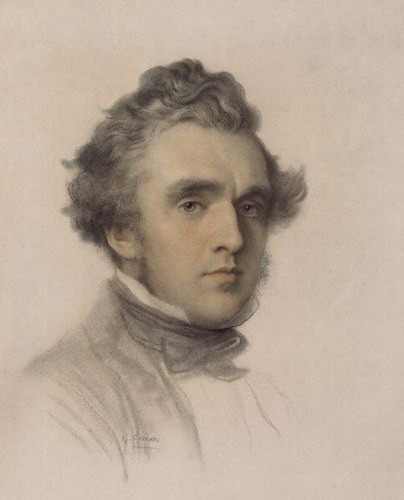
Sir Austen Henry Layard was an English Assyriologist, traveller, cuneiformist, art historian, draughtsman, collector, politician and diplomat. He was born to a mostly English family in Paris and largely raised in Italy. He is best known as the excavator of Nimrud and of Nineveh, where he uncovered a large proportion of the Assyrian palace reliefs known, and in 1851 the library of Ashurbanipal. Most of his finds are now in the British Museum. He made a large amount of money from his best-selling accounts of his excavations. He had a political career between 1852, when he was elected as a Member of Parliament, and 1869, holding various junior ministerial positions. He was then made ambassador to Madrid, then Constantinople, living much of the time in a palazzo he bought in Venice. During this period he built up a significant collection of paintings, which due to a legal loophole he had as a diplomat, he was able to extricate from Venice and bequeath to the National Gallery (as the Layard Bequest) and other British museums.
This book really needs an index, and a description of what is in each chapter. I got this book to read about the fall of Nineveh, but there are many topics in this book that have nothing to do with that. It would have been nice to know which chapters were about what I was looking for since this is not a one-topic book. I was hoping for a description of “how” the city was destroyed. I was expecting the archaeologist to describe the damage he found that would give some hints as to what happened there.
Introduction – This has good information.
Chapter 1 – Getting ready to search for Nineveh and Nimrod.
Chapter 2 – Describing some of his archaeological excavations.
Chapter 3 – Describing some of his archaeological excavations. The riches of ancient Assyria meant that they had the best of technology of their day. People of the 1840s had expectations that the author would give them gifts. He made the month of March in Mesopotamia sound delightful. It is frustrating that the author didn’t mention the name of the kings of Assyria he found etched on the Bas-reliefs. The strict religious sects consider Christians and the people of other religions to be unclean, and won’t even touch something they’ve touched.
Chapter 4 – Descriptions of the lives of women, and some of men interacting with each other. The rich could afford tents and nicer material for their clothes.
Chapter 5 – Excavating ancient Assyrian artifacts across the river from modern-day Mosul, Iraq. Describing the living conditions, feasts, and women.
Chapter 6 – Nineveh was extravagantly wealthy in its heyday, but in the 1840s, when this book was written, it was very poverty stricken. (Sidebar: (not in this book) Its outrageous wealth came from them forcibly taking all the valuable things from all the nations around them. The book of Nahum tells us that God decided that they’d terrorized everyone long enough, and He wiped them from the face of the earth, and even the memory of them from the face of the earth for 2,500 years. After they were gone, the people who lived in the area, apparently, lived an incredibly simple life style.) Somewhere in this book, between chapters 6-8, the author told about a man he saw in rags so he gave him a few handkerchiefs, and those really spruced up his outfit.
Chapter 7 – The author’s travels through small villages in the mountains during the hot season. His observations of how they lived, what they ate, and how they bathed, in the 1840s.
Chapter 8 – Catholicism and the Chaldeans. My memories of this chapter are vague.
Chapter 9 – Is about the worshippers of the devil.
Chapter 10 – He went back to talking about uncovering ancient Assyrian relics to end the book.
This book is written like a diary, or travelogue. You'd need to be interested in the period of history to care enough to keep reading the travelogue of most people, I would imagine. You may need a dictionary a time or two, unless you already know a lot about ancient Assyria.
I read through some lovely original editions of these at the British Library, which no doubt helped to bring the text to life through the age of the ink and the serenity of the reading rooms. The book is hugely well-written. Having read bits from similar accounts of Mesopotamian remains from the period, I found this to have the most artistic and impressionistic merit. I don't want to give too much away for the sake of possible future university work, but suffice it to say that Layard writes with an eye for the contrapuntal relationship between past and present. Layard describes in detail the highs and lows which led to his excavations, including disputes among his workers, building equipment to remove artefacts, and obtaining funding from the British Museum, as well as the details of the archaeological sites themselves. The almost comically regular descriptions of artefacts crumbling upon exposure to the air gave me chills, and it's in these moments that it's intriguing to consider Layard's feelings about his place in all of this. He knows he's pioneering the study of an ancient civilisation, yet he also seems sadly aware of how little he can do to preserve Nimrud from the elements and iconoclasts beyond what he sends to London. This has some painful contemporary resonance; to save it and study it was to pave the way for destruction.
Brilliant 19th century adventure. Layard also goes into religious history, anthropology and politics of the various people he meets with a humanizing perspective.
A wonderful account of Layard's first excavations, of Nimrud rather than Nineveh actually, back in the 1840's, written by the man himself. While he describes something about excavation techniques and certainly the findings as they go along, much of the narrative is also about the local conditions: his travels in the region around Mosul, the different ethnias and tribes and his relationship with them, the evolving politicial and military situation in the area, the delicate diplomacy with the political and religious authorities. What emerges is an energetic Victorian adventurer, passionate about disinterring old stones (although no Arab will believe he is not after buried treasure, and it takes a lot of community outreach for him to make them understand what he is doing and dissuade them from raiding his camp for nonexisting gold!). Some things will make modern archaeologists cringe, and the tale of how the lamassus are moved from the site to be sent to the British Museum is vivid enough to give one nightmares. I was very glad I read this book in preparation for my visit to the Ashurbanipal exhibition at the British Museum, as it added a layer of enjoyment to the pieces (plus, now I know exactly where and when a number of them were found!).
واحد من اكثر الكتب الممتعة الي قريتها، يتحدث عن بدايات التنقيب في العراق واهم الصعوبات والمشاكل التي واجهت لايارد، بنفس الوقت يعطي فكرة عامة عن طبيعة الحياة الإجتماعية التي كانت سائدة في مدينة الموصل قبل اكثر من 175 سنة وابرز العلاقات والمصادمات التي كانت تحصل بين كل من العرب والكرد والايزيدية والمسيحين.
This book was part of a novel I read that I found interesting so felt compelled to read it:[There Are Rivers In The Sky by Elif Shafak] This book was first published in 1848 so most of the history of the Nineveh area was new to me. I found the excavations of the area interesting as well as their struggles and successes.
This entire review has been hidden because of spoilers.