DC went crazy in the 1990s. Thinking that all their characters have become too archaic for the cutting-edged tastes of today's readers, they systematically set out to eliminate all their "old" characters and replace them with "new" characters. Thus we have all the big "events" of the 1990s - the "death" of Superman (to be replaced by FOUR Supermen - and finally the original returned with long hair), the "maiming" of Batman (to be replaced by a psychotic, badly-drawn Jean Paul Valley), the "defeat" of Wonder Woman and the "amputation" of Aquaman.
And there were the "events". Underworld Unleashed. Zero Hour. Final Night. Day of Judgment. Our Worlds At War. Joker's Last Laugh. etc. etc. Mega-crossovers that involve a million titles.
Here in this book, we have DC doing what DC should have been doing. Silver-Age storytelling with a modern sense of the epic. Goyer and Johns here stick to the "comic-characters-as-absurd-heroic-visions" view of past-writers like John Broome and Gardner Fox. There are no attempts here to force the characters to become unneccessarily "adult" ala' the pretentious Vertigo attempts. The characters here dress and talk like comic characters. And that's what they should always have been. And finally, no crossovers. The whole saga happened within ONE title - JSA.
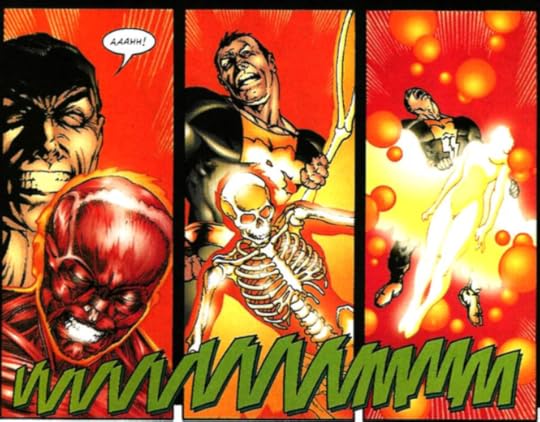
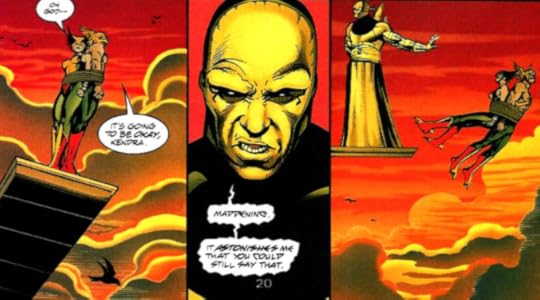
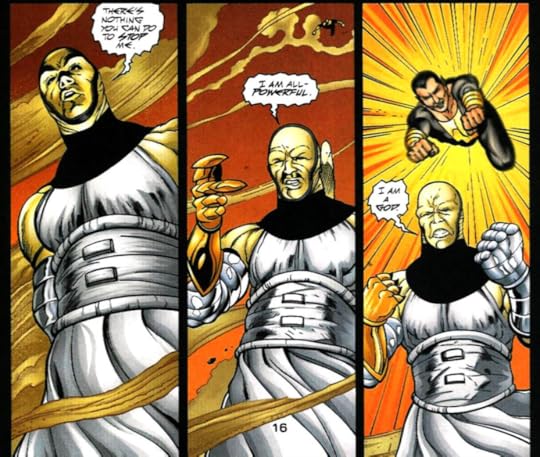
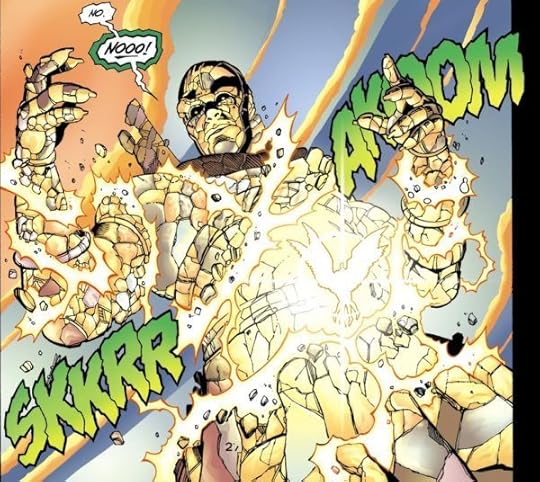
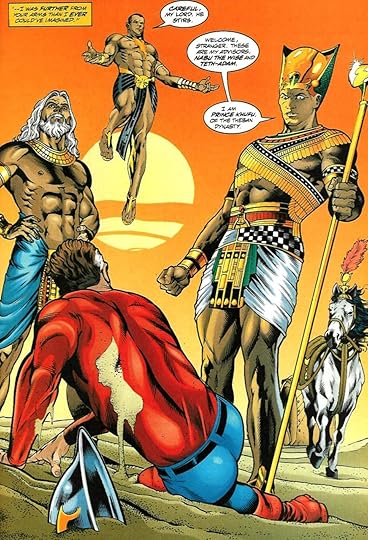
Of course, as the title implies, Hawkman returns. And what an awe-inspiring scene that was. I still get that familiar tingle down my spine looking at that full-page blast of Carter Hall resurrected and proclaiming, "Arise, my once and future love!" And his return was just in time too. As the JSA then rush off to face Onimarr Synn.
Finally, there is that JSA meeting at the end of the story. Hawkman is back. And they do a little re-examination of what the JSA stands for - "Young Justice and the Titans, they look up to the Justice League. But the Justice League... they look up to US!" That's what the JSA is all about - LEGACY, what with being the original super-team in human history.