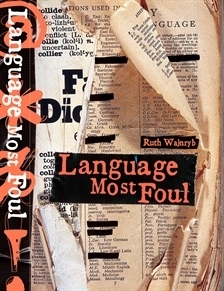
I just finished this book seconds ago and am inspired to write essays about it. Well-written, humorous and fascinating, Ruth Wajnryb covers in her exploration of bad language everything from definitions of bad language (what is a "curse" versus a "swear" versus an "oath" versus an "expletive"?) to the reasons we curse (stubbing one's toe, communicating social bonds, abuse), to who curses, how they do it, and what are we as a society saying by how we react to it?
Especially interesting to me was the brief delving Wajnryb did into culturally-constructed concepts of language, like the inbedded subtle insults hidden in the hyper-formal complexity of Japanese grammatical structures, or even the compelling (if too brief!) mention she gives of the inter-cultural differences in descriptions of visual experiences (silver, for example, being not only a color but a shiny texture as well). The book drags for a bit in the 10th and 11th chapters but is rescued by a great last chapter and a near-perfect epilogue, in which she addresses the newest of the taboo words in English -- the words that imply personal hatred towards someone due to factors beyond their control, such as race, gender, or sexuality, and the movement in the eighties towards a more compassionate system of language. Wajnryb suscintly and deftly traces the path of what she refers to as the "so-called 'Politically Correct' movement, from "a liberal movement to raise awareness of endemic, naturalized, and institutionalized prejudice and discrimination", through its subsequent attack and condemnation (which, interestingly, the Australian Wajnryb ascribes not to conservatives, but to American conservatives specifically), to its final sad resting place as a term of insult, "associated with priggishess and moral self-rightiousness", though with long-lasting social effects.
What keeps this book from being as good as it could be are the few places where Wajnryb fails to research an idea she proposes, even in cases where the research would be very accesible and easily done, such as when she wonders what the sign language (sic) word for deaf is, or when she -- a liguist! -- fails to even differentiate different signed languages (American Sign Language, French Sign Language) but instead refers to "sign language" as though there were only one universal language of the deaf.
Overall, however, Wajnryb does a phenomenal job on this book. It was a pleasure to read, thought-provoking, and a book that I would definitely recommend to anyone interested in language.