

What do you think?

Petit, the Monster
Petit is puzzled. He’s a good boy when he plays with his dog. But he’s a bad boy when he pulls a girl’s hair. He can be very nice to his grandfather but terrible to pigeons. It’s good when he takes care of his toys, but very bad when he doesn’t want to share them. In short, the world is mysterious to Petit. It’s exhausting trying to figure it all out. This book by the three-time Hans Christian Andersen finalist Isol is a brilliant, funny, and ever-so-true recreation of a small boy’s world. The ambiguities and confusions confronting the behavior of people, even small children, are perfectly and lovingly observed and wonderfully illustrated in this little masterpiece. Every child (and every grownup with any honesty) will recognize themselves in this story.
40 pages, Hardcover
First published January 1, 2007
About the author
Isol
51 books87 followersMarisol Misenta, known professionally under the mononym Isol, is one of the most famous authors and illustrators of children's books in the world. She has won the Astrid Lindgren Memorial Award, has twice been selected as a finalist for the Hans Christian Andersenn Award and has won a Golden Apple at the Biennial of Illustration, Bratislava. her many publications include It's Useful to Have a Duck, Beautiful Griselda, Nocturne and Petit, the Monster. Isol is also an advertising illustrator, a professional singer and a comic-book writer. She lives with her family in Buenos Aires.
Ratings & Reviews
Friends & Following
Create a free account to discover what your friends think of this book!
Community Reviews
Displaying 1 - 30 of 39 reviews

October 17, 2011
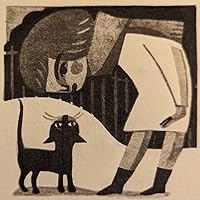
The illustrations are not to my taste, although I liked how Petit appears to have a halo during his 'good' moments and a devil's shadow during his 'bad' moments. This would be good for an independent type reader and does a nice job of conveying the conflicting emotions children may feel as they start to define their moral code. However, it's a bit open-ended so it's more food for thought than a lesson learned.

July 13, 2024
Petit es un niño que tiene un lado bueno y malo, como todos. Él se cuestiona sobre este asunto.
Las ilustraciones son tiernas.
Está bueno para hablar con los chicos sobre el comportamiento y aceptar que a veces nos comportamos de mala manera y es algo que se puede corregir pero no nos convierte en malas personas.
Las ilustraciones son tiernas.
Está bueno para hablar con los chicos sobre el comportamiento y aceptar que a veces nos comportamos de mala manera y es algo que se puede corregir pero no nos convierte en malas personas.

October 22, 2010
Very clever, and the pictures have some depth. I like the semi-hidden shadows of a halo, or devil horns, or a wolf, etc. I missed some of these the first time through. That's why I love hearing someone else's reaction - they often mention something I failed to notice. Thanks, Ginny! :)

June 10, 2017
Tomé prestado un montón de libros sobre monstruos para mis niños. Sucede que este libro no se trata de monstruos. Trata de un niño que no entiende porque a veces es "bueno" y a veces es "malo." El libro está bien, pero no es tan bueno como "Dónde Viven los Monstruos."
April 11, 2026
Çevirmen: Sima Özkan
Orijinal adı Petit, EL Monstruo ve 2010 yılında yayımlanmış. Türkçede birinci baskısı Mart 2019’da yapılmış. Elimdeki Mayıs 2022’de yapılmış ikinci baskısı. Genel olarak hayatın siyah beyaz şeklinde net kategorilere ayrılamayacağı mesajını veriyor diyebilirim. Çocuklarla okurken onların düşünceleriyle ilginç bir okuma olabilir. Dili sade, çizimler özellikle seçilen renklerle farklı.
Orijinal adı Petit, EL Monstruo ve 2010 yılında yayımlanmış. Türkçede birinci baskısı Mart 2019’da yapılmış. Elimdeki Mayıs 2022’de yapılmış ikinci baskısı. Genel olarak hayatın siyah beyaz şeklinde net kategorilere ayrılamayacağı mesajını veriyor diyebilirim. Çocuklarla okurken onların düşünceleriyle ilginç bir okuma olabilir. Dili sade, çizimler özellikle seçilen renklerle farklı.

April 12, 2021
Argentiinalainen Isol on voittanut kansainvälisen arvostetun Astrid Lindgren muistopalkinnon vuonna 2013. Petit on poika, joka on välillä kiltti, välillä tuhma. Tarina on tunnistettavuudessaan sympaattinen, mutta erikoinen kuvitus saattaa olla liian vieraannuttava.
August 29, 2022
Es una historia en donde el protagonista Petit, lleno de dudas y acciones que como niño lo van configurando en su crecimiento, se enfrenta también a las contradicciones cotidianas de su mamá y su propia actitud. Un cuento que nos hace reflexionar.

December 20, 2023
guaxis pel trencament amb la dicotomia bo-dolent. M'ha sabut una mica de greu la representació de la mestra. Pro bien, tot i que no em fascina l'estil de les il•lustracions, hi ha idees guaxis. Molt llibre de valors

May 6, 2024
No sé por qué elegimos estos libros para leerle a los chicos hoy, bueno sí sé, pero no funcó.
Todos preguntan cosas que no preparamos, aaaah el lado lindo de ser docente, no? Incentivar el pensamiento critico y toda esa mierda.
Todos preguntan cosas que no preparamos, aaaah el lado lindo de ser docente, no? Incentivar el pensamiento critico y toda esa mierda.

December 19, 2018
Me vuelve loca el recurso de los dibujos que cuentan por detrás del relato principal.

March 7, 2019
Alle må ku' genkende en del af sig selv i Petit - hvor svært det ind i mellem kan være at navigere i verden og finde ud af, hvad der er rigtigt og forkert, hvad man må og hvad man ikke må.

July 24, 2019
Um livro divertido que põe em paralelo aquilo que distingue um menino bem comportado de outro mal comportado.
October 24, 2020
Petit cambió mi vida. Petit es maravilloso.
Un libro asombroso, una joya.
Un libro asombroso, una joya.
January 11, 2022
me gusto muchoo

April 21, 2023
Love the style and kid-reasoning.

Read
November 5, 2023Me parece un buen libro para hablar con niñxs sobre ética

March 12, 2026
Como siempre el estilo de la autora que sorprende.
Una genialidad y muy reflexivo como todo lo que escribe.
Definitivamente se convierte en mi autora fav ♡.
Una genialidad y muy reflexivo como todo lo que escribe.
Definitivamente se convierte en mi autora fav ♡.

July 16, 2026
monstruosamente humano ❤️
September 10, 2024
con un final que no me encanta, pero veremos cómo lo reciben mis estudiantes <3

August 1, 2013
Petit struggles with whether he is good or bad -- and sometimes it's confusing. For example, he's bad when he tells lies, but good at storytelling. These nuances are presented from a child's perspective, and capture that sense of confusion and trying to figure this crazy world out. Sometimes he means to help . . . but things turn out wrong. So Petit even wonders if he's a monster . . . though his dog certainly doesn't think so! And neither does his mom. A reassuring ending to natural childhood angst.
Isol's illustrations add humor and charm to Petit's plight. Translated by Elisa Amado. Illustrations in pencil, oil pastel and the computer.
Isol's illustrations add humor and charm to Petit's plight. Translated by Elisa Amado. Illustrations in pencil, oil pastel and the computer.

November 17, 2011
Petit is a little boy still learning how to behave. He wonders why a usually good boy sometimes does bad things. His mother wonders the same thing.
This books seems a little backwards as illustrated by the last page:
"Mother is good because she understands and bad when she sends me to bed without dessert."
A mother is not "bad" when she sends a child to bed without dessert. She is making a parental decision.
This books seems a little backwards as illustrated by the last page:
"Mother is good because she understands and bad when she sends me to bed without dessert."
A mother is not "bad" when she sends a child to bed without dessert. She is making a parental decision.

April 30, 2014
Bra och mitt i prick och så. Illustrationerna ör smarta och innebörden är påtaglig men inte glasklar. Känns lite som att Isol har privata små skämt hon vill dela med oss men inte riktigt lyckas...okej nej jag vet inte vad jag babblar! Hemskt söt och fin. Lättläst, smart och rakt på sak. Barnen tas i beaktande och samtidigt som de kan känna igen sig kan äldre läsa mellan raderna. Passar både stor som liten!

January 3, 2014
A boy ponders how he can do good things (play nicely with his dog) and also be capable of doing bad things (not sharing his toys): is he good or is he a monster? I feel like this story could have been going somewhere intriguing, but it never quite mustered up the energy to get there. Isol's illustrations are energetic and clever, though.

October 23, 2013
Tyvärr är jag inte helsåld på Isols stil, hennes illustrationer är uttänkta och smarta men de får mig inte så nyfiken på mer. Men hon är ju inte dålig, så ta er ändå en titt.
Minirecension på bokpotaten.
Minirecension på bokpotaten.

May 21, 2010
What an odd, interesting little book...

July 20, 2010
good boys sometimes behave badly, award winning book translated, philosophy on an inquiring level but no plot

August 18, 2010
Liked this one a lot. I think it can be confusing for children, when the attempt to figure out right from wrong.

November 25, 2010
Conflicted by the good and bad sides of his nature, Petit wonders if he is a monster. Isol's illusrations add whimsy and depth to this story, which asks, "Am I good or am I bad?
December 13, 2010
A conversation starter ... why is Petit bad when he lies but good when he tells stories? Great questions from the perspective of a child.

March 31, 2011
Great book showing that we all have the ability to be both bad and good at different times. We are not all one or the other. Cute.
Displaying 1 - 30 of 39 reviews