Jump to ratings and reviews
Rate this book

Como el Leopardo Obtuvo Sus Manchas

Rate this book
Relates how the greyish-yellowish-brownish leopard came by his spots.

168 pages, Hardcover

Published January 1, 2013

6 people are currently reading
126 people want to read

About the author

Rudyard Kipling

7,211 books3,687 followers
Joseph Rudyard Kipling was a journalist, short-story writer, poet, and novelist.

Kipling's works of fiction include The Jungle Book (1894), Kim (1901), and many short stories, including The Man Who Would Be King (1888). His poems include Mandalay (1890), Gunga Din (1890), The Gods of the Copybook Headings (1919), The White Man's Burden (1899), and If— (1910). He is regarded as a major innovator in the art of the short story; his children's books are classics of children's literature; and one critic described his work as exhibiting "a versatile and luminous narrative gift".

Kipling was one of the most popular writers in the United Kingdom, in both prose and verse, in the late 19th and early 20th centuries. Henry James said: "Kipling strikes me personally as the most complete man of genius (as distinct from fine intelligence) that I have ever known." In 1907, at the age of 41, he was awarded the Nobel Prize in Literature, making him the first English-language writer to receive the prize, and its youngest recipient to date. He was also sounded out for the British Poet Laureateship and on several occasions for a knighthood, both of which he declined.

Awarded the Nobel Prize in Literature in 1907 "in consideration of the power of observation, originality of imagination, virility of ideas and remarkable talent for narration which characterize the creations of this world-famous author."

Kipling kept writing until the early 1930s, but at a slower pace and with much less success than before. On the night of 12 January 1936, Kipling suffered a haemorrhage in his small intestine. He underwent surgery, but died less than a week later on 18 January 1936 at the age of 70 of a perforated duodenal ulcer. Kipling's death had in fact previously been incorrectly announced in a magazine, to which he wrote, "I've just read that I am dead. Don't forget to delete me from your list of subscribers."

Ratings & Reviews

What do you think?
Rate this book

Friends & Following

Create a free account to discover what your friends think of this book!

Community Reviews

5 stars
48 (24%)
4 stars
52 (26%)
3 stars
62 (31%)
2 stars
24 (12%)
1 star
13 (6%)
Displaying 1 - 20 of 20 reviews
Profile Image for Ronyell.
990 reviews339 followers
September 11, 2014
Leopard

“How the Leopard Got His Spots” is the fourth of the “Just So Stories” to be introduced in the Rabbit Ears Storybook Classics Series. The story features narration from Danny Glover, African music from Ladysmith Black Mambazo and Lori Lohstoeter’s colorful and beautiful illustrations.

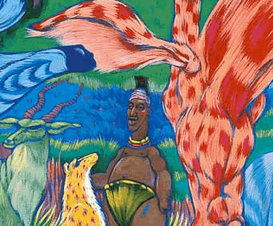
Danny Glover narrates the story with an African accent, making this story filled with an African culture feeling to the story. Also, Danny Glover’s narration is full of energy as he seems to be ecstatic about narrating this “Just So” story. Ladysmith Black Mambazo’s African influenced music is mostly filled with the vocal talents of each member and in perfect harmony, they create a soothing and energetic vocal sounding music that greatly enhances the African roots of the story. Lori Lohstoeter’s illustrations are beautiful and colorful as the illustrator masterfully illustrates each animal with vibrant colors, especially when they changed their colors. The illustrations that are the true highlights of this story are the images of the Leopard drawn as an extremely beautiful creature as he is mostly yellow at first and is more beautiful when his skin is full of purple and reddish spots. Also, the Ethiopian is drawn as a calm and chubby man and when he changes his colors, he becomes more vibrant as he gets darker.

The only problem I found with this story is that Danny Glover’s narration is a bit difficult to understand. Danny Glover sounds as if he has a sore throat when narrating this story as his voice tends to give out on him at certain times such as, when he was describing the animals in the High Veldt and you can barely hear the words “Eland” and “Hartebeest” since his voice gets soft at these words.

“How the Leopard Got His Spots” is another classic from the “Just So Stories” collection and is truly a memorizing story about going through changes in life. This story is probably the most energetic and attractive of the four “Just So Stories” introduced on Rabbit Ears and is surely to delight children ages eight and up.

Review is also on: Rabbit Ears Book Blog

Banner

Profile Image for Megan.
31 reviews
June 23, 2008
Oh best beloved...this has to be one of my absolute favorite books as a child. I would die if I could find a copy of it with the tape recording of Danny Glover.
Profile Image for DivaDiane SM.
1,196 reviews119 followers
December 12, 2014
My son loves leopards and cheetahs, so when he saw the picture on the front he wanted to check it out of the library. The story is good, and the artwork very nice. There are a lot of big words for a 5 year old, so I was explaining a lot of words.
Profile Image for Nacho Cuadrado.
250 reviews7 followers
March 24, 2025
Durante años fueron Jack London y Horacio Quiroga mis principales referentes en cuanto a obras literarias que usarán como personajes a los animales.
Igual no es secreto para nadie que London, más allá de lobos y perros. La participación de otros animales es muy reducida en sus libros. Pero no por ello dejaba de ser extraordinario el factor sorpresa presente en historias como la del perro Buck, cuando inesperadamente hacía frente a un enorme alcé o la de Colmillo Blanco, siendo aún, un cachorro, enfrentando a un lince junto a su madre.
Por el lado de Quiroga, aún tengo muy presente, a pesar de haberlo leído hace más de ocho años. El enfrentamiento entre una cobra real y una anaconda. ¡Simplemente apoteósico! A pesar de mi fobia a las víboras en cualquier presentación.

En esta oportunidad se suma Rudyard Kipling a esa lista de escritores amantes de la naturaleza y su fauna. Este libro fue una grata experiencia por el nivel de inventiva que despliega su autor. A la hora de idear un escenario en dónde se responda a las siguientes preguntas: ¿Cómo obtuvo sus manchas el leopardo, sus barbas la ballena o su joroba el dromedario?
Alucinante es el adjetivo ideal para describir mi impresión tras la lectura de este libro.

Resto de la reseña: https://escritoranubarrado.blogspot.c...
Profile Image for Meandmy Tea.
161 reviews2 followers
August 31, 2023
I really like this book and I still have the cassette tape that came with it read by Danny Glover
Profile Image for J.
3,965 reviews33 followers
July 4, 2017
This book takes one story from the “Just So Stories” by Rudyard Kipling to give some beautiful although in this case unique illustrations while re-telling the story. And until looking over the actual other reviews I didn't know that it was suppose to come with a tape *rats*.

Anyway the reading as with Kipling may be a bit tricky for very much younger crowds since of all the abbreviated words and it is done well to be able to read this book aloud. It is interesting to hear the Audible sample although I don't know if I could choose her as my narrator of the story or not.

The pictures again are quite unique. They are bright while the leopard doesn't look cat-like. As for the Ethiopian I don't know what to say about him at all although the rest of the animals seem to come out okay. And even in the parts where the forest is the pictures are still beautifully done and bright. A beautiful addition to any personal library.
Profile Image for Mloy.
723 reviews
March 15, 2017
The story was kind of cute and I understand that Rudyard Kipling will be a more accomplished writer than I would even dare dream but I just dislike the narrative. I really have no appreciation for writing that uses a tone or dialect that makes the speaker sound like a backwater hillbilly; I understand that it a creative writing license to make your characters speak the way they do in order to add a little flavor to the character or a uniqueness to the story, I just don't care for it.
959 reviews2 followers
April 24, 2016
An African folktale about (of course) the leopard getting its spots, but also how many other animals including man came to be colored the way they were. It unfolds sort of slowly, particularly with the accompanying audio track, but I really enjoyed it as a kid and when I heard it recently it hadn't lost any of its charm.
Profile Image for Melissa.
2,727 reviews42 followers
August 3, 2016
Relates how the leopard got his spotted coat in order to hunt the animals in the dappled shadows of the forest. Some issues with book design. words take up small space, but humorous charming tale with good language.
150 reviews
October 17, 2021
This is a retelling of a classic story passed down about how a leopard came to be spotted. It is an old African tale that has been turned into a picture book for children. There are cool illustrations that go along with the story as well.
Profile Image for Rose.
193 reviews
August 29, 2016
It's like Kipling turned into a teenage girl who needs to make every single word sound excessively cutesy. I'm not having it.
Profile Image for Balasankar C.
106 reviews35 followers
November 2, 2019
From what I could infer, almost all the quality was lost in translation. I could guess what something would've been in English, and how good it was. :D
Displaying 1 - 20 of 20 reviews

Can't find what you're looking for?

Get help and learn more about the design.