

What do you think?
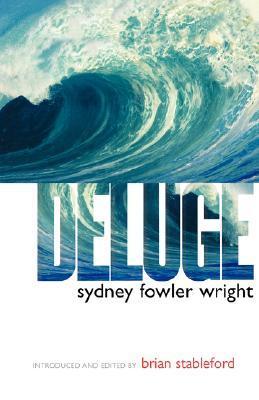
Deluge
The definitive edition of an important 20th-century disaster novel.
First published in 1927, Deluge is one of the most famous of the English catastrophe novels. Beautifully written and action packed―RKO Radio Pictures even filmed this story―the novel depicts a flood so severe that it destroys modern civilization, leaving the few survivors to adapt to the rigors of the natural world. Like other English writers responding to the trauma of World War I, Sydney Fowler Wright expresses a loathing of the worst aspects of industrialization. The flood, in his view, becomes an opportunity for the remaking of society. The protagonists soon realize that civilization and technology have divorced them from the knowledge and skills necessary for survival. Released from their over-reliance on social regulation, they struggle to overcome their own brutality to develop a new sense of community. For over 75 years readers have praised this book for its style and wisdom, and debated the meaning of its controversial ending. This Wesleyan edition is graced with an excellent introduction and annotations by leading science fiction scholar Brian Stableford.
First published in 1927, Deluge is one of the most famous of the English catastrophe novels. Beautifully written and action packed―RKO Radio Pictures even filmed this story―the novel depicts a flood so severe that it destroys modern civilization, leaving the few survivors to adapt to the rigors of the natural world. Like other English writers responding to the trauma of World War I, Sydney Fowler Wright expresses a loathing of the worst aspects of industrialization. The flood, in his view, becomes an opportunity for the remaking of society. The protagonists soon realize that civilization and technology have divorced them from the knowledge and skills necessary for survival. Released from their over-reliance on social regulation, they struggle to overcome their own brutality to develop a new sense of community. For over 75 years readers have praised this book for its style and wisdom, and debated the meaning of its controversial ending. This Wesleyan edition is graced with an excellent introduction and annotations by leading science fiction scholar Brian Stableford.
393 pages, Paperback
First published January 1, 1928
About the author
S. Fowler Wright
126 books12 followersSydney Fowler Wright was a prolific British editor, poet, science fiction author, writer of screenplays, mystery fiction and works in other genres. Most of his work is published as by "S. Fowler Wright", and he also wrote as Sydney Fowler and Anthony Wingrave.
Ratings & Reviews
Friends & Following
Create a free account to discover what your friends think of this book!
Community Reviews
Displaying 1 - 13 of 13 reviews

June 25, 2019
The book is unique, antique, interesting in its abundant prose where each scene or exchange takes many pages when one sentence might have done the deed. I thought it was supposed to be science fiction (that is, what I think of when I think of that genre), but it is a post-apocalyptic tale of a great flood sweeping over most of the UK. Pockets of people survive the deluge and evidence of good and evil traits is articulated within the plot. There are several main characters tracked during the onset of the deluge and their subsequent battles to survive.
Published about 1927 in the UK, but it received more attention and popularity when published in the US where it was also made into a film in 1933 in which the plot was changed to having NYC flooded.
The paperback published by Wesleyan University Press in 2003 has excellent introduction by Brian Stableford that briefs the reader on the author's life. It also includes the author's preface to his second edition of Deluge wherein he defends/refutes criticisms of his work as propaganda. Well, yes, the man had some very strong views. Cars, bad. Bicycles good. Industrialization evil. Wipe out human race and begin again.
Earlier influence was H G Wells
It is a very good read despite taking a wee bit of patience.
A random sample of the introduction of a character to give you a taste:
"There are women who are incapable of tragedy. An invincible triviality protects them.
Mary Wittels was one of this order. Fortune, which had endowed her with a mysterious malady, variously reported as neuritis, rheumatism, or sciatica, but which she honestly believed to be peculiar to herself, had, with an almost equal kindliness, appointed her lodge-keeper to the Staffordshire mansion of the Earl of Hallowby. No one who knew the Earl would be likely to suppose that she received any remuneration from that source and it was therefore a natural development in the social disorder of which she was a by-product, that she should support herself by the retailing of gossip in return for the offerings which her neighbours gave her. She did this without malice, and became, in the course of years, somewhat expert in distinguishing between that which was authentic and that which would bring discredit upon her should she extend its publicity."
Published about 1927 in the UK, but it received more attention and popularity when published in the US where it was also made into a film in 1933 in which the plot was changed to having NYC flooded.
The paperback published by Wesleyan University Press in 2003 has excellent introduction by Brian Stableford that briefs the reader on the author's life. It also includes the author's preface to his second edition of Deluge wherein he defends/refutes criticisms of his work as propaganda. Well, yes, the man had some very strong views. Cars, bad. Bicycles good. Industrialization evil. Wipe out human race and begin again.
Earlier influence was H G Wells
It is a very good read despite taking a wee bit of patience.
A random sample of the introduction of a character to give you a taste:
"There are women who are incapable of tragedy. An invincible triviality protects them.
Mary Wittels was one of this order. Fortune, which had endowed her with a mysterious malady, variously reported as neuritis, rheumatism, or sciatica, but which she honestly believed to be peculiar to herself, had, with an almost equal kindliness, appointed her lodge-keeper to the Staffordshire mansion of the Earl of Hallowby. No one who knew the Earl would be likely to suppose that she received any remuneration from that source and it was therefore a natural development in the social disorder of which she was a by-product, that she should support herself by the retailing of gossip in return for the offerings which her neighbours gave her. She did this without malice, and became, in the course of years, somewhat expert in distinguishing between that which was authentic and that which would bring discredit upon her should she extend its publicity."
November 27, 2018
One of the best post-apocalyptic novels I have read, and quite advanced for the pre-Golden age of sci-fi. S. Fowler Wright is a quite talented wordsmith, and I've enjoyed everything he has written so far.
This novel covers the aftermath of a massive flood, focusing on civilization's initial crawl from the literal mud, at first shocked and traumatized, but soon devolving into a primitive fight for resources.
The result is a bleak and often exciting series of brutal encounters and battles for survival very reminiscent of "The Walking Dead." Highly recommended for fans of post-apocalyptic adventure.
This novel covers the aftermath of a massive flood, focusing on civilization's initial crawl from the literal mud, at first shocked and traumatized, but soon devolving into a primitive fight for resources.
The result is a bleak and often exciting series of brutal encounters and battles for survival very reminiscent of "The Walking Dead." Highly recommended for fans of post-apocalyptic adventure.

September 17, 2020
This book tells the story of some people after a bizarre flood and series of earthquakes drown most of the world. This story details the experiences of a few survivors in England which is reduced to a few small islands. The survivors must forge new lives for themselves in the brutal landscape that has emerged.
I found the dialogue a bit stilted at times, people being overly precise in their sentence construction even for a novel. The characters are somewhat interesting however every once and awhile they verge into territory that is unlikable or odd. The most jarring is the possessiveness of the men combined with a shortage of women that leads to a world where any eligible woman must take a husband as protector to ward off any other men who might take them by force. Even the most sympathetic male characters may reveal a rather brutish possessiveness. However the quick descent of all the characters into a cold blooded frontier justice would mark another example.
The story is told by following one character's perspective until a lull in action or more likely a cliff hanger at which point we follow another character. Often we cover the same period of time from multiple perspectives. This can add interesting depth to some situations but can get tedious when the new material is mostly very predictable from the other.
The part of the book that stands out most to me is the various interjections and descriptions of the narrator that convey what I take to be the author's critique of modern life. Essentially modern life has seen a move away from nature and natural conditions and this has deformed, sickened and infantalized much of the population. The critical eye gets cast far and wide from environmental destruction, harsh industrial labour conditions, the dubious billing practices of lawyers, medical fads and on to egalitarianism, the way modern medicine leads to a sick and weak population hanging on unnecessarily, the rise of birth control, to more minor matters like motorcycles and the rise of the short "bobby" haircut for women. I admit I probably take the most umbrage at the author's more reactionary dismissal of modern virtues I myself support probably annoy me the most. I find this sort of time capsule of one man's view in his time an interesting reflection on the world he lived in, but I think even if you find this sort of reflection on times past interesting it gets tedious at times also.
The Project Gutenberg ebook I read this in seemed pretty well put together and organized with a minimum of typos. The ebook managed to integrate the chapter titles and headings into the table of contents so you can jump around that way fairly easily.
I found the dialogue a bit stilted at times, people being overly precise in their sentence construction even for a novel. The characters are somewhat interesting however every once and awhile they verge into territory that is unlikable or odd. The most jarring is the possessiveness of the men combined with a shortage of women that leads to a world where any eligible woman must take a husband as protector to ward off any other men who might take them by force. Even the most sympathetic male characters may reveal a rather brutish possessiveness. However the quick descent of all the characters into a cold blooded frontier justice would mark another example.
The story is told by following one character's perspective until a lull in action or more likely a cliff hanger at which point we follow another character. Often we cover the same period of time from multiple perspectives. This can add interesting depth to some situations but can get tedious when the new material is mostly very predictable from the other.
The part of the book that stands out most to me is the various interjections and descriptions of the narrator that convey what I take to be the author's critique of modern life. Essentially modern life has seen a move away from nature and natural conditions and this has deformed, sickened and infantalized much of the population. The critical eye gets cast far and wide from environmental destruction, harsh industrial labour conditions, the dubious billing practices of lawyers, medical fads and on to egalitarianism, the way modern medicine leads to a sick and weak population hanging on unnecessarily, the rise of birth control, to more minor matters like motorcycles and the rise of the short "bobby" haircut for women. I admit I probably take the most umbrage at the author's more reactionary dismissal of modern virtues I myself support probably annoy me the most. I find this sort of time capsule of one man's view in his time an interesting reflection on the world he lived in, but I think even if you find this sort of reflection on times past interesting it gets tedious at times also.
The Project Gutenberg ebook I read this in seemed pretty well put together and organized with a minimum of typos. The ebook managed to integrate the chapter titles and headings into the table of contents so you can jump around that way fairly easily.

May 14, 2016
S Fowler Wright is a new author to me. I came across him researching post-apocalyptic cozy catastrophes and am glad I did!
According to the S Fowler Wright website, where I read the book, it was first published in 1928. Many books published that far back were not written with our modern sentiments in mind. Curious that, eh? They were written in a time when people read more slowly and were used to a third person omniscient narrator telling them all manner of things about the characters and the times. A style we aren't used to today. It is the only fault I can find with the book.
Otherwise, Deluge is a top drawer post-apocalyptic cozy catastrophe. Wright was a good story teller and kept the tension and plot twists coming at a rapid rate. The ending was satisfying and yet a surprise.
The disaster is not the result of global warming, how anyone got that is amazing. The ad people need to familiarize themselves with their subject matter. The disaster, in true cozy fashion, is an unexplained seismic phenomenon. The land for no apparent reason simply sinks and the ocean floods in wiping out large portions of continents and islands everywhere. Reference is made to the sinking of the Mediterranean countries. The story itself takes place in what's left of England.
Wright's telling of the aftermath is very believable and makes the tale that much more enjoyable. His characters are well drawn and true to life. They have both good and bad points.
Those readers not used to an older, essentially Victorian style of storytelling, may find Deluge slow in spots, for the omniscient narrator does take us down some side roads that provide information not always necessary for the flow of the story. If one can get by those (in truth, some I skimmed;rather like not reading the whale sections in Moby Dick and just getting on with the story), then one is in for a thrilling story of survival and love and hope for a new and better world order.
According to the S Fowler Wright website, where I read the book, it was first published in 1928. Many books published that far back were not written with our modern sentiments in mind. Curious that, eh? They were written in a time when people read more slowly and were used to a third person omniscient narrator telling them all manner of things about the characters and the times. A style we aren't used to today. It is the only fault I can find with the book.
Otherwise, Deluge is a top drawer post-apocalyptic cozy catastrophe. Wright was a good story teller and kept the tension and plot twists coming at a rapid rate. The ending was satisfying and yet a surprise.
The disaster is not the result of global warming, how anyone got that is amazing. The ad people need to familiarize themselves with their subject matter. The disaster, in true cozy fashion, is an unexplained seismic phenomenon. The land for no apparent reason simply sinks and the ocean floods in wiping out large portions of continents and islands everywhere. Reference is made to the sinking of the Mediterranean countries. The story itself takes place in what's left of England.
Wright's telling of the aftermath is very believable and makes the tale that much more enjoyable. His characters are well drawn and true to life. They have both good and bad points.
Those readers not used to an older, essentially Victorian style of storytelling, may find Deluge slow in spots, for the omniscient narrator does take us down some side roads that provide information not always necessary for the flow of the story. If one can get by those (in truth, some I skimmed;rather like not reading the whale sections in Moby Dick and just getting on with the story), then one is in for a thrilling story of survival and love and hope for a new and better world order.

March 30, 2013
Well I was a little confused/disappointed by this one. The blurb on the e-book website was not very accurate. It was described as a global warming disaster thriller. In reality the disaster happens because of an earthquake....oh and it was written in 1929!!! Apparently it is a classic work of science fiction...and it certainly reads like one. Show don't tell was NOT a rule of writing in 1929 I assure you. Shame on the people at KOBO for misleading their customers on this one! Personally I will not be reading this again or recommending it for that matter.

February 2, 2025
Very enjoyable.
I quite liked the writing style. I found myself rereading a few favourite lines back over just for how good they were, though on the flip side of that I did sometimes have to read back over a whole page because I lost focus in some of the longer descriptions. That second thing really was quite rare though and not a major issue.
I found a lot of the romantic scenes impactful in a way that often, for me, stories fail to properly deliver, and I think the romance is really the fundamental arc of the story, to which the disaster is secondary (though still important of course, and the reason for the situations to exist in the first place.) The different expressions of love with Claire and Helen are both great, they both have passion and loyalty but in different forms, and I appreciated the time spent on the relationship between the two of the women too. The development from the differences between them and the mistrust to the resolution of that is lovely, and was bold then, and remains bold now, but it pays off as a beautiful story. It felt romantic without relying on cliches or signals too.
The societal commentary was well done. It's a little heavy handed at times but only at times, and the novelty of ideas makes up for that. I will say the scenes where Wright writes about his hatred for cars actually got a bit of a laugh out of me, he feels very strongly about it, to the point where the "good" society throws all of the cars off of a cliff into the ocean the first chance they get. On that as well there are a few moments of humour that are unexpected but did make me chuckle. Particularly
The writing on the relationships between men and women, and how we select partners, were probably my favourite parts to read the author's opinions on, and I think they are fairly accurate if you peel away the social conventions that have been built up to replace them, whether you think those conventions are a plus or a minus.
My only real complaint here in terms of the plot is that the tunnel sequence felt like it went on a little too long.
I might read Dawn too. I feel like there's something really good here, but it's just a little bit fragile, so the sequel could either expand on that very well or fail to live up to its predecessor quite easily.
I quite liked the writing style. I found myself rereading a few favourite lines back over just for how good they were, though on the flip side of that I did sometimes have to read back over a whole page because I lost focus in some of the longer descriptions. That second thing really was quite rare though and not a major issue.
I found a lot of the romantic scenes impactful in a way that often, for me, stories fail to properly deliver, and I think the romance is really the fundamental arc of the story, to which the disaster is secondary (though still important of course, and the reason for the situations to exist in the first place.) The different expressions of love with Claire and Helen are both great, they both have passion and loyalty but in different forms, and I appreciated the time spent on the relationship between the two of the women too. The development from the differences between them and the mistrust to the resolution of that is lovely, and was bold then, and remains bold now, but it pays off as a beautiful story. It felt romantic without relying on cliches or signals too.
The societal commentary was well done. It's a little heavy handed at times but only at times, and the novelty of ideas makes up for that. I will say the scenes where Wright writes about his hatred for cars actually got a bit of a laugh out of me, he feels very strongly about it, to the point where the "good" society throws all of the cars off of a cliff into the ocean the first chance they get. On that as well there are a few moments of humour that are unexpected but did make me chuckle. Particularly
The writing on the relationships between men and women, and how we select partners, were probably my favourite parts to read the author's opinions on, and I think they are fairly accurate if you peel away the social conventions that have been built up to replace them, whether you think those conventions are a plus or a minus.
My only real complaint here in terms of the plot is that the tunnel sequence felt like it went on a little too long.
I might read Dawn too. I feel like there's something really good here, but it's just a little bit fragile, so the sequel could either expand on that very well or fail to live up to its predecessor quite easily.

January 18, 2023
I'm going to come across as a terrible philistine here but I hated this. I had to give up after the first 'book' into which the novel is divided.
Even allowing for the fact Deluge was written in the 1920s, the prose is horribly stilted and unnecessarily convoluted. Fowler really can make the act of a sentence last for several pages. And this pompous verbosity can't be completely excused by the times in which he was writing. HG Wells wrote War of the Worlds 20 odd years before Fowler wrote Deluge and Well's prose, although also dated, moves the story along briskly enough. Reading Deluge is like wading through treacle.
In addition to the stultifying pace of the narrative is the total woodeness of Fowler's characters. This lot have their stiff upper lips turned up to eleven! When reading the characters' speech, I couldn't help but hear it in my head in the voice of Harry Enfield's "Mr. Cholmondley-Warner" character.
Here's an example. In this scene, our hero Martin has returned to the ruins of his house to rescue his wife Helen. She, meanwhile, is trapped by the legs under a fallen roof beam. The house is also on fire and the flames are licking closer and closer....
Even allowing for the fact Deluge was written in the 1920s, the prose is horribly stilted and unnecessarily convoluted. Fowler really can make the act of a sentence last for several pages. And this pompous verbosity can't be completely excused by the times in which he was writing. HG Wells wrote War of the Worlds 20 odd years before Fowler wrote Deluge and Well's prose, although also dated, moves the story along briskly enough. Reading Deluge is like wading through treacle.
In addition to the stultifying pace of the narrative is the total woodeness of Fowler's characters. This lot have their stiff upper lips turned up to eleven! When reading the characters' speech, I couldn't help but hear it in my head in the voice of Harry Enfield's "Mr. Cholmondley-Warner" character.
Here's an example. In this scene, our hero Martin has returned to the ruins of his house to rescue his wife Helen. She, meanwhile, is trapped by the legs under a fallen roof beam. The house is also on fire and the flames are licking closer and closer....
He was struggling, in natural haste, toward the site from which the voice came, but now paused as she continued, while his eyes became more accustomed to the gloom, and helped him to understand what she told him. “Wait a moment, and listen. I am pinned under a beam. I don’t feel hurt at all, but I can’t move, and I don’t know whether I am really injured. I didn’t care to struggle hard till you came, because, as you can see, its full weight is not on me now, but if I moved I might bring it. I felt sure when you did not come, and I did not hear them cry, that you had got them safe. You wouldn’t all have been killed at once. So when I heard nothing I just waited. Where have you left them?”

August 29, 2021
https://www.fadedpage.com/showbook.ph...
Post-apocalyptic science fiction with a focus on psychology and philosophy, with lots of internal monologue.
A film version made in Hollywood, very loosely based upon the book, but instead set in New York City was released in 1933 and is available here: https://www.youtube.com/watch?v=RPGI_...
https://en.wikipedia.org/wiki/Deluge_...
https://en.wikipedia.org/wiki/Deluge_...
Post-apocalyptic science fiction with a focus on psychology and philosophy, with lots of internal monologue.
A film version made in Hollywood, very loosely based upon the book, but instead set in New York City was released in 1933 and is available here: https://www.youtube.com/watch?v=RPGI_...
https://en.wikipedia.org/wiki/Deluge_...
https://en.wikipedia.org/wiki/Deluge_...
Wright later watched the final scenes being shot and was disappointed to learn that producers had made changes and chose to not use the ending of the book as the film's ending. He later wrote in his diary that he felt the film was "ghastly" and advised his children not to see it.

May 10, 2020
Character study in post-apocalyptic England. Nature's done something unexpected and as far as our characters can tell, civilization has ended.
The story is generally well told, though the author rhapsodizes from time to time. And the language is a tad stilted, even for its 1927 period. I'm glad I read it, but I shan't be reading it again.
The story is generally well told, though the author rhapsodizes from time to time. And the language is a tad stilted, even for its 1927 period. I'm glad I read it, but I shan't be reading it again.

January 5, 2009
"Deluge" by Sydney Fowler Wright is another book in the Early Classics of Science Fiction series, the excellent series from Wesleyan University Press. Deluge was first published in 1927, and falls into the category of Scientific Romances which experienced a revival between the two World Wars, largely due to Sydney Fowler Wright's novels (The Amphibians, which later became part of the larger work The World Below, and Deluge) as well as his short fiction.
Deluge is an early example, if not the earliest, of a disaster story in which most of the civilized world is wiped out by the land slipping beneath the waves after a series of tremors and is about the fate of civilization for those who remain through the eyes of a few key characters. To the modern reader, the science of the disaster is poor, and his description of the chaos and lawlessness of those who survive probably errs on the side of civility, but as those points are not the point of the story they are easily set aside for those who are interested in this work as part of the history of the genre.
The story is centered on three main characters: Martin, Helen, and Claire. Martin and Helen are married at the time of the disaster, but become separated in such a way as to make them think that the other has died. Claire is on her own, but is victimized by men until she uses her own athletic ability to escape by swimming until she is fortunate enough to find land. Her escape results in her being found by Martin, who has created a safe living place for himself within some caves. However, a group of people who live by taking from the weak are in the area, and ultimately they are found and Helen captured. Martin then performs a rescue and the two find themselves trapped in Martin's caves.
During this time Helen has found safety in a community of people, though their law would give her as the wife to the man who has rescued her, she has become convinced that Martin is still alive and his debt to her husband keeps him from taking her as his wife until he can prove to her that Martin is not still alive. This results in his searching the known land for Martin and ultimately rescuing Martin and Claire, though not until Martin has agreed to take Claire as his wife. Martin, because of his status prior to the disaster as a respected lawyer, is given leadership over the community that has rescued him, and they return in time to rescue the rest of the community from yet another group of men, this time a militant group lead by a self-appointed military man. This results in an end dilemma for Martin and Helen and Claire, which is only partially resolved, in a somewhat surprising fashion, as the intent was for the story to continue in sequels, of which one was published (Dawn) in 1929.
The story touches on a number of themes, including commenting on how fragile civilized society is and the differences between classes in the society of the time. Sydney Fowler Wright wrote without deciding how his stories would end, and this was a method which really works for his style of writing. The story flows easily, and one is not left with a clear cut well-defined ending and that is all to the better. The decisions he makes regarding how man carries on and forms a new society would probably not have come about if he had come up with an ending before writing the story.
Overall, the story has dated a bit, and one could certainly criticize the ending as being sexist, though I personally would not go so far. Instead, I would say it is a product of its time. The period between the World Wars was one of uncertainty, and this is reflected in the disaster theme as individuals are forced to try to survive circumstances which are completely outside their control. The open-ended nature of the ending, though meant to be filled with sequels (one was published), also suits this aspect of the time.
As with most of the Early Classics of Science Fiction series, this edition benefits greatly from the supporting material. Brian Stableford provides an outstanding introduction which covers Sydney Fowler Wright's life and writings and puts it all in context with regards to the period in which he lived. There are also very good notes for those who want more information. This is another very strong entry in the series.
Deluge is an early example, if not the earliest, of a disaster story in which most of the civilized world is wiped out by the land slipping beneath the waves after a series of tremors and is about the fate of civilization for those who remain through the eyes of a few key characters. To the modern reader, the science of the disaster is poor, and his description of the chaos and lawlessness of those who survive probably errs on the side of civility, but as those points are not the point of the story they are easily set aside for those who are interested in this work as part of the history of the genre.
The story is centered on three main characters: Martin, Helen, and Claire. Martin and Helen are married at the time of the disaster, but become separated in such a way as to make them think that the other has died. Claire is on her own, but is victimized by men until she uses her own athletic ability to escape by swimming until she is fortunate enough to find land. Her escape results in her being found by Martin, who has created a safe living place for himself within some caves. However, a group of people who live by taking from the weak are in the area, and ultimately they are found and Helen captured. Martin then performs a rescue and the two find themselves trapped in Martin's caves.
During this time Helen has found safety in a community of people, though their law would give her as the wife to the man who has rescued her, she has become convinced that Martin is still alive and his debt to her husband keeps him from taking her as his wife until he can prove to her that Martin is not still alive. This results in his searching the known land for Martin and ultimately rescuing Martin and Claire, though not until Martin has agreed to take Claire as his wife. Martin, because of his status prior to the disaster as a respected lawyer, is given leadership over the community that has rescued him, and they return in time to rescue the rest of the community from yet another group of men, this time a militant group lead by a self-appointed military man. This results in an end dilemma for Martin and Helen and Claire, which is only partially resolved, in a somewhat surprising fashion, as the intent was for the story to continue in sequels, of which one was published (Dawn) in 1929.
The story touches on a number of themes, including commenting on how fragile civilized society is and the differences between classes in the society of the time. Sydney Fowler Wright wrote without deciding how his stories would end, and this was a method which really works for his style of writing. The story flows easily, and one is not left with a clear cut well-defined ending and that is all to the better. The decisions he makes regarding how man carries on and forms a new society would probably not have come about if he had come up with an ending before writing the story.
Overall, the story has dated a bit, and one could certainly criticize the ending as being sexist, though I personally would not go so far. Instead, I would say it is a product of its time. The period between the World Wars was one of uncertainty, and this is reflected in the disaster theme as individuals are forced to try to survive circumstances which are completely outside their control. The open-ended nature of the ending, though meant to be filled with sequels (one was published), also suits this aspect of the time.
As with most of the Early Classics of Science Fiction series, this edition benefits greatly from the supporting material. Brian Stableford provides an outstanding introduction which covers Sydney Fowler Wright's life and writings and puts it all in context with regards to the period in which he lived. There are also very good notes for those who want more information. This is another very strong entry in the series.

June 20, 2014
This book was written in 1927 set in the not-too-distant future. England (and presumably Europe and beyond?) is destroyed by a huge storm. Winds down trees and buildings and start fires that wipe out towns. The only surviving structures are isolated, well-built, low buildings on the leeward side of hills. Then the waters start to rise as the island tips. The few people who survived the initial storm start moving to find shelter, food, clothing, other survivors and to escape the rising waters that trap and kill another large part of the diminished population.
There are 3 individuals plus a small community with some exiled bands of ruthless individuals that populate the story. To me the characters were less important than the authors view of humanity. This deluge is a chance for humans to rebuild society - a better society. But they quickly come up against the major hurdle of human nature. People are all out for number one, they don't trust each other (for good reason) and it's touch and go whether something survivable and worth keeping will form from this disparate group of humanity.
A lot of the book focuses on the battle of the sexes. The violence of the catastrophe killed more women than men leaving a ratio of 4 men to each woman. This ends up being one of the biggest challenges facing the population - how to manage the competition between the men for the scarce resources of women. The suggestions range from reasonable to horrific but it is an ongoing danger for all.
The book was written not long after WWI ravaged Europe and I presume S. Fowler Wright was pondering whether or not society was on the right track and what we'd be better without (lawyers and cars he seemed to have a specific dislike for) and what we'd be better with (sensible rules rather than complicated laws).
This is a very good read that leaves you thinking. Not many books can be both - this one is worth hunting for.
There are 3 individuals plus a small community with some exiled bands of ruthless individuals that populate the story. To me the characters were less important than the authors view of humanity. This deluge is a chance for humans to rebuild society - a better society. But they quickly come up against the major hurdle of human nature. People are all out for number one, they don't trust each other (for good reason) and it's touch and go whether something survivable and worth keeping will form from this disparate group of humanity.
A lot of the book focuses on the battle of the sexes. The violence of the catastrophe killed more women than men leaving a ratio of 4 men to each woman. This ends up being one of the biggest challenges facing the population - how to manage the competition between the men for the scarce resources of women. The suggestions range from reasonable to horrific but it is an ongoing danger for all.
The book was written not long after WWI ravaged Europe and I presume S. Fowler Wright was pondering whether or not society was on the right track and what we'd be better without (lawyers and cars he seemed to have a specific dislike for) and what we'd be better with (sensible rules rather than complicated laws).
This is a very good read that leaves you thinking. Not many books can be both - this one is worth hunting for.

September 12, 2013
When I first started this book I had a bit of trouble sticking with it. I'm glad that I did! This is a gem of a book that was first published in 1927. It is as good as any of the sci-fi (armagheddon)books that you find today.
Excellent characters, good plot, etc.
Excellent characters, good plot, etc.

Want to Read
May 2, 2019This novel was filmed in 1933.
Displaying 1 - 13 of 13 reviews