

What do you think?
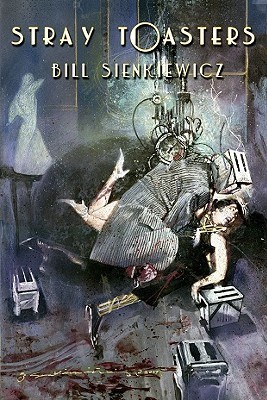
Stray Toasters
Locked up for a crime he didn't commit, burnt out detective Egon Rustemagick is released from a high security mental institution in order to catch a serial-killing monster who is murdering and mutilating housewives and young children. Stray Toasters is the seminal graphic novel written and painted by one of the world's most innovative and influential comic book artists, Bill Sienkiewicz. This dark, scary critically acclaimed tale mixes the sci-fi, noir, mystery and monster genres and sets them in a Blade Runner-like City of the Future. In this full-color definitive annotated volume, Sienkiewicz is at the top of his game. Contains new cover, cover gallery and a few surprises.
224 pages, Paperback
First published January 1, 1988
About the author
Bill Sienkiewicz
988 books151 followersBoleslav William Felix Robert Sienkiewicz is an American artist known for his work in comic books—particularly for Marvel Comics' New Mutants, Moon Knight, and Elektra: Assassin. He is the co-creator of the character David Haller / Legion, the basis for the FX television series Legion.
Sienkiewicz's work in the 1980s was considered revolutionary in mainstream US comics due to his highly stylized art that verged on abstraction and made use of oil painting, photorealism, collage, mimeograph, and other forms generally uncommon in comic books.
Sienkiewicz's work in the 1980s was considered revolutionary in mainstream US comics due to his highly stylized art that verged on abstraction and made use of oil painting, photorealism, collage, mimeograph, and other forms generally uncommon in comic books.
Ratings & Reviews
Friends & Following
Create a free account to discover what your friends think of this book!
Community Reviews
Displaying 1 - 30 of 59 reviews
June 23, 2017
I recently retrieved my 30-year old copies of this from the loft, pleased to find the 4th issue's cover hadn't rubbed off – it's matt black with the title and author in white, but the main design is picked out purely in a gloss laminate. Which felt ridiculously "prog" at the time, but it remains beautiful and for the time it was technically ambitious.
It wAS a most extraordinary comic throughout. Still is, re-read 30 years later. A hybrid Jacobean revenge tragedy and steampunk psychodrama, picked out in a bewildering array of styles. There are brief frames of fragile domestic peace, Klimt-like oases, dotted among the scratched angular portraits, knockabout line-art cartoons, mixed media and woozy delirium pastels. It conveys the visceral insanity and instability of the characters, and the odd sketched out future world.
When Big Numbers sank without trace, 2-3 years after this came out, people cited Bill S's personal issues, and I lazily thought "figures". Oedipal human-robot hybrids, a demon, neurotic lawyers, incest, toast, hallucinations (from alcohol and medical drug), and jam. FIVE STARS
It wAS a most extraordinary comic throughout. Still is, re-read 30 years later. A hybrid Jacobean revenge tragedy and steampunk psychodrama, picked out in a bewildering array of styles. There are brief frames of fragile domestic peace, Klimt-like oases, dotted among the scratched angular portraits, knockabout line-art cartoons, mixed media and woozy delirium pastels. It conveys the visceral insanity and instability of the characters, and the odd sketched out future world.
When Big Numbers sank without trace, 2-3 years after this came out, people cited Bill S's personal issues, and I lazily thought "figures". Oedipal human-robot hybrids, a demon, neurotic lawyers, incest, toast, hallucinations (from alcohol and medical drug), and jam. FIVE STARS
December 29, 2014
Well this was a trip.
A lot of interesting aesthetics, sometimes quite nauseating use of colours and images but I'm sure that was intentional. Part of my brain is stubbornly telling me that this was really a pretty ordinary, not a particularly well-plotted or well-observed story stuck through the psychedelic meatgrinder. The other part of my brain is giving the author the benefit of the doubt. The plot was disjointed in that multiple viewpoints were meshed together and ran concurrently, side by side - it was a bit much to handle at first (the impressionistic surrealist drawings didn't really help) but these plotlines eventually converge to tell a story that wasn't as unusual as the reader was initially led to expect. I think part of the reason why the plot feels a little flat to me is because Sienkiewicz doesn't have quite the sensitivity or the deftness to really crack into his characters' head. He knows that they are disturbed because he is telling a very bizarre story situated in a very intense, oppressive city landscape and hence, as a result, they should think differently from the everyday average person. Expounding on this, he chooses to follow their internal monologues, which either take the form of seething intensities or child-like sing-song speech, a primitive mind that only has enough space for its simple (and destructive) preoccupations, which are themselves governed by a strangely vivid brand of logic. That's all well and good but the internal monologues never become much more than the result of Sienkiewicz's aesthetic choices. This is especially the case in regards to Dahlia, where her psychological intensity and obsessions felt oddly flat to me, in part because her obsessions were too vividly described, too eloquent. Obsessions, I think, are focused on the fact of the matter and not the details of the matter - to have Dahlia be obsessive of dirt/filth/corruption is okay, I guess; to have her internal monologue essentially comprise this vivid string of details of corruptions and dirt feels inauthentic to me, for some reason that I'm not quite able to put into words.
Same thing with Harvard, the lawyer. I guess maybe that's just an unfortunate side-effect having the story told in just 4 volumes, so it's a sort of balancing act for Sienkiewicz - having the story sprawl out over more books would work against the vividness of the drawings and the atmosphere of the world in Stray Toasters; having the story compressed squeezes some of the life out of the characters since the universe doesn't feel quite real to the touch. All we are told is that these characters have very intense emotions (some of which feels definitely contrived to me) which is to be expected after all since they are characters are living in a fucked-up world caught in a fucked up situation. And that's it. From then onwards, the reader peers from a distance as these characters slowly inch their ways towards their violent collision with one another, impelled by the motives spelled out to us by Sienkiewicz. I don't want to harp on the importance of characterisation because that feels like a lazy argument but if the characters don't feel on some level real then there's going to be a degree of disconnect, and since this graphic novel actively courts the attention of its audience/reader from page to page, I doubt that that is Sienkiewicz's intention.
I can't help but compare this with Sam Kieth's The Maxx (or really, most of his other comics) since both authors have a tendency for the surrealistic. Kieth, to his credit, has a sense of humour in the comics; he also isn't satisfied with emotional banality when it comes to his characters and is often willing to take his time in letting circumstances reveal who the characters are without pushing for a particular result. Sienkiewicz does without both these things to the detriment, in my opinion, of this particular story. Still, much of the artwork is great and there are some nice moments in this book. I particularly like the scene where Egon wakes up in the lair of Dr. Violet - "electricity arcing from metal to metal" indeed.
3.5 stars.
A lot of interesting aesthetics, sometimes quite nauseating use of colours and images but I'm sure that was intentional. Part of my brain is stubbornly telling me that this was really a pretty ordinary, not a particularly well-plotted or well-observed story stuck through the psychedelic meatgrinder. The other part of my brain is giving the author the benefit of the doubt. The plot was disjointed in that multiple viewpoints were meshed together and ran concurrently, side by side - it was a bit much to handle at first (the impressionistic surrealist drawings didn't really help) but these plotlines eventually converge to tell a story that wasn't as unusual as the reader was initially led to expect. I think part of the reason why the plot feels a little flat to me is because Sienkiewicz doesn't have quite the sensitivity or the deftness to really crack into his characters' head. He knows that they are disturbed because he is telling a very bizarre story situated in a very intense, oppressive city landscape and hence, as a result, they should think differently from the everyday average person. Expounding on this, he chooses to follow their internal monologues, which either take the form of seething intensities or child-like sing-song speech, a primitive mind that only has enough space for its simple (and destructive) preoccupations, which are themselves governed by a strangely vivid brand of logic. That's all well and good but the internal monologues never become much more than the result of Sienkiewicz's aesthetic choices. This is especially the case in regards to Dahlia, where her psychological intensity and obsessions felt oddly flat to me, in part because her obsessions were too vividly described, too eloquent. Obsessions, I think, are focused on the fact of the matter and not the details of the matter - to have Dahlia be obsessive of dirt/filth/corruption is okay, I guess; to have her internal monologue essentially comprise this vivid string of details of corruptions and dirt feels inauthentic to me, for some reason that I'm not quite able to put into words.
Same thing with Harvard, the lawyer. I guess maybe that's just an unfortunate side-effect having the story told in just 4 volumes, so it's a sort of balancing act for Sienkiewicz - having the story sprawl out over more books would work against the vividness of the drawings and the atmosphere of the world in Stray Toasters; having the story compressed squeezes some of the life out of the characters since the universe doesn't feel quite real to the touch. All we are told is that these characters have very intense emotions (some of which feels definitely contrived to me) which is to be expected after all since they are characters are living in a fucked-up world caught in a fucked up situation. And that's it. From then onwards, the reader peers from a distance as these characters slowly inch their ways towards their violent collision with one another, impelled by the motives spelled out to us by Sienkiewicz. I don't want to harp on the importance of characterisation because that feels like a lazy argument but if the characters don't feel on some level real then there's going to be a degree of disconnect, and since this graphic novel actively courts the attention of its audience/reader from page to page, I doubt that that is Sienkiewicz's intention.
I can't help but compare this with Sam Kieth's The Maxx (or really, most of his other comics) since both authors have a tendency for the surrealistic. Kieth, to his credit, has a sense of humour in the comics; he also isn't satisfied with emotional banality when it comes to his characters and is often willing to take his time in letting circumstances reveal who the characters are without pushing for a particular result. Sienkiewicz does without both these things to the detriment, in my opinion, of this particular story. Still, much of the artwork is great and there are some nice moments in this book. I particularly like the scene where Egon wakes up in the lair of Dr. Violet - "electricity arcing from metal to metal" indeed.
3.5 stars.
August 18, 2009
I remember reading this when it first came out, and I remember liking it then. But such is a comic miniseries that it's easy to forget the nuances of the story during the slow progression of each new issue's release. When I went back to read Stray Toasters collected in the graphic novel format, I found that I was a bit annoyed with the story. What seemed surreal and shocking the first time out now struck me as merely gratuitous, and the story that was being told lacked sufficient meaning to support or justify its mayhem. I still enjoyed Bill Sienkiewicz's art as much as I ever did. It is strange, dreamlike, idiosyncratic. His gifts as a wordsmith are not quite so striking, and his vision as a storyteller in the long form is diffuse. Any single page or spread in the book might appear brilliant, but it adds up to very little. I'm afraid that, after a while, I declined to take this journey all the way to the end a second time.
February 2, 2015
My reading experience can be summarized in two sentences:
1) What the * is going on?
2) No, they don't!
The book confused me a lot in the beginning but made all the more sense in the end. I often had trouble to figure out from which viewpoint (character) the texts were spoken. But...
It has been said that sanity is a slippery slope. 'Stray Toasters' is certainly an excellent embodiment of this thesis: I found it pretty frightening when the maddest actions of the characters suddenly started to make sense.
The art work often evoked an atmosphere of confusion and extraneousness, sometimes bordering on the unintelligible.
Some parts, especially the postcards to hell, I really enjoyed.
It was definitely worth reading it, but overall I found it deeply unsettling.
1) What the * is going on?
2) No, they don't!
The book confused me a lot in the beginning but made all the more sense in the end. I often had trouble to figure out from which viewpoint (character) the texts were spoken. But...
It has been said that sanity is a slippery slope. 'Stray Toasters' is certainly an excellent embodiment of this thesis: I found it pretty frightening when the maddest actions of the characters suddenly started to make sense.
The art work often evoked an atmosphere of confusion and extraneousness, sometimes bordering on the unintelligible.
Some parts, especially the postcards to hell, I really enjoyed.
It was definitely worth reading it, but overall I found it deeply unsettling.
November 12, 2011
One of my all-time favourites - period.
One of the pages from the first book was hanging on the wall of my comics dealer in the late 80's. Pity I was too broke to buy it at the time...
Sienkiewicz, remembering his abused child past, writes a sometimes hard to follow storyline, but one of real domestic horror mixing magic, alcohol enduced trances, the Devil hitch-hiking on earth, and a psychopathic toasterheaded killer.
Graphically speaking, he's following on the path he created along the designing of Elektra Assassin - brilliant!
And I do believe that family circles are triangles...
One of the pages from the first book was hanging on the wall of my comics dealer in the late 80's. Pity I was too broke to buy it at the time...
Sienkiewicz, remembering his abused child past, writes a sometimes hard to follow storyline, but one of real domestic horror mixing magic, alcohol enduced trances, the Devil hitch-hiking on earth, and a psychopathic toasterheaded killer.
Graphically speaking, he's following on the path he created along the designing of Elektra Assassin - brilliant!
And I do believe that family circles are triangles...

December 7, 2008
This was some seriously heavy shit. Unbelievable, gorgeous artwork, and just a very bizarre storyline. Especially Dr. Montana Violet--he sorta deserves a complete "WTF?!" It was sorta surprising how very little we see of the "Toaster Man," but then looking at him compared to all the other adult villains makes sense.
Also really like how we never actually learn who Mona is.
Also really like how we never actually learn who Mona is.

January 20, 2016
The artwork is extraordinary and inventive, but the story is a bit weak and tries too hard to be daring and edgy, and so it comes across as self-indulgent. And the bondage scenes are cliche.
Twenty some odd years ago, I loved this, and it may just be that it has more to say to someone in their early twenties than someone in their mid forties. It's driven by plot and symbolism more than characters, and I have a lot less patience for that than I used to.
Many great panels and pages that are etched into my memory. Dr. Montana Violet's finger falling off, then being eaten by crows and vomited into his mouth. The electric boy, who doesn't need an extension cord to figure it out. The demon on vacation, writing postcards home to hell. Swelling of the brain should not be ruled out, which I remembered as "you can never rule out a brain tumor."
So, four stars. As much for for how I remember it, as opposed to how I experience it now. And the artwork truly is excellent.
Twenty some odd years ago, I loved this, and it may just be that it has more to say to someone in their early twenties than someone in their mid forties. It's driven by plot and symbolism more than characters, and I have a lot less patience for that than I used to.
Many great panels and pages that are etched into my memory. Dr. Montana Violet's finger falling off, then being eaten by crows and vomited into his mouth. The electric boy, who doesn't need an extension cord to figure it out. The demon on vacation, writing postcards home to hell. Swelling of the brain should not be ruled out, which I remembered as "you can never rule out a brain tumor."
So, four stars. As much for for how I remember it, as opposed to how I experience it now. And the artwork truly is excellent.

November 15, 2016
Did you ever read "Sandman: The Doll's House" and wish that the characters made a little less sense but were way scarier, and that every page looked like Dave McKean's famous covers? This story is truly a post-modern nightmare, but like, in a good way. Murder and child abuse abound, so trigger warning for people who don't like to feel like they're inside the heads of murders and child abusers and abused murderers. You have to hang in for the first half of the story while you're being buffeted with the perspectives of several unreliable narrators, but it comes together pretty well and the payoff carries emotional weight beyond the shock-value of its content.

July 29, 2012
one of the weirdest and creepiest comic book series I've ever read

February 2, 2013
While I admire his ambition, this is a mess. Sienkiewicz may be a strong artist, but he has no sense of narrative, plot, pacing or how to use background or extraneous details. The dialogue is especially bad, like he learned a little too much from working with Frank Miller. Even his art, while unique and unnerving, is not quite up there with his best stuff (Love and War, Elektra). Also sometimes I'm suspicious that once you get past the novelty factor, there isn't really that much to Sienkiewicz's art, though I've yet to prove it to myself. There is, however, some really interesting imagery here and he does some impressive things with repeating/linked images.
Read Cages instead.
Read Cages instead.

November 21, 2016
One of those books which as soon as I'd finished, I wanted to start from the beginning again.
I think it would benefit from a second reading, where everything is much clearer and you can appreciate the nuances a bit more. On the first run through I was just trying to work out what was going on, and it only really starts to come together towards the end.
A fun, original novel which makes full use of the graphic novel format and yes - it is casually nuts, but it wasn't used to conceal a poor plot - the plot is actually pretty creative and layered.
The reviews here that say the plot is "simple" - did we read the same book?
I think it would benefit from a second reading, where everything is much clearer and you can appreciate the nuances a bit more. On the first run through I was just trying to work out what was going on, and it only really starts to come together towards the end.
A fun, original novel which makes full use of the graphic novel format and yes - it is casually nuts, but it wasn't used to conceal a poor plot - the plot is actually pretty creative and layered.
The reviews here that say the plot is "simple" - did we read the same book?

October 22, 2012
Originally read the 4-issue "prestige" mini-series in 1988, that's half a lifetime ago... does that mean I'll be reading it agian 26 years from now?
I had absolutely no recollection of what this was when I re-read it last night.
I'm still not completely certain as to what it was that I just read.
Weird Sienkiewicz art, which was to be expected, but just as weird was the Sienciewicz story, which was a lot less expected. Over-all art and story go hand-in-hand on this one. And over-all, a pleasant sort of weird.
I had absolutely no recollection of what this was when I re-read it last night.
I'm still not completely certain as to what it was that I just read.
Weird Sienkiewicz art, which was to be expected, but just as weird was the Sienciewicz story, which was a lot less expected. Over-all art and story go hand-in-hand on this one. And over-all, a pleasant sort of weird.
February 22, 2019
This graphic novel is one of the most confusing and bizarre stories I've ever tried to read - But the artwork is so wild and intriguing that I was strung through like a hungry fish waiting for more nibbles nibbles of data as I swam through the delightful visuals.
About 3/4th of the way though the book, the story HITS me - All the complex pieces began to merge into a larger and surprising story involving abuse and pain.
I am a big fan of Sienkiewicz's artwork, but this particular piece will forever rattle around in my brain's room of favorite things.
About 3/4th of the way though the book, the story HITS me - All the complex pieces began to merge into a larger and surprising story involving abuse and pain.
I am a big fan of Sienkiewicz's artwork, but this particular piece will forever rattle around in my brain's room of favorite things.
August 3, 2014
Edizione definitiva di un'opera degli anni 80 che mantiene a trent'anni di distanza tutta la sua carica rivoluzionaria e sperimentale, sia nella rappresentazione grafica che nella tecnica narrativa.
Da tralasciare una rigorosa analisi razionale e ogni sforzo di comprensione precisa delle singole vignette o di sceneggiatura - a tratti davvero incomprensibile - per farsi travolgere dalle invenzioni disturbanti dell'artista.
Una pietra miliare nel suo genere, ancora attualissima.
Da tralasciare una rigorosa analisi razionale e ogni sforzo di comprensione precisa delle singole vignette o di sceneggiatura - a tratti davvero incomprensibile - per farsi travolgere dalle invenzioni disturbanti dell'artista.
Una pietra miliare nel suo genere, ancora attualissima.

February 25, 2009
Man what a tough read. Starts to make sense towards the end, so its a good one to read twice, since you'll forget all the nutso stuff from the beginning. It's got so many insane characters doing insane things, you will definitely feel lost. But Sienkiewitz's art is so amazing, this is a book to own.

April 4, 2022
I made it about a third of the way in before giving up. Sienkiewicz is a very talented artist, and if I'd read this when it first came out when I was 16 I probably would have loved the darkness of it in the same way I enjoyed Arkham Asylum. But these days I don't have much patience for stream of consciousness, serial killers, and relentless depravity.

January 28, 2009
This is a seriously wierd comic book. Sienkiewicz' story and art are about a killer on the loose who just may be a toaster. It doesn't get stranger than this in the world of comic books and that is saying something.

December 18, 2011
Amazing looking graphic novel, visually one of the best I've ever seen. Sadly, makes zero fucking impact story wise.

June 11, 2017
One of my all time favourite things ever from way back. Sienkiewicz at the top of his game, out there, beautifully mad. I wish he'd done more like this.
August 29, 2026
-IA SLOP REVIEW-
Stray Toasters debe interpretarse como una parábola sobre el cortocircuito afectivo de la sociedad moderna. Sienkiewicz utiliza el ciberpunk no para hablar del espacio o de naves, sino de la intimidad doméstica corrompida.
La tostadora y el televisor, los objetos que se diseñaron para dar comodidad, calor y entretenimiento al hogar burgués, se transforman en instrumentos de tortura y aislamiento. La obra postula que la hiperconexión tecnológica y el control corporativo terminan por cortocircuitar la psicología humana, mutando el amor materno y la inocencia infantil en una maquinaria fría, psicópata, literal y asesina.
La alienación tecnológica y la biomecánica: Muy en la línea de H.R. Giger y David Cronenberg. El cómic explora cómo la tecnología deja de ser una herramienta exterior y pasa a colonizar el cuerpo y el cerebro ("All wired up / Inside out"). La carne se degrada y se funde con el silicio y el cobre.
El trauma materno-filial y la infancia rota: El núcleo emocional de la obra. Explora la sobreprotección destructiva, el abandono y la incapacidad de las instituciones y la psiquiatría fría para sanar las mentes de los niños desamparados. Todd destruye a las madres buscando una "madre pura" idealizada por el algoritmo de su televisor.
La disolución del "Yo" y la locura: Representada a través del propio Egon y del caos estilístico de las páginas. Sienkiewicz plantea que la cordura es una máscara rígida y frágil (como la retícula franco-belga de Tintín), y que bajo la superficie de la ley y el orden late un expresionismo abstracto, un grito de Munch hecho de migrañas, tumores y confusión existencial.
La burocracia deshumanizada y el cinismo corporativo: El toque de humor negro que detectaste. Las notas marginales de los doctores y los científicos de Monomax tratan el dolor de Egon o la muerte de las mujeres como simples datos estadísticos, variables de un experimento o "chistes crueles de la vida". Mientras el mundo se quema en un cuadro expresionista, el sistema se detiene de forma cínica a admirar si la alfombra del laboratorio es bonita ("Really nice carpet")
Stray Toasters debe interpretarse como una parábola sobre el cortocircuito afectivo de la sociedad moderna. Sienkiewicz utiliza el ciberpunk no para hablar del espacio o de naves, sino de la intimidad doméstica corrompida.
La tostadora y el televisor, los objetos que se diseñaron para dar comodidad, calor y entretenimiento al hogar burgués, se transforman en instrumentos de tortura y aislamiento. La obra postula que la hiperconexión tecnológica y el control corporativo terminan por cortocircuitar la psicología humana, mutando el amor materno y la inocencia infantil en una maquinaria fría, psicópata, literal y asesina.
La alienación tecnológica y la biomecánica: Muy en la línea de H.R. Giger y David Cronenberg. El cómic explora cómo la tecnología deja de ser una herramienta exterior y pasa a colonizar el cuerpo y el cerebro ("All wired up / Inside out"). La carne se degrada y se funde con el silicio y el cobre.
El trauma materno-filial y la infancia rota: El núcleo emocional de la obra. Explora la sobreprotección destructiva, el abandono y la incapacidad de las instituciones y la psiquiatría fría para sanar las mentes de los niños desamparados. Todd destruye a las madres buscando una "madre pura" idealizada por el algoritmo de su televisor.
La disolución del "Yo" y la locura: Representada a través del propio Egon y del caos estilístico de las páginas. Sienkiewicz plantea que la cordura es una máscara rígida y frágil (como la retícula franco-belga de Tintín), y que bajo la superficie de la ley y el orden late un expresionismo abstracto, un grito de Munch hecho de migrañas, tumores y confusión existencial.
La burocracia deshumanizada y el cinismo corporativo: El toque de humor negro que detectaste. Las notas marginales de los doctores y los científicos de Monomax tratan el dolor de Egon o la muerte de las mujeres como simples datos estadísticos, variables de un experimento o "chistes crueles de la vida". Mientras el mundo se quema en un cuadro expresionista, el sistema se detiene de forma cínica a admirar si la alfombra del laboratorio es bonita ("Really nice carpet")

March 14, 2021
So what happens when you give one of the most innovative comics artists of the late 80s full creative freedom on a creator owned project? Absolute madness and unbridled creativity, is what.
This book is insane, in every way possible. Sienkiewicz let his artistic urges take the reigns, and it result in a kind of relentless mish-mash of visual influences, that somehow end up working surprisingly well together. Almost every page has a different approach. From impressionistic oil paintings, to scratchy black and white pages, to mixed media collages. Klimt to Miller to Picasso to Hewlett. But always decidedly Sienkiewicz. It's mad. Just mad.
And the reason it works so well, I think, is because the story is equally crazy. It starts of willfully obtuse. You're not quite exactly what's happening, if everything is just a fever dream or a metaphorical tale. It slowly starts coming together, issue by issue, building a somewhat neo-noir cyberpunk world built on silliness and depravity.
But it also ends up being unexpectedly very face value. Or maybe I just missed something. I just feel like it started out very open ended and the more you learn about the world and the narrative, the more it becomes this kind of basic "bad guy does bad shit" story. The characters are mostly interesting, if a little underdeveloped, but hardly ever serve much more than to move the story forward and give meaning to new twists and turns.
I also think Sienkiewicz to one too many pages out of Miller's book while working with him. The writing is similar to their collaboration on Elektra. Very hectic, with dialogue that always trips on itself. I get that it's a stylistic choice, but it makes for a frustrating experience
As a piece of contemporary art, I think it's incredible. As a narrative work I didn't care much for it at all. So when you put two and two together, it comes out as a kind of middling comic book experience. Definitely recommend giving it a try though
This book is insane, in every way possible. Sienkiewicz let his artistic urges take the reigns, and it result in a kind of relentless mish-mash of visual influences, that somehow end up working surprisingly well together. Almost every page has a different approach. From impressionistic oil paintings, to scratchy black and white pages, to mixed media collages. Klimt to Miller to Picasso to Hewlett. But always decidedly Sienkiewicz. It's mad. Just mad.
And the reason it works so well, I think, is because the story is equally crazy. It starts of willfully obtuse. You're not quite exactly what's happening, if everything is just a fever dream or a metaphorical tale. It slowly starts coming together, issue by issue, building a somewhat neo-noir cyberpunk world built on silliness and depravity.
But it also ends up being unexpectedly very face value. Or maybe I just missed something. I just feel like it started out very open ended and the more you learn about the world and the narrative, the more it becomes this kind of basic "bad guy does bad shit" story. The characters are mostly interesting, if a little underdeveloped, but hardly ever serve much more than to move the story forward and give meaning to new twists and turns.
I also think Sienkiewicz to one too many pages out of Miller's book while working with him. The writing is similar to their collaboration on Elektra. Very hectic, with dialogue that always trips on itself. I get that it's a stylistic choice, but it makes for a frustrating experience
As a piece of contemporary art, I think it's incredible. As a narrative work I didn't care much for it at all. So when you put two and two together, it comes out as a kind of middling comic book experience. Definitely recommend giving it a try though
September 11, 2022
Der Kriminalpsychologe Dr. Egon Rustemagik wurde kürzlich aus einer Nervenheilanstalt entlassen, in der er wegen Halluzinationen und Alkoholabhängigkeit einsaß, um die Polizei bei Mordermittlungen zu unterstützen. In der Stadt ereigneten sich gleich zwei Mordserien, in der Frauen und kleine Jungen verstümmelt und ermordet wurden.
Privat steht er zwischen seiner Geliebten Dahlia, die einen Roboterbutler mit einem Toaster als Kopf hat und seiner Ex-Frau Abby, die eine Psychiaterin mit merkwürdigen Behandlungspraktiken ist.
Sie alle verbindet Todd, ein offensichtlich autistischer Junge, der nur Toast mit Marmelade isst und sehr technikaffin ist - ein verrückter Wissenschaftler, der innerlich verfault, ist daran nicht ganz unschuldig.
Wir begleiten auch den Teufel, der unerkannt in den USA als Tourist unterwegs und auf der Jagd nach Souvenirs für die daheimgebliebene Familie ist.
Diese Mischung aus Krimi, Sci-Fi und Psychodrama ist Ende der 1980er entstanden und spielt in der nahen Zukunft, in der fast nur noch männliche Kinder geboren werden und es kaum noch Tiere gibt.
Die Zeichnungen sind ein wilder Mix aus Collagen, Ölmalerei, Bleistift, Tusche, Aquarell und Fotografie und was hier aus dem Toaster hüpft, dürfte vielleicht nicht jedem schmecken.
Wer aber unkonventionelle Panels und Strukturen mag, die fernab des Üblichen und nicht ganz einfach zu lesen sind, ist hier goldrichtig. Solch eine Graphic Novel sieht man nicht jeden Tag.
Diese Ausgabe aus dem Splitter-Verlag umfasst die komplette vierteilige Miniserie inklusive Bonusmaterial.
Privat steht er zwischen seiner Geliebten Dahlia, die einen Roboterbutler mit einem Toaster als Kopf hat und seiner Ex-Frau Abby, die eine Psychiaterin mit merkwürdigen Behandlungspraktiken ist.
Sie alle verbindet Todd, ein offensichtlich autistischer Junge, der nur Toast mit Marmelade isst und sehr technikaffin ist - ein verrückter Wissenschaftler, der innerlich verfault, ist daran nicht ganz unschuldig.
Wir begleiten auch den Teufel, der unerkannt in den USA als Tourist unterwegs und auf der Jagd nach Souvenirs für die daheimgebliebene Familie ist.
Diese Mischung aus Krimi, Sci-Fi und Psychodrama ist Ende der 1980er entstanden und spielt in der nahen Zukunft, in der fast nur noch männliche Kinder geboren werden und es kaum noch Tiere gibt.
Die Zeichnungen sind ein wilder Mix aus Collagen, Ölmalerei, Bleistift, Tusche, Aquarell und Fotografie und was hier aus dem Toaster hüpft, dürfte vielleicht nicht jedem schmecken.
Wer aber unkonventionelle Panels und Strukturen mag, die fernab des Üblichen und nicht ganz einfach zu lesen sind, ist hier goldrichtig. Solch eine Graphic Novel sieht man nicht jeden Tag.
Diese Ausgabe aus dem Splitter-Verlag umfasst die komplette vierteilige Miniserie inklusive Bonusmaterial.

October 31, 2023
Gurizada, eu não sei o que a galera usava no fim dos anos 80, mas estou interessado, inclusive sugiro, para a próxima edição, o subtítulo: 5e20 às 1620.
Sério, eu já li muita coisa estranha nesta vida de leitor, mas essa aqui é especial, não sei se no bom sentido.
É importante ressaltar que eu sou muito fã do 5e20 desde a época dos Novos Mutantes, acho um dos artistas mais singulares dos quadrinhos, daqueles que só de olhar pro desenho a gente já sabe de quem é, e aqui tem um pouco de tudo, é uma loucura total, cada personagem tem um estilo de desenho de letramento único que deveria ajudar no entendimento da história, porém nada é tão fácil assim; a história é bem confusa.
Aparentemente, um assassino está matando donas de casa e crianças substituindo pedaços do corpo por equipamentos de eletrodomésticos, claro, a melhor opção para investigar o caso é um detetive que acabou de sair de um instituição mental. Não tem como dar errado.
Devido a mais pura coincidência, todos os outros personagens tem alguma ligação com o detetive; a ex-namorada psiquiatra que atende um advogado com problemas mentais, a outra ex pseudo religiosa que controla um médico que parece um cientista maluco, um piá que fica o tempo inteiro querendo comer pão com geleia e um demônio que coleciona gatos. É bem difícil de entender e acho que ficou muito pelo caminho, mas a maneira de contar a história é tão única que deixa a experiência muito legal, ainda que volta e meia não se faça a menor ideia do que tá acontecendo.
Sério, eu já li muita coisa estranha nesta vida de leitor, mas essa aqui é especial, não sei se no bom sentido.
É importante ressaltar que eu sou muito fã do 5e20 desde a época dos Novos Mutantes, acho um dos artistas mais singulares dos quadrinhos, daqueles que só de olhar pro desenho a gente já sabe de quem é, e aqui tem um pouco de tudo, é uma loucura total, cada personagem tem um estilo de desenho de letramento único que deveria ajudar no entendimento da história, porém nada é tão fácil assim; a história é bem confusa.
Aparentemente, um assassino está matando donas de casa e crianças substituindo pedaços do corpo por equipamentos de eletrodomésticos, claro, a melhor opção para investigar o caso é um detetive que acabou de sair de um instituição mental. Não tem como dar errado.
Devido a mais pura coincidência, todos os outros personagens tem alguma ligação com o detetive; a ex-namorada psiquiatra que atende um advogado com problemas mentais, a outra ex pseudo religiosa que controla um médico que parece um cientista maluco, um piá que fica o tempo inteiro querendo comer pão com geleia e um demônio que coleciona gatos. É bem difícil de entender e acho que ficou muito pelo caminho, mas a maneira de contar a história é tão única que deixa a experiência muito legal, ainda que volta e meia não se faça a menor ideia do que tá acontecendo.

November 2, 2024
Sienkiewicz is firing on all cylinders here, with his work sliding between painting, comic art, collage and back as the situation requires. A lot of what makes this book work is his ability to produce striking images that capture the nightmarish world he's created.
The whole comic unfolds like a nightmare in what's implied to be a far future setting where most animals have died and been replaced. The cast are all caught up in their own neuroses as multiple killers are running about in a world that has lost almost all sense of empathy. Newscasts can barely stay on topic about horrific crimes while people prattle on about TV shows and home shopping, with one advertisement per chapter for bizarre toasters.
The story is a mix of a Jacobean revenge play, with a very Freudian take on psychology about our childhood development along with our obsessions with sex and death, and a Burroughs-ian nightmare with hints of Philip K. Dick.
It might not be the most complicated narrative, but the book is such a perfectly cohesive whole that it's hard to really criticize that. The art feeds into writing which feeds back into the art. If I could criticize anything it would simply be that I wish the book was larger to really let you experience Sienkiewicz's art.
The whole comic unfolds like a nightmare in what's implied to be a far future setting where most animals have died and been replaced. The cast are all caught up in their own neuroses as multiple killers are running about in a world that has lost almost all sense of empathy. Newscasts can barely stay on topic about horrific crimes while people prattle on about TV shows and home shopping, with one advertisement per chapter for bizarre toasters.
The story is a mix of a Jacobean revenge play, with a very Freudian take on psychology about our childhood development along with our obsessions with sex and death, and a Burroughs-ian nightmare with hints of Philip K. Dick.
It might not be the most complicated narrative, but the book is such a perfectly cohesive whole that it's hard to really criticize that. The art feeds into writing which feeds back into the art. If I could criticize anything it would simply be that I wish the book was larger to really let you experience Sienkiewicz's art.

February 6, 2025
I have one of the numbered and signed hardcover editions, an original double page spread, and the single issue comics. Clearly, I think it’s great. Like a delicious meal, it’s best with all of the elements combined. The individual pieces making up Stray Toasters, taken on their own, might not point to the masterpiece that it is when Sienkiewicz combines them all together. There are artists I like who leave me disappointed when they try their hand at writing. That might be your case here, and certainly if you’re not a fan of his art you’re unlikely to enjoy yourself. However, I think Sienkiewicz pulls it off. All of the elements are right up my alley, and his art engages my brain in a way few, if any, other artists can. With Stray Toasters, he plays to his strengths, limits his weaknesses, and gets it done without dragging it on. Chaykin’s Black Kiss got more attention (because sex), but Stray Toasters was the arthouse epitome of the zeitgeist in 1988. Artists are storytellers, but not all artists are writers. This was the story Sienkiewicz needed to tell, he did it brilliantly, then he continued his career as one of the most unique and influential comics artists of his generation.
May 30, 2025
Sienkiewicz’s art is always incredible, and the way he shifts styles here is masterful. The book goes from standard 9-panel pages to full or two page spreads unlike anything you’ve ever seen. His writing might be a little too ambitious? A surreal sci-fi horror/black comedy satire, even with 50 page issues there’s a lot going on and it doesn’t always come together. The Harvard Chalky and demon subplots feel like maybe too much when you’re still wrapping your head around what’s going on in the main plot. But the themes it’s tackling are fascinating, alluding to childhood trauma and the messed-up dynamic of nuclear family structures. Props to the lettering for helping to sift the confusion, as the constant narrator switches are clearly marked, even when the order of dialogue is sometimes a mess. Maybe not the best book but also not one we’ll easily forget.
August 16, 2017
This graphic novel reads like the hand-drawn wall scrawlings of a toaster-obsessed, demon-possessed madman who had been locked away in a jail cell for years with nothing but Ren & Stimpy cartoons, Blade Runner and jam on toast to accompany him. That's what sets it apart from its peers. It also features incredibly affective/effective/disturbing/powerful/beautiful art. If you want to stare into the abyss and see it stare back, this is a good place to start.
April 28, 2021
I feel like my ratings are very harsh this week, but despite the amazing art, and my memories of 19 year old me absolutely adoring this back in the day, I really struggled with this. I’m sure Bill had the narrative clear in his head all along, but by good it was difficult to keep track of everything along the way. By god some of that art is so good, i had to give it an extra star.
January 19, 2022
This book is experimental, it's gorgeous, it's hideous, it's baffling, it's off-putting, it's thoroughly engaging . . .
In short, it's an experience. It defies concise description or definition. It's a prime example of a talented creator telling a story as he wants to. And, it should not be missed.
In short, it's an experience. It defies concise description or definition. It's a prime example of a talented creator telling a story as he wants to. And, it should not be missed.

July 11, 2020
Bizarre.
Graphics are boggling and do vary pretty much from page to page.
The story is just too out there (as what was likely intended).
A solid 4.0 Stars.
A thumb's up to the flying pink elephants.
Displaying 1 - 30 of 59 reviews