

What do you think?
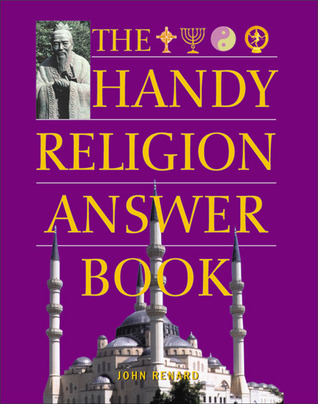
The Handy Answer Book
The Handy Religion Answer Book
The spiritual world we live in today is a diverse and sometimes highly individual mix of religious practices and beliefs. The physical world is a much smaller place, often secular in appearance but still very much fueled by religious beliefs and conflict in the name of God. The Handy Religion Answer Book provides solid descriptions of major beliefs and rituals worldwide, affording the reader an understanding of contemporary religion. Clearly and eloquently written by a scholar with 30 years of study and teaching experience, Handy Religion is an easy-to-use comparative guide for anyone seeking basic religious literacy and intellectual history. The Handy Religion Answer Book looks specifically at the world’s religious traditions that trace their origins to the Middle East (Judaism, Christianity, Islam), South East Asia (Buddhism, Hinduism), and East Asia (Confucianism, Taoism, Shinto). Is there such a thing as a Muslim saint? What is the significance of the Star of David? How did so many different Christian churches come into being? What is the importance of the month of Ramadan? Do Hindus really believe in and worship many gods? Who was the Buddha and what does tradition say about his early life? Dr. John Renard examines each religion for history and sources, religious beliefs, signs and symbols, membership, community, diversity, leadership, authority, organization, personalities, and powers, holidays and regular observances, and customs and rituals. Handy Religion includes 125 illustrations, suggestions for further reading, and a global timeline of the history of religion.
624 pages, Paperback
First published January 1, 2001
Ratings & Reviews
Friends & Following
Create a free account to discover what your friends think of this book!
Community Reviews
Displaying 1 - 9 of 9 reviews

October 23, 2015
The Handy Religion Answer Book by John Renard is a very useful resource for those who wish to know and understand the beliefs and structures of the five main world religions and a handful of other Eastern religions and traditions. This is a very good starting point for any person interested in the subject matter or has a class and needs or wants a study guide or reference tool.
However, there are some problems with it. Daoism, Confucianism, and Shintoism are predominately more philosophical than religious. The author acknowledges this, which begs the question, why then were these worldviews included? Why not other worldviews as well? There are plenty of traditions and faiths in the world not included in this book.
The book also offers a brief glimpse into a few denominations of larger faiths, like Mormonism in Christianity or Sufism in Islam. I wish it expanded on this and included some others like Seventh-Day Adventists and the Moravians instead of adding traditions that don't really profess to be religions.
Another minor critique is how the author also uses theological terms used in Western religions interchangeably with those of Eastern. The problem with that is a reader could be confused or mislead to believe something about a religion that isn't quite accurate. Such as salvation is not really a term or major theme in Hinduism or Buddhism. Moksha and Nirvana are these faiths' goals, and they do not equate salvation in comparison to Christianity. I wish the author would more clearly define his words and explain his answers better.
Furthermore, my main problem with this book, and with the author, stems a bit from my previous point. According to the book, the author teaches Comparative Religion courses. At some points in the book, John Renard tries to reconcile the irreconcilable. It can be argued that from my previous problem stated, this is were it came from. He tries too hard to make these religions appear very similar, when in various cases, they really aren't. Renard should have simply given the information, similarities and differences in all, instead of trying to equate them too much to one another. Such as when he tries to make Christianity and Islam seem as though they have more in common then they really do. I also found this in his 101 Questions and Answers on Islam, and see it has carried over to this book.
My final issue with this book, is that it appears to have some basis in some liberal theological scholarship. He states in the chapter on Judaism how the Torah (Old Testament) was all written after the Babylonian Exile instead of by the authors and times that the ancient texts state. This is not agreed upon by every theologian and should be looked into more by the author and reader.
My conclusion then is, that this book is a great resource. I would recommend it for a classroom setting, a teacher or student. It does, however, have some problems and slants to it. Other than that, it was a good read.
However, there are some problems with it. Daoism, Confucianism, and Shintoism are predominately more philosophical than religious. The author acknowledges this, which begs the question, why then were these worldviews included? Why not other worldviews as well? There are plenty of traditions and faiths in the world not included in this book.
The book also offers a brief glimpse into a few denominations of larger faiths, like Mormonism in Christianity or Sufism in Islam. I wish it expanded on this and included some others like Seventh-Day Adventists and the Moravians instead of adding traditions that don't really profess to be religions.
Another minor critique is how the author also uses theological terms used in Western religions interchangeably with those of Eastern. The problem with that is a reader could be confused or mislead to believe something about a religion that isn't quite accurate. Such as salvation is not really a term or major theme in Hinduism or Buddhism. Moksha and Nirvana are these faiths' goals, and they do not equate salvation in comparison to Christianity. I wish the author would more clearly define his words and explain his answers better.
Furthermore, my main problem with this book, and with the author, stems a bit from my previous point. According to the book, the author teaches Comparative Religion courses. At some points in the book, John Renard tries to reconcile the irreconcilable. It can be argued that from my previous problem stated, this is were it came from. He tries too hard to make these religions appear very similar, when in various cases, they really aren't. Renard should have simply given the information, similarities and differences in all, instead of trying to equate them too much to one another. Such as when he tries to make Christianity and Islam seem as though they have more in common then they really do. I also found this in his 101 Questions and Answers on Islam, and see it has carried over to this book.
My final issue with this book, is that it appears to have some basis in some liberal theological scholarship. He states in the chapter on Judaism how the Torah (Old Testament) was all written after the Babylonian Exile instead of by the authors and times that the ancient texts state. This is not agreed upon by every theologian and should be looked into more by the author and reader.
My conclusion then is, that this book is a great resource. I would recommend it for a classroom setting, a teacher or student. It does, however, have some problems and slants to it. Other than that, it was a good read.
June 25, 2013
Renard, J. (2012). The handy religion answer book. Detroit: Visible Ink Press.
Citation by: Robbie Biddle
Type of Reference: Handbook
Call Number: Ref 291
Content/Scope: Is a handbook that targets grades nine and up. It contains information on all the world religions. It has a timeline that explains when specific religions were created.
Accuracy/Authority/Bias: This book is written by a man that has over forty years studying and teaching experience in the field. It is now in its 2nd edition.
Arrangement/Presentation: The book is arranged in question and answer format that is easy to follow. The book answers more than one thousand religion specific questions. The book contains both a glossary of religious terminology and maps that help supplement the literature.
Relation to other works: In relations to other works this book gives a general knowledge of different world religions. Its straightforward question and answer format would be appealing to most students.
Accessibility/Diversity: This book is accessible to lower level students because the straight forward answers do not require as much synthesis as more complex texts. The various questions combined however could be synthesized together to create a higher level of thinking.
Cost: $34.95
Professional Review: Rollyson, C. (2012). Reference reviews: August 2012. School Library Journal Retrieved June 25, 2013, from http://www.slj.com/2012/08/books-medi...
Citation by: Robbie Biddle
Type of Reference: Handbook
Call Number: Ref 291
Content/Scope: Is a handbook that targets grades nine and up. It contains information on all the world religions. It has a timeline that explains when specific religions were created.
Accuracy/Authority/Bias: This book is written by a man that has over forty years studying and teaching experience in the field. It is now in its 2nd edition.
Arrangement/Presentation: The book is arranged in question and answer format that is easy to follow. The book answers more than one thousand religion specific questions. The book contains both a glossary of religious terminology and maps that help supplement the literature.
Relation to other works: In relations to other works this book gives a general knowledge of different world religions. Its straightforward question and answer format would be appealing to most students.
Accessibility/Diversity: This book is accessible to lower level students because the straight forward answers do not require as much synthesis as more complex texts. The various questions combined however could be synthesized together to create a higher level of thinking.
Cost: $34.95
Professional Review: Rollyson, C. (2012). Reference reviews: August 2012. School Library Journal Retrieved June 25, 2013, from http://www.slj.com/2012/08/books-medi...
Read
April 27, 2013Name: Jessica M. Dilsaver
Type of Reference: Handbook
Reference Citation: Renard, J. (2012). The handy religion answer book. Canton, MI: Visible Ink Press.
Call Number: Ref 299
Brief Description: Concise and accessible, this book for lay readers provides elemental, balanced coverage of Judaism, Christianity, Islam, Hinduism, Buddhism, Daoism and CCT (Chinese Community Traditions), Shinto, and Confucianism. The author uses a question-and-answer format, with each question appearing in large, bold font, making browsing for a particular topic a breeze. The answers describe history, beliefs, signs and symbols, leadership roles, holidays and other regular observances, and customs and rituals, dispelling stereotypes in the process.
Professional Review: Prince, J. (2012, August). [Review of the book The handy religion answer book]. School Library Journal. Retrieved from http://www.slj.com/category/books-med...
Criteria:
Content Scope: This handbook discusses common questions about a variety of religions all over the world. It delves into historical background as well as the influence of Westernization on world religions.
Accuracy, Authority, and Bias: The book covers the most popular world religions, but does leave some less practiced religions behind in the content. All topics are discussed by addressing points and counterpoints from various authorities and critics.
Arrangement and Presentation: The book’s layout is arranged by religion and popular questions about each. There is an index for readers to search by question and topic.
Relation to Similar Works: There other religious works in the collection that compare varying religions and sects to each other, but none that provides such a comprehensive view of all in one resource.
Timeliness and Permanence: As religious tenants don’t change much over time, the questions in the text remain as important today as they would have been ten to twenty years ago. As the patron population continues to become even more diverse, this resource will maintain its permanency.
Accessibility and Diversity: This handbook is good for readers in both seventh and eighth grade and offers views on many world religions that patrons will be able to understand.
Cost: $14.25
Type of Reference: Handbook
Reference Citation: Renard, J. (2012). The handy religion answer book. Canton, MI: Visible Ink Press.
Call Number: Ref 299
Brief Description: Concise and accessible, this book for lay readers provides elemental, balanced coverage of Judaism, Christianity, Islam, Hinduism, Buddhism, Daoism and CCT (Chinese Community Traditions), Shinto, and Confucianism. The author uses a question-and-answer format, with each question appearing in large, bold font, making browsing for a particular topic a breeze. The answers describe history, beliefs, signs and symbols, leadership roles, holidays and other regular observances, and customs and rituals, dispelling stereotypes in the process.
Professional Review: Prince, J. (2012, August). [Review of the book The handy religion answer book]. School Library Journal. Retrieved from http://www.slj.com/category/books-med...
Criteria:
Content Scope: This handbook discusses common questions about a variety of religions all over the world. It delves into historical background as well as the influence of Westernization on world religions.
Accuracy, Authority, and Bias: The book covers the most popular world religions, but does leave some less practiced religions behind in the content. All topics are discussed by addressing points and counterpoints from various authorities and critics.
Arrangement and Presentation: The book’s layout is arranged by religion and popular questions about each. There is an index for readers to search by question and topic.
Relation to Similar Works: There other religious works in the collection that compare varying religions and sects to each other, but none that provides such a comprehensive view of all in one resource.
Timeliness and Permanence: As religious tenants don’t change much over time, the questions in the text remain as important today as they would have been ten to twenty years ago. As the patron population continues to become even more diverse, this resource will maintain its permanency.
Accessibility and Diversity: This handbook is good for readers in both seventh and eighth grade and offers views on many world religions that patrons will be able to understand.
Cost: $14.25

July 15, 2011
Runs a good line between having enough information to be informative but not so much as to make things overly-complicated.

August 17, 2012
Good reference book for getting quick answers about various religions around the world. However, not a detailed look at religion - but very "handy" to have around.

October 6, 2012
It was a really good comparison of the major religions. I just wish I would have had more pictures, and pictures in color, especially for descriptions of things like religious symbols and clothing.

October 10, 2012
It was interesting and if you are curious about the different beliefs of the world's major religons it does a great job of explaining things

October 27, 2012
Boring and repetitive in the extreme. There are far better books available on this subject; I am very glad that I borrowed this copy instead of buying one myself.

May 1, 2014
Not as useful for my purposes as I hoped. Okay general reference book.
Displaying 1 - 9 of 9 reviews