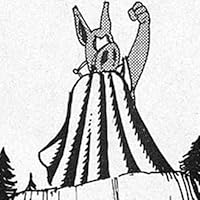
Doctor Robert Branch is a university professor, not a secret agent. But his best friend is dead and Branch knows that it can't have been suicide. He is also certain that the murder has been arranged by a Nazi espionage group operating on campus. The only trouble is, no one will believe him. Branch knows that the Nazis will have him eliminated as soon as it is convenient. He's even narrowed his choice of executioner down to a psychotic homosexual, a respected educator-and the women he loves...
Ross Macdonald is the pseudonym of the American-Canadian writer of crime fiction Kenneth Millar. He is best known for his series of hardboiled novels set in southern California and featuring private detective Lew Archer.
Millar was born in Los Gatos, California, and raised in his parents' native Kitchener, Ontario, Canada, where he started college. When his father abandoned his family unexpectedly, Macdonald lived with his mother and various relatives, moving several times by his sixteenth year. The prominence of broken homes and domestic problems in his fiction has its roots in his youth.
In Canada, he met and married Margaret Sturm (Margaret Millar)in 1938. They had a daughter, Linda, who died in 1970.
He began his career writing stories for pulp magazines. Millar attended the University of Michigan, where he earned a Phi Beta Kappa key and a Ph.D. in literature. While doing graduate study, he completed his first novel, The Dark Tunnel, in 1944. At this time, he wrote under the name John Macdonald, in order to avoid confusion with his wife, who was achieving her own success writing as Margaret Millar. He then changed briefly to John Ross Macdonald before settling on Ross Macdonald, in order to avoid mixups with contemporary John D. MacDonald. After serving at sea as a naval communications officer from 1944 to 1946, he returned to Michigan, where he obtained his Ph.D. degree.
Macdonald's popular detective Lew Archer derives his name from Sam Spade's partner, Miles Archer, and from Lew Wallace, author of Ben-Hur: A Tale of the Christ. Macdonald first introduced the tough but humane private eye in the 1946 short story Find the Woman. A full-length novel, The Moving Target, followed in 1949. This novel (the first in a series of eighteen) would become the basis for the 1966 Paul Newman film Harper. In the early 1950s, he returned to California, settling for some thirty years in Santa Barbara, the area where most of his books were set. The very successful Lew Archer series, including bestsellers The Goodbye Look, The Underground Man, and Sleeping Beauty, concluded with The Blue Hammer in 1976.
Macdonald died of Alzheimer's disease in Santa Barbara, California.
Macdonald is the primary heir to Dashiell Hammett and Raymond Chandler as the master of American hardboiled mysteries. His writing built on the pithy style of his predecessors by adding psychological depth and insights into the motivations of his characters. Macdonald's plots were complicated, and often turned on Archer's unearthing family secrets of his clients and of the criminals who victimized them. Lost or wayward sons and daughters were a theme common to many of the novels. Macdonald deftly combined the two sides of the mystery genre, the "whodunit" and the psychological thriller. Even his regular readers seldom saw a Macdonald denouement coming.
This is the first published novel by Ross Macdonald, and Lew Archer fans need to know that it is not only not a Lew Archer novel (in spite of what the covers of some paperbacks say) but it is not even a full-fledged murder mystery. Sure, it has murders and a bit of mystery, but it is really a spy story with a long extended chase sequence thrown in.
Macdonald wrote this novel while completing his doctorate in English at the University of Michigan in Ann Arbor, and its narrator and protagonist Robert Branch is a junior professor of English at the customarily quiet university town that is home to Midwestern University. When an old love interest from his fellowship days in Germany arrives in America, acting unlike herself, and when his friend who is investigating a Nazi spy ring falls from an upper floor window to his death, Branch is suspect. Soon he is fleeing from both the bad guys and the good guys and trying to solve the mystery too.
I thought "The Dark Tunnel" was pretty good for a first novel. The narration is a little pretentious in an English professor sort of way, with too many big words and jocular literary references, but since the narrator is an English professor, it can be partially excused as part of the characterization and atmosphere. Moreover, for a popular entertainment written in 1943, it presents a surprisingly nuanced portrait of Germans and Germany. It does suffer, however, from homophobia, but it also introduces an LGBT-themed plot device which Macdonald uses to surprisingly good effect.
2.5 stars - Not Macdonald's worst book, just his second to worst book.
The Dark Tunnel was Ross Macdonald's first published novel. It's not good. I've now read all of his novels except the second, Trouble Follows Me, and I have to say that while this is definitely not good, surprisingly I liked it a little better than his 4th novel, The Three Roads.
Macdonald is mainly remembered for his eighteen Lew Archer novels, the first of which was his fifth published book, and a lot of people feel he didn't really hit his stride until well into the Archer series. His first two novels were considered bad enough to be the only two of his books out of print when I started reading Macdonald, so I didn't have high expectations picking this up.
It's interesting to read Macdonald in some semblance of publication order because you can really see his progress from book to book. It's not a straight line, but in general both his writing and plotting improve steadily over the course of his career. Macdonald was an academic and something of a poet when he first turned his hand to crime novels. No doubt his background inclined him to "poetic" turns of phrase. The similes and metaphors are dialed up to 11 in the early books, there are far, far too many, and most of them miss their mark for a variety of reasons. He's also immitating other authors to some degree and trying way too hard.
This and the following book are sometimes referred to as "the Chet Gordon books", but Chet Gordon is barely in this one. Instead our narrator is a youngish professor in Michigan who gets caught up in the investigation of a Nazi spy ring stealing info from the University "War Board" which I guess was a thing? For our obligitory femme fatale type, we have a german woman he fell hard for six years prior when he was in Germany in the 30s studying something of no importance.
The biggest problem with the beginning of the book is the overwritting, but as the plot escalates it depends on more and more preposterous coincidences. I didn't particularly like the narrator much either, but there's no one particular thing I can think of to hold against him.
The story includes multiple murders, and of course the authorities are too foolish to believe our hero initially.
The book is also notable for inclusion of a few LGBTQ characters, though they don't get a lot of page time and one might get a bit bored waiting for them to be appear. Ultimately the portrayals are not of the sort LGBTQ readers are likely to be particularly thrilled with so there's no particular recommendation on that account.
There's no recommendation at all actually, except to avoid it. Leave this for completists only. Any readers new to Macdonald are advised to start with one of his much later novels. (My first was The Underground Man. All his books can be read as standalones.)
I was a mystery reader while very young, jumping quickly from the Hardy boys to Agatha Christie. And I liked quirky California rock. In the Spring before my high school graduation, Rolling Stone Magazine had favorite singer Warren Zevon on the cover. Zevon’s story of alcoholism and the intervention his family and friends held for him was truly riveting. As part of that story, the article told of Zevon’s life-long love of the mystery stories of Kenneth Millar, better known as Ross Macdonald. Zevon had picked up on Macdonald’s stories while playing guitar in Spain, and had become such a fan that he once moved to Santa Barbara to live close to Macdonald, who he occasionally talked to. Macdonald even attended the intervention, if I recall correctly. I had found the next author to read.
And read I did – I finished all of Macdonald’s books over the next 5 or 6 years, all but one. I found Macdonald’s other books very satisfying, examining the psychology of people (or more so Californians) in general, and with the right amount of action and mystery. I had saved “The Dark Tunnel” as the final Macdonald book I would read, as it was the last one I was able to find. I knew it wasn’t a Lew Archer novel, Macdonald’s bespoke detective that lived through a majority of his books. So I figured I wasn’t missing a key book. Unfortunately, I was correct.
The storyline of “The Dark Tunnel” concerns a professor at a college called, generically enough, Midwestern University. The place of this college was the town of Arbana, positioned near Detroit somewhere. It appears obvious that this was an amalgamation of University of Michigan and University of Illinois in Urbana. Having attended U of I in Urbana, I noted other similarities to our campus, including a McKinley Hall, where much of the action takes place, steam tunnels, and a campus museum. I greatly enjoyed picturing where the events could have taken place on campus, although they were likely generic enough that attendees of other colleges could also have seen similarities.
The book wasn’t one of Macdonald’s stronger ones. The story was a bit too odd. The character’s reactions seemed unreal, the plot seemed way too stretched. I understand from Wikipedia that this was Macdonald’s first published novel, and it feels like it. Fine for completists, just don’t judge the author by this one.
Should have started with Lew Archer series instead of Macdonald's debut as The Dark Tunnel is pretty awful in all respects. A completely unbelievable plot where an English professor is framed for the murder of his colleague is further let down by writing that lies somewhere between cringe worthy and amateurish. Macdonald makes his protagonist talk in a manner that is too stupid to pass as a parody of how English Graduates talk. He constantly references famous literary works in casual dialogue like meeting a femme fatale and comparing her to Lady Macbeth, facing a betrayal and contrasting it with some obscure lore from Greek mythology.
Macdonald has been compared to my favorite author Raymond Chandler but based on this book it is like saying Earth & Mars are equally inhabitable simply because both of them are planets. To sum it up avoid at all costs. Rating - 1/5
A classic noir/pulp fiction style thriller. It is reminiscent of This Gun for Hire, Brighton Rock and The Ministry of Fear by Graham Greene with a little Dashiell Hammett flair.
Macdonald's first, probably his worst. The plotting is an okay enough WW2 homeland spy thriller, it's the writing that lets it down, surprisingly. Macdonald is already reaching for those smart, razor-sharp similes and descriptive passages he'd become the master of, but they all go down in flames here. Most of all, the magical pacing of the Archer novels is nowhere in sight. This one just plods along til it sputters to an end. Try to avoid looking too closely at the default Goodreads cover art, which has a giant spoiler that unlocks one of the book's key puzzles, making it an even tougher slog to get through.
Kenneth Millar's first novel. Though he's better known as Ross MacDonald, the author of the fantastic Lew Archer series. And, this had the feel of a first novel... a few WTH just happened here? That wouldn't have happened like that! That said, published in 1944, the fear of a Nazi espionage group operating within the college where Prof. Branch plays amateur sleuth.....it still had the feel of an old black & white late night film.
Bob Branch, giovane professore di inglese, non ha mai dimenticato un'attrice tedesca di nome Ruth Esche. Dopo sei anni, il fato sembra arridergli: una donna con lo stesso nome e con gli stessi connotati viene assunta nella sua università come assistente di tedesco. Le coincidenze sono tante e incredibili, ma un dubbio atroce aleggia per l'ateneo: ci sarà da fidarsi di Ruth, in pieno periodo nazista? O potrebbe essere una spia? Il prof Branch si accorgerà presto che il pericolo è più vicino di quanto non si pensi..
Really only one for Ross McDonald completionists. I guess the most interesting thing to note is that this early example of the fast-paced non-stop case we'd become familiar with in later novels, where day bleeds into night into the next day and night, our protagonist, usually Lew Archer, here Robert Branch, rarely getting a chance to rest as they race after (or away from) the next piece of the puzzle.
I read it because I am blogging about his novels; it's his first novel and it shows. Macdonald didn't hit his stride until The Moving Target in 1949. Some critics call it "promising"--not sure I agree
review of Ross MacDonald's The Dark Tunnel by tENTATIVELY, a cONVENIENCE - December 22, 2020
I learned of Ross MacDonald's existence at the end of 2018 & read 3 bks by him in quick succession wch I very much enjoyed (The Chill: https://www.goodreads.com/review/show... ; The Far Side of the Dollar: https://www.goodreads.com/review/show... ; The Barbarous Coast: https://www.goodreads.com/review/show... ). Then I cdn't find any more used copies of his bks at Caliban, my favorite bkstore, so my reading of him languished. My luck turned recently, though, when I went to Caliban & found 15 of the little buggers waiting for my eager mind to ingest.
It's odd timing b/c for these last 2 yrs I've been largely trying to plow thru ± 8 bks that've been important to me for one reason or another but wch I haven't really been enjoying. As such, I've finished ONE of them & reviewed it but I'm still plowing thru the others. The side-effect of this is that the temptation to read MacDonald leads to the possibility of setting those more turgid bks aside.. but I'm resisting. I read 2 more MacDonalds, found them exceptional, but now I won't 'allow' myself the luxury of any more until I get some more 'serious' reading done. I do have my priorities, doncha know?!
So this one: I'm reading the 15 recent MacDonald acquisitions in chronological order. I started w/ The Dark Tunnel (1944) b/c it seems to be his 1st novel. Since it was written during WWII it's no surprise that it's an anti-nazi spy novel. Despite the possible genericness of that I enjoyed it.
The main character wants to join the navy but fails the eye test b/c his eye was damaged in a fight w/ nazis when he was visiting Germany many yrs before.
"I had to trek nearly the whole length of the room before I could read the smallest letters at the bottom of the card.
""Not so good," the yeoman said. "How do you account for the comparative weakness of your left eye?? Did anything ever happen to it?"
""Yes," I said. An old anger woke up and moved to my stomach. "A Nazi officer hit me across the face with his swagger stick in Munich six years ago. That eye's never been the same since."
""No wonder you want to get into this war," he said. "But I'm afraid the Navy won't take you. Maybe the Army will, I don't know."
""What's my score?"
""Not good enough, I'm sorry to say. Your right eye just about makes the grade but your left is way down. Too bad."" - p 5
As a 1st novel, this is quite good. Kenneth Millar, MacDonald's given name that he was using as an author at the time, wd've been 28 when he wrote it & it seems to show some experience w/ the world. A sympathetic character that he meets in Germany when the story of his visit there is told, is a member of the Industrial Workers of the World (IWW) so the author's politics is considerably wiser than any patriotic glop one might expect from a wartime thriller.
""I've enough personal crimes to answer for without assuming responsiblility for the crimes of my ancestors," Franz said, smiling like a precocious boy. "My ancestors were in the aristocracy racket."
""And you've been in the United States," I said.
""Apparently I still talk United States adequately. Sure, I lived in California for several years. They deported me for being a Wobbly. That's one of my crimes."
""A Wobbly? You're older than you look."" - pp 28-29
The protagonist has been given reason to suspect that certain people may be Nazi spies. He gets into a discussion about morality w/ one of them.
"["]I distrust the feelings of men in general. I subscribe to the doctrine of original sin."
""I hadn't thought of you as a religious man, Mr. Schneider," I said in the hope of insulting him. "You'd base your ethics in dogma or revelation then, would you?"
""Of course not, I was speaking figuratively. I base morality in the common good. If you act for the common good, you are doing the right thing."
""Whose common good?"
""The good of the community. The political group or state, whatever group that happens to be."
""Is there not morality above the state?"
""Obviously not. Morality varies from place to place. In Russia it is not considered moral to deprive colored people of civil rights. In America and India it is considered moral."
""That merely proves that the state or community can be wrong."" - p 51
""You are an unconsious anarchist, Dr. Branch. You would set up the feeling or impulses of the individual against the laws, against the good of the state."
""If the laws are evil, they are not for the good of the state. Denying the validity of the individual conscience leaves no check on the state. Whatever it does is right."" - p 52
Interesting dinner conversation, eh? The presumed Nazi spy accuses the protagonist hero, Professor Branch, of being an "unconscious anarchist" while Branch sees himself as upholding American values. That wd've been a somewhat unusual position for a crime fiction writer during WWII to take in the US. I respect it. & what sorts of things might a Nazi spy be after & for what reasons?
"["]A smart German who knew all about our A S T P courses and could correlate the knowledge with information from other sources could figure out a hell of a lot. He could predict with a reasonable amount of accuracy a lot of the things that we'll be doing five years from now in Europe."
""In 1948? The war will be over long before then."
""No doubt it will, but the Nazis won't be finished if they can help it. Himmler's boys are laying plans now for carrying on underground even after Germany loses the war. But they're not going to get any more information from us."" - p 70
Now, here's one of those odd little details that gets my attn:
"["]Incidentally, you're not Edgar B. Hoover but I understand you're hot on the spoor of some spies."" - p 73
Not J. Edgar Hoover? Nowhere in the Wikipedia entry for John Edgar Hoover do I find a mention of "Edgar B. Hoover" but a search for EBH yielded the predictable JEH. From wch I conclude that JEH was actually President Rump from the waist up & President Bid from the waist down. Then again, maybe J. Edgar just wasn't that well known at the time & the author made a mistake?
"I wanted to tell him that he was acting pretty cocky for a dumb cop that didn't know one of his most important body openings from an excavation in the earth. But I also wanted his co-operation and I let him leer." - p 122
It's nice to know that the expression doesn't know his ass from a hole in the ground was active in 1944.. but what if I'm reading that wrong? What if what's meant is doesn't know his navel from an open grave? That wd have a hole [pun intended] different set of philosophical implications. Perhaps it means doesn't know his history from a phone book, remember them?
"The making of a historical dictionary is a long process. For five years Alec had been co-editor of the Middle English Dictionary, with a dozen people working under him. One thing his death meant was that the Dictionary would have to find a new editor. I had never had anything to do with the Dictionary directly, but Alec had given me a general idea of it.
"It was intended to put in print, for the first time, in ten handy volumes weighing about fifteen pounds each, all the meanings of all the words written in English between the death of William the Conqueror and the time of Caxton, the first English printer. This meant that the editors and sub-editors and infra-editors had to read all the books and manuscripts remaining from four hundred years of English writing. They had to keep a file of every word read and examples of every use of every word. That is the first half of the process of making a historical dictionary." - pp 132-133
Yes, I'm the type of person who actually gets excited thinking about such a thing. I collect dictionaries, I don't have any historical ones. So, yeah, I had to start looking online & decided to get this:
A Concise Dictionary of Middle English : From A. D. 1150 To 1580 by Walter William Skeat and Anthony Lawson Mayhew:
THIS IS NOT A HASTILY ASSEMBLED SCAN, OCR'd OR "FACSIMILE EDITION" OF THIS WORK. EVERY LETTER AND WORD OF THE ORIGINAL HAS BEEN RESET AND CAREFULLY PROOFED FOR ACCURACY. A reprint of A Concise Dictionary of Middle English (1888) by the prominent Middle English scholars and lexicographers Rev. A. L. Mayhew, M.A. of Wadham College, Oxford, and Rev. Walter W. Skeat, Litt.D.; LL.D. Edin.; M.A. Oxon., Ellington and Bosworth Professor of Anglo-Saxon in the University of Cambridge. This Dictionary will easily pave the way for a clearer understanding of the birth of modern English while providing the medieval English reader with an invaluable resource for tackling all of the important English texts published between 1150 to 1580 A.D. It is also a perfect companion to the John Wycliffe Middle English translation of The Holy Bible published through R A SITES BOOKS. Originally published by Oxford at the Clarendon Press, this long out-of-print Middle English Dictionary is newly available with type entirely reset. This edition should not be confused with other significantly pricier "facsimile" editions or "scanned" editions which do not preserve the original Middle English and Greek alphabet characters of the original book.
I mean, how cd I resist?
Do you remember "The Fugitive"? A TV show about a guy wrongfully accused constantly on the run trying to exonerate himself? Well, of course, that sort of thing is fairly common. It's taken to the usual extreme here.
"Before I reached the head of the stairs, I heard a police whistle.
"I was a fool. He could whistle out of the window. But what could I have done to him? Tie and gag him? Sure, and suffer for it later. But I had his gun." - p 138
"I dropped my flashlight and scrambled up the ladder and got the iron door at the top open. The door from the tunnel sprang open below and I slammed the iron door shut. Two bullets rang flatly against it like the knocking of iron knuckles, and I jumped onto a black hill which loomed outside the door." - p 145
For at least the last 20 yrs I've been saying that if Hitler had needed to self-declare as a 'liberal' to gain power he wd have. During this time of the QUARANTYRANNY I've been particularly disgusted by the way that liberals have embraced Big Brother & censorship. As such, I enjoyed this next passage.
""It's something I can't understand, how scholars like Dr. Schneider, devotees of the humanities, can sink to such a level."
""Pro patria. They're Germans. One-third of the officers of the Nazi party are school-teachers, or used to be. But I can't understand the Esch woman." I tried to think and talk about her as impersonally as I could. "When I knew her in Germany she was liberal to the core."" - p 202
Wwweeeeeelllllllllll, as it turns out Branch was full of water (97%) on this one subject.. but I don't want to spoil the plot.
Ross Macdonald's debut crime novel is set against the background of the Second Word War and a Nazi conspiracy on a college campus. It's interesting to see how Macdonald made is first foray into private eye fiction. While the 'hero' is not a private eye, Professor Bob Branch does fulfil the role. The plot hinges on a clever idea. While nowhere near as satisfying as his later Lew Archer novels - some of the best crime fiction written - the germs are there and waiting to be polished. However, its an odd writing style, too many literary allusions, I suppose it is set around a University department, and there is an unpleasant tone about our hero. Maybe that was the nature of the time (published in 1949), but he certainly isn't the knight of honour that Lew Archer or Philip Marlowe are. I've read all the other Macdonald novels, and I'm glad I saved the worst to last. Now to start from the beginning and read all the Lew Archer books again.
I hate to disagree with Bill Pronzini, but this book badly shows both its age and the author’s undeveloped writing style. The characters have no depth, the storyline is ridiculous and the gay Nazi theme is really distasteful ( as are many of the phrases used in the book ). I know we make allowances for books written in a darker time but this honestly has no redeeming values, not to mention a hero who really is too stupid to still be alive at the end. Maybe I just shouldn’t have read it during Pride month but it’s making me fear going back to the Lew Archers as I had hoped to this summer. Yecch.
A great action read even if it does include the stereotype of Nazi cross-dressing and homosexuality, which I suppose in this day and age seems forced. One more way to display the evil inherent within the Nazi when cast against the rugged American male who fights on heroically, in spite of his injuries. In some ways this description does a disservice to McDonald's writing which is never as simplistic as that, but this inclusion nevertheless left a bitter taste in what otherwise was a first rate thriller.
The first novel I've read by Ross MacDonald (penname of Kenneth Millar, and better known for his Lew Archer series) is also the author's first novel. Set in 1943 and published in 1946, the novel has many of the flaws of the first-time author as well as tainted by the mores and attitudes of the era. Throughout the novel, it may be observed that Millar/Macdonald never met a simile he didn't like - most worked but the number of them exceeds their value. Yet the literary style of the first chapters caught my attention.
The novel begins with two university professors attempting to enlist in the Navy, the older man, though has a responsible job with a wartime committee, wants to do more; the younger has already been rejected by the Army due to an eye injury sustained during a visit to Munich in 1937, hopes to do the same. As expected the younger man is rejected while his friend passes. Before he can formally enlist, there is a problem to resolve - a potential Nazi spy leaking information from the committee. Complications thus ensue.
After a strong beginning the novel tends to stretch credibility. One factor is that most of the story takes place in one 24 hour period, necessary to keep the crisis escalating, but the elapsed time for some of the escapades a bit wonky.
While the plot is satisfactory, with a titillating twist or two, the young university professor abruptly takes on a hard-boiled personality that is at odds with his character, and his behavior is thus not entirely believable - an indication of where the author would eventually choose to make his mark.
I give it 3 stars even though the novel didn't meet expectations.
Prvotina slavného autora kriminálek. A podobně jako Smrt v patách, i tahle je zasazena do druhé světové války. Což znamená, ano, další nacističtí agenti. Jejich výhoda spočívá v tom, že jim nemusíte vymýšlet žádné motivy, jsou to prostě proradní Němčouři. Ale nutno říct, že tohle je přece jen lepší než Smrt v patách. Děj je sevřenější, má větší tempo a funguje i určitě napětí. Hlavním hrdinou je univerzitní učitel, který pátrá po tom, kdo zabil jeho přítele... a rychle se sám stává hlavním podezřelým. A do toho ho samozřejmě chtějí zabít němečtí agenti. I když je to prvotina, je tady víc zábavných hlášek a živější popisy a hlavně, scény, kdy je hrdina na útěku a nikdo mu nevěří, fungují. Míň už trochu celá ta záhada zamčeného pokoje... a hlavně šokující odhalení, které je dneska už spíš z těch naivnějších (a konfliktnějších). Plus se nejvíce doba podepsala (kromě vztahu k LGBT tématice) na pozitivních emocích, hlavně romantických. Zatímco spousta věcí stále funguje, tak jak dojde na vztahy, najednou se hrdinové chovají jako postavy z červené knihovny, kteří se zamilovávají na celý život, hroutí se, když vidí, jak se dívka, kterou milovali zhruba měsíc před šesti lety, líbá s jiným a okamžitě se ohání manželstvím. Ale to už k téhle době patří.
I am a huge lover of noir novels and a big fan of Ross MacDonald’s books, so, when I found this early novel of his, I felt that I’d hit the jackpot. Well, I did and I didn’t. THE DARK TUNNEL reads like an amalgamation of John Buchan and Raymond Chandler. It is not as polished as MacDonald’s later books. There are a couple of plot homes and some decisions made by the characters that truly defy logic. Still, it has an entertaining read. Set in a Michigan University then and ending in Kirkland Lake, Ontario, it is a novel about the pursuit of Nazi spies and saboteurs. Ross MacDonald, or Kenneth Millar (his real name) was Canadian, so the chapters that take place in Toronto and Kirkland Lake are fun, but I cannot help but think there was a missed opportunity in a novel about Nazi to not end it in the community of Swastika, which is just down the road from Kirkland Lake.
I did say that I enjoyed the book, but the twist in the mystery involves homosexuality, transgenderism and cross-dressing. Lurid and sensational for the the time, these motifs have not aged well and they are really, really awkward and uncomfortable to read today. The treatment of those themes definitely took considerable shine off the book.
I can see how this book caused a big splash when it was published. It was like Raymond Chandler but unique none the less. I think he genuinely thought those Chandleresque sentences and was not trying to come up with something that sounded like Chandler. There is a difference.
some examples:
page 103: ".. trying to cooperate with him was like shaking hands with an octopus while walking in quicksand"
page 129: " The attendant filled my cup and made change without waking, moving as if his starched shirt was holding him up"
page 236: "the two-hour sleep I got was a restful as a surfboard ride. Finally, the beetle-green motorboat that was dragging me over the dream-waves of hope and despair stopped with a grinding of gears and I answered the telephone."
There are plenty more but I didn't want to be stopping again and again to write them down. I found the story interesting enough to not put the book down all day until I had finished ready. And for those folks who gave it a 1 and 2 rating-- Just because you didn't like it doesn't make it a "bad" book.
I've read a lot of Ross Macdonald's Lew Archer detective novels and stories, but none of his other work. "The Dark Tunnel" is his first novel, and it was published under the author's real name, Kenneth Millar. I didn't know what to expect, but I was thrilled with the book.
'Tunnel" is intelligently written, as was always the case with Millar/Macdonald's work. This is a great story, well told, set in a small college town suburb of Detroit. The world is a little more than half way through WWII, which plays a prominent role in our story.
The protagonist is an associate professor, working along with his good friend and full professor on the civilian war efforts. They suspect espionage, which leads to murder and intrigue at break-neck speed. I'm not going to spoil the fun, so you'll have to read it for yourself to track all of the various elements of tale. I suspect you'll love it, as I did.
Until a couple of weeks ago, I had no idea Ross Macdonald went to Michigan. I think it's neat he was attending classes there the same time as my Uncle Chuck, just after WWII. Why didn't we get a Lew Archer novel assigned to us in Freshman English?
This is Macdonald's first novel, set in Ann Arbor, it's a "how did I end up in a spy adventure" along the lines of North by Northwest. It's a good first novel, but that doesn't make it a great book. It's fun in that it's witty. The "big mystery" is too easy. The middle portion of the book, involving an extended chase and meeting many characters in the middle of the night outside of town, is long and too fantastic.
There's some language involving race and sexual orientation that some may find offensive.
Fast paced mystery/spy thriller. Set on a college campus during World War II, a professor investigates a mole exposing secrets to the Nazis. When Robert Branch's mentor dies under suspicious circumstances while trying to track down the leak, Branch comes under suspicion himself leading to chases around campus. Up to the end, I'd probably give it 4 or 4.5 stars but the final twist was certainly dated.
Plenty of bad reviews here, so I felt compelled to chime in. It's not as bad as some reviews would have you believe. MacDonald's first novel, written under his actual name Kenneth Millar, and published 5 years before he honed his craft and started cranking out the Archer novels. It may not have the finesse of those Archer books, but why would it? It's his first effort. I found the plot entertaining, even though it is preposterous at times. I got sort of a pulp fiction vibe, and just enjoyed the ride. The middle of the book is crazy and almost comical, as the protagonist is pursued by gay cross-dressing Nazi sympathizers, and crosses paths with a cancerous bootlegger-pimp and deaf-mute rabbit hunters. Pretty edgy stuff for 1944, I guess.
The Dark Tunnel, Ross MacDonald. MacDonald’s first novel from 1949–published under his own name, Kenneth Millar—is an espionage thriller, which features as its protagonist an American academic, Branch, who had visited Nazi Germany in the ‘30s as a tourist. After attempting to defend a Jewish physician against an SS Officer’s brutality, Branch is assaulted and evicted from the country. Although his injuries keep him from serving in the US military, Branch serves the war effort at his university, where he comes to suspect a colleague, an esteemed Humanities professor of being a Nazi spy. The Dark Tunnel is a great atmospheric thriller, reminiscent of a Hitchcock movie.
"Above the dark-headed trees the stars began to waver and flare like torches at a celebration a long way off and I sat down in the grass because my right leg was made of rubber. My mind flew out like smoke in empty space and I rode a vertical wind through moving stars like fields of arcing fire-flies. The earth was a small, forgotten thing, a withered apple for which black ants and red ants fought together. The diastole of exhaustion ended and the systole of unconsciousness closed on my head, narrowing the universe to a warm, dry tunnel where I ran lightly and easily in the friendly darkness. The terrible things had died in the dark behind."
The first book that vaulted Macdonald as a masterful writer of crime fiction. He laid the groundwork for the framework of the Lew Archer detective stories of murder, deception, betrayal, masquerading characters and historical events that seem to drive the plot and narrative. It was a little slow moving, although the events took place over several days involving Professor Branch, murder, Nazi spies and a long lost romance. After reading 17 of the Archer novels and all the short stories, it's delightful to see where Macdonald started his writing career.
First published book by Ross MacDonald (originally published under his real name: Kenneth Millar). His talents are not yet developed as in the later Lew Archer series but this is a good first effort. There is anti-Semitism, but, duh, it’s a story about Nazis. Bob Branch fights against it. Later there is homophobia and a lot of related slurs. Branch seems opposed to this as well, though it’s not so over. And the theories expressed about homosexual behavior are wrong and outdated. If this is triggering, don’t read this book.
Meh. Some good parts. Some corny parts. One pretty interesting mystery. Then a weird amount of sexual politics, and just kinda confused politics. It was fun at times, but I also kinda hated the main character, so not much clicked except the propulsion of the story, and even that just enough to get me across the finish line. I honestly read this thinking it was another John D. Macdonald, but at least it hasn't spoiled that author for me (if I hadn't just checked again). It was fine, but that's about it.
Ross Macdonald is really under appreciated as a writer of crime mysteries and this book, outside of his usual Lew Archer series, feels like it could be one of them, save for the personal touch of involvement of the narrator. The mystery isn't really a complete mystery. The villains are apparent from the beginning but the twists that turn this story are really a fun and rather unjudgy kind of reveal despite the era (don't look at other covers if you want to avoid some spoilers).
Went back to the beginning with Ross Macdonald for this one. I love Ross' Archer series and his standalones aren't bad but this one is. Unfocused plotting, expository dialogue, characters conveniently bouncing in and out. Macdonald was trying to do pulp with an intellect's bend. He would perfect it in the Archer series but here, you can barely see the talents that would make him great. All writers have to start somewhere, I reckon.