

What do you think?

Great American Short Stories
The Pomegranate Seed, the Moving Finger
The Pearson Education Library Collection offers you over 1200 fiction, nonfiction, classic, adapted classic, illustrated classic, short stories, biographies, special anthologies, atlases, visual dictionaries, history trade, animal, sports titles and more!
80 pages, Paperback
First published May 1, 1994
About the author
Edith Wharton
1,739 books5,663 followersEdith Wharton emerged as one of America’s most insightful novelists, deftly exposing the tensions between societal expectation and personal desire through her vivid portrayals of upper-class life. Drawing from her deep familiarity with New York’s privileged “aristocracy,” she offered readers a keenly observed and piercingly honest vision of Gilded Age society.
Her work reached a milestone when she became the first woman to receive the Pulitzer Prize for Fiction, awarded for The Age of Innocence. This novel highlights the constraining rituals of 1870s New York society and remains a defining portrait of elegance laced with regret.
Wharton’s literary achievements span a wide canvas. The House of Mirth presents a tragic, vividly drawn character study of Lily Bart, navigating social expectations and the perils of genteel poverty in 1890s New York. In Ethan Frome, she explores rural hardship and emotional repression, contrasting sharply with her urban social dramas.
Her novella collection Old New York revisits the moral terrain of upper-class society, spanning decades and combining character studies with social commentary. Through these stories, she inevitably points back to themes and settings familiar from The Age of Innocence. Continuing her exploration of class and desire, The Glimpses of the Moon addresses marriage and social mobility in early 20th-century America. And in Summer, Wharton challenges societal norms with its rural setting and themes of sexual awakening and social inequality.
Beyond fiction, Wharton contributed compelling nonfiction and travel writing. The Decoration of Houses reflects her eye for design and architecture; Fighting France: From Dunkerque to Belfort presents a compelling account of her wartime observations. As editor of The Book of the Homeless, she curated a moving, international collaboration in support of war refugees.
Wharton’s influence extended beyond writing. She designed her own country estate, The Mount, a testament to her architectural sensibility and aesthetic vision. The Mount now stands as an educational museum celebrating her legacy.
Throughout her career, Wharton maintained friendships and artistic exchanges with luminaries such as Henry James, Sinclair Lewis, Jean Cocteau, André Gide, and Theodore Roosevelt—reflecting her status as a respected and connected cultural figure.
Her literary legacy also includes multiple Nobel Prize nominations, underscoring her international recognition. She was nominated for the Nobel Prize in Literature more than once.
In sum, Edith Wharton remains celebrated for her unflinching, elegant prose, her psychological acuity, and her capacity to illuminate the unspoken constraints of society—from the glittering ballrooms of New York to quieter, more remote settings. Her wide-ranging work—novels, novellas, short stories, poetry, travel writing, essays—offers cultural insight, enduring emotional depth, and a piercing critique of the customs she both inhabited and dissected.
Her work reached a milestone when she became the first woman to receive the Pulitzer Prize for Fiction, awarded for The Age of Innocence. This novel highlights the constraining rituals of 1870s New York society and remains a defining portrait of elegance laced with regret.
Wharton’s literary achievements span a wide canvas. The House of Mirth presents a tragic, vividly drawn character study of Lily Bart, navigating social expectations and the perils of genteel poverty in 1890s New York. In Ethan Frome, she explores rural hardship and emotional repression, contrasting sharply with her urban social dramas.
Her novella collection Old New York revisits the moral terrain of upper-class society, spanning decades and combining character studies with social commentary. Through these stories, she inevitably points back to themes and settings familiar from The Age of Innocence. Continuing her exploration of class and desire, The Glimpses of the Moon addresses marriage and social mobility in early 20th-century America. And in Summer, Wharton challenges societal norms with its rural setting and themes of sexual awakening and social inequality.
Beyond fiction, Wharton contributed compelling nonfiction and travel writing. The Decoration of Houses reflects her eye for design and architecture; Fighting France: From Dunkerque to Belfort presents a compelling account of her wartime observations. As editor of The Book of the Homeless, she curated a moving, international collaboration in support of war refugees.
Wharton’s influence extended beyond writing. She designed her own country estate, The Mount, a testament to her architectural sensibility and aesthetic vision. The Mount now stands as an educational museum celebrating her legacy.
Throughout her career, Wharton maintained friendships and artistic exchanges with luminaries such as Henry James, Sinclair Lewis, Jean Cocteau, André Gide, and Theodore Roosevelt—reflecting her status as a respected and connected cultural figure.
Her literary legacy also includes multiple Nobel Prize nominations, underscoring her international recognition. She was nominated for the Nobel Prize in Literature more than once.
In sum, Edith Wharton remains celebrated for her unflinching, elegant prose, her psychological acuity, and her capacity to illuminate the unspoken constraints of society—from the glittering ballrooms of New York to quieter, more remote settings. Her wide-ranging work—novels, novellas, short stories, poetry, travel writing, essays—offers cultural insight, enduring emotional depth, and a piercing critique of the customs she both inhabited and dissected.
Ratings & Reviews
Friends & Following
Create a free account to discover what your friends think of this book!
Community Reviews
Displaying 1 - 13 of 13 reviews

October 2, 2015
First Wharton ghost story I have ever read. Before there were slasher movies and slasher novels, with explicit violence and murders, there were stories like this one, that depended on atmosphere, slow buildups and increasing tension. Dead wives, and mysterious letters, secrets and changed personalities. Loved the story but the ending alas was sorely lacking and a big letdown. Still I did enjoy getting to that point.

November 13, 2021
My first Edith Wharton. . .and I wanted to be enthralled with it and. . . wasn't. A overblown ghost story. I did like the open end, tho. . . .

November 6, 2015
Pomegranate Seed
A woman is very much in love with her new husband, a widower. But as time goes on, it seems that another woman may have become a factor in their relationship. Who are the mysterious letters that arrive in the house at odd intervals from? And why does her husband find them so upsetting?
A woman is very much in love with her new husband, a widower. But as time goes on, it seems that another woman may have become a factor in their relationship. Who are the mysterious letters that arrive in the house at odd intervals from? And why does her husband find them so upsetting?

November 21, 2024
the pomegranate seed
açıkçası uykulu olmama ve hikâye epey uzun olmasına rağmen yine de merak ederek okumuştum, suspense çok iyiydi ama hikâyenin sonunu pek sevmedim ve tatmin edici bulmadım ve kızın kocası literally nereye gitti??? i have questions
açıkçası uykulu olmama ve hikâye epey uzun olmasına rağmen yine de merak ederek okumuştum, suspense çok iyiydi ama hikâyenin sonunu pek sevmedim ve tatmin edici bulmadım ve kızın kocası literally nereye gitti??? i have questions

October 31, 2022
Read by Tony Walker. https://youtu.be/bQ2_c2p-OtE

April 28, 2025
What the fudge? This is a really compelling story that just ends abruptly without any resolution. Like A Series of Unfortunate Events (13 volumes that lead to...nothing) or that stupid old elementary school joke about the boy who asked for 10,000 green ping pong balls for his birthday each year.
It's a shame because the tale is written in an engaging, easy-to-read style that is often missing from short stories. It was easy to like the main character, Charlotte Ashby, a newlywed who becomes increasingly worried about letters her husband starts receiving as soon as they return from their honeymoon. She loves him dearly and respects his privacy but longs to know what is distressing him so. Not sure what the story has to do with a pomegranate seed though, and yes, I'm familiar with this fruit in mythology but don't see a connection.
It's a shame because the tale is written in an engaging, easy-to-read style that is often missing from short stories. It was easy to like the main character, Charlotte Ashby, a newlywed who becomes increasingly worried about letters her husband starts receiving as soon as they return from their honeymoon. She loves him dearly and respects his privacy but longs to know what is distressing him so. Not sure what the story has to do with a pomegranate seed though, and yes, I'm familiar with this fruit in mythology but don't see a connection.

October 25, 2025
“The look in his eyes when he returned from receiving one of the letters...The look was not unloving; not even indifferent; it was the look of a man who has been so far away from ordinary events that when he returns to familiar things they seem strange.”
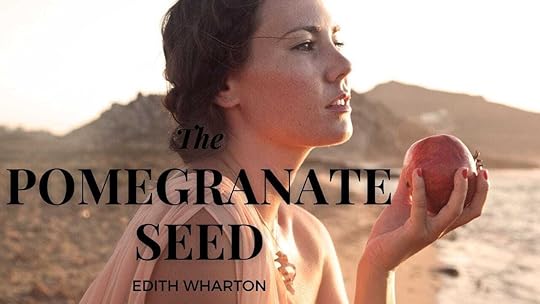
[Image: Book Cover]
The Pomegranate Seed is a creepy short story, appropriate for October. Edith Wharton’s writing style is sharp, as is her depiction of the protagonist Charlotte’s anxiety and mounting dread. The ending is surprising, but also manages to feel inevitable.
***************************************************************************
Title: The Pomegranate Seed
Author(s): Edith Wharton
Year: 1931
Genre: Fiction - Short Story: Gothic Horror
Date(s) read: 10/24/25-10/25/25
Book 224 in 2025
***************************************************************************
October 15, 2021
Read: Pomegranate Seed
April 6, 2025
3.75 stars

December 26, 2015
Great beginning! Suspenseful and exciting! A woman falls in love with a widower who keeps receiving mysterious gray envelopes apparently from another woman. The story kept me so enthralled to the very end...which was a total letdown.

Read
May 8, 20112009.

November 14, 2013
Good Introduction, Great Body, Crappy Ending...

July 22, 2016
Love her ghost stories!
Displaying 1 - 13 of 13 reviews