What do you think?
Rate this book


112 pages, Paperback
First published March 1, 1982
"William Carlos Williams said that poets write for a single reason - to give witness to splendor (a word also used by Thomas Aquinas in defining the beautiful). It is a useful word, especially for the photographer, because it implies light - light of overwhelming intensity. The Form toward which art points is of an incontrovertible brilliance, but is also far too intense to examine directly. We are compelled to understand by its fragmentary reflection in the daily objects around us; art will never fully define light." (p. 25)The nemesis of classicism is romanticism, the infatuation with the formless, the nebulous and the crepuscular.
"I would trade all of Stieglitz's pictures of blurry night clouds for one of his sharply focused view of the sky in daylight, one of those in which he customarily nicked in some solidifying foliage from ground where we walk." (p. 93)Also inimical to Adam's artistic ethos is shallow aestheticism.
" ... style is never, in important art, important by itself." (p. 87)Against the strain of the odd angles and contribed post-processing of mass circulation imagery Adams places economy of means and the everyday sort of relationship between subject and artist that marks good photography.
"First we have an obligation simply to be the citizens we want everyone to be – informed, engaged, reasonable, and compassionate. Then as artists we are called historically to a double mission, to instruct and delight, to tell the truth but also to find in it a basis for affirmation." (quoted from here)In a short piece about Frank Gohlke's pictures from the destruction left in the wake of a tornado that crossed Wichita Falls in 1979, Adams observes:
"Gohlke's pictures, although they too make clear the devastation, show order. His composition implies a belief in the endurance of shape; the pictures are metaphor, an assertion of meaning within the apocalypse (...) he would not, moral man that he is, have been able to keep at it if he had not realized that his pictures of the destruction would be, as much as carpentry or masonry, themselves acts of reconstruction. It is his vision of form that is his chief gift to his old neighbors, and to surivors generally." (p. 100)
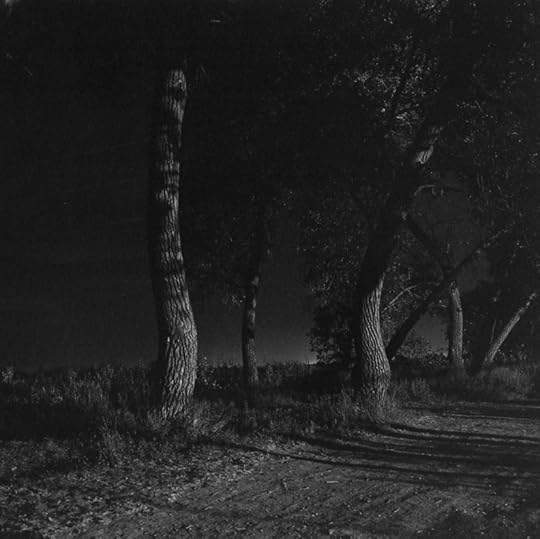
from Summer Nights Walking, 1976-1982 (c) Robert Adams