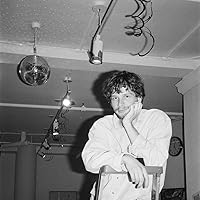
Helen Louise Gardner, Professor of English Literature with distinguished critical work on John Donne and T.S. Eliot. First woman to hold the Merton Professor of English Literature chair at Oxford (1966-1975). Wikipedia
What a beautiful work of literary criticism! Gardner guides us through Eliot's poetic works, beginning and ending with his crowning offering, "Four Quartets."
She writes: "I believe 'Four Quartets' is Mr. Elliot's masterpiece and that it contains more fully than any of this earlier works the poetic solution of his peculiar problems as a poet, problems which arise partly from his own temperament, and partly from the conditions under which he has had to write. I shall therefore begin by considering 'Four Quartets' as a work of art, and after that I shall attempt to trace the development of his art from the beginning, and to demonstrate the fundamental unity of all his work."
“‘The Waste Land’ moves, if it moves at all, towards some moment which is outside the poem and may never come, which we are still waiting for at the close. It does not so much move towards a solution as make clearer and clearer that a solution is not within our power. We can only wait for the rain to fall.”
The Art of T.S. Eliot by Helen Gardner focuses on the poetic style and images of Eliot’s work. The author sees his earlier work only as preparing him for his masterpiece, “Four Quartets”, which she identifies as a turning point in his work.
The real world did not reflect all that Eliot believed about the spiritual world where he saw hope for redemption. His poems were about art, old age, regret and redemption. His hope, in a religious sense, was that the making of art was the highest justification of human life. These are poems of self-examination and regret where art helped fill the need for penance.
Gardner's says of Eliot’s earlier work that he often imitated the voices of other poets but then moves on to a more independent style. He wrote “The Waste Land,” in a way that underscored the musicality inherent in natural rhythms. This thematic evolution did not overshadow his core ideas which seem best understood in the Quartets.
Eliot’s famous quote: “We shall not cease from exploration. And the end of all our exploring. Will be to arrive where we started. And know the place for the first time, leaves a question. Did Eliot move onto plays after his poetry because after the Quartets he had nothing left to say? Maybe he really did feel he arrived at where he started. For more on this book see https://connectedeventsmatter.com/blo...
They don't make literary criticism like this anymore. You don't have to agree with all of Gardner's judgements to find this just a thoroughly enjoyable read with plenty of insight, particularly into the Four Quartets. Really lovely to read a work of literary criticism shaped by appreciation rather than cynicism, and filled with close readings without descending into finding an 'ism' or personal tragedy under every rock. I will certainly return to this as a conversation partner as I continue to think about the Four Quartets.
An excellent exploration of Eliot’s poetry, focusing on The Four Quartets. I’d recommend this to anyone needing help with his notoriously difficult poems. People who’d like to go deeper will also get a lot out of this little gem of a book.
Based on articles and lectures, this book provides a readable and useful account of T. S. Eliot’s poems and plays, with particular attention to Four Quartets. Helen Gardner brings in Eliot’s own pronouncements on poetry where appropriate, and argues for “a fundamental unity” of all his work. Attention to meter and patterns of imagery helps an understanding of what Eliot does with the quartet form, as the chapter on music discusses each of the four in detail. Gardner notes that knowledge of the literary sources of the quartets is not as crucial as it is to The Waste Land, so that the best way to understand the later poems is to keep reading them rather than looking for outside information. The final chapter is a model of that reading, identifying literal, moral, and mystical meanings and concluding that Eliot is a visionary poet like Dante.
Despite having read and re-read Four Quartets and The Waste Land so many times over the past twenty and more years, my understanding of them remains limited. It's still limited after reading this excellent book by Helen Gardner (written not long after Eliot had finished Little Gidding) but it is undoubtedly richer and my appreciation for the structure and complexity of the Four Quartets has increased no end.
Second reading - still very good although limited to some extent by the fact that it was written so soon after Eliot's writing. Reading this after the annotated complete poems highlighted some of the points that Helen Gardner simply wouldn't have been aware of at the time.
its very well written,well reserached arguments and basically engaging lectures, i mean its very thought provoking and i would recommend using it to annote and write lots of notes and going back forth with the text which i didn't do, the content is amazing. well worth investing in if you liked/own the four quartets.