

What do you think?

LENINGRAD 1943
Correspondant de la presse britannique en Union soviétique pendant toute la durée de la Seconde Guerre mondiale, Alexander Werth fut un témoin privilégié du siège de Leningrad qui dura 872 jours. Au début du mois de septembre 1941, les troupes allemandes arrivent devant les premières lignes de défense de Leningrad. La prise de la ville, dont la défense est organisée par Joukov, se révèle vite impossible. Les Allemands, renonçant à un assaut direct, décident de l’investir progressivement pour affamer la population, avec l’aide des Finlandais. Heureusement pour les Soviétiques, l’encerclement n’a été que partiel et précaire. En effet, le ravitaillement leur parvenait chaque hiver, en passant par le lac Ladoga gelé, ce qui leur a permis de tenir. Cependant, les pertes humaines seront colossales : il en coûtera à l’Union soviétique 1 800 000 hommes, dont un million de civils morts de faim pendant le siège. Quant aux forces de l’Axe, elles déploreront la perte de 200 000 de leurs soldats. Malgré l’ampleur des pertes humaines, la ville résistera jusqu’à son dégagement en janvier 1944, au cours du siège le plus long de l’histoire moderne.
Paperback
First published January 1, 1944
About the author
Alexander Werth
55 books23 followersAlexander Werth was a Russian-born, naturalized British writer, journalist, and war correspondent.
Werth's family fled to the United Kingdom in the wake of the Russian Revolution.
Werth wrote about France in the prewar period and about Russia in World War II, especially the Battle of Stalingrad and the Siege of Leningrad. He was fluent in both Russian and English. His best-known work is "Russia at War 1941 to 1945", (London, 1964) a behind-the-scenes look at life in the wartime Soviet Union; he spent the war there as the BBC's correspondent, and had unrivalled access due to the combination of his BBC press credentials and his ability to function as a native Russian.
Werth was among a group of journalists to visit the Majdanek concentration and extermination camp after it had been discovered by the advancing Red Army. He filed a report on the atrocities, but the BBC initially refused to broadcast it, believing that it was too incredible to be true and suspecting a Soviet propaganda stunt.
He was the Moscow correspondent for the Guardian newspaper from 1946 to 1949. He was one of the first outsiders to be allowed into Stalingrad after the battle. Other works include: France 1940-1955: the de Gaulle Revolution; Moscow 41; The Last Days of Paris: a Journalist's Diary; Leningrad; The Year of Stalingrad; and Musical Uproar in Moscow.
His son Nicolas Werth is a well-known French historian (Directeur de recherche au CNRS) who specializes in the history of the Soviet Union.
Source: wikipedia.com
Werth's family fled to the United Kingdom in the wake of the Russian Revolution.
Werth wrote about France in the prewar period and about Russia in World War II, especially the Battle of Stalingrad and the Siege of Leningrad. He was fluent in both Russian and English. His best-known work is "Russia at War 1941 to 1945", (London, 1964) a behind-the-scenes look at life in the wartime Soviet Union; he spent the war there as the BBC's correspondent, and had unrivalled access due to the combination of his BBC press credentials and his ability to function as a native Russian.
Werth was among a group of journalists to visit the Majdanek concentration and extermination camp after it had been discovered by the advancing Red Army. He filed a report on the atrocities, but the BBC initially refused to broadcast it, believing that it was too incredible to be true and suspecting a Soviet propaganda stunt.
He was the Moscow correspondent for the Guardian newspaper from 1946 to 1949. He was one of the first outsiders to be allowed into Stalingrad after the battle. Other works include: France 1940-1955: the de Gaulle Revolution; Moscow 41; The Last Days of Paris: a Journalist's Diary; Leningrad; The Year of Stalingrad; and Musical Uproar in Moscow.
His son Nicolas Werth is a well-known French historian (Directeur de recherche au CNRS) who specializes in the history of the Soviet Union.
Source: wikipedia.com
Ratings & Reviews
Friends & Following
Create a free account to discover what your friends think of this book!
Community Reviews
Displaying 1 - 19 of 19 reviews

November 23, 2014
I received this from Netgalley in exchange for an honest review.
Not the usual essay, this is an quick book detailing a journalist's 4-day visit during the siege of Leningrad during World War II. Typical of the time period, the narrative reflects on Soviet glory, tireless workers, selfless warriors, and heroic children. A vivid storyline, with strong regard for the Stalinist period, which was then seen as a harbinger of good for the Russian people. Little did they know what was to come.
Not the usual essay, this is an quick book detailing a journalist's 4-day visit during the siege of Leningrad during World War II. Typical of the time period, the narrative reflects on Soviet glory, tireless workers, selfless warriors, and heroic children. A vivid storyline, with strong regard for the Stalinist period, which was then seen as a harbinger of good for the Russian people. Little did they know what was to come.

October 16, 2014
A somewhat pedestrian independent contemporary view of Leningrad in 1943
Alexander Werth was a British journalist born in St Petersburg(Leningrad) but his family left when he was aged 15 just as the Russian Revolution took hold. This book covers his visit in 1943 post the worst of the siege but prior to it's eventual relief.
There's some areas of the book I did find fascinating particularly his comparisons of the pre-revolutionary St Petersburg to 1943 Leningrad and his visit to the flat he left in 1917. However I did find the endless visit to schools, factories, etc and the conversations with various Soviet functionaries somewhat boring.
The book could have used some editing and some more background on the sites he was visiting and the importance of those locations during the blockade.
If you're looking for a more informative book on the Siege of Leningrad try Leningrad: The Epic Siege of World War II, 1941-1944, however for an unvarnished contemporary account the book does give some insight.
Alexander Werth was a British journalist born in St Petersburg(Leningrad) but his family left when he was aged 15 just as the Russian Revolution took hold. This book covers his visit in 1943 post the worst of the siege but prior to it's eventual relief.
There's some areas of the book I did find fascinating particularly his comparisons of the pre-revolutionary St Petersburg to 1943 Leningrad and his visit to the flat he left in 1917. However I did find the endless visit to schools, factories, etc and the conversations with various Soviet functionaries somewhat boring.
The book could have used some editing and some more background on the sites he was visiting and the importance of those locations during the blockade.
If you're looking for a more informative book on the Siege of Leningrad try Leningrad: The Epic Siege of World War II, 1941-1944, however for an unvarnished contemporary account the book does give some insight.

October 22, 2014
‘And then we took off. The idea of going to Leningrad – after nearly 26 years – was hard to take in ..’
Alexander Werth (1901-1969) was born in Leningrad (then called St Petersburg), where he lived for the first sixteen years of his life. His family fled to the United Kingdom after the Russian Revolution in 1917. Mr Werth was a naturalized British author, journalist and war correspondent. He wrote a number of books about pre-war France and, and Russia during World War II. This book, written after his brief visit to Leningrad in 1943, was first published in London in 1944. In his preface to the book, Mr Werth writes that two things encouraged him to write this book: firstly, he was the only British correspondent to have been in Leningrad during the blockade; and secondly, Leningrad was his native city. The greater part of this book, Mr Werth wrote, is a record of all that he saw and heard during his visit.
‘Werth was the first foreign correspondent (and the first Westerner) to record what remains one of the great urban tragedies of World War II: the longest siege ever endured by a modern city, during which nearly 700,000 civilians starved to death.’
In his introduction to the book, Nicholas Werth (son of Alexander) writes that the book was intended primarily for a British audience. At the time, with little awareness of what was happening in the east, the British generally would not have been aware of the courage and tenacity of their Soviet allies. And would not have been aware that conditions were more desperate in Leningrad than in London and Paris as a consequence of food shortages and the cold.
‘Alexander Werth’s book sheds light on the numerous survival strategies adopted during the siege, not only by ordinary people but also heads of industry and even the municipal authorities.’
While Alexander Werth would not have directly experienced the reality of life under the siege, he met with a number of people (both civilians and soldiers) and visited a number of buildings (including the Leningrad Public Library and the Kirov works) and spoke with a number of people working there about their experiences of the siege.
I found this book both informative and moving. While I have read a little about the siege of Leningrad, accounts of events from an individual personal perspective bring the siege to life in a way that descriptions of events alone cannot. From reading accounts of the heroism of individuals, their determination to keep going: their patriotism becomes evident. Images of horror and terror are evoked by reference to the bombing of hospitals, mass starvation, and instances of cannibalism. These are stark reminders both of the brutality of 20th century war, and the suffering inflicted as a consequence.
‘And now, as you see, life is almost normal. There is this shelling, of course, and people get killed, but life has become valuable again.’
When Alexander Werth first arrived in Leningrad, he was comparing what he saw with his memories of the city he had left almost 26 years earlier. By the time he left, those memories were fainter and he was much more aware of the city through the eyes of those surviving in it. So many people died during this siege and yet so many of the survivors never lost hope. They, the heroes of Leningrad, worked hard to try to ensure the survival of as much of the city itself, and as many of its treasures and people as possible.
I’d recommend this book to anyone interested in Russia’s participation in World War II, and specifically in the impacts on Leningrad. We should never forget their courage.
My thanks to NetGalley and the publisher I. B. Tauris for the opportunity to read an advance copy of this book.
Jennifer Cameron-Smith
Alexander Werth (1901-1969) was born in Leningrad (then called St Petersburg), where he lived for the first sixteen years of his life. His family fled to the United Kingdom after the Russian Revolution in 1917. Mr Werth was a naturalized British author, journalist and war correspondent. He wrote a number of books about pre-war France and, and Russia during World War II. This book, written after his brief visit to Leningrad in 1943, was first published in London in 1944. In his preface to the book, Mr Werth writes that two things encouraged him to write this book: firstly, he was the only British correspondent to have been in Leningrad during the blockade; and secondly, Leningrad was his native city. The greater part of this book, Mr Werth wrote, is a record of all that he saw and heard during his visit.
‘Werth was the first foreign correspondent (and the first Westerner) to record what remains one of the great urban tragedies of World War II: the longest siege ever endured by a modern city, during which nearly 700,000 civilians starved to death.’
In his introduction to the book, Nicholas Werth (son of Alexander) writes that the book was intended primarily for a British audience. At the time, with little awareness of what was happening in the east, the British generally would not have been aware of the courage and tenacity of their Soviet allies. And would not have been aware that conditions were more desperate in Leningrad than in London and Paris as a consequence of food shortages and the cold.
‘Alexander Werth’s book sheds light on the numerous survival strategies adopted during the siege, not only by ordinary people but also heads of industry and even the municipal authorities.’
While Alexander Werth would not have directly experienced the reality of life under the siege, he met with a number of people (both civilians and soldiers) and visited a number of buildings (including the Leningrad Public Library and the Kirov works) and spoke with a number of people working there about their experiences of the siege.
I found this book both informative and moving. While I have read a little about the siege of Leningrad, accounts of events from an individual personal perspective bring the siege to life in a way that descriptions of events alone cannot. From reading accounts of the heroism of individuals, their determination to keep going: their patriotism becomes evident. Images of horror and terror are evoked by reference to the bombing of hospitals, mass starvation, and instances of cannibalism. These are stark reminders both of the brutality of 20th century war, and the suffering inflicted as a consequence.
‘And now, as you see, life is almost normal. There is this shelling, of course, and people get killed, but life has become valuable again.’
When Alexander Werth first arrived in Leningrad, he was comparing what he saw with his memories of the city he had left almost 26 years earlier. By the time he left, those memories were fainter and he was much more aware of the city through the eyes of those surviving in it. So many people died during this siege and yet so many of the survivors never lost hope. They, the heroes of Leningrad, worked hard to try to ensure the survival of as much of the city itself, and as many of its treasures and people as possible.
I’d recommend this book to anyone interested in Russia’s participation in World War II, and specifically in the impacts on Leningrad. We should never forget their courage.
My thanks to NetGalley and the publisher I. B. Tauris for the opportunity to read an advance copy of this book.
Jennifer Cameron-Smith

October 23, 2014
Alexander Werth, a British war correspondent based in Moscow during World War II, was given a rare opportunity to visit Leningrad in 1943. It was a time in which Leningrad was slowly recuperating from the worst of the famine. The city was still surrounded by Germans and virtually cut off from the majority of Russia, but the blockade was lessening. There were ever increasing gaps within the blockade, through which the country was able to get in food and supplies.
I was constantly amazed that 1) a foreign correspondent was allowed into Leningrad; 2) the officials were so open with this journalist (despite the fact that he was a native Russian and a representative from a once-again-Ally country); and 3) that he got such VIP treatment, allowed to go anywhere and everywhere that was reasonably feasible. It was as if after such a long and harrowing isolation from the from rest of the world, Leningrad was eager to talk to anyone willing to listen to its tale of survivorship. Though, as I read, I was conflicted as to the ulterior motive of both Leningrad’s openness and Werth’s telling. As I saw it, there were three facets to Leningrad, 1943: 1) The vast change of Saint Petersburg to Leningrad, signifying the end of Tsarist Russia and the beginning of the Soviet Union; 2) the strength and perseverance in overcoming starvation and attack by the German blockade; and 3) the potential propaganda to the Soviet Union and the rest of the world that claims, “Look at Leningrad! Not only is it the birthplace of the revolution, but its fight against the blockade is the epitome of the revolution’s spirit. It does not surrender even in the face of death. It does not hide from the shelling, but drags itself to the frontline and continues manufacturing weapons and tanks. When it has nothing left, it innovates to create something new out of the meager scraps it finds. Not only does it survive, but it thrives once again!” I mean, who wouldn’t be eager to get that message out, foreign correspondent or no?
Leningrad, 1943 reads like a diary of a journalist. And perhaps because Werth intertwined his personal history with his investigation of Leningrad's survival of the blockade, I noticed so many ironies and inconsistencies that would become so characteristic of the Soviet Union. Werth came from a well-off German family that emigrated shortly before the Bolsheviks came to power. However, that never seemed to be a point of contention among his hosts. Had it been after the war, he very well may have ended up in a labor camp.
Werth often spoke of the contrast between St. Petersburg and Leningrad, saying that Petersburg “belonged to literature and to history, but no longer to real life.”
Can you imagine it? It takes me back to a Tolstoy novel.
He goes on to describe “other weird visions [that] had risen out of the mist of St. Petersburg, out the grey cold vapors of the Neva” to inspire literary artists such as Gogol and Dostoievsky, among countless others. (Personally, this puts me in mind of Andrey Bely’s novel Petersburg.)
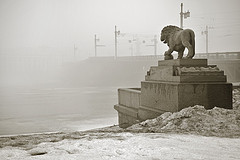
And yet, despite the fact that the City of Lenin was the birthplace of the revolution, they still value the relics of the old tsars, particularly Peter and Catherine. The people go through the trouble of sandbagging the statues and moving the “big bronze and iron monsters” because they were simply a “part of Leningrad.”
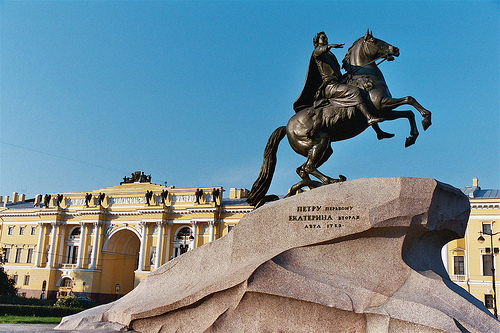
How hard it is to get rid of your past, no matter how mired it is in bad feeling and scorn. The more cataclysmic an event, the stronger the emotions on both sides. The Tsars and Soviet leaders were greatly loved and just as greatly hated. But today, there are just as many Lenin statues as there are statues of Peter the Great. Perhaps even more, as just about every town in Russia has at least one statue of Lenin. These things serve as a reminder of where we’ve been, how far we’ve come, and how much further we have left to go.
When people spoke to Werth about the winter of the blockade, there was no doubt to their sincerity. They did not over-exaggerate. Their stories were somber, bleak. They spoke of death as if it were an unwelcome house guest that lived in their apartments, lurking in the cold, dark corners, waiting. The slow, painful, and eventual demise of their friends, neighbors, coworkers, parents, spouses, children became an everyday fact of life. It was a blessing and a curse. It was heart-wrenching and one less burden to carry. Those that managed to drag themselves to work each day, had a will to live. Something so mundane as working in a factory provided an excuse for them to get out of bed, to carry on, and not succumb to death. And it’s true that those who continued to work, were better fed (and we’re talking a difference of a 50-100 grams at most) and they lived longer. More than one person told Werth that people seemed to know (almost to the day) when they would die. It’s hard to imagine, but I suppose if you see it happen on a daily basis, if you physically feel your physical, mental, and emotional strength and health slowly ebb each day, you probably learn to be more acutely attuned to your body’s limits.
However, when the topic turned to production and numbers, my cynicism switched on. More than once, Werth refrained from divulging too much “classified information.” They bragged about their soldiers at the front, the Stakhanovite workers in the factories, the fact that people begged to be allowed back into Leningrad to join the fight. At times, the glasses seemed a bit too rose-colored. How is it that soviet soldiers fought and died proudly for their country, though they, too, were starving and had little provisions? They died by the hundreds of thousands, much under the same conditions as when fighting for Tsar Nicholas II, which gave rise to the Bolshevik Revolution. Why did they not revolt against the Soviet regime during this war? Perhaps because communism gave them education, rights, a quickly modernized country that was finally catching up to the rest of the world? Citizen like those in Leningrad were constantly manufacturing weapons and ammo to supply their frontlines. Perhaps because their newfound regime was still novel, still fresh, and citizens were still reaping the benefits, though those things would soon diminish after the war?
But Werth didn’t seem to question these things. If he did, he kept his suspicions to himself. At times, it felt like he was trying to be unbiased journalist without the benefit of fact-checking. Other times, I suspected him of being taken in by this new city and its people. Maybe out of nostalgia for the city he once knew? Maybe out of compassion for all that they had been through? Maybe out of sympathy for the communist cause? I couldn’t quite put my finger on it on Werth’s true opinion of things. Then again, maybe I just have the benefit of hindsight. And if that's the case, an afterward commentary would have been nice.
I received an advance copy from NetGalley.
I was constantly amazed that 1) a foreign correspondent was allowed into Leningrad; 2) the officials were so open with this journalist (despite the fact that he was a native Russian and a representative from a once-again-Ally country); and 3) that he got such VIP treatment, allowed to go anywhere and everywhere that was reasonably feasible. It was as if after such a long and harrowing isolation from the from rest of the world, Leningrad was eager to talk to anyone willing to listen to its tale of survivorship. Though, as I read, I was conflicted as to the ulterior motive of both Leningrad’s openness and Werth’s telling. As I saw it, there were three facets to Leningrad, 1943: 1) The vast change of Saint Petersburg to Leningrad, signifying the end of Tsarist Russia and the beginning of the Soviet Union; 2) the strength and perseverance in overcoming starvation and attack by the German blockade; and 3) the potential propaganda to the Soviet Union and the rest of the world that claims, “Look at Leningrad! Not only is it the birthplace of the revolution, but its fight against the blockade is the epitome of the revolution’s spirit. It does not surrender even in the face of death. It does not hide from the shelling, but drags itself to the frontline and continues manufacturing weapons and tanks. When it has nothing left, it innovates to create something new out of the meager scraps it finds. Not only does it survive, but it thrives once again!” I mean, who wouldn’t be eager to get that message out, foreign correspondent or no?
Leningrad, 1943 reads like a diary of a journalist. And perhaps because Werth intertwined his personal history with his investigation of Leningrad's survival of the blockade, I noticed so many ironies and inconsistencies that would become so characteristic of the Soviet Union. Werth came from a well-off German family that emigrated shortly before the Bolsheviks came to power. However, that never seemed to be a point of contention among his hosts. Had it been after the war, he very well may have ended up in a labor camp.
Werth often spoke of the contrast between St. Petersburg and Leningrad, saying that Petersburg “belonged to literature and to history, but no longer to real life.”
Of course I remembered Gogol Street, it had a wonderful shop for sweets and chocolates which belonged to a Frenchman or a Swiss called Berrin…. On Christmas Eve or New Year’s Eve there used to be crowds of cars and smart horse sleighs outside Berrins, and luscious displays of sweets and fruit confits and chocolates in his brightly lit-up windows.
Can you imagine it? It takes me back to a Tolstoy novel.
He goes on to describe “other weird visions [that] had risen out of the mist of St. Petersburg, out the grey cold vapors of the Neva” to inspire literary artists such as Gogol and Dostoievsky, among countless others. (Personally, this puts me in mind of Andrey Bely’s novel Petersburg.)
And yet, despite the fact that the City of Lenin was the birthplace of the revolution, they still value the relics of the old tsars, particularly Peter and Catherine. The people go through the trouble of sandbagging the statues and moving the “big bronze and iron monsters” because they were simply a “part of Leningrad.”
How hard it is to get rid of your past, no matter how mired it is in bad feeling and scorn. The more cataclysmic an event, the stronger the emotions on both sides. The Tsars and Soviet leaders were greatly loved and just as greatly hated. But today, there are just as many Lenin statues as there are statues of Peter the Great. Perhaps even more, as just about every town in Russia has at least one statue of Lenin. These things serve as a reminder of where we’ve been, how far we’ve come, and how much further we have left to go.
When people spoke to Werth about the winter of the blockade, there was no doubt to their sincerity. They did not over-exaggerate. Their stories were somber, bleak. They spoke of death as if it were an unwelcome house guest that lived in their apartments, lurking in the cold, dark corners, waiting. The slow, painful, and eventual demise of their friends, neighbors, coworkers, parents, spouses, children became an everyday fact of life. It was a blessing and a curse. It was heart-wrenching and one less burden to carry. Those that managed to drag themselves to work each day, had a will to live. Something so mundane as working in a factory provided an excuse for them to get out of bed, to carry on, and not succumb to death. And it’s true that those who continued to work, were better fed (and we’re talking a difference of a 50-100 grams at most) and they lived longer. More than one person told Werth that people seemed to know (almost to the day) when they would die. It’s hard to imagine, but I suppose if you see it happen on a daily basis, if you physically feel your physical, mental, and emotional strength and health slowly ebb each day, you probably learn to be more acutely attuned to your body’s limits.
However, when the topic turned to production and numbers, my cynicism switched on. More than once, Werth refrained from divulging too much “classified information.” They bragged about their soldiers at the front, the Stakhanovite workers in the factories, the fact that people begged to be allowed back into Leningrad to join the fight. At times, the glasses seemed a bit too rose-colored. How is it that soviet soldiers fought and died proudly for their country, though they, too, were starving and had little provisions? They died by the hundreds of thousands, much under the same conditions as when fighting for Tsar Nicholas II, which gave rise to the Bolshevik Revolution. Why did they not revolt against the Soviet regime during this war? Perhaps because communism gave them education, rights, a quickly modernized country that was finally catching up to the rest of the world? Citizen like those in Leningrad were constantly manufacturing weapons and ammo to supply their frontlines. Perhaps because their newfound regime was still novel, still fresh, and citizens were still reaping the benefits, though those things would soon diminish after the war?
But Werth didn’t seem to question these things. If he did, he kept his suspicions to himself. At times, it felt like he was trying to be unbiased journalist without the benefit of fact-checking. Other times, I suspected him of being taken in by this new city and its people. Maybe out of nostalgia for the city he once knew? Maybe out of compassion for all that they had been through? Maybe out of sympathy for the communist cause? I couldn’t quite put my finger on it on Werth’s true opinion of things. Then again, maybe I just have the benefit of hindsight. And if that's the case, an afterward commentary would have been nice.
I received an advance copy from NetGalley.
January 26, 2015
SUMMARY of Review
Alexander Werth’s Leningrad 1943: Inside a City Under Siege is a BBC reporter’s well-edited journal of his visit to Leningrad after major holes in the Axis (German-Finnish) blockade made a visit possible. Leningrad 1943 is not a military history with an eye for tactics, and it does not take place during the worst part of the siege; however, that should not dissuade you from reading this book. Werth’s ability to succinctly tell stories infused with details, facts, and historical information; and, the author’s own personal attachments to Leningrad, makes for a highly compelling read. I am giving Leningrad 1943 five out of five stars because the prose, the stories, the historical details, and Werth’s personal inquiries brilliantly provide the reader with a portrait of the survivors of this bitter siege.
FULL REVIEW:
“In this book I have recorded in detail what I saw and heard, but refrained from drawing too many conclusions. Let the details in their cumulative effect speak for themselves.” (Preface)
Alexander Werth, a BBC War correspondent in the Soviet Union, in September 1943 reports to work in the northern reaches of the Soviet Union, Leningrad also known as St. Petersburg, “Russia’s window into Europe.” By 1943 the city had endured a ceaseless siege, where the Germans and Finnish armies isolated the city from the world. The soldiers, as well as women, children, and the elderly survived shellings, fires, diseases, and famines to save their city – they would not surrender. Just how bad was the siege? The author accounts that between September 1941 and July 1942 between 650,000 – 700,000 residents died, “a mortality rate 15 times the peacetime average.”
This book is a well-edited diary of journalist’s notes, and takes place after the worst of the siege, in 1943, when serious holes were made in the German and Finnish contra and counter valences. Though Werth’s visit was no cakewalk, it certainly is not an account of a Leningrad in the midst of the worst moments of the siege. In this book, Werth considers the cost of the siege, and whether or not holding out was worth the loss of life, while also highlighting stories of citizens and soldiers.
Given that Leningrad 1943 is a journal, it is full of contemplations that time has made complete: “Perhaps, in the course of years, when thoughts of the siege and the blockade fade in people’s memories, they may again colloquially refer to the city by its own name: but it was significant that throughout my stay not one person would have called the city Petrograd or St. Petersburg.”
Why did Werth care about the name of the city? He was born and raised in St. Petersburg, prior to the Bolsheviks’ rise to power. As a young boy he fled Russia, moving throughout Europe, and eventually became a BBC war correspondent stationed in the Soviet Union. In addition to recounting the story of those who survived the siege, Werth’s tells insightful personal moments, for example, when he climbs the stairs of his old apartment, discovering what it had become. I immediately identified with Werth’s personal reasons for being in Leningrad – St. Petersburg – names he interchanges depending on the stories he recounts.
The author, obviously interested in the role books and news played in Leningrad during the war, meets with librarians, teachers, and writers. One resident recounts: “The Leningrad Public Library was of great help to us in the blockade. People went there at first – actually before the blockade began – and studied every conceivable book on the sieges of towns. Then during the blockade there were no matches in Leningrad; scientists and other went the to the Public Library…” St. Petersburg, a town much like London, rich in literary history, found comfort in their books; and similar to London, turned to their own music, like Tchaikovsky.
Werth visits the “hedgehog” – mostly civilian built – frontlines where the Red Army was holding back the Finns and Germans. He tours the Kirov factory, where soviet workers endure sever shellings, yet return to the factory to fuel the war effort. At one point, the author visits a boys’ school and asks the pupils: “’Can anybody tell me anything about America?’ Two hands went up. One of the boys said, ‘They’ve got skyscrapers 150 stories high.’ ‘They make a lot of trucks for the Red Army.’ ‘We get American chocolate.’ ‘The Americans are very rich,’ came the replies. ‘Have any of you ever seen an American?’ Nobody had.” Each adventure is carefully recounted, letting the “details speak for themselves.”
The details add up to a city of indomitable strength; a city pulled between its European-St. Petersburg past and its Soviet-Leningrad now. Werth, with a journalist’s keen eye for making details captivate hearts, tells the poignant stories of the people of Leningrad, the citizens and soldiers, who made daily sacrifices for the betterment of their city, a city which would indeed be referred to by “future generations as St. Petersburg.”
Alexander Werth’s Leningrad 1943: Inside a City Under Siege, is an outstanding personal account of a time and a place history should not soon forget. Werth’s expertise as a journalist shines brilliantly, as he documents stories providing an emotional and vibrant glimpse into Leningrad as the siege was grinding to a halt. I am giving Leningrad 1943 five out of five stars because the prose, the stories, the historical details, and Werth’s personal inquiries brilliantly provide the reader with a portrait of the survivors of this bitter siege of St. Petersburg.
Tags: WWII, Eastern Front, Russian Campaign, Operation Barbarossa, Leningrad, St. Petersburg, Soviet Union, Russia, Siege Warfare, Diary, Journal, Journalist’s Account of War, Leningrad Blockade, Siege of Leningrad, Russian Front of WWII, Famine, Cannibalism, Literature and War, Music and War, Stalin, Post-War Recovery, Civilian Stories, Children and War
Alexander Werth’s Leningrad 1943: Inside a City Under Siege is a BBC reporter’s well-edited journal of his visit to Leningrad after major holes in the Axis (German-Finnish) blockade made a visit possible. Leningrad 1943 is not a military history with an eye for tactics, and it does not take place during the worst part of the siege; however, that should not dissuade you from reading this book. Werth’s ability to succinctly tell stories infused with details, facts, and historical information; and, the author’s own personal attachments to Leningrad, makes for a highly compelling read. I am giving Leningrad 1943 five out of five stars because the prose, the stories, the historical details, and Werth’s personal inquiries brilliantly provide the reader with a portrait of the survivors of this bitter siege.
FULL REVIEW:
“In this book I have recorded in detail what I saw and heard, but refrained from drawing too many conclusions. Let the details in their cumulative effect speak for themselves.” (Preface)
Alexander Werth, a BBC War correspondent in the Soviet Union, in September 1943 reports to work in the northern reaches of the Soviet Union, Leningrad also known as St. Petersburg, “Russia’s window into Europe.” By 1943 the city had endured a ceaseless siege, where the Germans and Finnish armies isolated the city from the world. The soldiers, as well as women, children, and the elderly survived shellings, fires, diseases, and famines to save their city – they would not surrender. Just how bad was the siege? The author accounts that between September 1941 and July 1942 between 650,000 – 700,000 residents died, “a mortality rate 15 times the peacetime average.”
This book is a well-edited diary of journalist’s notes, and takes place after the worst of the siege, in 1943, when serious holes were made in the German and Finnish contra and counter valences. Though Werth’s visit was no cakewalk, it certainly is not an account of a Leningrad in the midst of the worst moments of the siege. In this book, Werth considers the cost of the siege, and whether or not holding out was worth the loss of life, while also highlighting stories of citizens and soldiers.
Given that Leningrad 1943 is a journal, it is full of contemplations that time has made complete: “Perhaps, in the course of years, when thoughts of the siege and the blockade fade in people’s memories, they may again colloquially refer to the city by its own name: but it was significant that throughout my stay not one person would have called the city Petrograd or St. Petersburg.”
Why did Werth care about the name of the city? He was born and raised in St. Petersburg, prior to the Bolsheviks’ rise to power. As a young boy he fled Russia, moving throughout Europe, and eventually became a BBC war correspondent stationed in the Soviet Union. In addition to recounting the story of those who survived the siege, Werth’s tells insightful personal moments, for example, when he climbs the stairs of his old apartment, discovering what it had become. I immediately identified with Werth’s personal reasons for being in Leningrad – St. Petersburg – names he interchanges depending on the stories he recounts.
The author, obviously interested in the role books and news played in Leningrad during the war, meets with librarians, teachers, and writers. One resident recounts: “The Leningrad Public Library was of great help to us in the blockade. People went there at first – actually before the blockade began – and studied every conceivable book on the sieges of towns. Then during the blockade there were no matches in Leningrad; scientists and other went the to the Public Library…” St. Petersburg, a town much like London, rich in literary history, found comfort in their books; and similar to London, turned to their own music, like Tchaikovsky.
Werth visits the “hedgehog” – mostly civilian built – frontlines where the Red Army was holding back the Finns and Germans. He tours the Kirov factory, where soviet workers endure sever shellings, yet return to the factory to fuel the war effort. At one point, the author visits a boys’ school and asks the pupils: “’Can anybody tell me anything about America?’ Two hands went up. One of the boys said, ‘They’ve got skyscrapers 150 stories high.’ ‘They make a lot of trucks for the Red Army.’ ‘We get American chocolate.’ ‘The Americans are very rich,’ came the replies. ‘Have any of you ever seen an American?’ Nobody had.” Each adventure is carefully recounted, letting the “details speak for themselves.”
The details add up to a city of indomitable strength; a city pulled between its European-St. Petersburg past and its Soviet-Leningrad now. Werth, with a journalist’s keen eye for making details captivate hearts, tells the poignant stories of the people of Leningrad, the citizens and soldiers, who made daily sacrifices for the betterment of their city, a city which would indeed be referred to by “future generations as St. Petersburg.”
Alexander Werth’s Leningrad 1943: Inside a City Under Siege, is an outstanding personal account of a time and a place history should not soon forget. Werth’s expertise as a journalist shines brilliantly, as he documents stories providing an emotional and vibrant glimpse into Leningrad as the siege was grinding to a halt. I am giving Leningrad 1943 five out of five stars because the prose, the stories, the historical details, and Werth’s personal inquiries brilliantly provide the reader with a portrait of the survivors of this bitter siege of St. Petersburg.
Tags: WWII, Eastern Front, Russian Campaign, Operation Barbarossa, Leningrad, St. Petersburg, Soviet Union, Russia, Siege Warfare, Diary, Journal, Journalist’s Account of War, Leningrad Blockade, Siege of Leningrad, Russian Front of WWII, Famine, Cannibalism, Literature and War, Music and War, Stalin, Post-War Recovery, Civilian Stories, Children and War
January 7, 2019
Documentaire intéressant sur l'état des lieux à Leningrad en 1943 alors que Werth est le premier journaliste étranger à obtenir la permission de visiter la ville assiégée depuis 1941. Au moment de sa visite, elle est toujours assiégée encore que l'encerclement ait été brisé depuis peu, elle ne sera libérée qu'en 1944 quand une vaste offensive soviétique brisera le verrou allemand et refoulera les troupes germaniques hors de la province de Leningrad.
La visite est faire sous la supervision des autorités soviétiques, ce qui fait que la plupart des observations rapportées par les officiels sont sujets à caution; mais la description que Werth fait de cette ville qui reprend vie est absolument merveilleuse et empreinte d'humanisme. Il a le sens du détail qui parle.
La visite est faire sous la supervision des autorités soviétiques, ce qui fait que la plupart des observations rapportées par les officiels sont sujets à caution; mais la description que Werth fait de cette ville qui reprend vie est absolument merveilleuse et empreinte d'humanisme. Il a le sens du détail qui parle.

August 22, 2023
The author of this book, Alexander Werth, as born in and lived in St.Petersburg until the age of 14 when his family left to move to England. Becoming a naturalised British citizen in 1930 he was a war correspondent primarily based in Russia during WWII. The basis of this book is a 4 day visit to the city in August 1943, some 18 months after the worst of the siege of Leningrad when a total food blockade causing over a million deaths by starvation. The use of an ice road on the large lake and the subsequent rapid laying of 45 miles of new railway track had broken the blockade but the city was still subject to persistent shelling every day, with the German army well dug in only a few miles away.
A fascinating book.
A fascinating book.
December 23, 2020
An interesting eye-witness account of a curated visit to a besieged Leningrad by a British journalist.

September 17, 2025
a superb piece of historical propaganda, surpassing the blitz reporting by far

August 4, 2023
A fairly decent journalistic account, considering the epoch and circumstances. A little too much of emotional introspections maybe, but given the author's personal attachment to the city, it may be excusable.

December 16, 2014
(I received a free copy of this book from Net Galley in exchange for an honest review.)
The 900-day German siege of Leningrad is the most powerful testimony to the immeasurable cruelty and horror of World War II. As the sole British correspondent to have been in the city during the blockade, Alexander Werth presents a harrowing firsthand account of the savagery and destruction wrought by the Nazis against the civilian population of the city. His writing evokes compelling images of terror—the bombing of children’s hospitals, mass starvation and cannibalism—with rich and well-informed firsthand accounts and commentary on the internal politics of Soviet party chiefs, soldiers and civilian resistance fighters. Both an authoritative historical document and a journalistic narrative of the overwhelming sadness, grief and futility of 20th century warfare, this is an invaluable look at one of the greatest losses of human life in recorded history.
Not sure I could describe the outline of this book any better than that.
As for the book itself, it was very informative and detailed. The author grew up in Leningrad and left in 1917 - he returned, as the only correspondent allowed into the city, for 4 days during 1943 and spoke first-hand of the atrocities and the struggles the city faced during the "blockade." His interviews with ordinary, everyday people highlight the hardships: bombing, famine, death. He also brings to light some of the tactics and strategies the Russian people used to combat the never-ending bombardment for their survival. There are many accounts of ordinary people doing extraordinary things that really lifts this book into the category of "significant."
Unfortunately, as can be the case with these style books, the constant interviews and inundation of places, names and locations was a little overwhelming. At times, it was hard to keep up with everything that I was reading. Also, the constant references and comparisons to his childhood were, at times, annoying to read as it was pretty much the same thing every time.
Still, do not let that stop you from reading this book if you are interested in the personal side of this very violent and savage time in Russia's history. It is a fascinating look into a world most of us from the outside have never heard.
Paul
ARH
The 900-day German siege of Leningrad is the most powerful testimony to the immeasurable cruelty and horror of World War II. As the sole British correspondent to have been in the city during the blockade, Alexander Werth presents a harrowing firsthand account of the savagery and destruction wrought by the Nazis against the civilian population of the city. His writing evokes compelling images of terror—the bombing of children’s hospitals, mass starvation and cannibalism—with rich and well-informed firsthand accounts and commentary on the internal politics of Soviet party chiefs, soldiers and civilian resistance fighters. Both an authoritative historical document and a journalistic narrative of the overwhelming sadness, grief and futility of 20th century warfare, this is an invaluable look at one of the greatest losses of human life in recorded history.
Not sure I could describe the outline of this book any better than that.
As for the book itself, it was very informative and detailed. The author grew up in Leningrad and left in 1917 - he returned, as the only correspondent allowed into the city, for 4 days during 1943 and spoke first-hand of the atrocities and the struggles the city faced during the "blockade." His interviews with ordinary, everyday people highlight the hardships: bombing, famine, death. He also brings to light some of the tactics and strategies the Russian people used to combat the never-ending bombardment for their survival. There are many accounts of ordinary people doing extraordinary things that really lifts this book into the category of "significant."
Unfortunately, as can be the case with these style books, the constant interviews and inundation of places, names and locations was a little overwhelming. At times, it was hard to keep up with everything that I was reading. Also, the constant references and comparisons to his childhood were, at times, annoying to read as it was pretty much the same thing every time.
Still, do not let that stop you from reading this book if you are interested in the personal side of this very violent and savage time in Russia's history. It is a fascinating look into a world most of us from the outside have never heard.
Paul
ARH

November 4, 2014
Inside a City Under Siege
This book is a harrowing firsthand account by British correspondent who was the sole journalist allowed to be in city during the blockade. In his book the author goes to great length to document the city’s struggle while the inhabitants faced the savagery and the aggression by the Nazi forces where an estimate of one million people lost their lives mostly from starvation. This brief visit took place in 1943 and is a record of what he saw and heard from survivors.
I found this book fascination in many ways the four days he spent travelling across Leningrad each step he described was reliving history. Mr. Werth went in great details sometimes overloading us names of streets and buildings and comparing what he saw at the moment with his memories of the city he loved and lived in as a child before the revolution. While his visits were to different locations, all interviews shared the same experience: famine, continuous shelling and death. What come to light are the survival strategies that was adopted during the siege by the ordinary people such as workers, the heads of industries, the local authorities, and of course the soldiers. Although not enough, one positive effect the Russian winter froze Lake Ladoga and created a life-line over which caravans of trucks hauled a meager amount of food and supplies and also provided an evacuation route for thousands of the city’s weak and elderly.
This book is both informative and moving in many ways but the endless visits to schools, factories, camps and conversations with functionaries became redundant and taxing. It is evident the culture in Leningrad at the time was highly artistic, people still enjoyed books, theater, music and Mr. Werth doesn't shy away from describing plays and authors he enjoyed. There is a lot in this book actually I would say an overwhelming amount of information to absorb in too little time.
On this I say: Bravery and collective courage of the whole city deserves to be welcomed for eternity.
My thanks to NetGalley and the publisher I. B. Tauris for the opportunity to read this book.
This book is a harrowing firsthand account by British correspondent who was the sole journalist allowed to be in city during the blockade. In his book the author goes to great length to document the city’s struggle while the inhabitants faced the savagery and the aggression by the Nazi forces where an estimate of one million people lost their lives mostly from starvation. This brief visit took place in 1943 and is a record of what he saw and heard from survivors.
I found this book fascination in many ways the four days he spent travelling across Leningrad each step he described was reliving history. Mr. Werth went in great details sometimes overloading us names of streets and buildings and comparing what he saw at the moment with his memories of the city he loved and lived in as a child before the revolution. While his visits were to different locations, all interviews shared the same experience: famine, continuous shelling and death. What come to light are the survival strategies that was adopted during the siege by the ordinary people such as workers, the heads of industries, the local authorities, and of course the soldiers. Although not enough, one positive effect the Russian winter froze Lake Ladoga and created a life-line over which caravans of trucks hauled a meager amount of food and supplies and also provided an evacuation route for thousands of the city’s weak and elderly.
This book is both informative and moving in many ways but the endless visits to schools, factories, camps and conversations with functionaries became redundant and taxing. It is evident the culture in Leningrad at the time was highly artistic, people still enjoyed books, theater, music and Mr. Werth doesn't shy away from describing plays and authors he enjoyed. There is a lot in this book actually I would say an overwhelming amount of information to absorb in too little time.
On this I say: Bravery and collective courage of the whole city deserves to be welcomed for eternity.
My thanks to NetGalley and the publisher I. B. Tauris for the opportunity to read this book.

December 3, 2014
Via Net Galley. This book is being republished. I'd never heard of the author before reading this on my e-reader. And I have read many US reporters of the war. As other reviewers have noted in 1943/44 the Soviet Union was a valued ally and it would not be good to say anything negative about the country. As I read this book, I kept wondering what kind of self-censorship Werth practiced. He was a native born speaker of the Russian language and grew up in Leningrad. He conveys the citizen's endurance as the city faced the long siege, and famine. Never once was the government blamed. While his book is endlessly positive, every so often sadness, and desolation creep in. I enjoyed his account of the State library in Leningrad. It remained open throughout the famine and siege. I wanted to know more about the wartime director (a woman) Did she have an MLS or the Russian equivalent or was she a political appointee that survived the purges. None of that was ever mentioned, and it must have been on all of their minds.
As a first hand and first in report of Leningrad the peoples of the world allied against Germany would read this and cheer on the heroism portrayed in this account.
As a first hand and first in report of Leningrad the peoples of the world allied against Germany would read this and cheer on the heroism portrayed in this account.

December 8, 2014
Alexander Werth was a British journalist and war correspondent, who had been born in Leningrad but had fled Russia with his family at age 16 in 1917. In 1943 he was allowed access to his native city, which was enduring the siege that lives on in the hearts and minds of Russians to this day. He was the first foreign correspondent and the first westerner to record what was happening and his first-hand account is both harrowing and deeply moving. However much one reads about the siege – and I’ve read a lot – every account offers something more and in its immediacy this one is a welcome addition to the many books that have been written since. Well worth reading.
May 30, 2014
An amazing diary of a british journalist during a couple of days visit to Leningrad in 1943 during German assault. Werth had several visits to different locations in Leningrad talking to people about their experience during the early blockade, the famine and struggle against german continuos shelling of this beautiful city. The stories were moving and showed the worst sufferings of the people of Leningrad specially the younger ones who lost a parent died starving and another fighting in the front.
January 10, 2015
A first hand account of the siege of Leningrad - by a Russian-born British journalist with native Russian language. He knew the city well, having lived there from birth and throughout his childhood. He described the city and its inhabitants under siege in such rich language that it comes alive for the reader decades later. The many hardships suffered by the inhabitants are endured with an impressive level of stoicism. I've read other accounts of the siege, but Alexander Werth's account really makes it come alive.
Recommended.
Recommended.

February 16, 2014
Non il solito saggio sui 900 giorni, questo è un instant book, diario di un giornalista in 4 giorni di visita durante l'assedio.
Quanto riportato è sintomatico di quei giorni, di quel periodo, la gloria sovietica, instancabili lavoratori, valorosi guerrieri, bambini eroici e lavoratori.
Vivido per il racconto in diretta, retorico per quel che riguarda il periodo stalinista, visto allora come foriero di bene per il popolo russo
Quanto riportato è sintomatico di quei giorni, di quel periodo, la gloria sovietica, instancabili lavoratori, valorosi guerrieri, bambini eroici e lavoratori.
Vivido per il racconto in diretta, retorico per quel che riguarda il periodo stalinista, visto allora come foriero di bene per il popolo russo

December 3, 2016
A charming account of Leningrad 1943: Werth's views of the city are not to be taken at face value, of course. Nonetheless, the interweaving of his admiration of the city, childhood nostalgia and status as a British journalist make for an entertaining read. Don't let the dust jacket fool you, though: "he saw through the propaganda to the heart of the country like no other"? Heh.

March 13, 2013
Un excellent témoignage sur la vie leningradoise au cours du siège le plus long de l'histoire récente.
Displaying 1 - 19 of 19 reviews