

What do you think?

Mac McCorkle #1
The Cold War Swap
At the height of the Cold War, two Americans are runnng a bar called Mac’s Place in the West German capital. One of the pair, Michael Padillo, isn’t around a lot; he keeps disappearing on “business trips.” McCorkle, his partner, wisely doesn’t ask questions; he knows Padillo has a second job—he’s a (reluctant) US agent. But McCorkle is ready to answer a call for help from Padillo, and he joins his friend in a blind journey with no inkling of what they will encounter at the turn of each dark and dangerous corner.
127 pages, Paperback
First published January 1, 1966
About the author
Ross Thomas
57 books180 followersRoss Thomas was an American writer of crime fiction. He is best known for his witty thrillers that expose the mechanisms of professional politics. He also wrote several novels under the pseudonym Oliver Bleeck about professional go-between Philip St. Ives.
Thomas served in the Philippines during World War II. He worked as a public relations specialist, reporter, union spokesman, and political strategist in the USA, Bonn (Germany), and Nigeria before becoming a writer.
His debut novel, The Cold War Swap, was written in only six weeks and won a 1967 Edgar Award for Best First Novel. Briarpatch earned the 1985 Edgar for Best Novel. In 2002 he was honored with the inaugural Gumshoe Lifetime Achievement Award, one of only two authors to earn the award after their death (the other was 87th Precinct author Evan Hunter in 2006).
He died of lung cancer two months before his 70th birthday.
Thomas served in the Philippines during World War II. He worked as a public relations specialist, reporter, union spokesman, and political strategist in the USA, Bonn (Germany), and Nigeria before becoming a writer.
His debut novel, The Cold War Swap, was written in only six weeks and won a 1967 Edgar Award for Best First Novel. Briarpatch earned the 1985 Edgar for Best Novel. In 2002 he was honored with the inaugural Gumshoe Lifetime Achievement Award, one of only two authors to earn the award after their death (the other was 87th Precinct author Evan Hunter in 2006).
He died of lung cancer two months before his 70th birthday.
Ratings & Reviews
Friends & Following
Create a free account to discover what your friends think of this book!
Community Reviews
Displaying 1 - 30 of 92 reviews

April 13, 2022
Published in 1966, this is the first novel by Ross Thomas. It is also an excellent spy novel that somehow wound up winning the Edgar Award for Best First Mystery Novel, even though it has nothing in common with Agatha Christie or any other traditional mystery novelists.
As the book opens, Mac McCorckle is attempting to open a bar in Bonn, Germany at the height of the Cold War. A mysterious man named Michael Padillo effectively blackmails McCorckle into taking him on as a partner, but they turn out to be a good team and become close friends.
Padillo is often away from the bar on mysterious business of one sort or another and we learn early on that he is a reluctant employee of an American intelligence agency. He keeps trying to get out, but his handlers keep pulling him back in, making him offers that he can't refuse. One afternoon, Padillo disappears on what we later learn is a very difficult assignment that will take him into communist East Germany. There he runs into trouble and sends McCorckle a coded message asking for help. McCorkle is no spy; he's a saloon owner. But his partner is in trouble and so McCorckle goes to his aid.
With that the story is off and running and, as is usual in books like this, you never know who to trust, and the crosses and double-crosses keep coming at you from all directions. This is a taut, suspenseful novel that is easily as good as most books written by John Le Carre. It's the sort of story that's been told many times since 1966, but rarely so skillfully.
Nearly sixty years and countless imitators down the road, the plot may not seem all that fresh, but the characters are very well drawn; the settings are well done, and the action rarely slows down. Thomas would go on to write a number of other excellent books through the years, including a few more featuring Mac McCorkle, and virtually all of them are gems. Thomas died in 1995, and, sadly, most of his books are now out of print. Still, they are well worth searching for. The Cold War Swap was an excellent start to an illustrious career.
As the book opens, Mac McCorckle is attempting to open a bar in Bonn, Germany at the height of the Cold War. A mysterious man named Michael Padillo effectively blackmails McCorckle into taking him on as a partner, but they turn out to be a good team and become close friends.
Padillo is often away from the bar on mysterious business of one sort or another and we learn early on that he is a reluctant employee of an American intelligence agency. He keeps trying to get out, but his handlers keep pulling him back in, making him offers that he can't refuse. One afternoon, Padillo disappears on what we later learn is a very difficult assignment that will take him into communist East Germany. There he runs into trouble and sends McCorckle a coded message asking for help. McCorkle is no spy; he's a saloon owner. But his partner is in trouble and so McCorckle goes to his aid.
With that the story is off and running and, as is usual in books like this, you never know who to trust, and the crosses and double-crosses keep coming at you from all directions. This is a taut, suspenseful novel that is easily as good as most books written by John Le Carre. It's the sort of story that's been told many times since 1966, but rarely so skillfully.
Nearly sixty years and countless imitators down the road, the plot may not seem all that fresh, but the characters are very well drawn; the settings are well done, and the action rarely slows down. Thomas would go on to write a number of other excellent books through the years, including a few more featuring Mac McCorkle, and virtually all of them are gems. Thomas died in 1995, and, sadly, most of his books are now out of print. Still, they are well worth searching for. The Cold War Swap was an excellent start to an illustrious career.

January 22, 2021
Review in English is here
Das Projekt: Normaleweise besuche ich Deutschland etwa zweimal im Jahr; naturlich geht das nicht in Covidzeit. Als Alternativ habe ich mich darum gekümmert, ein Buch das im jeder die sechszehn deutschen Bundeslader Rechte zu lesen. Damit habe ich mein deutsches zu ueban als auch mein Reiselust zu saettigen.
Meine Liste bis jetzt:
Drei Dingen gab es, die ich an diesem Buch nicht wußte, als ich es begann: Es wurde in den 1960er Jahren geschrieben; Der Autor war Amerikaner (obwohl einer, der den größten Teil seines Lebens in Deutschland verbracht hat; und es war wirklich gar nicht sehr gut. Ja, besonders diese letzte Tatsache wäre für mich genug Grund, ein anderes Buch finden zu wunschen, meine geliebte Nordrhein-Westfalen zu repräsentieren.
Aber um fair zu sein, ich habe es gewählt, weil ich gesehen habe, dass es in Bonn stattfindet; einer Stadt, die ich gerne im Obscurität lassen möchte. Es ist eine schöne Stadt voller Menschen aus der ganzen Welt, aber die alle täglich arbeiten, statt touristische Zielen besuchen. Und, O Joy!, in ersten Seiten entdeckt ich, dass die ersten Szenen in dem charmanten Suburb Bad Godesberg, meiner alten Nachbarschaft, stattfindet.
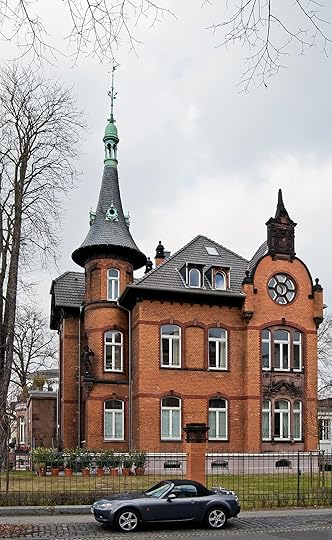 (Mein Studentenwohnheim in Bad Godesberg)
Leider dauert meine Freude gar nicht so lang. Nach einigen schönen Beschreibungen der Stadt begann die Handlung. Ich kann die Handlung folgendermaßen zusammenfassen:
1. Trink mal einen Whisky / Bourbon / Gin / Brandy / Bier
2. Zwei oder drei Zigaretten
3. Noch ein Whisky / Bourbon / Gin / Brandy / Bier
4. Fahren Sie irgendwohin oder lassen Sie sich in einen Van werfen und fahren Sie irgendwohin
5. Zigarettenpause
6. Lange Unterhaltung mit einem Whisky / Bourbon / Gin / Brandy / Bier
7. Töte jemanden oder angucken, als jemand ermördet wird.
8. Zeit für eine Zigarette und ein Glas Wodka!
9. Schritte 1 bis 9 noch einmal.
Keiner der Charaktere musste jemals essen, schlafen oder sich auf körperlichere Grundfunktionen einlassen. Ich weinte fast vor Freude, als jemand nach 200 Seiten den Wunsch nach einer Tomate sagten.
Das Buch hat ungefähr 8 Hauptfiguren, was bedeutet, dass wir die Schritte 1 bis 9 sieben Mal lesen mussten, bis nur noch eine Person noch lebt. Zu diesem Zeitpunkt war das Buch zum Glück vorbei.
Bitte entschuldige mein 'Anglodeutsch.'
Das Projekt: Normaleweise besuche ich Deutschland etwa zweimal im Jahr; naturlich geht das nicht in Covidzeit. Als Alternativ habe ich mich darum gekümmert, ein Buch das im jeder die sechszehn deutschen Bundeslader Rechte zu lesen. Damit habe ich mein deutsches zu ueban als auch mein Reiselust zu saettigen.
Meine Liste bis jetzt:
Drei Dingen gab es, die ich an diesem Buch nicht wußte, als ich es begann: Es wurde in den 1960er Jahren geschrieben; Der Autor war Amerikaner (obwohl einer, der den größten Teil seines Lebens in Deutschland verbracht hat; und es war wirklich gar nicht sehr gut. Ja, besonders diese letzte Tatsache wäre für mich genug Grund, ein anderes Buch finden zu wunschen, meine geliebte Nordrhein-Westfalen zu repräsentieren.
Aber um fair zu sein, ich habe es gewählt, weil ich gesehen habe, dass es in Bonn stattfindet; einer Stadt, die ich gerne im Obscurität lassen möchte. Es ist eine schöne Stadt voller Menschen aus der ganzen Welt, aber die alle täglich arbeiten, statt touristische Zielen besuchen. Und, O Joy!, in ersten Seiten entdeckt ich, dass die ersten Szenen in dem charmanten Suburb Bad Godesberg, meiner alten Nachbarschaft, stattfindet.
(Mein Studentenwohnheim in Bad Godesberg)Leider dauert meine Freude gar nicht so lang. Nach einigen schönen Beschreibungen der Stadt begann die Handlung. Ich kann die Handlung folgendermaßen zusammenfassen:
1. Trink mal einen Whisky / Bourbon / Gin / Brandy / Bier
2. Zwei oder drei Zigaretten
3. Noch ein Whisky / Bourbon / Gin / Brandy / Bier
4. Fahren Sie irgendwohin oder lassen Sie sich in einen Van werfen und fahren Sie irgendwohin
5. Zigarettenpause
6. Lange Unterhaltung mit einem Whisky / Bourbon / Gin / Brandy / Bier
7. Töte jemanden oder angucken, als jemand ermördet wird.
8. Zeit für eine Zigarette und ein Glas Wodka!
9. Schritte 1 bis 9 noch einmal.
Keiner der Charaktere musste jemals essen, schlafen oder sich auf körperlichere Grundfunktionen einlassen. Ich weinte fast vor Freude, als jemand nach 200 Seiten den Wunsch nach einer Tomate sagten.
Das Buch hat ungefähr 8 Hauptfiguren, was bedeutet, dass wir die Schritte 1 bis 9 sieben Mal lesen mussten, bis nur noch eine Person noch lebt. Zu diesem Zeitpunkt war das Buch zum Glück vorbei.
Bitte entschuldige mein 'Anglodeutsch.'

July 24, 2017
The setup's familiar: hard men, a bar, partners who keep secrets from each other, moral ambiguity, double- and triple-crosses, fedoras, cigarette smoke, shadows. Only this time around, we're not in prewar San Francisco or postwar L.A.; we're in Germany, the concrete's still setting on the Wall, and the hard men are spooks, not shamuses and gunsels.
If Raymond Chandler wrote spy novels, they'd have been like The Cold War Swap.
Our narrator is Mac McCorckle, an American ex-soldier who never left Europe after WWII. He runs Mac's Place, an American bar in Bonn, which serves the same purpose as Rick's Café Américain in Casablanca: a watering hole for journalists, cops, fixers, men on the make, and people they all feed on. His business partner, Michael Padilla, used to work for Oh So Secret (the ironic name for the OSS) and now freelances for the stew of three-letter agencies at play on the Cold War chessboard of Central Europe. Padilla goes off on one of his "business trips," gets in a jam, and calls on McCorckle for help. Needless to say, things become murky, players are either more or less than they at first seem, and bodies start piling up inconveniently.
Author Thomas worked in PR, was a correspondent for the Armed Forces Network, and was a political strategist in the U.S., Bonn and Nigeria in the '50s and early '60s. In other words, he lived some amount of this story. You can see it in his descriptions of Bonn and Berlin, the atmospheres of the clubs and restaurants and back alleys, the clothes and cars and free-floating paranoia. This was his first novel, which he supposedly banged out in six weeks in 1966 and won an Edgar for his trouble.
When you get right down to it, there's nothing especially new here. Thomas checks off not only all the noir tropes, but also all the Cold War ones: the world-weary protagonist, the variably honest cops, subterranean official maneuvering, a legion of supporting players of negotiable virtue, false identities, the prisoner swap, and the inevitable escape past the Wall. The only thing missing is the dame, either victim or villain. Women play only a peripheral role in this story; the manly men do all the heavy lifting.
What sets this book apart from the welter of other Cold War novels with the same story is the Chandleresque prose: spare, wised up, wisecracking, deft with the telling detail, vivid characterization, or wry turn of phrase. This is a world shot at night in black and white (or, more to the point, shades of gray), with the protagonist's voice-over narration serving up the ennui and foreshadowing as he walks alone under mist-haloed streetlights. The Spy Who Came in from the Cold was only three years old when The Cold War Swap came out, and although they share several of the same plot points, they're very different reads.
That said, this book probably seemed fresher when it launched than it does now. For one thing, the plot's been done and re-done endlessly since 1966; what must have been new and exciting back then has become hackneyed now. Because of this, the reversals and reveals don't have the same impact they once did because we see them coming. Mac's an alcoholic -- a maintenance drinker, a creature I have first-hand experience with -- yet it doesn't seem to slow him down, and no one comments on the fact that he's never entirely sober during the story. Everyone else drinks like fish and smokes like chimneys. I know it was that way back then, but Thomas mentions it constantly, like a tic he couldn't control. That the book lost only one star from its rating is all down to the prose, which reads like the wind and will play in your mind like an old Warner's thriller.
Thomas wrote 25 novels under two names between 1966 and his death in 1995. Up until fairly recently, most were out of print. There are three more McCorckle adventures should you want to hang out with him some more.
The Cold War Swap is a spy noir thriller that fifty years on is still an entertaining read even though nothing in it will surprise you. Consider it an exercise in reading Turner Classic Movies. If that sounds like your shot of whiskey, then cast your favorite 1950s-60s actors in the roles, push your way through the night and fog and cigarette smoke and alcohol fumes, and enjoy watching the shady people do bad things to each other as they play the great game.
If Raymond Chandler wrote spy novels, they'd have been like The Cold War Swap.
Our narrator is Mac McCorckle, an American ex-soldier who never left Europe after WWII. He runs Mac's Place, an American bar in Bonn, which serves the same purpose as Rick's Café Américain in Casablanca: a watering hole for journalists, cops, fixers, men on the make, and people they all feed on. His business partner, Michael Padilla, used to work for Oh So Secret (the ironic name for the OSS) and now freelances for the stew of three-letter agencies at play on the Cold War chessboard of Central Europe. Padilla goes off on one of his "business trips," gets in a jam, and calls on McCorckle for help. Needless to say, things become murky, players are either more or less than they at first seem, and bodies start piling up inconveniently.
Author Thomas worked in PR, was a correspondent for the Armed Forces Network, and was a political strategist in the U.S., Bonn and Nigeria in the '50s and early '60s. In other words, he lived some amount of this story. You can see it in his descriptions of Bonn and Berlin, the atmospheres of the clubs and restaurants and back alleys, the clothes and cars and free-floating paranoia. This was his first novel, which he supposedly banged out in six weeks in 1966 and won an Edgar for his trouble.
When you get right down to it, there's nothing especially new here. Thomas checks off not only all the noir tropes, but also all the Cold War ones: the world-weary protagonist, the variably honest cops, subterranean official maneuvering, a legion of supporting players of negotiable virtue, false identities, the prisoner swap, and the inevitable escape past the Wall. The only thing missing is the dame, either victim or villain. Women play only a peripheral role in this story; the manly men do all the heavy lifting.
What sets this book apart from the welter of other Cold War novels with the same story is the Chandleresque prose: spare, wised up, wisecracking, deft with the telling detail, vivid characterization, or wry turn of phrase. This is a world shot at night in black and white (or, more to the point, shades of gray), with the protagonist's voice-over narration serving up the ennui and foreshadowing as he walks alone under mist-haloed streetlights. The Spy Who Came in from the Cold was only three years old when The Cold War Swap came out, and although they share several of the same plot points, they're very different reads.
That said, this book probably seemed fresher when it launched than it does now. For one thing, the plot's been done and re-done endlessly since 1966; what must have been new and exciting back then has become hackneyed now. Because of this, the reversals and reveals don't have the same impact they once did because we see them coming. Mac's an alcoholic -- a maintenance drinker, a creature I have first-hand experience with -- yet it doesn't seem to slow him down, and no one comments on the fact that he's never entirely sober during the story. Everyone else drinks like fish and smokes like chimneys. I know it was that way back then, but Thomas mentions it constantly, like a tic he couldn't control. That the book lost only one star from its rating is all down to the prose, which reads like the wind and will play in your mind like an old Warner's thriller.
Thomas wrote 25 novels under two names between 1966 and his death in 1995. Up until fairly recently, most were out of print. There are three more McCorckle adventures should you want to hang out with him some more.
The Cold War Swap is a spy noir thriller that fifty years on is still an entertaining read even though nothing in it will surprise you. Consider it an exercise in reading Turner Classic Movies. If that sounds like your shot of whiskey, then cast your favorite 1950s-60s actors in the roles, push your way through the night and fog and cigarette smoke and alcohol fumes, and enjoy watching the shady people do bad things to each other as they play the great game.

September 17, 2015
It was the era of the Cold War, Lyndon Johnson’s Great Society, John Le Carre, Don Draper’s Mad Men, and, of course, nonstop consumption of alcohol. The Berlin Wall was new, and the capitals of divided Germany — Bonn and Berlin –teemed with spies. “It was like postwar Vienna in the movies,” Ross Thomas writes in The Cold War Swap, “where Orson Welles went around muttering so low and fast you couldn’t understand what he was saying except that he was up to no good.” Swimming in this cauldron of intrigue we meet “Mac” McCorkle, veteran of World War II in the Burma Theater and now co-owner of a pub in Bonn with a shadowy, polyglot character named Mike Padillo.
Padillo, “half Estonian, half Spanish,” speaks six languages like a native and works in some mysterious capacity for an unnamed American agency (not the CIA) that is somehow involved in espionage and possibly murder. He disappears from the pub for weeks on end on assignment in other cities throughout Europe. In The Cold War Swap, McCorkle suddenly finds himself caught up in one of Padillo’s capers behind the Berlin Wall. Need I add that danger is afoot? Some sort of prisoner swap is about to go down in East Berlin, Padillo is in the middle of it, and now so is McCorkle. As the story unfolds, everything goes wrong — of course.
Welcome to the world of Ross Thomas. With a style that conjures up Raymond Chandler and Elmore Leonard alike, Thomas created unforgettable characters, wrote witty dialogue that made even the bleakest circumstances seem like fun, and crafted plots riddled with suspense that twisted and turned and surprised. He was, in short, a master.
Ross Thomas (1926-1995) wrote nineteen novels and two nonfiction books in a career that spanned nearly three decades. The Cold War Swap, published in 1966, was the first novel he wrote after a career as a PR man and political strategist. The book won an Edgar Award from the Mystery Writers of America as Best First Novel in 1967. Thomas is unparalleled as a master of the quip and the pithy observation.
Padillo, “half Estonian, half Spanish,” speaks six languages like a native and works in some mysterious capacity for an unnamed American agency (not the CIA) that is somehow involved in espionage and possibly murder. He disappears from the pub for weeks on end on assignment in other cities throughout Europe. In The Cold War Swap, McCorkle suddenly finds himself caught up in one of Padillo’s capers behind the Berlin Wall. Need I add that danger is afoot? Some sort of prisoner swap is about to go down in East Berlin, Padillo is in the middle of it, and now so is McCorkle. As the story unfolds, everything goes wrong — of course.
Welcome to the world of Ross Thomas. With a style that conjures up Raymond Chandler and Elmore Leonard alike, Thomas created unforgettable characters, wrote witty dialogue that made even the bleakest circumstances seem like fun, and crafted plots riddled with suspense that twisted and turned and surprised. He was, in short, a master.
Ross Thomas (1926-1995) wrote nineteen novels and two nonfiction books in a career that spanned nearly three decades. The Cold War Swap, published in 1966, was the first novel he wrote after a career as a PR man and political strategist. The book won an Edgar Award from the Mystery Writers of America as Best First Novel in 1967. Thomas is unparalleled as a master of the quip and the pithy observation.

June 5, 2022
First book the top master Ross Thomas ever wrote, full of the traits and promises he later fully delivered. More are coming my way and they are a huge relief amidst the pile of trash around us.

May 6, 2010
Ross Thomas, now unjustly neglected, is a delight: a brilliant plotter, creator of unforgettably eccentric and dangerous characters, and a guy writer nonpareil. His books are about guys: guys in trouble, guys who are friends, guys who operate on the fringes of espionage, guys who love women but, in the end, would probably just as soon hang around with the guys. I bought a whole shelf of out-or-print paperbacks in the book room of the Left Coast Crime convention and have been drowning in Thomas ever since. If you can find him, read him. Four terrific titles -- The Cold War Swap, Ah, Treachery!, The Fools in Town Are On Our Side, and Out on the Rim -- are available for Kindle, enough reason in itself to buy one.

May 19, 2021
Hard-boiled spy fun, surprisingly engaging, great characters. Will definitely read everything else in the McCorkle-Padillo series. Picked this up because Ross Thomas wrote Briarpatch, and they made it a pretty decent miniseries. Real quick read, very enjoyable. Lots of action and great descriptions of Cold War locales and scenery. Makes me miss bars very much.

November 13, 2020
I am sucker for books about the Cold War. The Golden Age of spies. Thomas gives us a fairly realistic turn about ordinary folk caught up in impossible situations. The protagonist isn't James Bond. He's a bar owner who is sucked into intrigue through loyalty and black mail.
A good read.
A good read.

October 12, 2007
The Cold War Swap was the first novel by Ross Thomas, a former soldier, political flack and reporter. It's a doozy.
It's a cracking yarn set in 1960s Bonn at the height of the Cold War, replete with un-named American three-letter-agencies, Stasi, KGB, and MI-x excitement, politics, alcoholism, and everyone smoking too much. Ross Thomas wrote more than 20 novels, most of them wonderful examples of political intrigue. His eye for detail was that of a skilled journeyman reporter - the kind who's repeatedly had to knock doors at 2 am and say, 'You're son's just been found dead...How does that make you feel?' His prose captures the petty and the patriotic and the absurdity of the times. Here's his description of a crossing through Checkpoint Charlie into East Berlin:
The sharp-faced German read some more about Cooky and decided that his passport didn't need to travel through the slot. He got mine back, shot his cuffs, and prepared for the operation. First the stamp was inked twice on the pad, then it was examined, then it was applied to the passport with a firm yet flashy bang. The Vopo admired his work briefly and then gave us back the passports after a cursory look at the car's papers.
His characters range from Cold War Swap stalwarts Padillo (the half-Spanish, half-Estonian spook who, "Can speak English with either a Mississippi or an Oxford accent. I can talk like a Berliner or a Marseilles pimp. Berlitz would love me.") and McCorkle (a soldier who, we infer, saw action in Burma and then in Europe before settling down in Bonn after WWII with some black market connections and then opened a bar) to a wide range of Washington, Berlin and London mid-level public servants, spooks, dealmakers and scoundrels.
There's a hint of it here (Cooky Baker, the roly-poly Herr Maas) but in later novels Thomas has a ball with his character names. My favorite character name is that of Otherguy Overby - the medium-time hood who gets his name, of course, from the fact that the police can never hold him because he always manages to create at least reasonable doubt that some other guy did it. Though others - Boy Howdy, "That fucking Durant", Angus Wu and Georgia Blue - make reading anything by Thomas (or anything under his periodic nom de plume of Oliver Bleeck) a pleasure.
Philips Minataur re-released most of his novels recently, and they don't sell as well as they used to, probably because times have changed. Though if anyone wants to sell me the movie rights to "Out on the Rim", I'm in the market.
It's a cracking yarn set in 1960s Bonn at the height of the Cold War, replete with un-named American three-letter-agencies, Stasi, KGB, and MI-x excitement, politics, alcoholism, and everyone smoking too much. Ross Thomas wrote more than 20 novels, most of them wonderful examples of political intrigue. His eye for detail was that of a skilled journeyman reporter - the kind who's repeatedly had to knock doors at 2 am and say, 'You're son's just been found dead...How does that make you feel?' His prose captures the petty and the patriotic and the absurdity of the times. Here's his description of a crossing through Checkpoint Charlie into East Berlin:
The sharp-faced German read some more about Cooky and decided that his passport didn't need to travel through the slot. He got mine back, shot his cuffs, and prepared for the operation. First the stamp was inked twice on the pad, then it was examined, then it was applied to the passport with a firm yet flashy bang. The Vopo admired his work briefly and then gave us back the passports after a cursory look at the car's papers.
His characters range from Cold War Swap stalwarts Padillo (the half-Spanish, half-Estonian spook who, "Can speak English with either a Mississippi or an Oxford accent. I can talk like a Berliner or a Marseilles pimp. Berlitz would love me.") and McCorkle (a soldier who, we infer, saw action in Burma and then in Europe before settling down in Bonn after WWII with some black market connections and then opened a bar) to a wide range of Washington, Berlin and London mid-level public servants, spooks, dealmakers and scoundrels.
There's a hint of it here (Cooky Baker, the roly-poly Herr Maas) but in later novels Thomas has a ball with his character names. My favorite character name is that of Otherguy Overby - the medium-time hood who gets his name, of course, from the fact that the police can never hold him because he always manages to create at least reasonable doubt that some other guy did it. Though others - Boy Howdy, "That fucking Durant", Angus Wu and Georgia Blue - make reading anything by Thomas (or anything under his periodic nom de plume of Oliver Bleeck) a pleasure.
Philips Minataur re-released most of his novels recently, and they don't sell as well as they used to, probably because times have changed. Though if anyone wants to sell me the movie rights to "Out on the Rim", I'm in the market.

April 15, 2017
This was Ross Thomas' first novel, written when he was 40 years old, and he won an Edgar for it from the Mystery Writers' Association. Reading it now, 51 years after it was published, the book feels very dated in some ways, particularly its stereotyping of the two gay defectors. Still, Thomas spins quite a yarn and I read the last few chapters in a rush to find out what happened.
The narrator is Mac MacCorkle, an ex-soldier who did a little clandestine work during World War II but now is content to run a bar/restaurant in Bonn along with his shady partner Mike Padillo. He's got a nice quiet life, and he's got a gorgeous foreign correspondent girlfriend. So what if Padillo disappears from time to time to carry out little errands for a secret employer? MacCorkle can live with that -- until one day a man walks in and kills one of his customers, and Padillo tells MacCorkle to tell the cops he wasn't there, then disappears.
Next MacCorkle gets word via his girlfriend that Padillo is trapped in East Berlin and needs help getting out. He goes to rescue his partner and winds up in the middle of double and triple-crosses that leave a trail of corpses all over Germany. Padillo had been dispatched to grab a couple of defectors from the Russians and bring them back home, not knowing that the CIA had agreed to a swap -- Padillo to be captured by the Russians in exchange for the Russians handing back the defectors.
The plot unfolds from there with plenty of gunplay, a car chase or two, and dead bodies galore. Thomas has a nice way of underplaying the outlandish elements of the plot, making them more believable. The best part, I think, was the story that the double-agent Maas tells to explain why there's a tunnel under the Berlin Wall that can be used only once. The punchline is absolutely perfect.
This was the first of four MacCorkle and Padillo novels. I read the last one first, not realizing it was a series, so now I've got to go find the other two.
The narrator is Mac MacCorkle, an ex-soldier who did a little clandestine work during World War II but now is content to run a bar/restaurant in Bonn along with his shady partner Mike Padillo. He's got a nice quiet life, and he's got a gorgeous foreign correspondent girlfriend. So what if Padillo disappears from time to time to carry out little errands for a secret employer? MacCorkle can live with that -- until one day a man walks in and kills one of his customers, and Padillo tells MacCorkle to tell the cops he wasn't there, then disappears.
Next MacCorkle gets word via his girlfriend that Padillo is trapped in East Berlin and needs help getting out. He goes to rescue his partner and winds up in the middle of double and triple-crosses that leave a trail of corpses all over Germany. Padillo had been dispatched to grab a couple of defectors from the Russians and bring them back home, not knowing that the CIA had agreed to a swap -- Padillo to be captured by the Russians in exchange for the Russians handing back the defectors.
The plot unfolds from there with plenty of gunplay, a car chase or two, and dead bodies galore. Thomas has a nice way of underplaying the outlandish elements of the plot, making them more believable. The best part, I think, was the story that the double-agent Maas tells to explain why there's a tunnel under the Berlin Wall that can be used only once. The punchline is absolutely perfect.
This was the first of four MacCorkle and Padillo novels. I read the last one first, not realizing it was a series, so now I've got to go find the other two.

June 29, 2018
Early Ross Thomas. Mac McCorckle is a hard-drinking saloon owner in cold war-era Berlin. His partner, Mike Padillo, is a CIA agent trying to get out of the spy game. Padillo accepts one more assignment, which quickly proves to be one too many (like the last ski run of the day). McCorckle is dragged in, somewhat against his will, but soon proves to be up to the task despite his protestations. Murder and mayhem ensue; have your body counter by your side when you start this book.

April 26, 2016
This is my second book by Ross Thomas. I read "The Fools in Town are on Our Side " a few week before this, and enjoyed it enough to seek more. Both had interesting stories, humorous dialogs, lots of twists and turns, and people having bad days in general.
I will most likely read more by this author.
I will most likely read more by this author.

October 20, 2009
A marvelous book that really should put Thomas in the same league as Le Carre. Granted, he wouldn't win the playoff, but he belongs right up there. Thomas has the great advantage over Le Carre in that he knows how to be funny.

March 20, 2010
I had read this years and years ago and was wondering if I still felt that Ross Thomas was one of the all-time mystery writers. No more wondering. I'm only about 25% through The Cold War Swap and there's no doubt. Ross Thomas is one of the all-time greats.

October 21, 2010
For an old book--one written in the 1960s--this has all the makings of a timeless classic in the spy/thriller genre and would make a great Bourne-like movie. Reading it was like watching a classic Connery Bond movie.

July 15, 2017
My second Ross Thomas book is his first effort and I enjoyed it. A quick paced Cold War spy tale that keeps the reader from start to finish. I wasn't overwhelmed by his first but I read it at a different time in my life. This is making me think I need to read more.

March 24, 2022
VSOP.

September 7, 2020
It is outrageous that this was Thomas' first novel. OUTRAGEOUS. It's nearly perfect in virtually every way -- well-developed characters, a flawlessly drawn story, and subtle, deeply human moments that make even a pretty over the top spy tale feel real. My Thomas reread it taking forever, but it's 100% worth it.
November 28, 2025
The first in the four book McCorkle and Padillo series, & the first published novel of Ross Thomas, this is a good, twisty & witty story, set in cold war Germany, both East & West.
Not quite as excellent as Thomas's later novels, this is still a damn fine exciting spy book, great for a first novel.
Not quite as excellent as Thomas's later novels, this is still a damn fine exciting spy book, great for a first novel.

July 20, 2012
It's back-to-school time, and each year the newspapers run the story about what the incoming freshman college class "knows." For example, the freshman class of 2012 was likely born around 1994, so in addition to having Pierce Brosnan being their first James Bond and only seeing "Cheers" in reruns, these kids missed the fall of the Berlin Wall. It's difficult to explain to them the bizarre West Berlin situation - how to describe the dizzying clash of East Versus West in such a glorious city.
"The Cold War Swap" would be a perfect study aid.
Ross Thomas, correctly recognized as one of the Great Overlooked Writers, set his first novel in Bonn and Berlin, 1966. The Wall was up and tensions ran high. Our "hero" is McCorkle, a disenchanted American content to run his little bar in Bonn as the world dared the Cold War to turn hot. There is little Rick Blaine in McCorkle, and it's out of this buried sense of duty that he allows Padillo, a CIA operative, to force his way into a partnership with McCorkle in running the bar. McCorkle respected Padillo's long, unexplained absences and appreciated the air of intrigue it brought to the bar, and one senses that he envies Padillo's life of danger and duty in McCorkle's rare sober moments.
McCorkle gets the opportunity to put his life on the line thanks to a seeming chance meeting with the fat German Maas. Within hours of meeting Maas, a dead man lies on the floor of McCorkle's bar and he's off on an adventure to save Padillo, betrayed and trapped on the wrong side of the Berlin Wall.
Thomas writes with a hard-boiled style that is pitch-perfect for the dry McCorkle, who narrates the tale. This is perfect for the time, as cigarettes and liquor provide more nourishment than food and medicine. Linger over these passages, for Thomas has imbued them with humor and romance. His characters, even those who vanish all too soon, are full of life and wit, but be careful - Thomas is willing to kill off a promising young character in the middle of making his introductions, so you never know when a character will meet his end.
This is my first Ross Thomas book, but it will not be the last. Not many career authors write a book this good, and this was Thomas's debut.
"The Cold War Swap" would be a perfect study aid.
Ross Thomas, correctly recognized as one of the Great Overlooked Writers, set his first novel in Bonn and Berlin, 1966. The Wall was up and tensions ran high. Our "hero" is McCorkle, a disenchanted American content to run his little bar in Bonn as the world dared the Cold War to turn hot. There is little Rick Blaine in McCorkle, and it's out of this buried sense of duty that he allows Padillo, a CIA operative, to force his way into a partnership with McCorkle in running the bar. McCorkle respected Padillo's long, unexplained absences and appreciated the air of intrigue it brought to the bar, and one senses that he envies Padillo's life of danger and duty in McCorkle's rare sober moments.
McCorkle gets the opportunity to put his life on the line thanks to a seeming chance meeting with the fat German Maas. Within hours of meeting Maas, a dead man lies on the floor of McCorkle's bar and he's off on an adventure to save Padillo, betrayed and trapped on the wrong side of the Berlin Wall.
Thomas writes with a hard-boiled style that is pitch-perfect for the dry McCorkle, who narrates the tale. This is perfect for the time, as cigarettes and liquor provide more nourishment than food and medicine. Linger over these passages, for Thomas has imbued them with humor and romance. His characters, even those who vanish all too soon, are full of life and wit, but be careful - Thomas is willing to kill off a promising young character in the middle of making his introductions, so you never know when a character will meet his end.
This is my first Ross Thomas book, but it will not be the last. Not many career authors write a book this good, and this was Thomas's debut.

June 28, 2012
I picked this up on the recommendation of one of my favorite crime writers (George Pelecanos) and found it to be a funny, fast-paced, Cold War caper. In it, we meet McCorkle and Padillo, the American co-owners of a bar in Bonn, Germany, circa 1966. After serving in the Army, McCorkle opened the place with Padillo in 1952 as a typical American bar and grill, making it a novelty in Cold War Germany. However, for the multilingual Padillo, co-ownership is merely a cover for his real job as an American spy -- a job McCorkle has never had an ounce of involvement in, until now. Padillo's latest job involves trading with the Soviets to get back two gay NSA defectors, but it turns out to be far more complicated than that. McCorkle gets dragged into it, along with a whole passel of colorful characters, many of whom die along the way -- often much too soon for my taste. McCorkle is a dry narrator of the Chandler or Hammett school, relying on booze and cigarettes to keep him going as he threads his way through all the layered betrayals the plot throws up. It's almost a kind of pastiche of classic espionage like Eric Ambler or Casablanca, with the deadpan humor of the best noir writers. It's a fun, fast-paced read with some great lines throughout, and I'll definitely pick up the next in the McCorkle series, Cast a Yellow Shadow.
January 20, 2012
I am in the process of re-reading any of the Ross Thomas books I can still find, but I have concluded that this one, sadly, doesn't stand the test of time. Not because it is his first novel - it's still damn good for a first book. And not because it has as its backdrop the Cold War in all its sublime pointlessness - that is his point, and there is plenty here that is still relevant in the age of Guantanamo and the so-called war on terror. The reason I found myself cringing over and over was because of the homophobic premise - the notion that the two traitors that were the object of so much attention by the shadowy agents of the competing superpowers were turnable and leverageable and ultimately vulnerable because they were gay. This canard is even more obsolete than the Cold War itself and it made the rest of the plot, however artfully crafted, hard to swallow. When I first read this book some twenty five years ago I remember finding this annoying; now it's a fatal distraction. Who says we haven't made progress over the last quarter century?
March 30, 2013
Written in 1966, this was Thomas' first novel, but it shows a sure hand at work. I had read a number of Thomas' books (but not this one) some years ago; none are currently available in physical form but fortunately some are available as ebooks.
Much like Charles McCarry, who works the same ground as this book, Thomas writes in something of a lean style. Unlike too many contemporary mystery and suspense writers, he doesn't pad his work with unnecessary detail. When the main character flies from Bonn to Berlin, Thomas doesn't tell us what food, if any, was served on the plane or what the stewardess said or looked like. A contemporary writer in this genre would have turned this 200 page book into a 400-500 pager. It's refreshing to read a book of this type that stays focused on advancing the story and efficiently developing the main characters.
Much like Charles McCarry, who works the same ground as this book, Thomas writes in something of a lean style. Unlike too many contemporary mystery and suspense writers, he doesn't pad his work with unnecessary detail. When the main character flies from Bonn to Berlin, Thomas doesn't tell us what food, if any, was served on the plane or what the stewardess said or looked like. A contemporary writer in this genre would have turned this 200 page book into a 400-500 pager. It's refreshing to read a book of this type that stays focused on advancing the story and efficiently developing the main characters.

January 15, 2018
Mac is not a knife, he's a mensch
The very first Ross Thomas book, written in just six weeks in the late sixties, could have been disappointing. But it wasn't. Mac is such a mensch that he walks into an espionage plot for his friend and partner, Mike Padillo, with little preparation and less foresight. This is the fifth Thomas book I've read. Full of the murky suspense of a time of no cell phones and Cold War mistrust, it's the characters that make the story rich. And Mac is the glue that makes it all hang together. Plus, while there are a lot of un-p.c. references to "Negro" and gay characters, the story is neither racist, nor homophobic. A pretty big thing for the time in which it was set, but it somehow makes sense. Enjoy!
The very first Ross Thomas book, written in just six weeks in the late sixties, could have been disappointing. But it wasn't. Mac is such a mensch that he walks into an espionage plot for his friend and partner, Mike Padillo, with little preparation and less foresight. This is the fifth Thomas book I've read. Full of the murky suspense of a time of no cell phones and Cold War mistrust, it's the characters that make the story rich. And Mac is the glue that makes it all hang together. Plus, while there are a lot of un-p.c. references to "Negro" and gay characters, the story is neither racist, nor homophobic. A pretty big thing for the time in which it was set, but it somehow makes sense. Enjoy!
August 26, 2012
this book is a really fun cold war, spy-noir. sort of a combination of raymond chandler, elmore leonard, and allan furst. the main characters are two american expats living in germany a few years after WW II. They both fought in the war. One is still in the CIA while the other owns a bar and wants to live a quiet, peaceful life. They get caught up in a plot to bring somebody over the border from east germany. the pacing moves along quickly and the narrator, the bar owner, has a great phillip marlowe-esque detached, ironic style. while not a piece of classic literature, definitely a fun, quick read.
November 21, 2013
If you liked Hitchcock's Torn Curtain, this novel will enchant you. It's quite entertaining and very exciting. For me as a German it was especially funny to see how the Americans see us. You might be slightly surprised but "Auf Wiedersehen" and "Ein Bier, bitte" aren't the only things we can say. Also, the German names were very amusing. Mac's girlfriend is called Fredl and - by all means!!- I've never heard that name in my life. It as horrible and old-fashioned as Heidi (sorry, Mrs. Klum!!) and not even my grandma can recall that any of her friends were called that way...so, yes, stereotypical but a page-turner and the ending was great and even a bit melancholic!

June 6, 2011
This is the first book I read of this author, and it is also the first book written by the author, and I am amazed that this author was unknown to me until I started reading this book, and now I'm helplessly hooked; I must read his other books. I was told though, that 25 of his 26 books are now out of print.
I liked this book a lot. It was written in 1966 during the cold war, and it is obviously about the same. This author could write. This book won the Edgar Award for being the best mystery of 1967. I like his style of writing. I highly recommend this to anyone who likes spy novels.
I liked this book a lot. It was written in 1966 during the cold war, and it is obviously about the same. This author could write. This book won the Edgar Award for being the best mystery of 1967. I like his style of writing. I highly recommend this to anyone who likes spy novels.

January 3, 2015
Ross Thomas's debut novel has all of his characteristic wit and intelligence. It resembles one of Lionel Davidson's books, esp. NIGHT OF WENCESLAS, where the plot revolves around escape. It is a bit dated (others have commented on the treatment of homosexuals in the novel) but Thomas's wonderful characters are out in force -- the phlegmatic McCorkle, his enigmatic partner Padillo, and the oleaginous Maas (or is it Klein?). It is a novel of its time, and a pretty good one. Try to compute how many cigarettes are consumed in 200 odd pages.

November 5, 2018
Having only discovered Ross Thomas this past year I continue to be impressed with how he combines suspense and humor. Both take skill and they rarely work together. This debut novel featuring series character Mac McCorkle finds our protagonist running a bar in Bonn, the West German capital. His business partner is a spook of some sort, but Mac doesn't really care one way or the other. He likes running the bar. I won't spoil the plot but to say that Mac is going to get involved in that spook world and the whole yarn is a lot of fun.
March 20, 2013
This was a fast read. I agree with Stuart Kaminsky's (one of my favorite authors) foreward, comparing the characters to those in Casablanca. I can well see Humphrey Bogart reciting some of these lines. I don't know how I missed knowing about Ross Thomas. This book was written in 1966, was his first book and won an Edgar. There were a few typos, but nothing that hindered the reading. I really liked his writing and will be following up with others, I think he wrote 19.
Displaying 1 - 30 of 92 reviews