

What do you think?

The Times Are Never So Bad
“ The Pretty Girl . . . may be the most compelling and suspenseful work of fiction [Dubus] has written.”―Joyce Carol Oates, The New York Times Book Review Stories of men and women attempting to live together, to tell the truth as they see it (or don’t see it), and to survive the crises, and sometimes the violence, of domestic life. Now included in Andre Dubus's Collected Short Stories & Novellas ) this original edition includes A Father’s Story , as well as the novella The Pretty Girl . Upon its publication in 1991, Tobias Wolff wrote, “'It is a world of secrets,' says the narrator of A Father’s Story. Andre Dubus’s fine new collection is made of those secrets, observed with an art that is luminous with honesty and generosity. Dubus is interested in essential things―in the shadowy powers that circle our lives and the slender resources of faith and love with which we try to keep them at bay.”
180 pages, Paperback
First published July 1, 1983
About the author
Andre Dubus
78 books273 followersAward-winning author Andre Dubus II (1936–1999) has been hailed as one of the best American short story writers of the twentieth century. Dubus’s collections of short fiction include Separate Flights (1975), Adultery & Other Choices (1977), and Dancing After Hours (1996), which was a National Book Critics Circle Award finalist. Another collection, Finding a Girl in America, features the story “Killings,” which was adapted into the critically acclaimed film In the Bedroom (2001), starring Sissy Spacek, Tom Wilkinson, and Marisa Tomei. His son Andre Dubus III is also a writer.
Ratings & Reviews
Friends & Following
Create a free account to discover what your friends think of this book!
Community Reviews
Displaying 1 - 30 of 48 reviews

April 27, 2020
IL NORMALE DOLORE DI ESSERE VIVI

Storie che sembrano impassibili e però sono insieme cariche di tensione: un contrasto che genera Bellezza.
Le misere vicende di noi esseri qualunque nelle sue pagine acquistano un respiro mitico, una forza profonda, viscerale, che mette in gioco la misura dell’esistenza.
Nei suoi racconti si sente risuonare la vita – la grazia, il dolore, il silenzio, la povertà del vivere – il conflitto inesorabile con l’esistenza di ogni giorno.
La sua scrittura, il modo come costruisce le sue storie e le racconta, è la condivisione di un’esperienza di vita.

Manuppelli nella postfazione dice che Dubus la definisce “scrittura verticale”: lo sforzo di entrare a fondo dentro i propri personaggi, conoscerli, sapere esattamente perché, e come. Sentirli fisicamente: quasi un’esperienza tattile, come sentire il bicchiere nella mano. Cercarne la luce, la bellezza, anche se non si è d’accordo con quello che fanno.
Le note finali di Manuppelli sono preziose, ma la cura editoriale di Mattioli 1885 in questo caso lascia a desiderare, tra refusi e modesta impaginazione.

Polly, la ragazza carina del primo lungo racconto, ha lasciato il marito: lei lo tradiva, lui l’ha stuprata sotto la minaccia di un pugnale… Polly è frastornata, ha ventisei anni, alle spalle una vita già conclusa, senza portare a casa un gran bel voto, e le propaggini di quell’esistenza che vorrebbe lasciarsi dietro s’insinuano in quella nuova che cerca di costruire… Ripensa e rivede gli anni di scuola, le attese e le sue aspettative, il primo lavoro, il giro di boa dall’adolescenza alla giovinezza, e col matrimonio direttamente nell’età adulta… E poi il risultato finale, lo stupro… il cuore le era stato spezzato da amiche e da ragazzi, e lo aveva sopportato, e anche lei aveva spezzato, sopportando anche questo, e l’imbarazzo, la vergogna, l’umiliazione e il fallimento, e non era una di quelle persone che , una volta o più volte ferite, attendono con paura l’errore successivo o la crudeltà o la propria porzione di sfortuna…
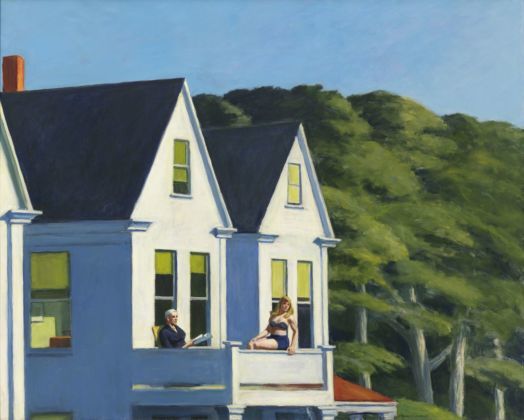
Edward Hopper: Second Story Sunlight. 1960
I racconti (nove) sono tutti belli, ma alcuni lo sono di più, sono più belli: per esempio, il primo, quello oltre settanta pagine che ho già citato intitolato La ragazza carina e il penultimo, Anna. In entrambi con mia sorpresa compaiono armi, pistola e pugnale, e a me sembra elemento insolito nelle storie di Dubus.
E poi c’è l’ultimo racconto, Storia di un padre, dove il padre del titolo è l’io narrante – ma c’è anche un altro ‘padre’, un sacerdote molto amico del protagonista, e poi anche quell’altro padre che sta nei cieli – che è splendido, fa tremare le vene dei polsi. E anche in questo caso, grande, grande sorpresa da parte mia: perché il racconto è immerso nella fede cattolica, si prega, si va in chiesa, ci si comunica, si conversa col prete, e ciò nonostante a me mangiapreti è piaciuto ugualmente.
Ed ecco come finisce:
Ma tu non hai mai avuto una figlia e, se l’avessi avuta, non avrsti sopportato la sua Passione.
Dunque, dice Lui, la ami più di quanto ami me.
La amo più di quanto amo la verità.
Allora la tua fede è debole, dice Lui.
Lo stesso la tua verso di me, dico, e mi dirigo con una mela o una carota verso il fienile.
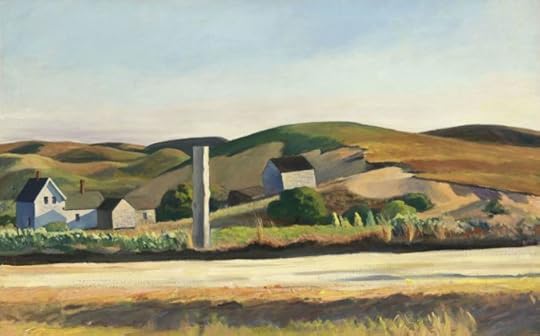
Edward Hopper: Road and Houses, South Truro. 1930-33
S’insiste molto a sostenere che Dubus si astenga (categoricamente) da simbolismi. Immagino perché si tende a fare la (stolta) equazione simbolo=difficoltà. La lingua di Dubus è sempre semplice e diretta, quasi scarna, non per questo è impossibile trovare simboli nelle sue pagine: per esempio, banalmente, tutte le descrizioni di paesaggi, della natura, la luce che cambia, con ovvia predilezione per le luci a cavallo (dette magic hour, non per niente), il vento, le foglie che si muovono, l’erba che si piega, il fango, la neve…: esprimono gli umori dei personaggi, e a me pare anche un palese modo per trasmettere la loro solitudine. Persone che vivono sempre in piccole realtà di provincia, spesso rurali, e non per questo sono meno sole, e perse, degli abitanti di una metropoli.
La sofferenza, l’inquietudine, l’incertezza, la solitudine, il desiderio e la delusione… tutti gli aspetti dolorosi della vita: ma i tempi non sono poi così cattivi. Sarà vero?
Ecco, se io credessi in una realtà diversa da questa che mi circonda, in altra o altre realtà, se credessi in qualcosa o qualcuno di ultraterreno, se credessi tout court, ecco, allora, direi che Dubus sa attraversare i muri e spostarsi da un universo all’altro.
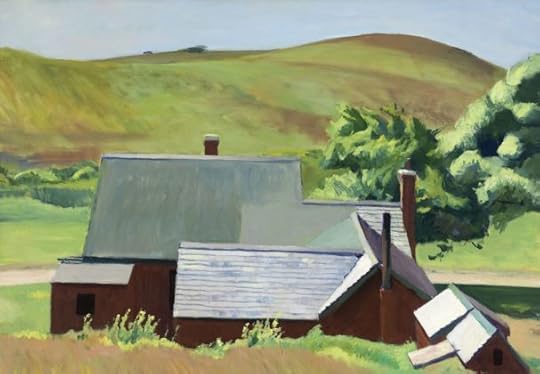
Edward Hopper: Burly Cobb’s House, South Truro. 1930-33
Storie che sembrano impassibili e però sono insieme cariche di tensione: un contrasto che genera Bellezza.
Le misere vicende di noi esseri qualunque nelle sue pagine acquistano un respiro mitico, una forza profonda, viscerale, che mette in gioco la misura dell’esistenza.
Nei suoi racconti si sente risuonare la vita – la grazia, il dolore, il silenzio, la povertà del vivere – il conflitto inesorabile con l’esistenza di ogni giorno.
La sua scrittura, il modo come costruisce le sue storie e le racconta, è la condivisione di un’esperienza di vita.
Manuppelli nella postfazione dice che Dubus la definisce “scrittura verticale”: lo sforzo di entrare a fondo dentro i propri personaggi, conoscerli, sapere esattamente perché, e come. Sentirli fisicamente: quasi un’esperienza tattile, come sentire il bicchiere nella mano. Cercarne la luce, la bellezza, anche se non si è d’accordo con quello che fanno.
Le note finali di Manuppelli sono preziose, ma la cura editoriale di Mattioli 1885 in questo caso lascia a desiderare, tra refusi e modesta impaginazione.
Polly, la ragazza carina del primo lungo racconto, ha lasciato il marito: lei lo tradiva, lui l’ha stuprata sotto la minaccia di un pugnale… Polly è frastornata, ha ventisei anni, alle spalle una vita già conclusa, senza portare a casa un gran bel voto, e le propaggini di quell’esistenza che vorrebbe lasciarsi dietro s’insinuano in quella nuova che cerca di costruire… Ripensa e rivede gli anni di scuola, le attese e le sue aspettative, il primo lavoro, il giro di boa dall’adolescenza alla giovinezza, e col matrimonio direttamente nell’età adulta… E poi il risultato finale, lo stupro… il cuore le era stato spezzato da amiche e da ragazzi, e lo aveva sopportato, e anche lei aveva spezzato, sopportando anche questo, e l’imbarazzo, la vergogna, l’umiliazione e il fallimento, e non era una di quelle persone che , una volta o più volte ferite, attendono con paura l’errore successivo o la crudeltà o la propria porzione di sfortuna…
Edward Hopper: Second Story Sunlight. 1960
I racconti (nove) sono tutti belli, ma alcuni lo sono di più, sono più belli: per esempio, il primo, quello oltre settanta pagine che ho già citato intitolato La ragazza carina e il penultimo, Anna. In entrambi con mia sorpresa compaiono armi, pistola e pugnale, e a me sembra elemento insolito nelle storie di Dubus.
E poi c’è l’ultimo racconto, Storia di un padre, dove il padre del titolo è l’io narrante – ma c’è anche un altro ‘padre’, un sacerdote molto amico del protagonista, e poi anche quell’altro padre che sta nei cieli – che è splendido, fa tremare le vene dei polsi. E anche in questo caso, grande, grande sorpresa da parte mia: perché il racconto è immerso nella fede cattolica, si prega, si va in chiesa, ci si comunica, si conversa col prete, e ciò nonostante a me mangiapreti è piaciuto ugualmente.
Ed ecco come finisce:
Ma tu non hai mai avuto una figlia e, se l’avessi avuta, non avrsti sopportato la sua Passione.
Dunque, dice Lui, la ami più di quanto ami me.
La amo più di quanto amo la verità.
Allora la tua fede è debole, dice Lui.
Lo stesso la tua verso di me, dico, e mi dirigo con una mela o una carota verso il fienile.
Edward Hopper: Road and Houses, South Truro. 1930-33
S’insiste molto a sostenere che Dubus si astenga (categoricamente) da simbolismi. Immagino perché si tende a fare la (stolta) equazione simbolo=difficoltà. La lingua di Dubus è sempre semplice e diretta, quasi scarna, non per questo è impossibile trovare simboli nelle sue pagine: per esempio, banalmente, tutte le descrizioni di paesaggi, della natura, la luce che cambia, con ovvia predilezione per le luci a cavallo (dette magic hour, non per niente), il vento, le foglie che si muovono, l’erba che si piega, il fango, la neve…: esprimono gli umori dei personaggi, e a me pare anche un palese modo per trasmettere la loro solitudine. Persone che vivono sempre in piccole realtà di provincia, spesso rurali, e non per questo sono meno sole, e perse, degli abitanti di una metropoli.
La sofferenza, l’inquietudine, l’incertezza, la solitudine, il desiderio e la delusione… tutti gli aspetti dolorosi della vita: ma i tempi non sono poi così cattivi. Sarà vero?
Ecco, se io credessi in una realtà diversa da questa che mi circonda, in altra o altre realtà, se credessi in qualcosa o qualcuno di ultraterreno, se credessi tout court, ecco, allora, direi che Dubus sa attraversare i muri e spostarsi da un universo all’altro.
Edward Hopper: Burly Cobb’s House, South Truro. 1930-33

November 27, 2023
Il racconto “Storia di un padre”merita 10 stelle.
Gli altri racconti sono belli, sono storie di emozioni spesso di adolescenti che affrontano il passaggio difficile verso l’età adulta….ma anche di altre persone, donne soprattutto, donne fragili che manifestano invece una forza insperata. Non sono storie con un finale “chiuso”, lasciano la porta aperta alla speranza.
Gli altri racconti sono belli, sono storie di emozioni spesso di adolescenti che affrontano il passaggio difficile verso l’età adulta….ma anche di altre persone, donne soprattutto, donne fragili che manifestano invece una forza insperata. Non sono storie con un finale “chiuso”, lasciano la porta aperta alla speranza.

December 4, 2009
Chosen because of the title. I am familiar with the Dubuses (both I & III) and I love the fatalism both writers evoke... it translates superbly unto screen ("House of Sand and Fog" [Dubus III:], "In the Bedroom," "We Don't Live Here Anymore"...). This collection of shorties does everything possible to dispel the following thesis: "The Times Are Never So Bad." Yeah- the times are bearable... (only) barely. What makes these so >well written< is the fact that sadness is never given a name... everything is found on the edges, at the periphery of each one of these drama-filled vignettes. These people are living sad existences!! Not because of death or violence (though there's sufficient of these both), but because of circumstances in their daily lives.
October 8, 2016
… poi il film finisce, le luci si accendono …
«La sola ragione per leggere e parlare di libri è condividere con qualcuno un’esperienza di vita» Andre Dubus.
Splendida raccolta di racconti della provincia americana. Dubus scrive magnificamente. Leggi, e, come per magia, il film si srotola davanti agli occhi in un rigorosissimo, magnifico, bianco e nero.
LA RAGAZZA CARINA: lui, culturista, non si rassegna a perderla …
BENEDICIMI PADRE: il padre tradisce la madre. Jackie, dal college, gli scrive una lettera.
ADDIO: Paul e Judith vanno a cena dai genitori di lui. Il padre non torna, rimane a giocare a carte al Club.
LESLIE IN CALIFORNIA: Kevin, ubriaco, fa un occhio nero a Leslie, sua moglie. Al mattino, lei prepara bacon e uova fritte e lui, abbracciandola, “non lo farò mai più”, dice.
IL RAGAZZO NUOVO: una piccola Arancia meccanica tra ville con piscina.
IL CAPITANO: un sottotenente dei Marines e suo padre, Capitano a riposo, partecipano ad una gara di caccia al cervo.
MISTERI DOLOROSI: Gerry regala un Rawlings Trapper, un guanto da prima base a Clay, cencioso ragazzino negro. Poi Gerry si sta laureando in storia; Gerry è al bancone del bar con Camille, la sua ragazza. Un cretino fa una battuta su negri che vanno a nuotare con ginnatrici appese al collo.
ANNA: Anna Griffin lavora alla cassa di un Sunnycorner. Anna aiuterà il suo ragazzo che deve andare in farmacia.
STORIA DI UN PADRE: Luke Ripley possiede una scuderia con trenta cavalli e ogni tanto beve una birra con Padre Paul Le Boeuf. Un tempo ha avuto moglie e figli.
Ammé m’ha rovinato il Piano Marshall! Insieme a vagonate di frigoriferi e lavatrici, sono arrivati i film ... Ford, Hawks, Capra, Zinnemann, Mann, Stewart, Cooper, Fonda, Wayne, Bogart … e io sgranavo gli occhi e diventavo Cisco Kid, Will Lockhart, il capitano Nathan Brittles, Philp Marlowe.
Dubus mi ha restituito la stessa potente magia di quando, ancora ragazzino, m’illudevo che i tempi non fossero mai cattivi …
«La sola ragione per leggere e parlare di libri è condividere con qualcuno un’esperienza di vita» Andre Dubus.
Splendida raccolta di racconti della provincia americana. Dubus scrive magnificamente. Leggi, e, come per magia, il film si srotola davanti agli occhi in un rigorosissimo, magnifico, bianco e nero.
LA RAGAZZA CARINA: lui, culturista, non si rassegna a perderla …
BENEDICIMI PADRE: il padre tradisce la madre. Jackie, dal college, gli scrive una lettera.
ADDIO: Paul e Judith vanno a cena dai genitori di lui. Il padre non torna, rimane a giocare a carte al Club.
LESLIE IN CALIFORNIA: Kevin, ubriaco, fa un occhio nero a Leslie, sua moglie. Al mattino, lei prepara bacon e uova fritte e lui, abbracciandola, “non lo farò mai più”, dice.
IL RAGAZZO NUOVO: una piccola Arancia meccanica tra ville con piscina.
IL CAPITANO: un sottotenente dei Marines e suo padre, Capitano a riposo, partecipano ad una gara di caccia al cervo.
MISTERI DOLOROSI: Gerry regala un Rawlings Trapper, un guanto da prima base a Clay, cencioso ragazzino negro. Poi Gerry si sta laureando in storia; Gerry è al bancone del bar con Camille, la sua ragazza. Un cretino fa una battuta su negri che vanno a nuotare con ginnatrici appese al collo.
ANNA: Anna Griffin lavora alla cassa di un Sunnycorner. Anna aiuterà il suo ragazzo che deve andare in farmacia.
STORIA DI UN PADRE: Luke Ripley possiede una scuderia con trenta cavalli e ogni tanto beve una birra con Padre Paul Le Boeuf. Un tempo ha avuto moglie e figli.
Ammé m’ha rovinato il Piano Marshall! Insieme a vagonate di frigoriferi e lavatrici, sono arrivati i film ... Ford, Hawks, Capra, Zinnemann, Mann, Stewart, Cooper, Fonda, Wayne, Bogart … e io sgranavo gli occhi e diventavo Cisco Kid, Will Lockhart, il capitano Nathan Brittles, Philp Marlowe.
Dubus mi ha restituito la stessa potente magia di quando, ancora ragazzino, m’illudevo che i tempi non fossero mai cattivi …

August 1, 2017
Storie come luci e ombre dello spirito
Storie di cui senti l'incrinazione delle voci , il momento in cui le azioni e i sentimenti non procedono di pari passo ... senti la paura, la rabbia ,la perdita ,l'amore di certi gesti semplici ,di certi sguardi ,di certi abbracci.
Ti pare proprio di prenderli in faccia il vento di quella notte e quei pensieri arruffati , di avere precisamente la sensazione del cuoio e del manico della pistola nella borsetta o di quell'occhio pesto..
È qualcosa che lascia senza fiato ,non riesco (ancora) a trovare le parole (bisogna leggerli questi racconti, è la cosa migliore da fare!)
All'inizio del libro due citazioni ,bellissime:
la prima, di Flannery O'Connor
la seconda, di San Tommaso Moro
Storie di cui senti l'incrinazione delle voci , il momento in cui le azioni e i sentimenti non procedono di pari passo ... senti la paura, la rabbia ,la perdita ,l'amore di certi gesti semplici ,di certi sguardi ,di certi abbracci.
Ti pare proprio di prenderli in faccia il vento di quella notte e quei pensieri arruffati , di avere precisamente la sensazione del cuoio e del manico della pistola nella borsetta o di quell'occhio pesto..
È qualcosa che lascia senza fiato ,non riesco (ancora) a trovare le parole (bisogna leggerli questi racconti, è la cosa migliore da fare!)
All'inizio del libro due citazioni ,bellissime:
la prima, di Flannery O'Connor
"L'uomo posto nella situazione violenta
rivela i tratti insopprimibili della sua personalità: tutto ciò che dovrà portare con sé nell'eternità..."
la seconda, di San Tommaso Moro
"I tempi non sono mai così cattivi da non trovarci un uomo buono"

August 11, 2024
C’è qualcosa di speciale nel modo che Dubus ha di scrivere; spesso le storie sembrano essere inizialmente troppo banali, qualcosa di già scritto, o, almeno, io ho questa impressione; poi, leggendo, ci si accorge che non è così e ciò che sembra banale, semplice, comune, racchiude una storia che vale la pena di essere raccontata.
La ragazza carina, Anna e Storia di un padre sono forse i racconti più apprezzati, ma la mia preferenza va a Misteri dolorosi, capace di condensare un’epoca, quella tra gli anno ’40 e ’50, e la questione razziale in meno di venti pagine.
La ragazza carina, Anna e Storia di un padre sono forse i racconti più apprezzati, ma la mia preferenza va a Misteri dolorosi, capace di condensare un’epoca, quella tra gli anno ’40 e ’50, e la questione razziale in meno di venti pagine.

March 24, 2013
Andre Dubus is a master of short fiction. His characters, all of them, have emotional weight and importance. It is almost impossible to make secondary characters in a short story flushed; Dubus does it so effortlessly he makes it look easy. It isn't.
As much as I like many of Updike's short stories there are times when his characters are completely inaccessible to me. Dubus' writing is as good as Updike's, but I'm never reading about someone with whom I can't relate. In this collection, all wonderful stories, the opening novella "The Pretty Girl" and the final story "A Father's Story" are about as perfect as a short story can get (read "A Father's Story" here: http://abctheology.pbworks.com/f/Fath...)
Thanks again to Kris and Moira for pointing me in the direction of Dubus. I'm reading his works slowly, savoring them and enjoying the thought of returning to them again and again throughout the years.
As much as I like many of Updike's short stories there are times when his characters are completely inaccessible to me. Dubus' writing is as good as Updike's, but I'm never reading about someone with whom I can't relate. In this collection, all wonderful stories, the opening novella "The Pretty Girl" and the final story "A Father's Story" are about as perfect as a short story can get (read "A Father's Story" here: http://abctheology.pbworks.com/f/Fath...)
Thanks again to Kris and Moira for pointing me in the direction of Dubus. I'm reading his works slowly, savoring them and enjoying the thought of returning to them again and again throughout the years.


February 3, 2016
Ci sono i bravi scrittori, e poi ci sono i Maestri.
Se "I tempi non sono mai così cattivi" non può essere LA sua migliore raccolta di racconti, è solo perché si trova in ottima compagnia con "Voci dalla luna" e "Non abitiamo più qui".
La ragazza carina ☆☆☆☆☆
Benedicimi padre ☆☆☆☆☆
Addio ☆☆☆☆☆
Leslie in California ☆☆☆☆
Il ragazzo nuovo ☆☆☆☆☆
Il capitano ☆☆☆
Misteri dolorosi ☆☆☆
Anna ☆☆☆☆☆
Storia di un padre ☆☆☆☆☆
"Vado alla scrivania, curvo la schiena, e mi dico: cinquanta parole vanno bene. Anche venti, Andre, basta che arrivi a sapere come ci si sente a essere il tuo personaggio." - Andre Dubus
Se "I tempi non sono mai così cattivi" non può essere LA sua migliore raccolta di racconti, è solo perché si trova in ottima compagnia con "Voci dalla luna" e "Non abitiamo più qui".
La ragazza carina ☆☆☆☆☆
Benedicimi padre ☆☆☆☆☆
Addio ☆☆☆☆☆
Leslie in California ☆☆☆☆
Il ragazzo nuovo ☆☆☆☆☆
Il capitano ☆☆☆
Misteri dolorosi ☆☆☆
Anna ☆☆☆☆☆
Storia di un padre ☆☆☆☆☆
"Vado alla scrivania, curvo la schiena, e mi dico: cinquanta parole vanno bene. Anche venti, Andre, basta che arrivi a sapere come ci si sente a essere il tuo personaggio." - Andre Dubus
June 9, 2018
Rough and tender, hopeless and hopeful, precise, specific, devastating.

November 6, 2017
Truth be told, I bought this just to read the lead novella, "The Pretty Girl," because I'd never read any of Dubus' work.
This is, in short, a novella of domestic violence, featuring Ray, a workout fanatic and fisherman; and Polly, his waitress wife, now estranged from him. It is told in the first person, but shifts from Ray to Polly and back to Ray, and then, confusingly, a short stretch with Ray's brother at the end.
I don't want to give away the ending, but suffice to say this is not a sweet and uplifting tale. It has many good points: Dubus is a master at getting inside people's heads and telling a story in their voices, and Ray's casual brutality and lack of insight make him a chilling figure. But there were also stretches of philosophical literary thumb sucking in Polly's voice that slowed down this story for me and kept me from giving it the highest marks.
It is, perhaps, an honest depiction of how an abuser can feel he is a worthwhile human being and a woman can feel she is trapped by her life and circumstances, but it also had a depressing overlay and in the end, I never really understood what made these characters tick.
So, a little meh.
This is, in short, a novella of domestic violence, featuring Ray, a workout fanatic and fisherman; and Polly, his waitress wife, now estranged from him. It is told in the first person, but shifts from Ray to Polly and back to Ray, and then, confusingly, a short stretch with Ray's brother at the end.
I don't want to give away the ending, but suffice to say this is not a sweet and uplifting tale. It has many good points: Dubus is a master at getting inside people's heads and telling a story in their voices, and Ray's casual brutality and lack of insight make him a chilling figure. But there were also stretches of philosophical literary thumb sucking in Polly's voice that slowed down this story for me and kept me from giving it the highest marks.
It is, perhaps, an honest depiction of how an abuser can feel he is a worthwhile human being and a woman can feel she is trapped by her life and circumstances, but it also had a depressing overlay and in the end, I never really understood what made these characters tick.
So, a little meh.
January 20, 2026
Relatos que hacen viajar y vivir otras vidas.

August 30, 2023
Questa raccolta si apre con una citazione di Flannery O'Connor: "L'uomo posto nella situazione violenta rivela i tratti insopprimibili della sua personalità: tutto ciò che dovrà portare con sé nell'eternità...". Non potrebbero esserci parole più azzeccate.
Dubus non ebbe una vita facile: dopo lo stupro subito dalla figlia iniziò a girare armato e fini col ferire un uomo. All'età di 50 anni, mentre stava prestando soccorso in un incidente stradale, si trovò lui stesso ad essere investito. Dopo l'amputazione di una gamba passò gli ultimi anni in carrozzina, soffrendo di forte depressione.
La sua vita urla forte attraverso i suoi personaggi.
I suoi protagonisti sono persone normali, per quanto il termine possa avere un senso. Persone che vivono la loro vita e che si trovano a compiere violenza: stupro, omicidio, rapina, tradimento. E tutto viene narrato nel modo più semplice possibile. I protagonisti sono coloro che commettono violenza ma tu che leggi non riesci a condannarli perché Dubus è cristallino, semplice, chiaro e privo di qualsiasi tipo di simbolismo (come lui volle sottolineare nelle ultime interviste).
Nella postfazione di Nicola Manuppelli (che ha fatto conoscere Dubus in Italia) vengono riportate alcune interviste all'autore. Dubus parla del suo metodo di scrittura, parla di come spesso non conoscesse la profondità dell'anima dei protagonisti dei suoi racconti, di come essa si manifestasse lentamente a mano a mano che le parole finivano sulla carta.
Ma la parte più commovente è la bellissima lettera che Dubus scrisse ad un aspirante scrittore:
"Non riesco a leggere l'opera di uno scrittore cinico. Non posso leggere uno scrittore che non ha compassione. (...) Io leggo per immergermi nel cuore umano, attraverso esseri umani immaginati. E nell'opera di un cinico, non vedo il cuore umano, ma solo quella strada già battuta e semplice che protegge lo scrittore dalle ardue vette dell'amore, della speranza e della fede."
"Apri la tua anima alla magnificenza a volte devastante della vita."
Dubus non ebbe una vita facile: dopo lo stupro subito dalla figlia iniziò a girare armato e fini col ferire un uomo. All'età di 50 anni, mentre stava prestando soccorso in un incidente stradale, si trovò lui stesso ad essere investito. Dopo l'amputazione di una gamba passò gli ultimi anni in carrozzina, soffrendo di forte depressione.
La sua vita urla forte attraverso i suoi personaggi.
I suoi protagonisti sono persone normali, per quanto il termine possa avere un senso. Persone che vivono la loro vita e che si trovano a compiere violenza: stupro, omicidio, rapina, tradimento. E tutto viene narrato nel modo più semplice possibile. I protagonisti sono coloro che commettono violenza ma tu che leggi non riesci a condannarli perché Dubus è cristallino, semplice, chiaro e privo di qualsiasi tipo di simbolismo (come lui volle sottolineare nelle ultime interviste).
Nella postfazione di Nicola Manuppelli (che ha fatto conoscere Dubus in Italia) vengono riportate alcune interviste all'autore. Dubus parla del suo metodo di scrittura, parla di come spesso non conoscesse la profondità dell'anima dei protagonisti dei suoi racconti, di come essa si manifestasse lentamente a mano a mano che le parole finivano sulla carta.
Ma la parte più commovente è la bellissima lettera che Dubus scrisse ad un aspirante scrittore:
"Non riesco a leggere l'opera di uno scrittore cinico. Non posso leggere uno scrittore che non ha compassione. (...) Io leggo per immergermi nel cuore umano, attraverso esseri umani immaginati. E nell'opera di un cinico, non vedo il cuore umano, ma solo quella strada già battuta e semplice che protegge lo scrittore dalle ardue vette dell'amore, della speranza e della fede."
"Apri la tua anima alla magnificenza a volte devastante della vita."

June 17, 2022
Dubus is a flat-out master of the genre, perhaps the greatest of the intimidating list that includes Alice Munro, Flannery O'Connor, Denis Johnson, Raymond Carver, and (yes, even) Hemingway. His precision and emotional tension never flag, and each of these stories grows larger in the mind after reading them. I read an interview where he said sometimes he would distill 200,000 words into 6000. I believe it. You want to learn how to write short fiction, look no further.

December 24, 2015
It's so easy to love a book by a man who can make words into magic.

September 5, 2026
Mới biết Andre Dubus gần đây thôi, vì vô tình đọc được phỏng vấn của Haruki Murakami là Andre Dubus là người mà Murakami muốn dịch. Và thế là tôi chọn truyện The Times Are Never So Bad để đọc, đặc biệt là A Father's Story – Truyện của cha. Bất ngờ là lượt rating lại thấp nhưng số điểm lại cao đến vậy. Cũng dúng thôi.
This entire review has been hidden because of spoilers.

June 18, 2026
The introduction written in the Penguins Classic version (published in 1986) feels like it could be written today. It discusses the tyranny of government, how many political leaders of the US today do not read or love the arts.
He says, “The totalitarian mind is a mystery, at least as I see it in the faces and hear it in the mouths of politicians in my country. They seem to never read literature, they seem to know nothing of the arts, and yet with some satanic instinct they know the arts are dangerous.” (pg. xv)
The other quote I liked in the intro is this: “the poet and fiction writer and dramatist can only write what is in her or his heart, and hope the heart is a compassionate one.” (pg. xvii)
What I enjoyed about these short stories is the focus on morality in our everyday lives. Mundane lives sometimes taken to the extreme by an act of passion, or brewing resentment. ‘The Pretty Girl’ and ‘A Father’s Story’ highlight this really well. ‘Anna’ also dealt with the theme very well.
My favourite part of this story is surprisingly the introduction, though certain stories touched me.
He says, “The totalitarian mind is a mystery, at least as I see it in the faces and hear it in the mouths of politicians in my country. They seem to never read literature, they seem to know nothing of the arts, and yet with some satanic instinct they know the arts are dangerous.” (pg. xv)
The other quote I liked in the intro is this: “the poet and fiction writer and dramatist can only write what is in her or his heart, and hope the heart is a compassionate one.” (pg. xvii)
What I enjoyed about these short stories is the focus on morality in our everyday lives. Mundane lives sometimes taken to the extreme by an act of passion, or brewing resentment. ‘The Pretty Girl’ and ‘A Father’s Story’ highlight this really well. ‘Anna’ also dealt with the theme very well.
My favourite part of this story is surprisingly the introduction, though certain stories touched me.
August 22, 2020
It's difficult to only give this book three stars. I enjoy his writing and I can think of many male friends of mine who would enjoy him. I read three stories, The Pretty Girl, Bless Me, Father and Goodbye. He writes from a male point of view, the male point of view before males became liberated from their macho Hemingway selves. The males are tough, stupid and don't learn from life. They are caught in a never ending display of manliness and beer drinking. His female characters, especially Polly, has no seeming purpose in life beyond interacting with males. This is pretty much the way things were back then but if Dubus was truly insightful he might have seen more, seen beyond prettiness and sex. Oh well. I read him because his nephew James Lee Burke said Dubus was great. How nice to have a family of writers. Anyway, I have another on my nightstand by him and I'll read it in its turn no doubt. Maybe I'll have a more developed opinion when I finish it.
November 13, 2020
Drawn to this copy because I hadn't read Dubus in years and found he'd come to my town library in 1983 to visit and speak.
Dark work here, but truthful and graphic. Men fueled by alcohol, sex, violence and grievance intersect with women who echo all that, but also try (sometimes) to escape.
I was enthralled by "The Pretty Girl" and "A Father's Story" that bookend this collection. Heartbreaking both, but so full of truth.
It's pandemic time now, 2020, and feel daily like the times have never been so bad. I know that's part of the reason that I so reacted to this collection. What characters come to life in all their darkness.
And sometimes light.
"A Father's Story" is embedded in my mind.
Dark work here, but truthful and graphic. Men fueled by alcohol, sex, violence and grievance intersect with women who echo all that, but also try (sometimes) to escape.
I was enthralled by "The Pretty Girl" and "A Father's Story" that bookend this collection. Heartbreaking both, but so full of truth.
It's pandemic time now, 2020, and feel daily like the times have never been so bad. I know that's part of the reason that I so reacted to this collection. What characters come to life in all their darkness.
And sometimes light.
"A Father's Story" is embedded in my mind.

November 12, 2024
Secondo me merita di più di 4 stelle, ma l’ho letto in un periodo distratto e Dubus non ha per il mio sentire una scrittura avvincente. È puntuale, evocativa, chirurgica ma non avvincente.
Ho proceduto razionalmente, non emotivamente, tra un racconto e l’altro, ed effettivamente l’ultimo è quello più tondo, più universale. Ma tutti sono ottimi e Dubus ha lasciato racconti cauti, ampi e mai banali.
Ho proceduto razionalmente, non emotivamente, tra un racconto e l’altro, ed effettivamente l’ultimo è quello più tondo, più universale. Ma tutti sono ottimi e Dubus ha lasciato racconti cauti, ampi e mai banali.

February 20, 2026
Una colección de relatos muy interesante. Sobre la culpa, la fé, las contradicciones. Sobre muchas cosas que aparentemente son banales pero que te llevan a reflexionar.
Dubus tiene cierta semejanza con Donald Ray Pollock y eso hace que directamente no dude sobre si leeré más de él. De ellos.
Dubus tiene cierta semejanza con Donald Ray Pollock y eso hace que directamente no dude sobre si leeré más de él. De ellos.
March 7, 2018
The final story is phenomenal. Besides that, my first dive into Dubus' fiction was underwhelming.
June 20, 2019
Libro 2019

June 24, 2019
Horrifyingly depressing but oh so good. Dubus is a genius, plain and simple.
September 10, 2019
I expected better
There were two stories that even wore my paiemce and I stopped. I have read Dubus before and really enjoyed his writing. Not allow these stories.
There were two stories that even wore my paiemce and I stopped. I have read Dubus before and really enjoyed his writing. Not allow these stories.

January 7, 2023
His own words to sum up what I felt after reading:
"In her confusion Jackie thought she might suddenly cry, for she knew the story was sentimental, even corny, but it touched her anyway."
"In her confusion Jackie thought she might suddenly cry, for she knew the story was sentimental, even corny, but it touched her anyway."

December 9, 2023
3+ Yes. Good reading. Read slowly, savor the prose, let yourself go deep into what each story says. I especially liked the last story, 'Being a Father' even though I'm a mother!

February 17, 2026
Masterful short stories, characters are so alive, situations are so ordinary, then shift to the unexpected, then back to ordinary. Good stuff.

November 15, 2024
One of the best works of fiction I've read in a while. Dubus has an incredible ability to write believable characters that make you want to keep reading despite the bleak premises of most of these stories. The highlight for me was definitely the novella, "The Pretty Girl," which flips between first and second person in order to tell a story of domestic violence from different perspectives.
Displaying 1 - 30 of 48 reviews