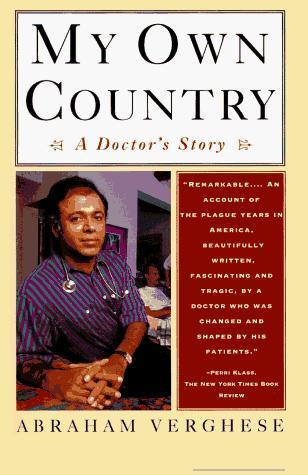
This is a fine book about the early days of the HIV epidemic, and how perplexed and conflicted many were as they came to terms with their own feelings and reactions to the disease and those who contracted it. However, it also is a book in the longstanding tradition of HIV books that are self-congratulatory, maudlin, and self-pitying. The irony of HIV has often been that, while pleading for it to be treated as just another disease in order to normalize those who suffer from it rather than marginalizing them, those who work with HIV patients have simultaneously asked for special treatment, special consideration, and willingly accepted the badge of sainthood conferred upon them. (In the interest of full disclosure, I should say that I am a Registered Nurse who has been dealing with HIV patients intermittently for 20 years, and exclusively for the last 10).
Verghese has fallen into this trap, that of the HIV provider as somehow outside the mainstream, isolated and therefore both special and persecuted, taking onto himself burdens impossible for any one man to bear alone, all in the name of serving his clients. But in the process, he (rather predictably) neglects his family, threatens his career, and eventually burns out to the point that he must abandon his beloved clients completely! That he does so with some rather lame philosophizing only makes the whole matter less forgivable rather than more.
As a story, this is a sad one, well told, skillfully written, though when he enters into the long slog of caring for patients with a chronic disease, the author's interest seems to wane, and therefore ours does, too. But as a story of HIV, it is both self-serving and dishonest; Verghese seems to have little stomach for self-examination or self-criticism, only for justification and self-indulgence. A shame, really, for this could have been a much better book but for that.