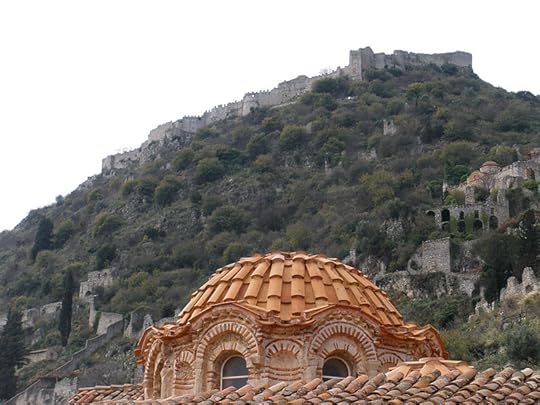
Mistra is an obscure ruin located on a hill near the fragmentary remains of Sparta. It obviously charmed Steven Runciman, the historian of Byzantium and the Crusades, who writes that in Mistra "one reaches a world...peopled by fragments of the imagination. But, for those to whom history is not just a matter of dry and dusty records, the imagination offers a splendid choice, whether it be of warriors or artists, of gracious ladies or learned philosophers, of the Villehardouin lords revelling in the loveliness of the countryside, or the dark-bearded Despots in their ceremonial robes discussing with their architects and artists how to add to the city's glories, or to the great philosopher Plethon himself talking to his pupils, while the Lady Cheope leaned in from her litter as she passed."
The record of Mistra is as piecemeal as its ruins, but Runciman does a fine job outlining the vicissitudes of Mistra's dynastic scions, the second sons of greater rulers reigning in Constantinople, Venice and Napoli. At times the labyrinthine succession of names can be overwhelming, but Runciman is a master of narrative and his love for Mistra and the Peloponnese shines through the occasionally confusing passages.
Mistra was never more than a provincial capital, but this love-letter to its storied past shines grandeur on its weathered stones.