From the comic relief of the Kyogen theater to the meditative powers of a Zengarden, "K Is for Kabuki" brings the past, present, and pageantry of Japan tolife. Full color.
Gloria Whelan is the best-selling author of many novels for young readers, including Homeless Bird, winner of the National Book Award; Fruitlands: Louisa May Alcott Made Perfect; Angel on the Square and its companion, The Impossible Journey; Once on This Island, winner of the Great Lakes Book Award; Farewell to the Island; and Return to the Island. She lives with her husband, Joseph, in the woods of northern Michigan.
This was a book that captured my eye as we visited the local library, which has a display of Japanese books whether it is manga, books like this or others. Due to I enjoy travel books and getting to now more about various cultures and the fact that Hachiko was mentioned on the first page I was hooked into reading this for the time that we were there in the library.
The book is given in an alphabetical format and so each letter targets a specific cultural aspect or location within Japan itself. As such this book is a stepping stone to Japanese culture so the reader gets to know more about Fuji-San, samurai, kabuki, akita dogs and so much more.
Each poem entry in the book has a bit of a rhyming format but it isn't in the same formula or in the case of the haiku is just completely out of sync with the rest of the poems. From there the book goes into rather lengthy paragraph discussions to give even more information or discussion about the subject in hand. As a result younger children may enjoy the poem section although I doubt it while the even heavier subjects would be out of league for many younger elementary readers.
I was disappointed in the fact that the book didn't matter some other really important aspects such as the geishas, kappas, kitsune or inari. One reason for this is the fact that the book was cleaned up so the summarizing of the myth of Amaterasu didn't have the full story either.
There was also a Japanese glossary in the book that shows the reader how to pronounce some of the words and gave a brief definition as well as the page number where it can be found for those readers who just want to look one or two things up.
All in all it was a decent stepping stone for those who are interested in getting to know more about Japan or for those who are interested in their culture. Definitely not a guidebook but a sure encouragement to learn more slowly and piece by piece.
There are mistakes in this book ... for example, they call the "geta" (Japanese sandals) "gela." At first I thought it was a typo in the text, but it's spelled wrong in the glossary as well. It also says the shinkansen (bullet train) travels all the way from the north as far down as Tokyo. In reality, the shinkansen line in Hokkaido (the northernmost island) is still under construction, and there's a lot more track going farther south past Tokyo. It also mentioned that the biggest earthquake in recent memory was the Tokyo earthquake of 1923. Yes, that earthquake killed close to 150,000 people, but at the time of publication (2009), the Hanshin earthquake (of 1995) was probably fresher in people's minds (as would the Tohoku earthquake of 2011 would be). There were a couple of other things that bothered me but I can't remember them at the moment ...
Yes, I read a children's picture book, again. I confess I love this book series. I read all the US States books with my younger children and have kept up the series for myself. I fell in love with alphabet books long ago, the kind where each letter is used to explain a word relating to the topic. I knew most of the words in K is for Kabuki and what they meant, but the little details, as well as the words I was not familiar with, were fascinating. Obviously it takes only minutes to read, but it was a delightful way to spend half an hour. My only complaint is the illustrations, which were quite adequate, though I would have preferred to see more of them done in a Japanese style to give the book a more complete cultural immersion.
Underwhelming. The art was excellent, but the text looked like the authors' research consisted of reading Wikipedia articles. I'm not sure if the errors were from Wikipedia vandalism, or were inserted by the authors themselves.
This book was awesome. I loved it. It was an informative book about Japan, but set up so even a child could enjoy it. I learned a lot. This is a great read.
Nice book with good illustrations but too wordy with definitions of each selected letter; each letter is also attached to a short Haiku. A younger child will probably not have the patience to sit through a complete reading of this book even though the descriptions are interesting for adults.
Very informative - gives a nice crash course on some aspects of Japanese culture and history. I found myself headed to the internet several times to get more detail on some of the things the book introduced!
This book is on the ABC's of Japanese history and culture. For each letter of the alphabet, it provides a one-paged description related to each word, followed by a short poem and illustration. This is a great way for kids to learn about japan and may be suitable book for kids in the middle-grade age range (as the book is quite wordy).
I actually read this book during my annual trip to Japan. It inspired me to do my own version using different words… so here are the ABC's of my 2018 Japan trip! (all pictures taken by yours truly)
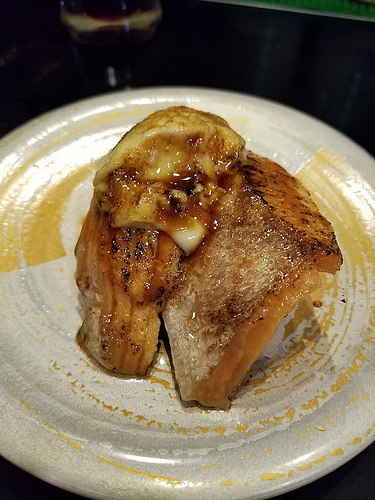
A In this book, the letter ‘A’ was for Akita (Japan's national dog). Unfortunately, I didn't see any on my trip, so I'll say ‘A’ is for Aburi Sushi (torched sushi) which is one of my favourite types of sushi!
Here’s a picture of one of the torched sushi dishes I tried at a Kaiten (conveyor belt) Sushi restaurant (I believe this one is a picture of the torched salmon belly and mayo dish).
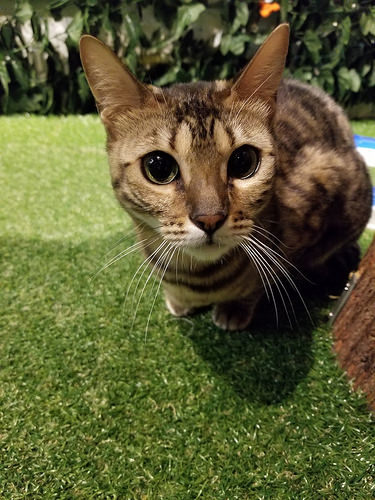
B B is for the Bengal Cat Cafe that I went to in Kyoto. They weren't very social or playful but they were really pretty.
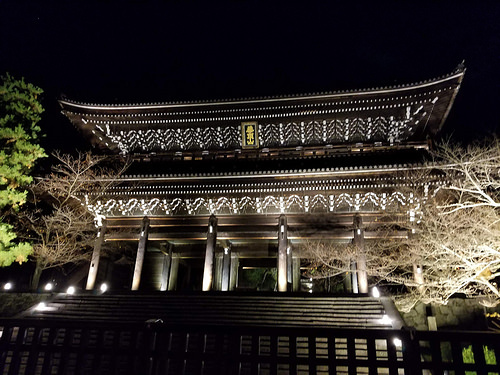
C C is for Chion-in Temple which I visited in Kyoto. I went in the evening to see their fall illumination event. Although the colours of the leaves haven't changed yet, the place still looked amazing at night. I also got to climb a super steep set of stairs up to the second floor of the temple (and climbed back down) which was incredibly tiring and made my legs sore for days…
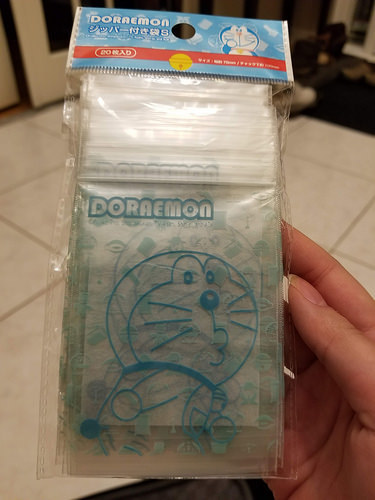
D D is for Doraemon which I grew up with (both the anime and the manga). Check out these Doraemon ziplock bags I found in the 100 yen (dollar) store!
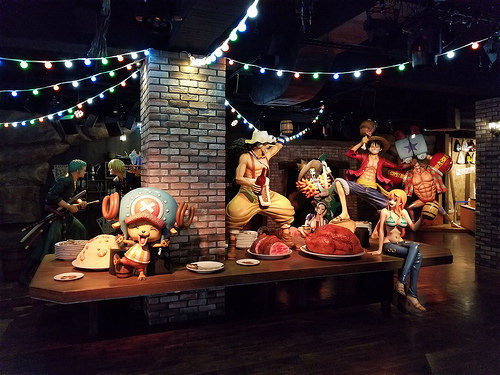
E E is for Eiichiro Oda, author of One Piece. I went to the One Piece Theme Park in Tokyo Tower and it was pretty cool.
Here is a picture of the life-sized statues you can find in the theme park.
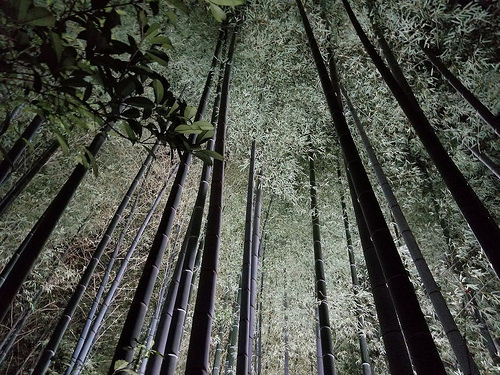
F F is for Fall Illumination Event in Kyoto. Besides the Chion-in Temple (mentioned under the letter ‘C’), I also managed to visit the Shoren-in Temple for their Fall Illumination Event as well. This temple has a bamboo forests which looks gorgeous at night.
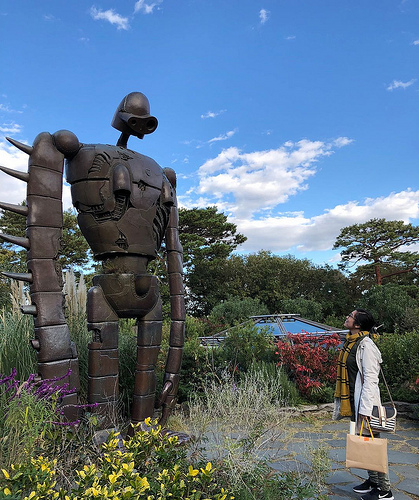
G G is for the Ghibli Museum. A few years ago, I randomly came across the Ghibli Museum on my way to meet up with a friend. I was denied entry because I didn't pre-order tickets. For this trip, I made sure to order the tickets in advance and it was worth it. The place was magical and inspiring.
Here’s a picture of me with the Ghibli Laputa Statue -
H H is for Hyakku Yen (¥100) Shoppu. For me, a trip to Japan is never complete without making a stop at a ¥100 / dollar store. Japanese dollar stores are waaaay better than the Canadian dollar stores with way cuter stuff. I often spend around a hundred dollars or more in one of these stores… (see also letter d to see an example of the sort of useless things I like to spend my money on at these hyakku yen shops).
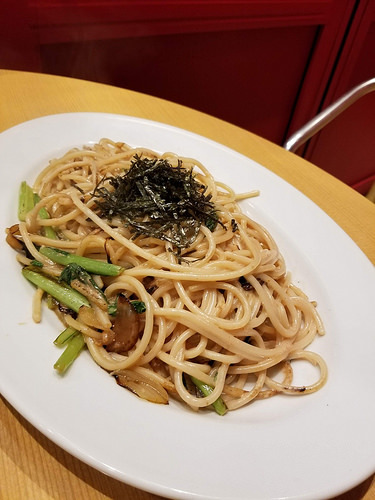
I I is for Italian food. My friends think it's weird when I recommend them to try Japanese-Italian food when they visit Japan. But I swear, this fusion cuisine tastes amazing. A ‘classic’ Japanese-Italian dish would be a the mentaiko (cod roe) mayo pasta although some of my other favourites include unagi (eel) or uni (sea urchin) pasta.
Here is the mentaiko mayo pasta that I had.
J J is for JR, the biggest rail company in Japan. I was debating whether or not I should get the JR Rail Pass but decided not to as I opted to fly from Tokyo to Osaka instead of taking the train. Otherwise, getting the pass would have been worth it as I did take various JR Lines throughout my trip.
K K is for Kyoto International Manga Museum. I highly recommend this museum/library to any manga lovers visiting Kyoto. It has a nice collection of international manga, and English information pertaining to the history and evolution of manga. Photography is not permitted inside the museum so I don’t have any pictures...
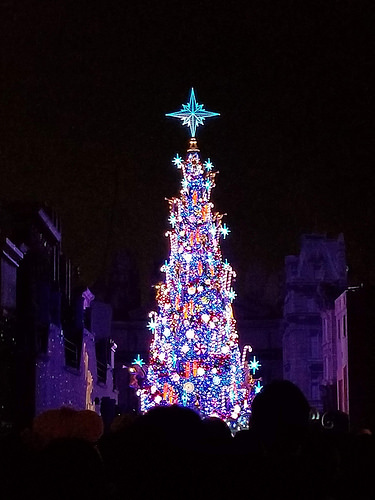
L L is for… Lights (sorry, can’t think of anything else). When I went to Universal Studios in Osaka, the place was decked out in Christmas lights! (so were the airports actually)
Here is a picture of the massive Christmas tree and Universal Studios.
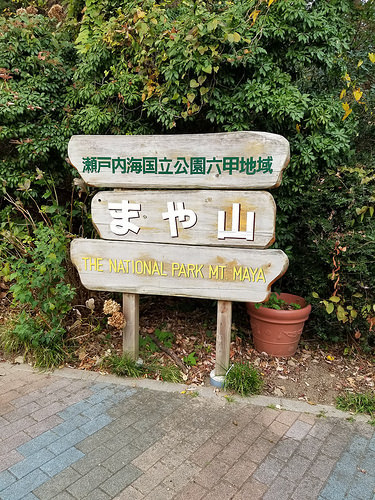
M M is for Mount Maya in Kobe. I rode the Maya Cable Car and Maya Ropeway up Mount Maya which offers a gorgeous view of Kobe (especially at night).
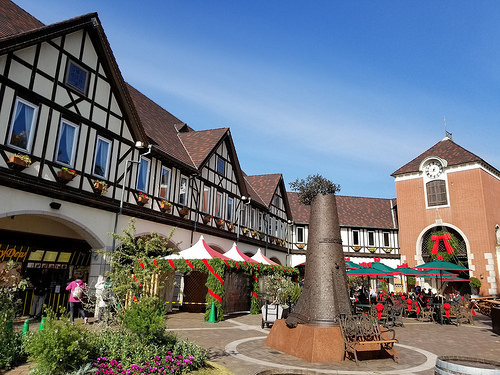
N N is for Nunobiki Herb Garden in Kobe which is a large and beautiful European-style garden up in the mountain next to Mount Maya.
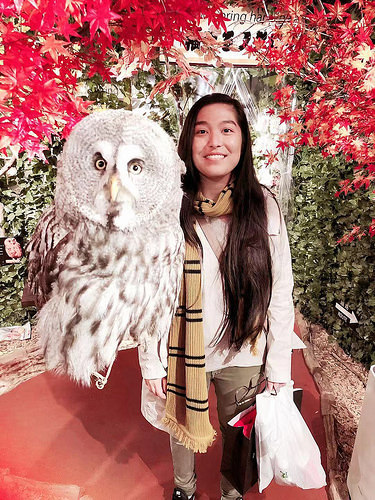
O O is for Owl Cafe. Along with the Cat Cafe, I also visited an Owl Cafe while in Kyoto.
Yep, this is a picture of me with my Hufflepuff scarf and owl. Totally ready for my Hogwarts letter. Any day now...
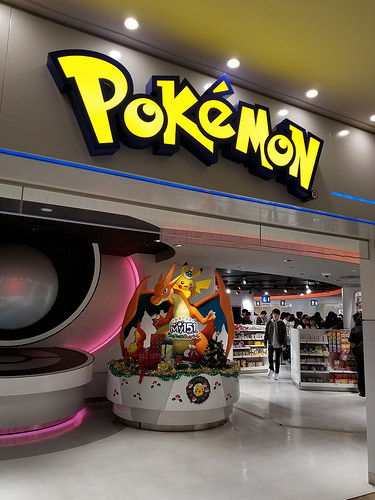
P P is for Pokemon. I took a quick look around the Pokemon Mega Center in Tokyo which is the biggest Pokemon store with a lot of very cute merchandise. Unfortunately, I didn't buy a thing because the cashier's line was so long, it wrapped around the store!
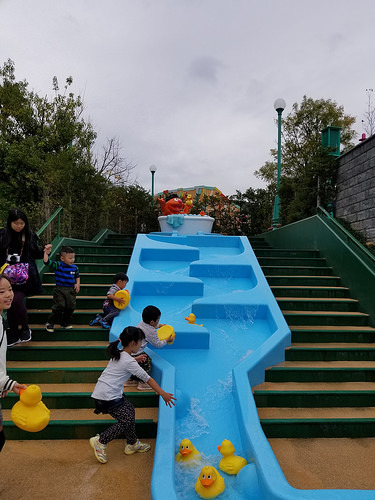
Q Q is for Quack! Which is the sound that these rubber duckies should make in the Sesame Street Park at Universal Studios Osaka.
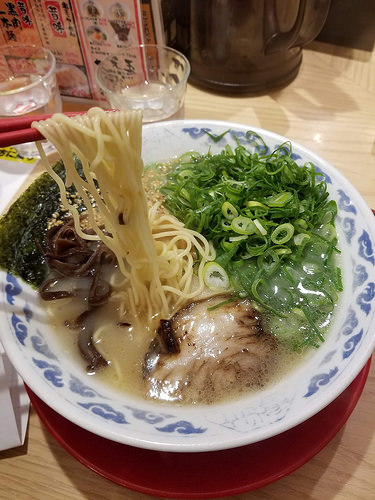
R R is for ramen. A trip to Japan just isn’t complete without visiting at least one ramen shop.
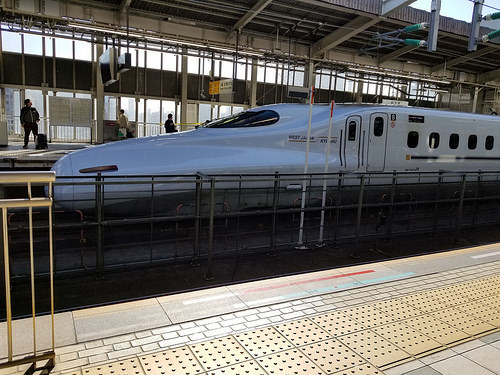
S S is for Shinkansen (which the book had listed under the letter B for Bullet train). I took the bullet train from Osaka to Tokyo and it was a very comfortable ride.
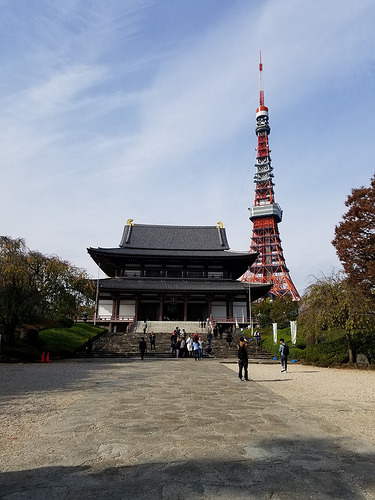
T T is for Tokyo Tower (see also the letter ‘z’ for a picture of the tower).
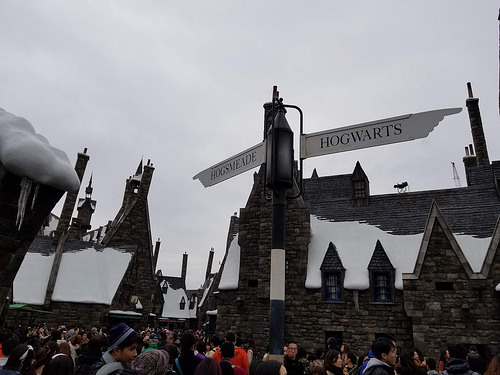
U U is for Universal Studios Japan located in Osaka. My favourite part was visiting Hogsmeade and Hogwarts.
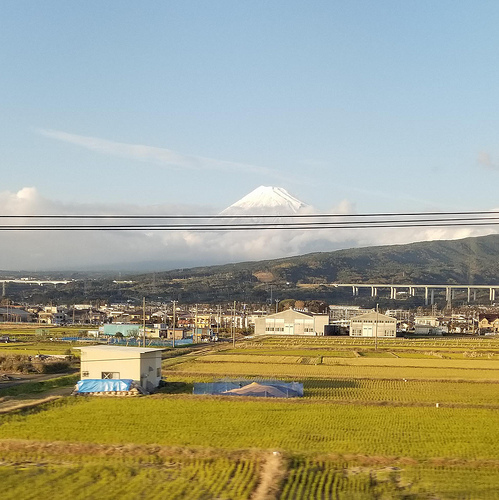
V V is for volcano (Ok, I cheated here and used the same word as the one in the book). I saw Mt. Fuji on the train ride from Osaka to Tokyo!
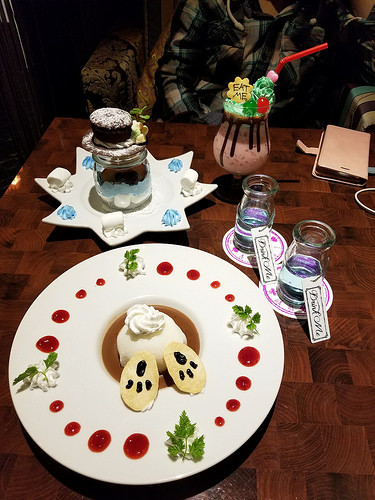
W W is for Wonderland because I went to an Alice in Wonderland themed restaurant while in Osaka!
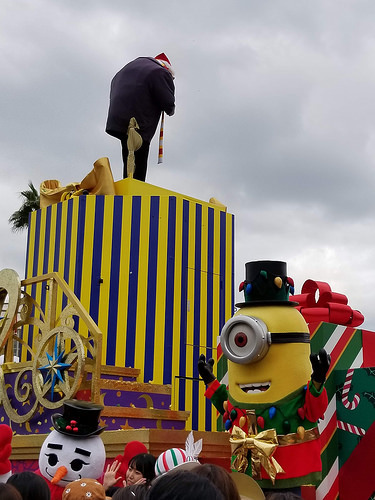
X X is for … xanthoderm? (Ok I cheated again and used a dictionary to find a word that starts with x). Xanthoderm is a person of yellowish skin so… I guess this applies to Japanese people? If not, then it definitely applies to minions, who were everywhere at Minion Park in Universal Studios.
Also, the ‘x’ part of this book was used to state that there is no ‘x’ in the Japanese alphabet. It then proceeds to state that Japanese grammar is simple - which I completely disagree with. I found the grammar and conjugation of verbs to be harder than french!
Y Y is for Yokohama. This is the city I normally stay at when I visit Japan because it’s one train ride (around 20min) from Haneda airport and another train ride (around 30min) to Tokyo. There’s also a lot of fun and interesting things to do here as (including visiting the port, Cup Noodles Museum and the Ramen Museum).
Z Z is for Zojoji Temple in Tokyo which includes a wonderful view of the Tokyo Tower which is located right behind the temple.