

What do you think?
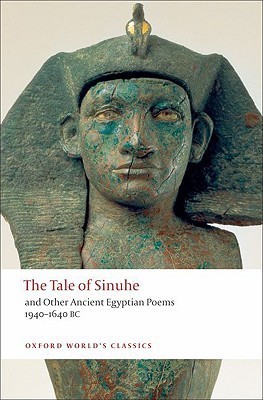
The Tale of Sinuhe, and Other Ancient Egyptian Poems, 1940-1640 B.C.
Drawing on recent advances in Egyptology, R. B. Parkinson's new translations bring to life for the modern reader the golden age of Egyptian fictional literature, the Middle Kingdom (c. 1940-1640 BC). The book features The Tale of Sinuhe, acclaimed as the masterpiece of Egyptian poetry, which tells of a courtier's adventures after he flees Egypt. Other works include stories of fantastic wonders from the court of the builder of the Great Pyramid, a lyrical dialogue between a man and his soul on the nature of death and the problem of suffering, and teachings about the nature of virtue and wisdom, one of which is bitterly spoken from the grave by the assassinated king Amenemhat I, founder of the Twelfth Dynasty.
A general introduction discusses the historical context of the poetry, the nature of poetry, and the role of literature in ancient Egyptian culture., while a full set of notes explicates allusions, details of mythology, place-names, and the like. Parkinson's book provides, for the first time, a literary reading to enable these poems to entertain and instruct the modern reader, as they did their original audiences three-and-a-half thousand years ago.
A general introduction discusses the historical context of the poetry, the nature of poetry, and the role of literature in ancient Egyptian culture., while a full set of notes explicates allusions, details of mythology, place-names, and the like. Parkinson's book provides, for the first time, a literary reading to enable these poems to entertain and instruct the modern reader, as they did their original audiences three-and-a-half thousand years ago.
298 pages, Paperback
First published October 2, 1941
Ratings & Reviews
Friends & Following
Create a free account to discover what your friends think of this book!
Community Reviews
Displaying 1 - 30 of 53 reviews

June 21, 2023
The Tale of Sinuhe
From the 19th century BC this was a popular tale and preserved in any copies. It tells the tale of an Egyptian who flees from Egypt as a young man and lives in Palestine and Syria where he lives a successful life. Later the king invites him back to Egypt in order to have a respectable death and is buried with high honours.
Translated by Richard B. Parkinson.
I quite enjoyed this one. It's a fun little tale of an entire life of a guy who lives in a foreign land.
Egyptian Love Poems
Lots of juvenile love with girls sharing their love with boys and vice versa.
From the 19th century BC this was a popular tale and preserved in any copies. It tells the tale of an Egyptian who flees from Egypt as a young man and lives in Palestine and Syria where he lives a successful life. Later the king invites him back to Egypt in order to have a respectable death and is buried with high honours.
Translated by Richard B. Parkinson.
I quite enjoyed this one. It's a fun little tale of an entire life of a guy who lives in a foreign land.
Egyptian Love Poems
Lots of juvenile love with girls sharing their love with boys and vice versa.
I wish I were the laundryman
of my beloved's clothes
for even just a month!
I would be strengthened by grasping the garments
that touch her body
Am I not here with you?
Then why have you set your heart to leave?
Why don't you embrace me?
Has my deed come back upon me?
IF you seek to caress my thighs.
Is it because you are thinking of food
That you would go away?
or because you are a slave to you belly?

July 11, 2014
Once again I’m surprised to find that a classical classic is such a great read. You’d think by now I’d realize they’re classics for a reason.
The first segment, The Story of Sinuhe, is on Philip Ward’s 500 books list, so I chose this volume. But I actually enjoyed the subsequent pieces much more. Perhaps Ward chose it because the Sinuhe poem is more complex than the others in terms of plot, geographical range, and theme (displacement, identity bound up with country) or perhaps the language in the original Egyptian is more admirable. The translator admires the ‘profusion of genres’ it contains. At any rate it is the one with the fame.
The Egyptian Sinuhe has a panic attack when he hears that the king has been assasinated and abandons his post as tutor to the King’s children, before waiting around to see whether there will be a chaotic interregnum. He nearly dies in the desert, then is sold to a Palestinian, and becomes an advisor to this prince and gains wealth. But after many years he has, in essence, another panic attack as he ages and fears dying far from his own land, which he realizes is integral to his identity. Luckily the current Egyptian king has ESP and invites him to return, which he does.
There are introductions and exhaustive notes to each of the twenty or so poems in this book. For Sinuhe, R B Parkinson explains the Egyptian emphasis on calm and order, and its deep fear of chaos. Also that dusk and night are particular dangerous times, which is reflected in the timing of events in this and other stories. He cites the importance of Sinuhe as commentary on the relationship of the individual to the king. Parkinson also focuses on the form of the poem, which comprises sets of stanzas corresponding to divisions of the story. He notes that the traditional autobiographical form is broken when Sinuhe leaves Egypt, and returns to form when he returns to his land.
Sinuhe is followed by three other tales (my favorite works here), several discourses, and several teachings. The Tale of the Eloquent Peasant employs absolutely wonderful rhetoric as an increasingly distraught poor traveling merchant berates a palace official who he thinks is ignoring his pleas for justice after another commoner robs him. (see my reading progress comment). In fact, the king has instructed the official to stonewall him in order to hear more talk, while secretly providing him and his family with sustenance for the duration.
Then The Tale of King Cheops Court is amusing, almost picaresque--a diversionary tale of magic tricks. It begins with a funny episode in which a cuckolded priest Ubainer fashions a clay crocodile which then turns into a real crocodile in order to seize the rascal who’s fooling around with his wife and take him to the bottom of a pond for several days (Robinson says crocodiles do indeed drown their victims). Then the crocodile returns to toy size, then again to real size. Then comes the rowing party in which the courtesan who refuses to row because she’s lost her necklace overboard has it restored because the magician folds the river one half over the other to lay bare the spot where the necklace fell. Necklace found, river restored. This had to happen because in a scene that could take place in any household with a moody teenager, she insists she wants her own thing, not any replacement thing.
The remaining poems are interesting due to the various aspects of Egyptian culture they illustrate. The only other one. I found compellilng as literature was the Dialogue of a Man and His Soul. The Teaching for King Merikare was quite interesting for the sophistication of the political, personal and military strategy that the old king is advising his son to follow. The Loyalist Teaching gives an overview of the hard life of dozens of different professions and trades.
The notes get fairly repetitive as though Parkinson expected some readers to just dip into one or two poems, rather than carry the information from one to the next. On the other hand, he is very thorough in explaining the word play in the original language, and giving the meaning of personal and place names. By the end of the book one has a grasp of a few key Egyptian words, events, poetic forms, and cultural characteristics that permeate the literature.
The first segment, The Story of Sinuhe, is on Philip Ward’s 500 books list, so I chose this volume. But I actually enjoyed the subsequent pieces much more. Perhaps Ward chose it because the Sinuhe poem is more complex than the others in terms of plot, geographical range, and theme (displacement, identity bound up with country) or perhaps the language in the original Egyptian is more admirable. The translator admires the ‘profusion of genres’ it contains. At any rate it is the one with the fame.
The Egyptian Sinuhe has a panic attack when he hears that the king has been assasinated and abandons his post as tutor to the King’s children, before waiting around to see whether there will be a chaotic interregnum. He nearly dies in the desert, then is sold to a Palestinian, and becomes an advisor to this prince and gains wealth. But after many years he has, in essence, another panic attack as he ages and fears dying far from his own land, which he realizes is integral to his identity. Luckily the current Egyptian king has ESP and invites him to return, which he does.
There are introductions and exhaustive notes to each of the twenty or so poems in this book. For Sinuhe, R B Parkinson explains the Egyptian emphasis on calm and order, and its deep fear of chaos. Also that dusk and night are particular dangerous times, which is reflected in the timing of events in this and other stories. He cites the importance of Sinuhe as commentary on the relationship of the individual to the king. Parkinson also focuses on the form of the poem, which comprises sets of stanzas corresponding to divisions of the story. He notes that the traditional autobiographical form is broken when Sinuhe leaves Egypt, and returns to form when he returns to his land.
Sinuhe is followed by three other tales (my favorite works here), several discourses, and several teachings. The Tale of the Eloquent Peasant employs absolutely wonderful rhetoric as an increasingly distraught poor traveling merchant berates a palace official who he thinks is ignoring his pleas for justice after another commoner robs him. (see my reading progress comment). In fact, the king has instructed the official to stonewall him in order to hear more talk, while secretly providing him and his family with sustenance for the duration.
Then The Tale of King Cheops Court is amusing, almost picaresque--a diversionary tale of magic tricks. It begins with a funny episode in which a cuckolded priest Ubainer fashions a clay crocodile which then turns into a real crocodile in order to seize the rascal who’s fooling around with his wife and take him to the bottom of a pond for several days (Robinson says crocodiles do indeed drown their victims). Then the crocodile returns to toy size, then again to real size. Then comes the rowing party in which the courtesan who refuses to row because she’s lost her necklace overboard has it restored because the magician folds the river one half over the other to lay bare the spot where the necklace fell. Necklace found, river restored. This had to happen because in a scene that could take place in any household with a moody teenager, she insists she wants her own thing, not any replacement thing.
The remaining poems are interesting due to the various aspects of Egyptian culture they illustrate. The only other one. I found compellilng as literature was the Dialogue of a Man and His Soul. The Teaching for King Merikare was quite interesting for the sophistication of the political, personal and military strategy that the old king is advising his son to follow. The Loyalist Teaching gives an overview of the hard life of dozens of different professions and trades.
The notes get fairly repetitive as though Parkinson expected some readers to just dip into one or two poems, rather than carry the information from one to the next. On the other hand, he is very thorough in explaining the word play in the original language, and giving the meaning of personal and place names. By the end of the book one has a grasp of a few key Egyptian words, events, poetic forms, and cultural characteristics that permeate the literature.

January 11, 2014
This is the best collection I could find of ancient Egyptian poetry, all from the Middle Kingdom, 1940 - 1640 BC. The translation is awkward, the introductions boring, the poems themselves mostly just opaque, but it does give you some insight into how ancient Egyptians felt about the world. Or I could just tell you: they were pretty bummed out about it. They were pretty much poor and overworked, and then they died when they were like 35, and in spare moments they said shit like this:
There is no one clever enough to understand;
There is no one angry enough to give voice.
Every day one wakes to suffering.
Long and heavy is my anguish.
The pauper has no strength
to save himself from the more powerful man.
This is from The Words of Khakheperreseneb, about whom all we know is that he was a bummer.
That theme there - the theme of how it sucks to be poor - is continued in The One About The Eloquent Peasant, my favorite poem here. This dude gets his asses stolen and he goes to the king and asks for justice, and when he doesn't get the response he wants he just lays into the dude:
Look, you are a hawk to the folk,
Who lives on the wretched birds...
You were appointed as a dyke to the pauper;
Beware lest he drown!
Look, you are his lake, you drag him under...
Your neglect will mislead you,
Your selfishness befool you,
Your greed create you foes.
That's kindof amazing, isn't it? It's a proletariat, speaking truth to power across four thousand years. Fuck yeah, peasant guy.
Totally gets his asses back in the end, too, btw. OCCUPY ASSES
So there are some cool moments here, interspersed in a whole lot more moments that I didn't really get. The Words of Neferti, addressed Hamlet-style from the ghost of a murdered king to his son, gets some spooky atmosphere; I like it. The Tale of the Shipwrecked Sailor's crazy nesting-doll structure - poet from sailor from giant talking snake - has its moments. The Teachings are entirely skippable. The book is worth checking out.
There is no one clever enough to understand;
There is no one angry enough to give voice.
Every day one wakes to suffering.
Long and heavy is my anguish.
The pauper has no strength
to save himself from the more powerful man.
This is from The Words of Khakheperreseneb, about whom all we know is that he was a bummer.
That theme there - the theme of how it sucks to be poor - is continued in The One About The Eloquent Peasant, my favorite poem here. This dude gets his asses stolen and he goes to the king and asks for justice, and when he doesn't get the response he wants he just lays into the dude:
Look, you are a hawk to the folk,
Who lives on the wretched birds...
You were appointed as a dyke to the pauper;
Beware lest he drown!
Look, you are his lake, you drag him under...
Your neglect will mislead you,
Your selfishness befool you,
Your greed create you foes.
That's kindof amazing, isn't it? It's a proletariat, speaking truth to power across four thousand years. Fuck yeah, peasant guy.
Totally gets his asses back in the end, too, btw. OCCUPY ASSES
So there are some cool moments here, interspersed in a whole lot more moments that I didn't really get. The Words of Neferti, addressed Hamlet-style from the ghost of a murdered king to his son, gets some spooky atmosphere; I like it. The Tale of the Shipwrecked Sailor's crazy nesting-doll structure - poet from sailor from giant talking snake - has its moments. The Teachings are entirely skippable. The book is worth checking out.

Read
May 22, 2026Middle Egyptian literature is overwhelmingly pessimistic. Chaos seems to be the predominant force of the world, with the pharaoh being the force of order. Even projecting backwards to the setting of the 4th dynasty, Middle Egyptian writers present a mixed view of both good and bad. None of the texts in this collection are particularly, long, the longest being the Tale of Sinuhe and the teachings of Ptahhotep, in a way these texts feel abridged, as though there are chunks of it that could be there but simply aren't.

September 13, 2022
sinuhe should’ve been a woman and the eloquent peasant should’ve been eloquent enough to know the meaning of the word concise

August 2, 2023
Se trata de una muy conocida y citada antología de textos literarios del antiguo Egipto mucho más amplia que la de José Manuel Galán ("Cuatro Viajes") leída (y reseñada) casi simultáneamente.
Dos cosas a destacar son: la presentación de la mayor parte de las obras literarias en forma de verso, y el excelente aparato de análisis y notas. Las obras están agrupadas en cuatro categorías: 1.) Cuentos (entre ellos la "Historia de Sinuhé" y "El Náufrago"); 2. Discursos (como el "Diálogo de un Hombre y su Alma"); 3. Enseñanzas (de las que destaco la impresionante "Instrucción del rey Amenemhat"); y 4. Fragmentos (aquí se encuentra la breve "Historia del Pastor").
No he hecho una lectura del volumen completo, pero si una lectura detallada de la "Instrucción del rey Amenemhat", que me ha resultado una experiencia de lectura intensa e importante que merecía ser reseñada.
Dos cosas a destacar son: la presentación de la mayor parte de las obras literarias en forma de verso, y el excelente aparato de análisis y notas. Las obras están agrupadas en cuatro categorías: 1.) Cuentos (entre ellos la "Historia de Sinuhé" y "El Náufrago"); 2. Discursos (como el "Diálogo de un Hombre y su Alma"); 3. Enseñanzas (de las que destaco la impresionante "Instrucción del rey Amenemhat"); y 4. Fragmentos (aquí se encuentra la breve "Historia del Pastor").
No he hecho una lectura del volumen completo, pero si una lectura detallada de la "Instrucción del rey Amenemhat", que me ha resultado una experiencia de lectura intensa e importante que merecía ser reseñada.

August 7, 2025
9/10
A fair amount of the texts that appear here feature in Penguin Classics' Writings from Ancient Egypt, so it's a testament to how good The Tale of Sinuhe and The Tale of the Eloquent Peasant are, that this ranks higher.
A fair amount of the texts that appear here feature in Penguin Classics' Writings from Ancient Egypt, so it's a testament to how good The Tale of Sinuhe and The Tale of the Eloquent Peasant are, that this ranks higher.

Read
March 30, 2022Several tales.
Some moralistic, some legalistic. It becomes clear how drenched Egypt was in religion. The west truly was a horror for them (place of the Sun setting)
Some moralistic, some legalistic. It becomes clear how drenched Egypt was in religion. The west truly was a horror for them (place of the Sun setting)

December 5, 2022
I forgot to add this before but it was the first book I read for my class that made me read all the books from august up until now. it was okay but definitely work to read bc the language and footnotes

July 13, 2022
I read this because Toby Wilkinson in his introduction to Writings from Ancient Egypt mentioned that he hadn't translated The Tale of Sinuhe because he thought R B Parkinson's translation here was pretty perfect. However, there are several duplications between the two books. These are The Tale of the Shipwrecked Sailor, The Tale of King Cheops' Court, The Dialogue of a Man and his Soul, The Teaching of King Amenemhat, The 'Loyalist' Teaching of the Vizier Ptahhotep and The Teaching of Khety.
In the duplicated ones I tend to prefer Toby Wilkinson's translations, which seem to flow a little better, but R B Parkinson's notes.* If I was a vandal I'd find a way of smushing the two books together. Perhaps I might do at some point if I get bored.
Perhaps because of the duplication I found this more of a slog. The Tale of Sinhue itself is rather good and, again, you get to re-define in your head a little more about Egypt as a culture. The stories, which are often layered with allusion to religious practice and belief.
Both Wilkinson and Parkinson through these stories bring Ancient Egypt back to life. I've never really had the same clarity of focus about Egypt as I have Greece and Rome. The apparent absence of a literary tradition seemed to relegate Egyptian history to a series of impressive ruins and a lot of Mummies. Now though the archaeological footprint comes with voices. It might explain how Egypt's importance in the creation of Western Civilization has been under-estimated. That and the fact that as Rome conquered Egypt they were positioned as a decadent civilisation. A threat to the upright Romans with their strange religions.
So, interesting. But a bit of a harder read.
*Wilkinson's introduction and Parkinson's can be combined too.
*And Wilkinson's introduction is a little more in-depth.
In the duplicated ones I tend to prefer Toby Wilkinson's translations, which seem to flow a little better, but R B Parkinson's notes.* If I was a vandal I'd find a way of smushing the two books together. Perhaps I might do at some point if I get bored.
Perhaps because of the duplication I found this more of a slog. The Tale of Sinhue itself is rather good and, again, you get to re-define in your head a little more about Egypt as a culture. The stories, which are often layered with allusion to religious practice and belief.
Both Wilkinson and Parkinson through these stories bring Ancient Egypt back to life. I've never really had the same clarity of focus about Egypt as I have Greece and Rome. The apparent absence of a literary tradition seemed to relegate Egyptian history to a series of impressive ruins and a lot of Mummies. Now though the archaeological footprint comes with voices. It might explain how Egypt's importance in the creation of Western Civilization has been under-estimated. That and the fact that as Rome conquered Egypt they were positioned as a decadent civilisation. A threat to the upright Romans with their strange religions.
So, interesting. But a bit of a harder read.
*Wilkinson's introduction and Parkinson's can be combined too.
*And Wilkinson's introduction is a little more in-depth.

October 29, 2013
Assigning a single rating to this book is almost an impossible task, given that it consists of texts (sometimes fragmentary) composed by many authors in a variety of genres over the course of centuries, as well as extensive commentary added nearly 3,000 years later.
For the most part, it's perhaps best to say that relatively little of the book is really recreational reading, even compared to other work of the distant past such as Beowulf, or the Epic of Gilgamesh. Most of the four "tales," including that of the book's title, are fairly accessible narratives, but after that the remaining 50% of the book can be rough sledding. The same remoteness from our own culture that makes the "discourses" and "teachings" so opaque, however, is also what provides most of the interest they have; I found curiosity enough to support the effort, but it was not a decision everyone may agree with.
Two advisories may be helpful to prospective readers. First, the extensive notes at the end of each text are sometimes of debatable value. While they can clarify points of confusion, the notes themselves are often so opaque, as well as extensive, that trying to read them all can make a chapter more challenging rather than less. Second, if one should begin the book and then consider jumping ship after the tales' conclusion, do at least skip to the last teaching, that of Khety; the "satire on the trades" is actually one of the more readable and even amusing texts in the entire book.
For the most part, it's perhaps best to say that relatively little of the book is really recreational reading, even compared to other work of the distant past such as Beowulf, or the Epic of Gilgamesh. Most of the four "tales," including that of the book's title, are fairly accessible narratives, but after that the remaining 50% of the book can be rough sledding. The same remoteness from our own culture that makes the "discourses" and "teachings" so opaque, however, is also what provides most of the interest they have; I found curiosity enough to support the effort, but it was not a decision everyone may agree with.
Two advisories may be helpful to prospective readers. First, the extensive notes at the end of each text are sometimes of debatable value. While they can clarify points of confusion, the notes themselves are often so opaque, as well as extensive, that trying to read them all can make a chapter more challenging rather than less. Second, if one should begin the book and then consider jumping ship after the tales' conclusion, do at least skip to the last teaching, that of Khety; the "satire on the trades" is actually one of the more readable and even amusing texts in the entire book.
November 23, 2015
I enjoyed reading this text, especially because it is written as a "first person narrative". I think it makes any story even more engaging when the mouth of the person experiencing it tells it. In this case written by the main character himself.
Sinuhe tells the hardships he went through and how he fled his home in Egypt, but how wonderful that he was taken in by another king and given power over a tribe. In this text Sinuhe defeated a great warrior, which gave him fame among the people he was newly ruling, this narrative reminded me of the story of David and Goliath from the bible. Although he went through some hard times, then after awarded with power and a wife by a king, Sinuhe still longed for home.
And so, I had some difficulty reading the text because of how it is translated but other than that, I think Sinuhe did a great job of writing his life story and giving me a slight understanding of how important a mummification and burial was for Egyptians.
Sinuhe tells the hardships he went through and how he fled his home in Egypt, but how wonderful that he was taken in by another king and given power over a tribe. In this text Sinuhe defeated a great warrior, which gave him fame among the people he was newly ruling, this narrative reminded me of the story of David and Goliath from the bible. Although he went through some hard times, then after awarded with power and a wife by a king, Sinuhe still longed for home.
And so, I had some difficulty reading the text because of how it is translated but other than that, I think Sinuhe did a great job of writing his life story and giving me a slight understanding of how important a mummification and burial was for Egyptians.

April 29, 2026
Middle Kingdom Literature
12 Apr 2026
I’m not sure why I haven’t written anything about this book yet (other than comments on the texts that the book contains, since each of them are their own work and just like short story collections I do feel writing them as a whole sort of doesn’t do it justice so I will review each of the stories individually) but I suspect it has something to do with me having read this before I discovered Goodreads (and the book review site I used before that, before it basically decided to shut down because they no longer wanted to host reviews and referred me to Goodreads) and I wanted to read it again because, well, writing a review so long after I had read it didn’t do it justice (though some trolls have made comments on reviews I had written on books that I had read but didn’t want to read again).
Well, this book contains, not surprisingly, literature from the Middle Kingdom, which surprised me because I thought the only works we had were written on the walls of temples. So, it turned out that we had a lot more, and what is great about Egypt is that it is really dry, and huge caches of literature has been uncovered over the years which gives us greater insights into the live of Ancient Egyptians. In fact, not only is there philosophy, and works of wisdom, there are also stories as well.
Mind you stories in the Ancient World are vastly different to stories in the modern world. Honestly, you could probably categorise most American films into a handful of plots and basically leave it at that. In fact, you could pretty much do that with most literature as well (though the romantics of the early 19th Century are a little difference, such as girl meets buy and girl proceeds to discover boy’s wife locked in the attic). Or stories that are deliberately written to cause a sensation (and those stories are generally pretty badly written as well).
Okay, the Romans did actually have novels as well, though even those novels are of a higher quality than most modern American movies. Sure, I really do love the story about he guy trapped in a skyscraper that has been taken over by terrorists, until you then discover the same story set in an airport, in a hospital, and even in a plane (unless they switch out terrorists for snakes – no I haven’t seen that one yet).
So, yes, reading an ancient story about how a man goes and bitches to Pharoah about all of the problems that he is facing, or another’s journey of discovery, is somewhat refreshing from all of the media that we end up consuming these days (though, I guess we don’t have to consume it, I just end up choosing to). Okay, I may be being pretty vague, but I have written on them individually, and am writing this before I dash out the door, so can’t be bothered going back over my notes. Still, it is actually quite enlightening looking through the eyes of a person that lived so long ago, and discovering that things are pretty much the same (such as the induction class into Pharoah’s household).
12 Apr 2026
I’m not sure why I haven’t written anything about this book yet (other than comments on the texts that the book contains, since each of them are their own work and just like short story collections I do feel writing them as a whole sort of doesn’t do it justice so I will review each of the stories individually) but I suspect it has something to do with me having read this before I discovered Goodreads (and the book review site I used before that, before it basically decided to shut down because they no longer wanted to host reviews and referred me to Goodreads) and I wanted to read it again because, well, writing a review so long after I had read it didn’t do it justice (though some trolls have made comments on reviews I had written on books that I had read but didn’t want to read again).
Well, this book contains, not surprisingly, literature from the Middle Kingdom, which surprised me because I thought the only works we had were written on the walls of temples. So, it turned out that we had a lot more, and what is great about Egypt is that it is really dry, and huge caches of literature has been uncovered over the years which gives us greater insights into the live of Ancient Egyptians. In fact, not only is there philosophy, and works of wisdom, there are also stories as well.
Mind you stories in the Ancient World are vastly different to stories in the modern world. Honestly, you could probably categorise most American films into a handful of plots and basically leave it at that. In fact, you could pretty much do that with most literature as well (though the romantics of the early 19th Century are a little difference, such as girl meets buy and girl proceeds to discover boy’s wife locked in the attic). Or stories that are deliberately written to cause a sensation (and those stories are generally pretty badly written as well).
Okay, the Romans did actually have novels as well, though even those novels are of a higher quality than most modern American movies. Sure, I really do love the story about he guy trapped in a skyscraper that has been taken over by terrorists, until you then discover the same story set in an airport, in a hospital, and even in a plane (unless they switch out terrorists for snakes – no I haven’t seen that one yet).
So, yes, reading an ancient story about how a man goes and bitches to Pharoah about all of the problems that he is facing, or another’s journey of discovery, is somewhat refreshing from all of the media that we end up consuming these days (though, I guess we don’t have to consume it, I just end up choosing to). Okay, I may be being pretty vague, but I have written on them individually, and am writing this before I dash out the door, so can’t be bothered going back over my notes. Still, it is actually quite enlightening looking through the eyes of a person that lived so long ago, and discovering that things are pretty much the same (such as the induction class into Pharoah’s household).
Read
September 1, 2016The Tale of Sinuhe is one of the earliest extant pieces of literature, following the older version of The Epic of Gilgamesh, ANON, 'Surpassing all other kings'. It was written circa 1900BCE. It's considered a very masterful work of poetry, so much so that its anonymous author has been lauded "the Egyptian Shakespeare". This translation is by R.B. Parkinson.
The entire text is posed as a speech on the part of Sinuhe—"Sinuhe says, 'I was...'".
"The God ascended to his horizon". This shows some Ancient Egyptian theological beliefs. They believed that the Pharaoh was a god-king incarnation who would, upon his death, ascend to the heavens and become a God.
It also mentions a "Dual King". At some point, Egypt was split into two: Upper Egypt and Lower Egypt. Like East/West Germany. Each half had their own king, and it wasn't until much later that the two were united under a single "Dual King". I remember learning about this with the crowns. Lower Egypt had a red crown, shaped like a ring that sat on the head, with the upper edge rising around the back to form a high point. Upper Egypt had a white crown shaped like an elongated dome—it looked a bit more like what we would call a very strange hat. Upon the unity of Upper and Lower Egypt, the Dual King came to wear both crowns at the same time. The crown of Lower Egypt was slid over the crown of Upper Egypt, and it framed it like a ring on a finger, forming the Double Crown.
So, the first verse is an introduction of Sinuhe, and the second is informing the death of the Pharaoh.
As a speech on the part of Sinuhe, it's written in 1POV. All the pros and cons of this are standard. It lends anecdotal credence to the narrative events, but it's empirically unreliable because of the more evident bias of the narrator. It encourages more sympathy from the reader to the narrator by mimicking intimacy and confidence. It best suits an introspective or character-driven story rather than a plot-driven one that would likely require a more broad spectrum of perspectives.
Sinuhe hears the news and panics. The notes informs this is because of an implicit allusion native Egyptian would have caught that the Pharaoh's death was an assassination. He runs away, and he doesn't stop running.
He soon goes thirsty, as you do when fleeing through a barren desert. "This is the taste of death", he says. I suppose it would be for a desert-dwelling people.
He soon ends up in Retjenu. Tells the barbarian king tales of the might of the new Pharaoh of Egypt, ascended after his father. Recommends surrender. The king dismisses him, but Sinuhe stays and rises to power. He adopts the native culture.
In his speech, he particularly mentions the fate the Pharaoh visits upon traitors and fugitives. He's afraid to return to Egypt.
Sinuhe is envied by warriors of other tribes, and he ends up in a dawn duel with one of them. Sinuhe shoots him in the neck with an arrow, then sticks the man's own axe in his back.
Sinuhe uses a metaphor about bulls to frame the circumstances of the duel beforehand to the barbarian king. Apparently, cattle were often used as symbols of humanity. How flattering. Very Shingeki no Kyoujin.
He tries to distance himself from himself: he contrasts his present circumstances with the typical circumstances of a fugitive.
Sinuhe is still homesick. He's near dying of old age and he wants to be buried in Egypt, so he entreats the God he supposes sent him into the Retjenu lands to return him.
It becomes an epistolary with transcripts of the Pharaoh's message to Sinuhe and Sinuhe's reply. Pharaoh says that Sinuhe is responsible for his own flight; a God did not pull him from Egypt into barbarian lands. Still, he commands Sinuhe to return to Egypt. Sinuhe replies with relief. Lots of officious praise of the Pharaoh, and some confusing shuffling of blame about himself. He acknowledges his own fault in fleeing, but stresses it was not planned or out of guilt, he just panicked, and then he once more implies a God's intervention.
Sinuhe goes back to Egypt. He had been married to the eldest daughter of the barbarian king, and his children were conquerors of other tribes. He leaves behind his wife and children; his eldest son takes his position. He doesn't seem overly sad about it. It's all very patriotic. Egypt is the civilised world, and it is preferable to any other. Barbarians are to be discarded, and Egypt is home. Not a very good family man, is he?
He's accepted back after a speech from the Queen and some grovelling. He strips himself of the barbarian culture—the physical of it, because it doesn't seem he's internalised much.
This bit is confusing. It mentions there was a pyramid built for him. Pyramids take twenty years to build. I suppose he wouldn't been granted a full-sized one, a granted member of the elite or not, not as the likes of Pharaohs would be. Still, there are years here. He can't have been so close to death.
Sinuhe's speech ends praising the Pharaoh. Again, very patriotic, superior. Egypt-centric. A bit xenophobic.
It's a homecoming tale. Though he had made a home in the barbarian lands, in Iaa, after he fled Egypt, with a wife and children and reputation and favour, none of it compared to his homeland. Throughout his years in self-exile, he remained yearning for Egypt, and returned to it without a second thought as soon as his fears were assuaged. Home is where the heart is. Though, I suppose that phrase would imply a mutability of the concept of home that isn't present in the text.
The barbarians never quite accepted him. He had the favour of the barbarian king, but he was still considered an outsider, which was why he was challenged. You belong in the homeland, seems to be the message. It's very divisive. Egyptians stay in Egypt, and barbarians stay in barbarian lands. I think Hitler said something similar in Mein Kamf about the Germans belonging in the Fatherland most of all. Still very patriotic.
It definitely is intended to elevate the Pharaoh; there are so many praises to him. It espouses his mercy and forgiving nature, his wisdom and knowledge, his power.
Maybe a propaganda text. The Tale of Sinuhe was supposed to have been very popular for a very long time. Three quarters of a millenium, I think. Just that it was composed four thousand years ago and that we have a complete extant text shows how popular it used to be.
The entire text is posed as a speech on the part of Sinuhe—"Sinuhe says, 'I was...'".
"The God ascended to his horizon". This shows some Ancient Egyptian theological beliefs. They believed that the Pharaoh was a god-king incarnation who would, upon his death, ascend to the heavens and become a God.
It also mentions a "Dual King". At some point, Egypt was split into two: Upper Egypt and Lower Egypt. Like East/West Germany. Each half had their own king, and it wasn't until much later that the two were united under a single "Dual King". I remember learning about this with the crowns. Lower Egypt had a red crown, shaped like a ring that sat on the head, with the upper edge rising around the back to form a high point. Upper Egypt had a white crown shaped like an elongated dome—it looked a bit more like what we would call a very strange hat. Upon the unity of Upper and Lower Egypt, the Dual King came to wear both crowns at the same time. The crown of Lower Egypt was slid over the crown of Upper Egypt, and it framed it like a ring on a finger, forming the Double Crown.
So, the first verse is an introduction of Sinuhe, and the second is informing the death of the Pharaoh.
As a speech on the part of Sinuhe, it's written in 1POV. All the pros and cons of this are standard. It lends anecdotal credence to the narrative events, but it's empirically unreliable because of the more evident bias of the narrator. It encourages more sympathy from the reader to the narrator by mimicking intimacy and confidence. It best suits an introspective or character-driven story rather than a plot-driven one that would likely require a more broad spectrum of perspectives.
Sinuhe hears the news and panics. The notes informs this is because of an implicit allusion native Egyptian would have caught that the Pharaoh's death was an assassination. He runs away, and he doesn't stop running.
He soon goes thirsty, as you do when fleeing through a barren desert. "This is the taste of death", he says. I suppose it would be for a desert-dwelling people.
He soon ends up in Retjenu. Tells the barbarian king tales of the might of the new Pharaoh of Egypt, ascended after his father. Recommends surrender. The king dismisses him, but Sinuhe stays and rises to power. He adopts the native culture.
In his speech, he particularly mentions the fate the Pharaoh visits upon traitors and fugitives. He's afraid to return to Egypt.
Sinuhe is envied by warriors of other tribes, and he ends up in a dawn duel with one of them. Sinuhe shoots him in the neck with an arrow, then sticks the man's own axe in his back.
Sinuhe uses a metaphor about bulls to frame the circumstances of the duel beforehand to the barbarian king. Apparently, cattle were often used as symbols of humanity. How flattering. Very Shingeki no Kyoujin.
He tries to distance himself from himself: he contrasts his present circumstances with the typical circumstances of a fugitive.
Sinuhe is still homesick. He's near dying of old age and he wants to be buried in Egypt, so he entreats the God he supposes sent him into the Retjenu lands to return him.
It becomes an epistolary with transcripts of the Pharaoh's message to Sinuhe and Sinuhe's reply. Pharaoh says that Sinuhe is responsible for his own flight; a God did not pull him from Egypt into barbarian lands. Still, he commands Sinuhe to return to Egypt. Sinuhe replies with relief. Lots of officious praise of the Pharaoh, and some confusing shuffling of blame about himself. He acknowledges his own fault in fleeing, but stresses it was not planned or out of guilt, he just panicked, and then he once more implies a God's intervention.
Sinuhe goes back to Egypt. He had been married to the eldest daughter of the barbarian king, and his children were conquerors of other tribes. He leaves behind his wife and children; his eldest son takes his position. He doesn't seem overly sad about it. It's all very patriotic. Egypt is the civilised world, and it is preferable to any other. Barbarians are to be discarded, and Egypt is home. Not a very good family man, is he?
He's accepted back after a speech from the Queen and some grovelling. He strips himself of the barbarian culture—the physical of it, because it doesn't seem he's internalised much.
This bit is confusing. It mentions there was a pyramid built for him. Pyramids take twenty years to build. I suppose he wouldn't been granted a full-sized one, a granted member of the elite or not, not as the likes of Pharaohs would be. Still, there are years here. He can't have been so close to death.
Sinuhe's speech ends praising the Pharaoh. Again, very patriotic, superior. Egypt-centric. A bit xenophobic.
It's a homecoming tale. Though he had made a home in the barbarian lands, in Iaa, after he fled Egypt, with a wife and children and reputation and favour, none of it compared to his homeland. Throughout his years in self-exile, he remained yearning for Egypt, and returned to it without a second thought as soon as his fears were assuaged. Home is where the heart is. Though, I suppose that phrase would imply a mutability of the concept of home that isn't present in the text.
The barbarians never quite accepted him. He had the favour of the barbarian king, but he was still considered an outsider, which was why he was challenged. You belong in the homeland, seems to be the message. It's very divisive. Egyptians stay in Egypt, and barbarians stay in barbarian lands. I think Hitler said something similar in Mein Kamf about the Germans belonging in the Fatherland most of all. Still very patriotic.
It definitely is intended to elevate the Pharaoh; there are so many praises to him. It espouses his mercy and forgiving nature, his wisdom and knowledge, his power.
Maybe a propaganda text. The Tale of Sinuhe was supposed to have been very popular for a very long time. Three quarters of a millenium, I think. Just that it was composed four thousand years ago and that we have a complete extant text shows how popular it used to be.
This entire review has been hidden because of spoilers.

March 29, 2021
A literary treasure of an anthology! It beautifully brings the voices of Ancient Egypt to life through each tale and poem. The language is so eloquent, spiritual and human with philosophical cores present in each story. Very insightful resource in understanding Egyptian values, beliefs and civilization as a whole. While a majority of the translated works are unfortunately fragmentary, they open a door to the Middle Kingdom period of Egypt's history and the principles central to living a purposeful and honorable life. Highly recommend this for anyone intrigued by Ancient Egyptian myth and lore, especially if you're taking an archaeology course. It certainly is a wonderful informative source for teachers and writers as well. The "Tale of Sinuhe" above all is my favorite included in this anthology. My interest for the title character of course stemming from the namesake in Mika Waltari's novel "The Egyptian", piqued my interest in the original story and it is amazing. I was especially taken with the parallels it shares with the biblical stories of Joseph and Moses. While Ancient Egypt may not have had larger-than-life heroes such as Gilgamesh, Hercules etc. the ones at the center of the stories in this collection are no less worthy of recognition, study and admiration.

March 4, 2022
It is a narrative set in the aftermath of the death of Pharaoh Amenemhat I, founder of the 12th Dynasty of Egypt, in the early 20th century BC. It was composed around 1875 BC, although the earliest extant manuscript is from the reign of Amenemhat III, c. 1800 BC.
There is an ongoing debate among Egyptologists as to whether or not the tale is based on actual events involving an individual named Sinuhe (Egyptian: Za-Nehet "son of the sycamore"), with the consensus being that it is most likely a work of fiction.
Sinuhe is an official who accompanies prince Senwosret I to Libya. He overhears a conversation relaying the death of King Amenemhet I and as a result, flees to Upper Retjenu (Canaan), leaving Egypt behind. He becomes the son-in-law of Chief Ammunenshi and in time his sons grow to become chiefs in their own right. Sinuhe fights rebellious tribes on behalf of Ammunenshi. As an old man, in the aftermath of defeating a powerful opponent in single combat, he prays for a return to his homeland.
There is an ongoing debate among Egyptologists as to whether or not the tale is based on actual events involving an individual named Sinuhe (Egyptian: Za-Nehet "son of the sycamore"), with the consensus being that it is most likely a work of fiction.
Sinuhe is an official who accompanies prince Senwosret I to Libya. He overhears a conversation relaying the death of King Amenemhet I and as a result, flees to Upper Retjenu (Canaan), leaving Egypt behind. He becomes the son-in-law of Chief Ammunenshi and in time his sons grow to become chiefs in their own right. Sinuhe fights rebellious tribes on behalf of Ammunenshi. As an old man, in the aftermath of defeating a powerful opponent in single combat, he prays for a return to his homeland.

October 30, 2024
Sinuhé es un hombre francamente apegado a la realidad y dotado ante nada de sensatez y pragmatismo. Su (momentánea) desgracia y su peripecia son el resultado de su debilidad, el miedo y el pánico, que lo resuelve, de una forma francamente primaria, con la huída. Si bien es verdad que afronta su situación con ingenio y valor, no es menos cierto que el único momento plenamente épico en la Historia de Sinuhé es el combate con el jefe rival sirio. Fuera de este episodio, la resolución de su destino, su felicidad, el desenlace virtuoso que anhela, lo recibe del soberano, el rey que compite con el protagonista y que de alguna manera es el auténtico héroe de la historia.
Sin duda los dos grandes héroes del Oriente Antiguo antes de que Ulises y Aquiles aparezcan, fueron Sinuhé en la Historia de Sinuhé y Gilgamesh en la Epopeya de Gilgamesh. Sin embargo aunque ambos sean arquetipos modelos tienen varias diferencias que me gustaría establecer en una reseña de la obra sumeria. Así que esta review queda momentáneamente inconclusa.
Sin duda los dos grandes héroes del Oriente Antiguo antes de que Ulises y Aquiles aparezcan, fueron Sinuhé en la Historia de Sinuhé y Gilgamesh en la Epopeya de Gilgamesh. Sin embargo aunque ambos sean arquetipos modelos tienen varias diferencias que me gustaría establecer en una reseña de la obra sumeria. Así que esta review queda momentáneamente inconclusa.

September 7, 2017
Fuck Sinuhe, but not really. He was a fine guy, I guess. But whatever, the best part of this was the love poems.
It reminds you how fucking banal your love dramas are. Some poems are about how fleeting love can be, in another, a girl worries that after her lover spent the night he is more interested in breakfast than in staying with her. Well, JESUS CHRIST, three THOUSAND years later, I HAVE THOSE SAME PROBLEMS. I KNOW THAT FEELING, GIRL WHO LIVED THREE THOUSAND YEARS AGO! YOU'RE NOT ALONE!
"Better a day in the embrace of my beloved/than thousands on thousands anywhere else" Fuck you, ancient Egyptian man. You've been leading on ancient Egyptian woman for long enough. "Am I not here with you?/Then why have you set your heart to leave?/Why don't you embrace me?" YEA! WHY DONT YOU EMBRACE HER, ASSHOLE!
Seriously. It goes to show that the turmoils of love, lust, and the in-between know no timeline.
It reminds you how fucking banal your love dramas are. Some poems are about how fleeting love can be, in another, a girl worries that after her lover spent the night he is more interested in breakfast than in staying with her. Well, JESUS CHRIST, three THOUSAND years later, I HAVE THOSE SAME PROBLEMS. I KNOW THAT FEELING, GIRL WHO LIVED THREE THOUSAND YEARS AGO! YOU'RE NOT ALONE!
"Better a day in the embrace of my beloved/than thousands on thousands anywhere else" Fuck you, ancient Egyptian man. You've been leading on ancient Egyptian woman for long enough. "Am I not here with you?/Then why have you set your heart to leave?/Why don't you embrace me?" YEA! WHY DONT YOU EMBRACE HER, ASSHOLE!
Seriously. It goes to show that the turmoils of love, lust, and the in-between know no timeline.

May 16, 2023
Rarely do I read any ancient literature that I either dislike or find pretty boring but this is a rare exception. The Tale of Sinuhe runs for not much more than ten pages and has one very brief scene of any action. Hardly much of a rival for the Iliad. The other ‘tales’ also just feel like complete waffle, perhaps this is the fault of the translation, I can’t say for certain. Some of the dialogues were interesting including ‘The Dialogue of Ipuur and the Lord of All’ which is a kind of treatise on pessimism and a ‘Dialogue Between a Man and his Soul’ which is pretty similar. The only tale I enjoyed was ‘The Tale of the Shipwrecked Sailor’ which although very short, clearly had more meaning and purpose to it than the others. While I appreciate Ancient Egypt’s accomplishments were in other areas (architecture etc.) and not literature, this is quite a poor showing compared with literature from elsewhere in the ancient world such as Mesopotamia, Greece or Rome.
December 22, 2024
"Whatever God fated this flight, be gracious and bring me home. Surely you will let me see the place where my heart still stays. What matters more than my being buried in the land where I was born? This is my prayer for help."
"The wealthy should be merciful; violence is for the criminal robbing suits him who has nothing. The stealing done by the robber is the misdeed of one who is poor. One can't reproach him; he merely seeks for himself. But you are sated with your bread, drunken with your beer, rich in all kinds of treasures."
Literature and poetry can resurrect the human voice in a way that the study of ancient monuments and artefacts can never achieve. This is a wonderful collection of ancient Egyptian texts that reveal the humanity behind the rigid lines and unchanging figures of Egyptian art.
"The wealthy should be merciful; violence is for the criminal robbing suits him who has nothing. The stealing done by the robber is the misdeed of one who is poor. One can't reproach him; he merely seeks for himself. But you are sated with your bread, drunken with your beer, rich in all kinds of treasures."
Literature and poetry can resurrect the human voice in a way that the study of ancient monuments and artefacts can never achieve. This is a wonderful collection of ancient Egyptian texts that reveal the humanity behind the rigid lines and unchanging figures of Egyptian art.

April 12, 2025
The notes on these fragments of Egyptian literature are excellent, which makes for slow, if illuminating, reading. I suspect I would have loved this as a student, with the notes providing rich material to speculate and understand the various symbolic importance of motifs. Older, non-studying me struggled with the tiny typeface and found myself perhaps too weary and distracted to revel. But I nonetheless enjoyed reading this, and engaging with that miraculous way that humanity and our love for stories and words can reach effortlessly across millenia.
Also, Egyptian literature was definately fond of a poetic whinge. Aside from the titular story, it is a very lamenting-the-state-things tone here.
Also, Egyptian literature was definately fond of a poetic whinge. Aside from the titular story, it is a very lamenting-the-state-things tone here.
December 22, 2020
The Tale of Sinuhe, The Tale of the Eloquent Peasant, and The Tale of the Shipwrecked Sailor alone are worth the purchase of this book for their complexity of questions without easy answers and, especially in the case of the Sailor, scenes that turn out to be oddly moving. This precedent of messy humanity and vulnerability defying easy answers seeps into even the most conventional and seemingly simplistic selections to follow. The fragments at the end are frustratingly incomplete, but they don’t diminish the power of the strongest classics in the book. Highly recommended for anyone who is interested in ancient literature.

February 21, 2020
TALES
The Tale of Sinuhe – 4/5
The Tale of the Eloquent Peasant – 5/5
The Tale of the Shipwrecked Sailor – 4/5
The Tale of King Cheops’ Court – 3/5
DISCOURSES
The Words of Neferti – 3/5
The Words of Khakheperreseneb – 5/5
The Dialogue of a Man and His Soul – 4/5
The Dialogue of Ipuur and the Lord of All – 3/5
TEACHINGS
The Teaching of King Amenemhat – 3/5
The Teaching for King Merikare – 5/5
The ‘Loyalist’ Teaching – 3/5
The Teaching of the Vizier Ptahhotep – 5/5
The Teaching of Khety – 3/5
PHRASES AND FRAGMENTS
Phrases and Fragments – 3/5
The Tale of Sinuhe – 4/5
The Tale of the Eloquent Peasant – 5/5
The Tale of the Shipwrecked Sailor – 4/5
The Tale of King Cheops’ Court – 3/5
DISCOURSES
The Words of Neferti – 3/5
The Words of Khakheperreseneb – 5/5
The Dialogue of a Man and His Soul – 4/5
The Dialogue of Ipuur and the Lord of All – 3/5
TEACHINGS
The Teaching of King Amenemhat – 3/5
The Teaching for King Merikare – 5/5
The ‘Loyalist’ Teaching – 3/5
The Teaching of the Vizier Ptahhotep – 5/5
The Teaching of Khety – 3/5
PHRASES AND FRAGMENTS
Phrases and Fragments – 3/5

March 4, 2025
História de Sinuhe
Um texto recuperado do Egito Médio, conta a história de Sinuhe, um conselheiro real que, leal ao faraó e ao descendente legítimo, foge após a morte do mesmo, temendo um golpe de estado contra o herdeiro e impossibilitado de o avisar.
Um texto pequeno mas interessante na medida em que nos permite vislumbres da vida há tanto tanto tempo atrás. Fez-me refletir sobre a variedade da minha leitura e deu-me vontade de encontrar mais destes pedaços de literatura “esquecidos” ao redor do mundo.
Um texto recuperado do Egito Médio, conta a história de Sinuhe, um conselheiro real que, leal ao faraó e ao descendente legítimo, foge após a morte do mesmo, temendo um golpe de estado contra o herdeiro e impossibilitado de o avisar.
Um texto pequeno mas interessante na medida em que nos permite vislumbres da vida há tanto tanto tempo atrás. Fez-me refletir sobre a variedade da minha leitura e deu-me vontade de encontrar mais destes pedaços de literatura “esquecidos” ao redor do mundo.

February 6, 2023
This is most interesting as a kind of cultural excursion into the creative mind of Ancient Egypt, but some of this stuff holds up pretty well, particularly the Tale of the Eloquent Peasant which is a very Job-like tale of a good man suffering great loss and delivering a series of fiery poetic speeches and eventually being restored. That was the best written/translated of them all. The section made up entirely of fragments is a real waste of time and should have been left out.

November 14, 2021
For a few years I practiced translating Middle Egyptian, including these stories in Egyptian Readingbook: Exercises and Middle Egyptian Texts and Middle-Egyptian Stories. This Oxford Press translation by R. B. Parkinson is a helpful reference.

March 28, 2020
Fascinating compilation of Middle Kingdom literature, with a focus on advice lit, morality tales, and some fantastical travel. Detailed notes, but accessible for the non-specialist; I learned a huge amount.

Read
September 15, 2020Interesting to read, but a bit disappointing as well. The introductions and notes are convoluted and the translation puts a lot of effort into making it sound like Christian works, ie., capital G god and heaven and hell.

Read
October 3, 2020Only read The Tale of Sinuhe, The Tale of the Eloquent Peasant, and The Dialogue of a Man and his Soul

January 11, 2023
Too scholarly for its own good. But at least it is narrowed to a particular period in history (1940-1640 BC). Too many books on Egypt treated the 3,000 years before Cleopatra as one big blob.
Displaying 1 - 30 of 53 reviews