There are works of literature that readers find "strange."
This particular adjective or atmosphere transcends genre and by it I am not referring to the oddness or unreality of horror stories, apocalyptic stories, or science fiction stories. Such books - for all their imaginative richness - are, nonetheless, written as more-or-less straightforward narratives (most commonly written "to form"); they are escapist works (and I mean this as a compliment to them as having purpose and value), designed to give pleasure to the reader, and - therefore - cause the reader no discomfort, evoke in him/her no reflection, no quizzical expression or pause. The strangeness of horror, science fiction, fantasy, and noir is not the strangeness I wish to highlight here.
By contrast to the above, works of literature aesthetically describable as "strange" are works that require real effort to fathom, that do cause a measure of discomfort in the reader (at least to the extent that he/she has to struggle to understand the book), that do evoke reflection, pause, and the re-reading of passages or pages.
Of these books there are two general streaks of strangeness. One, there are what-I-will-call books of "mannered strangeness" - the self-consciously strange, the affectedly strange. Examples of this type include books by David Foster Wallace, Thomas Pynchon, Tom Robbins, William Vollmann, Jorge Luis Borges, and Roberto Bolano (among others). I get no personal satisfaction from reading the "mannered strange." Two, there are the what-I-will-call books of "existential strangeness" - the articulation of life's mysteriousness, its dimensions of seeming absurdities and incomprehensibilities, the articulation of the real behind the factual. The "existential strange" is recognizable and distinctive for the truth it sounds in the soul of the reader. It is less-a-matter of knowing the truth about a particular thing, less-a-matter of knowing some-thing, than it is a matter of recognizing the true, of having the reader's own inarticulable knowing articulated rather exactly and authentically in a work of literature. The "existential strange" speaks of existence and experience; it speaks to reality in its depth. The "existential strange" - quite unlike the "mannered strange" - strikes the reader as having been written effortlessly, flowingly. "Existential strangeness" is beautiful (no matter how dark), is poetic (even as prose), and is honest (especially if fictitious). Examples of "existential strangeness" include everything written by Flannery O'Connor, books by Clarice Lispector, NIGHTWOOD by Djuna Barnes, and (although B.R. Myers [see his A READER'S MANIFESTO: AN ATTACK ON THE GROWING PRETENTIOUSNESS IN AMERICAN LITERARY PROSE] would not agree with me on this) I'd add the works of Cormac McCarthy.
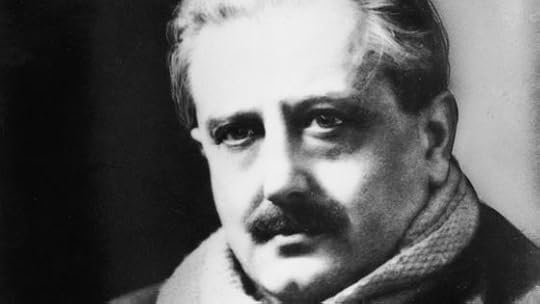
Which leads me to the "existential strangeness" of Georges Bernanos. According to the back cover of the NYRB-edition seen here, "MOUCHETTE stands with Bernanos' celebrated DIARY OF A COUNTRY PRIEST as the perfection of his singular art." I wholeheartedly agree. In an introduction to this edition Fanny Howe wrote, "[In this book Bernanos explores] the question of what a person needs to live in the world. (At least one of the three criteria has to be met for a person to survive: one needs to be useful, to be loved, to be safe. Old people, like the children of the poor, are often deprived of all three.) This is what the story of Mouchette is out to discover. What do we need to live?"
In the novel itself Bernanos wrote, "People generally think that suicide is an act like any other, the last link in a chain of reflections, or at least of mental images, the conclusion of a supreme debate between the instinct to live and another, more mysterious instinct of renouncement and refusal. But it is not like that. Apart from certain abnormal exceptions, suicide is an inexplicable and frighteningly sudden event..." That strikes me as "existentially" true. Later in the book Bernanos would add a gloss of-sorts to this when he writes, "Suicide only really frightens those who are never tempted by it and never will be, for its darkness only welcomes those who are predestined to it. [...] Unless he is mad, the last feeling of the person who kills himself must be one of amazement and desperate surprise."
Strange. MOUCHETTE is a work of "existential strangeness."