Gustave Flaubert (1821-1880) was a French writer who is counted among the greatest Western novelists. He is known especially for his first published novel, Madame Bovary (1857), and for his scrupulous devotion to his art and style, best exemplified by his endless search for “le mot juste” (“the precise word”). In September 1849, he completed the first version of a novel, The Temptation of Saint Anthony. In 1858, he travelled to Carthage to gather material for his next novel, Salammbo (1862). It is now commonly admitted that he was one of the greatest writers who ever lived in France and his greatness principally depends upon the extraordinary vigour and exactitude of his style. His private letters show that he was not one of those to whom easy and correct language came naturally; he gained his extraordinary perfection with the unceasing sweat of his brow. Many critics consider Flaubert’s best works to be models of style. His other works include Over Strand and A Record of Travel Through Brittany (1904), Herodias (1877) and A Simple Soul (1877).
Gustave Flaubert was a French novelist. He has been considered the leading exponent of literary realism in his country and abroad. According to the literary theorist Kornelije Kvas, "in Flaubert, realism strives for formal perfection, so the presentation of reality tends to be neutral, emphasizing the values and importance of style as an objective method of presenting reality". He is known especially for his debut novel Madame Bovary (1857), his Correspondence, and his scrupulous devotion to his style and aesthetics. The celebrated short story writer Guy de Maupassant was a protégé of Flaubert.
و چنین است داستان ژولین قدیس، پاکمردِ مردمدوست، به گونه ای که بر شیشه هایی نگارین، در کلیسای شهر ما، نقش زده شده است
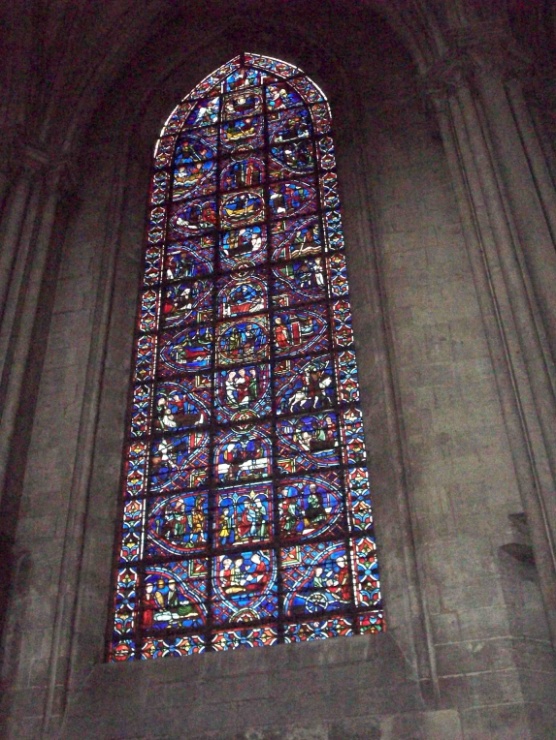
این آبگینه نگارین در کلیسای شهر «رون» که زادگاه گوستاوو فلوبر است قرار دارد
:در مورد کتاب
سرشک ژاله ها که بر زمین فرو می ریخت، قطره هایی گرانسنگتر را، قطره های خون را در یادش زنده می کرد
شاید ابتدا شخصیت ژولین باور کردنی نباشد؛ کودکی که از کشتن و زجر دادن حیوانات بینهایت لذت می برد و در جوانی هزاران حیوان را شکار می کند و بعد از شنیدن ندایی هراسناک، از کشتن حیوانات دست می کشد و عطشش به خون را در راه دیگری به کار می برد ..در جنگیدن با راهزنان و قاتلان و اگر به تاریخ نگاهی بیاندازیم میتوان شخصیت های بسیاری را نام برد که این چنین تشنه به خون بوده اند و همانند خون آشام برای ادامه ی زندگی به آن نیاز داشته اند
دروجود این این شخصیت خونخوار، یک قدیس هم وجود دارد که منتظر بروز کردن است عاقبت فاجعه ای رخ می دهد و ژولین تغییر می کند
:اریک فروم چنین شخصیت و خشونتی را بخوبی نقد کرده است
خشونت خون آشامی دیرینه
این نوع خشونت ناشی از درماندگی نیست؛ خون آشامی کسی است که همچنان دلبسته کامل به طبیعت است. شهوت او به کشتن بسان طریقه ای برای تفوق بر حیات است. زیرا از پیش رفتن و تماما انسان بودن می هراسد. در انسانی که پاسخ به حیات را با بازگشت به وضعیت ماقبل انسانی وجود جستجو می کند، در اثر همانند شدن با حیوانات- و بدین ترتیب رهایی یافتن از بار عقل- خون جوهر زندگانی می شود؛ خون ریختن یعنی زنده بودن، قوی بودن، یکتا بودن، و از همه برتر بودن، کشتن در دیرینه ترین سطح خود به نوعی سرمستی بزرگ و اثبات وجود عظیم مبدل می گردد. از سوی دیگر، کشته شدن تنها چاره و اختیار منطقی کشتن است. به مفهوم باستانی، این موازنه حیات است: تا می توانی بکش، و آنگاه که زندگیت از خون سیراب شد، برای کشته شدن آماده باش
کشتن به این مفهوم، نه همان عشق به مرگ بلکه اثبات زندگی و فرا رفتن از آن در ژرف ترین سطح بازگشت است. این عطش به خون را می توان گاه در تخیلات و رویاهای افراد و گاه در بیماری های شدید دماغی یا قتل النفس مشاهده کرد می توان به هنگام جنگ - خواه جنگهای بین المللی و خواه جنگ های داخلی- که ممنوعیتهای متعارف اجتماعی از میان می رود، آن را در اقلیتی از مردمان شاهد بود. در جوامع کهن که کشتن (یا کشته شدن) صورت دو قطب حاکم بر زندگی است آن را ملاحظه می کنیم. همچنین می توان آن را در نمودهای نظیر قربانیهای انسانی قوم آزتک، و انتقام خون در محل هایی چون مونته نگرو یا کرس، برای قربانی در پیشگاه خداوند در «تورات» مشاهده کرد. یکی از درخشان ترین تلذذ کشتن را می توان در داستان کوتاه فلوبر تحت عنوان «افسانه قدیس ژولین، راهب بیمارستان» یافت
در آغاز ژولین سر یک موش را له می کند و سپس یک کبوتر را خفه می کند
کبوتر که بالهایش شکسته بود، آویخته از شاخه ای با گلهای سپید و خوشبوی، می تپید. پایایی و مداومت پرنده در اصرار بر زندگی، کودک را به خشم آورد. پس ، به خفه کردن کبوتر آغاز کرد؛ لرزه های مرگ آلود کبوتر، قلب کودک را از شوق و شیفتگی به تپیدن آورد؛ و آنرا از شادی و لذتی ددآسا و پرشور و آشوب آکند. آنگاه پیکر کبوتر سرد و سخت شد، کودک احساس کرد که خود از پای در می آید
او با تجربه لذت خون ریختن، دچار عقده کشتن حیوانات گردید. خونریزی برای او والاترین راه اثبات وجود و تنها راه تفوق بر زندگانی گردید...تقریبا بر آن شد که به حیوانی تغییر شکل یابد، اما چون انسان بود نمی توانست به مراد خود برسد.. ندایی او را می گفت که سرانجام پدر و مادرش را خواهد کشت. وحشت زده از قصر خود گریخت، و از کشتن حیوانات دست شست و در عوض سرداری نام آور و هراس آفرین شد...این ندا صورت واقع پیدا می کند اما نه به عمد
..آنگاه که به ژرفای بازگشت رسید، قلب ماهیت عظیم پدید آمد
فلوبر در این داستان وصفی از جوهر عطش خون، و سرمستی حیات را در کهن ترین صورت آن بدست می دهد. از اینرو، شخص پس از دست یافتن به دیرینه ترین سطح پیوند با زندگانی، میتواند از طریق انسانیت به عالیترین سطح رشد و تکامل، و به اثبات زندگی بازگردد
همانطور که پیش از این گفتیم این شهوت کشتن با عشق به مرگ همانند نیست. در اینجا خون به صورت جوهر حیات تجربه می شود؛ خون دیگری را ریختن، یعنی بارور ساختن مام زمین با چیزی که برای باروری بدان نیاز دارد. (در قیاس با اعتقاد قوم آزتک به ضرورت ریختن خون بعنوان شرط تداوم نظام هستی، یا داستان هابیل و قابیل.) حتی چناچه خون خود شخص ریخته شود، زمین بارور می شود، و آدمی با آن یکی می گردد
ظاهرا در سطح بازگشت، خون معادل نطفه است؛ زمین معادل مام بزرگ است. نطفه بیانگر تقابل مذکر و مونث است، تقابلی که تنها وقتی مرد کاملا از زمین پدیدار می گردد، آنهم به اندازه ای که زن موضوع عشق و آرزویش می شود، مرکزیت می یابد. ریختن خون به مرگ منجر می شود؛ ریختن نطفه به تولد. اما هدف از خون ریختن، مانند نطفه ریختن، هرچند در سطحی حیوانی، اثبات حیات است. قاتل می تواند عاشق شود، اگر که کاملا تولد یابد، اگر که علقه اش را به زمین را وانهد، و اگر که بر خود شیفتگی اش فائق آید. با اینحال نمی توان انکار کرد که اگر او قادر به این کار نباشد، خود شیفتگی و تثبیت کهن او را در دام شیوه ای از زندگانی خواهد انداخت که بسیار به طریق مرگ نزدیک است زیرا ممکن است تمایز انسان تشنه به خون، از انسان عاشق مرگ دشوار گردد
This story could be an object lesson for the way humans have ravaged planet Earth over the past hundred and fifty years. Flaubert would not have cause to write the story for that reason in 1877, but it still applies. If you lay waste to everything around you, carelessly and cruelly, you can expect your victim to eventually lay a curse upon your wanton ass. The effects of our planet’s curse, if it comes to that, will be harsh and irrevocable, just like it is for Julian here. And regardless what penances we try at that point, just like Julian does, only our death will bring our redemption. So, here is a warning of apocalypse as reflected through the life of a saint as told by an atheist.
Flaubert convierte la leyenda medieval en un cuento fantástico en el que alterna pasajes de horror y violencia (Horror heroico como he oído llamarlo alguna vez) Nunca tuve muy claro si su obra influyó en los autores de Weird Tales (o si tan siquiera llegaron a saber de su existencia) pero siempre me ha parecido un antecedente claro de la obra de aquellos.
(En realidad no sé cómo calificar esto porque 1) Es lo primero que leo de Flaubert y soy tonta 2) Lo vimos en clase y siento que ya lo tenemos tan desmenuzado que como que una calificación de estrellitas es rara).
“La Leyenda de San Julián Hospitalario” es el segundo de los relatos que componen la obra de Gustave Flaubert “Tres Cuentos” publicada en 1877, junto a “Un corazón sencillo” y “Herodías”. Esta obra se caracteriza por presentar 3 sólidas historias ambientadas en distintas épocas que demuestran sus extraordinarios dotes para describir las tragedias infaustas de la existencia humana, y que, se conectan con lo más alto de su producción literaria. Así; “Un corazón Sencillo” es el anverso de “Madame Bovary”; “La Leyenda de San Julián”, recuerda lo más violento de Flaubert en “Las Tentaciones de San Antonio”; y, “Herodías” nos sumerge en el relato histórico que nos remite a “Salambó”.
Ariel Juvenil nos presenta “La Leyenda de San Julián Hospitalario” con sus características ilustraciones tradicionales. Es un relato caballeresco de la Edad Media, basado en ciertas tradiciones recogidas en la fábula de “Julián el Pobre” que Flaubert encontró inscrita en los vitrales de la Iglesia de su pueblo. Como si fuera un juglar, el autor francés nos narra las vicisitudes de Julián, nacido bajo los augures de la sangre, el honor, la gloria y la santidad. Tuvo los mejores maestros de las ciencias y las armas, cuál niño precoz, se destacó por su inteligencia, fuerza y agilidad. Al descubrir el vicio de la cacería, se convirtió en uno de sus adeptos, rodeado de sus caballos, perros y zorras, se pasaba días en los bosques matando por diversión, por el placer de sentir el poderío humano pisoteando a otras criaturas, por el anhelo más íntimo de crueldad humana. Tanta muerte trajo nuevas profecías, “darás muerte a tus padres”, escuchó Julián antes de caer enfermo.
Julián despertó de la convalecencia para escapar de su inevitable destino, se declaró apátrida y vagó por los caminos. Su temple lo llevó a liderar un poderoso ejército de mercenarios a sueldo de Reyes y Sultanes; su entereza y lealtad le condujeron a liberar los territorios de un Califa cristiano, que, en recompensa, ofreció la mano de su hija. La estabilidad hogareña parecía dar reposo al alma ensangrentada de Julián. Pero la profecía no tardó en cumplirse, un par de mendigos arribaron a su castillo, la esposa perspicaz adivinó la identidad de los pordioseros, ofreció posada y abrigo, al refugio del tierno lecho que compartía con su esposo ausente, incapaz de saciar sus instintos salvajes y brutales. Los hechos no tardaron en precipitarse mortales, poéticos. Julián terminará sus días como barquero, ayudando a los que necesitan atravesar el río, abrazando a un leproso, abrazando a Jesús.
Flaubert es un maestro de la forma, del estilo, de la perfección de la frase, del deleite oral de las narraciones. Encontraba la palabra precisa para contar los acontecimientos con dramatismo, vitalismo y luminosidad, con un realismo sencillo y conciso, sin exageraciones ni lirismos. Por estas cualidades es uno de los padres de la novela moderna y un genio del relato.
1987 notebook: castles, forests, a talking stag, emporers and epic journeys. A place so hot the travellers' hair catches on fire, and so cold arms fall off. Blood and mysticism.
This is the second short story in my collection of Three Tales. A Simple Heart is my favourite short story, period, and this was a fitting second in the collection. Flaubert is infamous for painstakingly choosing every word in a sentence and you can tell that with his beautiful descriptions in his short prose. The ending was a bit of a shock to me and I think it would have been a 4 star story if it wasn't for how abrupt it was.
Nei testi di letteratura francese studiati non se ne fa parola quasi, viene accennato nell'introduzione di Un coeur simple ma niente più. Non aggiunge nulla all'idea che ci si può fare dell'autore ma è una delizia tutta da leggere, proprio perché ricercata e accurata fino ai più sottili dettagli. La concezione e la stesura è un continuo tira e molla: ogni volta crede di essere sul punto di terminarlo e ogni volta ci rimette le mani o viene preso da altri progetti. E poi ritorna alle fonti, riguarda gli appunti, spulcia decine di testi, molti del tutto inutili allo scopo. Infine chiude il progetto e ci consegna un testo di una cinquantina di pagine davvero delizioso.
Sin dalle prime parole il lettore viene catapultato in un mondo surreale, non si tratta di una semplice agiografia: siamo di fronte a un sublime falsario.
Il tono non è quello delle classiche agiografie ma è da leggenda, Flaubert immerge il lettore nel pieno Medioevo, in quello più bello, ricco di luce e avventure, lo fa tramite un linguaggio ricco di arcaicismi e con minuziose descrizioni di aspetti della vita medievale, elenchi di animali, di pietre, popoli, di oggetti quotidiani ormai superati, e poi viaggi e avventure della sua vita da mercenario... sembra troppo? In realtà tutto è dosato con estremo equilibrio, non ci sono parti prolisse anzi, in alcuni punti si desidera che la narrazione si soffermi un po' di più, almeno è quello che ho desiderato io per quanto riguarda le avventure di Giuliano come mercenario ma forse dipende dal mio gusto personale tendente più alla narrazione di gesta che alle storie di Santi. In tanti momenti della lettura mi sono tornati in mente la Lettera del Prete Gianni del XIIIs. o I viaggi di Mandeville del XIVs. o ancora il Milione di Marco Polo, Flaubert dipinge un delizioso affresco medievale con pochi tratti in quaranta scorrevoli pagine e alla fine poco o nulla importa se la storia di San Giuliano non è stata riportata secondo il canone.
Non c'è in realtà molto da dire su questa opera tranne che per un'appassionata di Medioevo come me è stata sorprendentemente piacevole, piena atmosfere familiari, di rimandi alla letteratura odeporica, cortese... un bel tuffo in un laghetto di ricordi.
Riflessione che c'entra poco ma non posso fare a meno di esporla: pare che una delle fonti d'ispirazione principali dell'opera, se non proprio la fonte d'ispirazione principale, sia stata la leggenda di San Giuliano raffigurata sulle vetrate della cattedrale di Rouen... Come si fa allora a non pensare a Notre Dame de Paris di Victor Hugo, al passo sulle cattedrali, sui libri di pietra, i libri del volgo...
"Dall'origine delle cose fino al quindicesimo secolo dell'era cristiana incluso, l'architettura è un gran libro dell'umanità, l'espressione principale dell'uomo nei suoi diversi stadi di sviluppo, sia come forza, sia come intelligenza."
La storia che si fa vetro e poi si fa libro e tutti i dettagli che sulla vetrata vengono raffigurati in mille colori o immaginati prendono forma nelle parole di Flaubert e quasi mi dispiace non aver trovato un'edizione accompagnata dalle immagini delle vetrate di Rouen, avrebbe certamente impreziosito l'opera. http://marmott79.blogspot.it/2017/04/...
I enjoyed this short story by Gustave. The author gives his version of a spiritual tale about Saint Julian the Hospitaller. Saint Julian enters the world as a loved and well behaved child. Time passes and he becomes a blood thirsty hunter and warrior. He marries. Sad and terrible events happen. These events eventually lead to a new life as a Saint. The narrative is tied together by a prophecy.
Short story is also found at: online-literature.com
tahsin yücel'in kendine doğru yolculuk adlı kitabında okuyup da, ustanın böyle derinlemesine "şey"leri bulabildiğini görünce karar verdim. bakalım ben de yakalayabilecek miyim bir gün okursam. belki de sadece bunu değil, üç öyküyü okurum. "bir gün inş."
La mayor parte del texto esta ocupada con las descripciones, aunque no resultan densas. Se cuenta toda una vida a vuelo de pájaro, es decir, por arriba, hay pocas escenas que se muestren en profundidad, casi diría que solo el final. No ahonda en las emociones de los personajes ni la emoción de las peripecias, no se detiene en el horror del hecho que marca la trama. Si bien la idea de la historia es interesante, tiene reminiscencias a Edipo, me deja indiferente por la forma en que esta narrada.
Immagini in prosa Questo racconto (qui isolato) fa parte di una trilogia che comprende anche Un cuore semplice e Erodiade (ideati da Flaubert a rievocazione rispettivamente dell’epico, del moderno e dell’antico). Si tratta, in questo caso, della interpretazione fantastica della leggenda medioevale di Saint Julien l’Hospitalier. La cruenta tragicità della storia è attenuata da descrizioni semplici e piacevoli di paesaggi boschivi, con le loro luci e i loro rumori, con la comparsa continua di gran varietà di animali selvaggi. La versione originale francese (l’edizione è “double-face”) aggiunge una dolcezza di suoni e di ritmi che provavo a riprodurre a bassa voce. I tre tempi in cui si divide la storia culminano poi in una chiosa brevissima (Et voilà l’histoire de Saint Julien l’Hospitalier, telle à peu près qu’on la trouve, sur un vitrail d’église, dans mon pays), ma che riempie la scena di suggestioni nascoste: un capitolo a sé, che dilata i tempi. Si aggiunge infatti la magica immagine dell’Autore davanti alle antiche vetrate di Notre Dame di Rouen
In a casual conversation with his friend George Sand, Gustave Flaubert compared the excitement of “contemplating a wall of the Acropolis—a completely bare wall in which you ascend up the Propylaea”—to that of his excitement in writing Trois Contes, three short stories which he published in 1877.
The Legend of Saint Julien l’Hospitalier was one of these three stories. Flaubert describes this story as “words and images that speak to us of love and madness, of everyday life and the sacred, and of our inexorable need for eternity” (my translation, Trois Contes, 95).
After researching the legend of Julien l’Hospitalier, it is easy to understand this comparison by Flaubert. I particularly enjoyed his narrative style through a historical period (I am reminded here of the similarities in Mark Twain’s Joan of Arc.
There are several points of view about where this legend originated: the French, bien sûr, claim France as the primary birthplace and the Belgians claim its origin and preservation from the Middle Ages. One can find many paintings, stained glass windows, and frescoes across France and Belgium depicting Saint Julian.
Summary of Saint Julien
Saint Julien was a nobleman whose life was marked by violence, prophecy, tragedy, and ultimately redemption through repentance. According to the French legend, Julien was born to wealthy and noble parents after their prolonged prayers for a child. Shortly after his birth, a prophecy revealed that he would one day kill his own parents. Julien’s parents, shocked by the prophecy, tried to protect him from such a fate. However, as he grew up, Julien developed a passion for hunting, becoming exceptionally skilled but also increasingly cruel in his killing of animals.
One day, while hunting, Julien encountered a large and majestic stag. The stag spoke to him, cursing him with the prophecy that he would murder his father and mother. Horrified by the curse and seeking to prevent its fulfillment, Julien fled from his home, distancing himself from his family and seeking a new life. He eventually married a noblewoman and became a respected ruler in a distant land.
Years later, while Julien was away, his parents, who had been searching for him, arrived at his home. His wife, unaware of who they were, welcomed them and offered them a place to sleep in Julien’s own bed. When Julien returned and found two strangers in his bed, he was seized by a fit of rage and, thinking they were intruders, killed them both. It was only after the murders that he realized he had slain his own parents, thus fulfilling the prophecy.
Overcome by grief and guilt, Julien renounced his former life and sought forgiveness through acts of extreme penance. He withdrew to a remote area, where he built a small shelter near a dangerous river and devoted his life to helping travelers cross safely. This act of selfless service eventually became his defining feature, earning him the title of “Hospitaller” (one who offers hospitality).
Julian’s Redemption
Julien’s final act of redemption comes when he offers hospitality to a poor leper. This leper, near death, asks for food, drink, and warmth. Julien offers him all he has, and finally, when the leper asks to lie in Julien’s own bed, Julien agrees. As Julien tends to the leper, the man reveals himself to be Christ in disguise, and Julien is granted divine forgiveness for his sins. After his death, Julien becomes venerated as a saint, and his story is seen as one of redemption through humility, charity, and the rejection of worldly pride.
Flaubert’s Themes
Gustave Flaubert was fascinated with medieval legend and themes of spirituality. In Trois Contes, he delves into the themes of spirituality, morality, and redemption. Julien’s arc—from sinner to saint reveals how religious and moral struggles manifest in the human psyche. Julien had a passion for killing animals, a primal instinct of his violent nature, but had to examine this passion after he accidentally murdered his parents.
Can people really shape their own lives or are there forces beyond their control that they are bound to?
This story of redemption reminded me of Hugo’s Jean Valjean in Les Misérables. Both men went from a life of guilt and penance to redemption and salvation. Like Hugo, Flaubert also found comfort in Christian theology and grace but took issue with organized religion. Flaubert, however, leaned more into the psychological dimensions of religious experience whereas Hugo, in Les Mis, shows the emotional and spiritual side of grace [see post].
Flaubert wrote about the Christian legend of Saint Julien twenty years after writing his tawdry novel, Madame Bovary.
Why the shift? As I was reading Saint Julien, I kept thinking of Flaubert’s famous novel and how these two narratives came from the same author.
The contrast between Madame Bovary and La légende de Saint Julien l’Hospitalier is quite stark, and it does seem like Flaubert might have been attempting a kind of “palate cleanse” by shifting from the gritty realism and moral complexities of Bovary to the more spiritual, allegorical, and medieval world of Saint Julien-just my opinion! Perhaps Flaubert needed to explore the themes of spiritual redemption with purer, elevated themes of transformation.
In a sense, this shift offered Flaubert a refreshing catharsis-moving from the morally ambiguous and tragic outcomes of Madame Bovary to a more hopeful exploration of human goodness and divine forgiveness. Or perhaps, it was only cathartic for moi-même!
Work Cited
Gustave Flaubert. Trois Contes. Classiques de Poche, Paris.
* -} Gestalt Psychology Simplified with Examples and Principles {- *
* -:}|{}|{: = MY SYNTHESISED ( ^ GESTALT ^ ) OF THE * -:}|{}|{:=:}|{}|{:- * ( WAY THE AUTHOR FRAMES = HIS WRITING PERSPECTIVES ) & ( POINTERS & IMPLICATIONS = the conclusion that can be drawn IMPLICITYLY from something although it is not EXPLICITLY stated ) = :}|{}|{:- *
Thy kingdom come. Let the reign of divine Truth, Life, and Love be established in me, and rule out of me all sin; and may Thy Word enrich the affections of all mankind
A mighty oak tree standing firm against the storm, As sunlight scatters the shadows of night A river nourishing the land it flows through
"La leggenda di San Giuliano l’Ospitaliere" di Flaubert (1844) intreccia in modo magistrale violenza e misticismo. La storia, ispirata da una vetrata della Cattedrale di Rouen, narra di Giuliano, un giovane nobile il cui ardore per la caccia lo porta a compiere continue stragi di animali. Tale violenza culmina in un episodio soprannaturale: l’apparizione di un cervo che, vendicando il regno animale, profetizza a Giuliano l’uccisione dei genitori per sua stessa mano.
La componente violenta costituisce il fil rouge del racconto. Flaubert descrive con cruda precisione la passione di Giuliano per la caccia, mettendone in luce la selvaggia brutalità. Il dettaglio sanguinario delle scene venatorie sottolinea l’innata ferocia e spietatezza del protagonista verso le creature viventi, e pone una riflessione sull’impulso umano alla guerra e alla distruzione. Il sangue versato e la fatalità del destino rappresentano il peso della violenza che Giuliano porta con sé: un marchio di colpa indelebile della sua, e della nostra, anima.
L’elemento trascendente dalla premonizione del cervo introduce un senso di ineluttabilità e redenzione che si manifesta come avvertimento divino, suggerendo non solo che il destino di Giuliano è ormai votato al parricidio, ma che esiste anche una possibilità di redenzione attraverso la sofferenza e il pentimento, benché resa da Flaubert in modo assai inquietante – finanche repellente – con l’apparizione di Cristo a Giuliano, non priva di allusioni sessuali.
Pubblicato nel 1877 nella raccolta "Trois Contes", il racconto riflette la capacità di Flaubert di mescolare elementi terreni e trascendentali, esplorando temi universali come la colpa, la violenza e la redenzione. Come sottolinea il critico Pierre-Marc de Biasi, “Flaubert, con la sua prosa incisiva e visionaria, riesce a trasfigurare la brutalità della vita in una meditazione sul destino e la salvezza”.
This was an interesting read, but not my favorite for this year. It was a bit mind boggling to read this account, so inconsistent with his normal works, of a medieval saint. Moreover, to read of a saint whose childhood, and much of his adult life, was so very blood thirsty was a bit mind boggling. Yet it makes you think and proves a very true observation- every religion has it's saints, and for every separate culture that a religion touches, that culture too will have it's own saints. A person from one culture might not count among their saints one who spilled so much blood as St. Julian. One may in fact argue that Julian may well have simply been a man making amends for the death and violence of his youth. Yet, if this short story is to be believed, he very much is so in this particular culture. So it's interesting. Flaubert's penchant for over much detail feels at home here and even appropriate. There was a lot of foreshadowing. Not terrible by any means.
Quite enjoyed this. The structure reminded me of a classic Greek tragedy like Antigone or Oedipus.
Hero is Born. Prophecy. Run from Prophecy. Prophecy Fulfilled. Redemption!
I thought the idea of having some sort of innate proclivity, as our protagonist's penchant for violence, be the source of his ultimate downfall was an effective vehicle for a story about original sin. If give in to temptation, Julian's lust for violence, and you will lose yourself as well as those those you love. Only when you LITERALLY prostrate yourself naked before God will you be redeemed. Yes. That literally happens. Beautiful imagery. Beautiful writing. Old school story with old school themes. Loved it.
Eric Fromm nos habla de como "la sed de sangre” mueve al hombre a una vida en busca de derramamiento de sangre en tierra. Este libro es un claro ejemplo de ello. El narcisismo y la sed por sangre de Julián, lo llevan al caos y a una redención.
Está bien en realidad. Le rebaja la nota que una tercera parte de la historia fuese un final moralista admisible para el cristianismo. Molaba más la parte en que todo parecía una fábula pagana fatídica.
Пересказ легенды о святом Юлиане Странноприимеце (и это не самое странное слово рассказа) в переводе Тургенева. Хороший рассказ, но очень уж эпичное начало.