This is a pre-1923 historical reproduction that was curated for quality. Quality assurance was conducted on each of these books in an attempt to remove books with imperfections introduced by the digitization process. Though we have made best efforts - the books may have occasional errors that do not impede the reading experience. We believe this work is culturally important and have elected to bring the book back into print as part of our continuing commitment to the preservation of printed works worldwide. This text refers to the Bibliobazaar edition.
Thomas Love Peacock (1785-1866) was an English novelist and poet. For most of his life, Peacock worked for the East India Co. He was a close friend of Percy Bysshe Shelley, who greatly inspired his writing. His best verse is interspersed in his novels, which are dominated by the conversations of their characters and satirize the intellectual currents of the day. His best-known work, Nightmare Abbey (1818), satirizes romantic melancholy and includes characters based on Shelley, Samuel Taylor Coleridge, and Lord Byron.
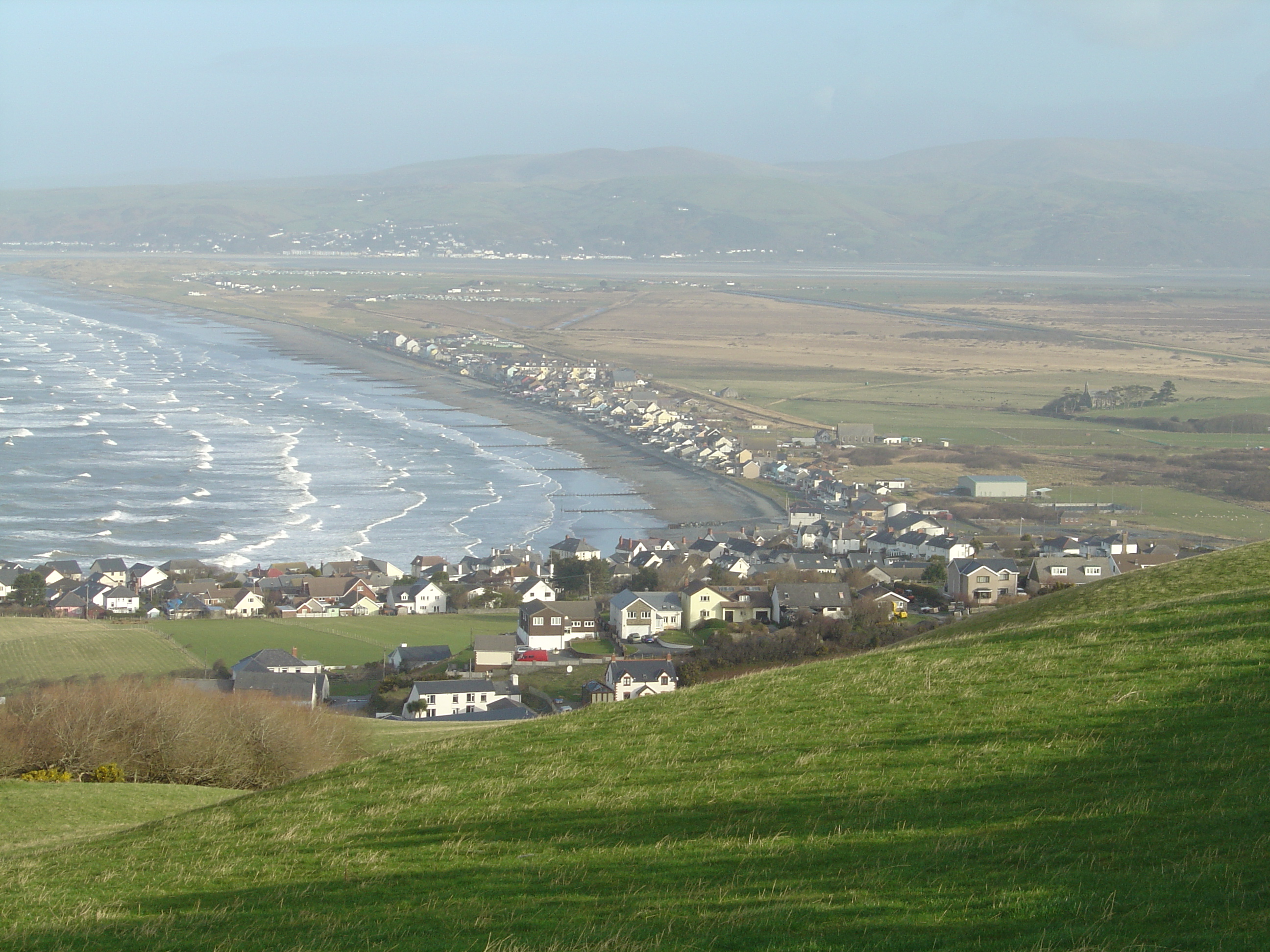
Some years ago, I travelled to Wales and spent the night in the quaintest little village comprised of a handful of houses and the longest sandy beach in Ceredigion, named Borth.
The beach near Ynyslas, Borth, was once a beautiful forest, if winds and tides are in favour, there are stumps of long dead trees emerging from beneath the sandy banks, remnants of an ancient submerged forest. Radiocarbon dating suggests the trees date from about 1500 BCE. Lore tells us this is the lost world of Cantre’r Gwaelod, mentioned in The Black Book of Carmarthen: Celtic Classics, the oldest collection of surviving Welsh texts.
Thomas Love Peacock's story is about this Welsh Atlantis, comparable to the deluge myth found in nearly every ancient culture. Building upon bardic poetry (a whooping 14 are featured - including Myrddin's Apple Trees and big historical names such as Taliesin, prince Elphin ap Gwythno and King Arthur, it is easy to declare this as one of the finest of the Arthuriana works I have ever to come across - because Thomas Love Peacock's love for all things Welsh bleeds on every page (he even translated poetry that hadn't been translated before) and because he is just too funny!
"Here, among the green woods and sparkling waters, Gwythno lived in festal munificence, and expended his revenue in encouraging agriculture, by consuming a large quantity of produce."
Peacock deploys all this History and Lore as a satirical attack on the Tory government of the time who were actively rejecting constitutional reform; the inundation represents the pressure for reform; the "plump, succulent" abbey of Avalon is an attack on the clergy of the Church of England.
- it is rare for me to actively chuckle at my readings, I would place it quite high among political satires.
"The Port of Gwythno we may believe if we please, had not been unknown to the Phoenicians and Carthaginians, when they visited the island for metal, accommodating the inhabitants, in return, with luxuries which they would not otherwise have dreamed of, and which they could very well have done without; of course, in arranging the exchange of what they denominated equivalents, imposing on their simplicity, and taking advantage of their ignorance, according to the approved practice of civilized nations; which they called imparting the blessings of Phoenician and Carthaginian light."
Tide and weather did not allow for me to witness this Welsh Atlantis but by walking around the coastal landscape of Ceredigion, it was lovely to imagine a Prince Seithenyn of the feeble mind from Welsh legends similar to Peacock's (critics mention similarities with Falstaff), who was responsible for the sea-defences of Cantre'r Gwaelod but neglected them one night because of his drunkenness, so the sea overran it.
Seithenyn is also mentioned in the Welsh Triads as one of the Three Disgraceful Drunkards of the Isle of Britain.
I noticed someone call this book 'slight', and after a couple of chapters dismissed that as referring to the humour and sarcastic wit on display. However then the initial storyline ends after chapter 3. This work is not so much slight, as it is fragmentary.
Its basically a retelling of welsh myth which overlaps with Arthurian legend. Folktales, myths, fairytales, whatever you call them they never make good narrative.
Sometimes the author is simply explaining what the original myth is, then there are bits of social and historical commentary often of a satirical nature, then you get a sprinkling of actual narrative.
You only get portions of the social satire that Peacock is reknowned for in later works. And the occasional obscure word to look up, my favourite being Kakistocracy - government by the least suitable or competent citizens of a state.
If your into Arthurian myth this is a witty enough telling of one.
The Misfortunes of Elphin is pretty light reading, with an ironic tone and a lot of -- to my mind, anyway -- indifferent verse. It's mostly interesting to me because it involves Taliesin and Gwyddno Garanhir, who I am most aware of from The Dark is Rising, and who I hadn't encountered in any other Arthurian texts (to my remembrance).
The character of Seithenyn and all his dialogue is fantastic, and it kind of made the whole thing: he's the main thing that distinguishes the story.
Read for school-The Post-Medieval Arthur. It's funny and easy to read, I'm not always a fan of the Romantic era literature but I enjoyed this. A return to the Welsh roots of the Arthur legend, using great medieval texts as reference points.
This unique "historical novel" (think Ivanhoe, without the boringness) is a delight. The writing is hilarious. The plot is just suspenseful enough. Though it takes a Welsh perspective, it does have an amusing encounter with King Arthur which a reader of such books as Le Morte D'Arthur can appreciate. It was especially interesting and entertaining after having read The Chronicles of Prydain and The Mabinogion. Thomas Love Peacock is wonderful and ought to be more widely read. If you read this in a physical copy, get a paperback and keep a colored pencil around to highlight the words you don't know - there will be plenty, but they will be used in such a masterfully funny manner that...well, you'll have to see for yourself.
A pleasant enough reworking and mixing of some old British legends, interesting more for its place in the development of English Literature than for its own slight merits. It's lightly ironic, good-humoured, but ultimately trivial. An excellent drunk in there, though....
One of the funniest descriptions of being drunk ever written: 'not drunk is he who from the floor can rise again and still drink more, but drunk is he who prostrate lies without the power to drink or rise'.