Sold into slavery to an insectoid race, Aleytys had been chosen as proxy-mother to the old Queen's successor. In short, like an Earth wasp's prey, she would be birth bearer and food for that which was to come.
Had Aleytys been any other human, this would have been the end. But she was the wearer of the Diadem, that creation of galactic science that linked her nervous system to powers of strange potency. And for Aleytys and the Queen the fateful conflict was about to begin!
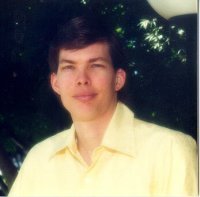
Jo Clayton, whose parents named her after Jo in Little Women, was born and raised in Modesto, California. She and her three sisters shared a room and took turns telling each other bedtime stories. One of her sisters noted that Jo's stories were the best, and often contained science fiction and fantasy elements.
Clayton graduated from the University of California in 1963, Summa Cum Laude, and started teaching near Los Angeles.
In 1969, after a religious experience, she moved to New Orleans, Louisiana, joining the teaching order Sisters of Mount Carmel as a novice. She left three years later, before taking final orders.
During her time in New Orleans, Clayton sold sketches and paintings in Pioneer Square to supplement her income.
After being robbed several times, Clayton moved to Portland, Oregon in 1983. She remained there for the rest of her life.
Clayton was diagnosed with multiple myeloma in 1996. Jo continued to write during her year and a half in the hospital. She finished Drum Calls, the second book of the Drums of Chaos series, and was halfway through the third and final book when she lost her struggle with multiple myeloma in February, 1998.
Literary executor Katherine Kerr made arrangements with established author Kevin Andrew Murphy to finish the third book of the Drums of Chaos series. It is now completed.
I wanted to like this book - I'm a fan of Jo Clayton and have been slowly collecting her books (thanks to used book stores). I liked the first book in the "Diadem" series, but in this one Aleytys is so annoying that I had trouble even finishing it. (Those who follow my reviews will notice that I've finished quite a few other books in the time since I started this one!)
The setting is an excellent science fiction type, with humanoid but insect-based life forms and a complex social and political structure. Very interesting, but marred by too many "alien" terms that I couldn't keep track of. I'm still not sure whether the mammalian humanoids also living on this planet were supposed to be natives or imports - probably natives, I guess? - or whether the "hiiri" were all mammals or that's just a term for the servant class.
But really the book is all about Aleytys, and she was annoying: a mass of overwhelming emotions occasionally struggling to gain some clarity and control. Admittedly her situation is quite dire (see the book description), but this is not what I was expecting from a heroine. Turning relationships into emotional crutches? Please no. She shows flashes of competence and ability during the book, but not enough. At the end she finally pulls herself together and uses her full abilities, but the fact remains that I had a much better impression of her from the first book, and also from one of the later ones. All in all, disappointing to me.
One step forward, one step back. Here Aleytys appears to gain some agency...and doesn't. The writing improves with each book in the series, but the biology of the insectoid aliens (both anatomical and reproductive) is very silly. What I liked is that the structure of the Universe in which the action takes place is slowly clarified (and it isn't that far from Norton's world of big companies and free traders). Casual brutality of the Diadem universe is quite different from politically and ideologically motivated one of modern space opera. Anyway, this is not as weak as Lamarchos, but still not great. Onwards to Maeve!
Book 3 in a series; read when I was in 8th grade might have made more sense if I had read the 2 books before it, but the story is a bit sexist. beautiful slave girl with powers she doesn't understand/can't use cast into slavey as an egg host. falls in love with one of the old queen's bed slaves...some odd sex scenes with humanoid beings that are wasp-decended
Still enjoying the tone and world building of this series but didn’t find this one to be as good as the last. The dynamic with the supporting characters was not as deep. Plus there were some points where Leyta is having odd dream/visions that are quite hard to follow.
At the end of Lamarchos, our heroine Aleytys was separated from her child and sold into slavery to the insectoid nayids. In Irsud she learns she is to serve as the host body for the old nayid queen's egg, which will consume her over the course of a year.
I'm still enjoying these books, but I didn't quite like this one as much as the previous two. Part of it, I think, was the lack of adventure. For a majority of the book, Aleytys doesn't get out much, confined to her quarters and the surrounding area. The other part is the disappointing aliens. They're described as insectoid, and have antennae and multifaceted eyes, but below the neck they seem to be more or less humanoid, even mammalian. (It's not entirely clear.) Other parts of their biology are similarly confused; they reproduce like mammals do, but their eggs must be implanted in a third party living creature. I'm not a biologist, and I suppose that in an infinite universe anything is possible, but it didn't feel plausible or convincing to me. I'd almost rather have wholly humanoid aliens than a sort of half-baked attempt.
On the positive side, Aleytys is still a likeable character, and there is some important development in her relationship to the mysterious diadem she wears. I also love the unabashed sexiness in these books. Aleytys is a free spirit and it's refreshing. I don't think you see that kind of un-self-conscious writing in fiction much today, sadly.