Maurice Guest, has been acknowledged as a major work throughout human history, and we have taken precautions to assure its preservation by republishing this book in a modern manner for both present and future generations. This book has been completely retyped, revised, and reformatted. The text is readable and clear because these books are not created from scanned copies.
Écrivain, historien et journaliste français, conseiller d'État, directeur des Archives du ministère des Affaires étrangères sous la Monarchie de Juillet, .auteur d'une Histoire de la Révolution française,
This is the first book written by Henry Handel Richardson that I’ve ever read. And I absolutely loved it.
The plot describes the life of Maurice Guest, a music piano student who lived and studied in Leipzig in the end of the 19th century. This book is about obsession, jealousy and friendship. Among Maurice’s friends, there is his best friend Madeleine Wade who was a former teacher in a large school near London. She was a devoted teacher of music, mainly piano lectures.
By following Madeleine’s recommendation, Maurice started his piano lesson with Schwarz who will be his master in this art.
Dove is another of Maurice’s friend who helps him to obtain a private interview with his future master.
But it was an Australian young woman - Louise Dufrayer, by whom Maurice will fall in love, that his life will change forever. She also was a Schwarz’s student for about a year and a half since they met for the first time.
The author also describes the state-of-the art of Leipzig at that time: Bach worked in Leipzig from 1723 to 1750; Richard Wagner was born in Leipzig in 1813; Schumann was also active in Leipzig music, having been invited by Felix Mendelssohn when the latter established Germany's first musical conservatoire in the city in 1843; Mahler was second conductor at the Leipzig Theatre from June 1886 until May 1888; he also completed his own 1st Symphony while living there. By being a music student herself, the author really magnificently described the music atmosphere of that city.
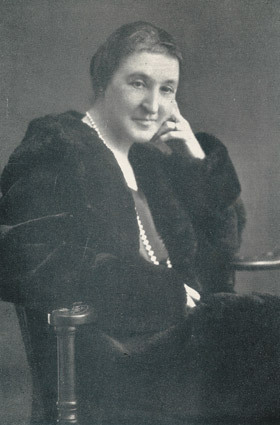
About the author: Henry Handel Richardson is a pen-name Ethel Florence Lindesay Richardson - an Australian writer. This book is a sort of the author’s auto-biography: by reading her biography, one learns that “After visiting relations in England, the family moved to Leipzig, Germany, where Ethel enrolled at the Royal Conservatorium in April 1889 to study the piano, and her sister the violin. They were soon immersed in the musical and social life of the town…”
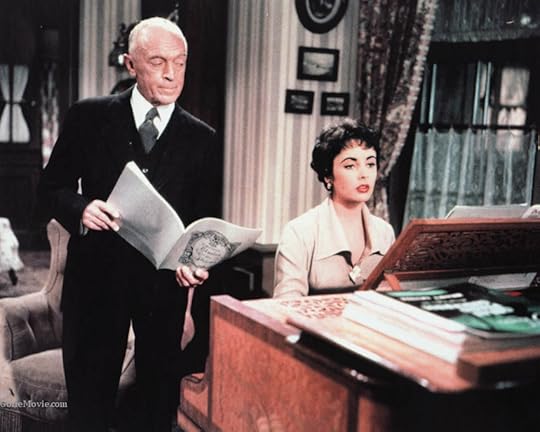
Maurice Guest was adapted, very loosely, for the screen in Rhapsody (1954) starring Elizabeth Taylor, with the setting in Switzerland rather than Germany. But you should be aware that the end of this movie has nothing to do with the ending of the book!
By coincidence (or not), January 3, 2015 was the Henry Handel Richardson’s birthday and was celebrated in Chiltren Victoria Australia. This place is an “historical village built upon solid values of its mining heritage.”
Circumstances suggested I give this another go. Still pretty much not into it. Maybe one of you'll have results vary.
dnf. page 200.
__________ I'm drawing a complete blank on this. Perhaps it's the reading context, that this old naturalist stuff is better read on a steamer across the Atlantic than a jet crossing the continent. At any rate, nothing in here attracted me enough to consider returning at a later date.
I don’t know whether this is just a sign of my ignorance, but I had literally never heard of the Australian novelist Henry Handel Richardson (a.k.a Ethel Florence Lindesay Richardson), until I came across a reference to her on this site. She sounded so intriguing that I decided to read her immediately, starting with her first novel, Maurice Guest (1908).
This is a very striking debut. The novel narrates—in slow motion—the tale of a young Englishman studying music in Leipzig in the 1890s, who stumbles into a dramatic and life-changing love affair with a highly “unsuitable” woman. The treatment of the shifting power dynamics of the relationship are remarkably insightful and sometimes quite raw and almost painful to read. Richardson quotes fragments of one of Petrarch’s most famous sonnets (132) as epigraphs to various chapters, and the subject-matter is the quintessentially Petrarchan one of the destructive power of erotic obsession, though treated in an unrelentingly “modern,” realist and quasi-forensic manner. The treatment of sex is surprisingly explicit for a work by a woman writer in the first decade of the twentieth century, and I wasn’t surprised to learn that the novel was believed to have been written by a male author for a considerable period after its first publication.
Aside from its more intimate and emotional material, the social world portrayed in the novel is also fascinating: the semi-bourgeois, semi-bohemian musical world of German conservatoires, drawing a motley bunch of aspirant musicians from Europe and America, with widely differing standards of social behavior. The mores of this mongrel culture are difficult to seize; within a matter of pages, you find yourself passing from the moral world of Edith Wharton to that of Gabriele d’Annunzio. This is a world in transition, and no one quite seems to have a sense of what is acceptable to whom.
Richardson is a very good writer, with a light, clean, sometimes epigrammatic style that helps offset the melodrama of the subject matter, and a sharp descriptive eye. The novel is very long (at times I felt I was living through Maurice’s love agony in real time), but I do think it’s worth sticking the course, as there’s a shape to the piece that only fully becomes apparent at the end.
There was a good article on this novel in “The Guardian,” published on its centenary in 2008 by Carmen Callil, who republished Maurice Guest in Virago Classics in the 1980s (sadly to resounding popular indifference):
I didn't actually finish this book but I did reach page 447 so I didn't just want to write if off. It has way too much detail and one extremely annoying character. I just couldn't take anymore.
Today we went to see the film, or to be precise a reading of a screen play. The fact that it was 3 hours long, with over one hundred scene changes described by narration and remained gripping is testament to the possibilities of this story. The acting was fantastic and that too must reflect strength of the script.
There is a nice discussion of the book and author here.
3.5 An interesting premise to me, set in the post-Liszt musical study atmosphere of Leipzig, and using some of the author's actual experience. And it kept me reading, but was way too long for its story of obsessive and suffocating love. I grew to dislike Louise intensely, with physical beauty as her only attribute. Poor Maurice, always competing with the lure of the virtuoso violinist she really wanted. This just needed a good editor. But I will try one of her later novels at some point.
Henry Handel Richardson is the pseudonym of Ethel Florence Lindesay Richardson (although why she chose, Brönte-style, a male pseudonym at the start of the twentieth century is puzzling). Maurice Guest, Richardson’s first novel, is a deeply psychological exploration of obsessive emotional and sexual love. It has been compared to Flaubert’s Madame Bovary and Dostoevsky’s Crime and Punishment, and while it has elements of both, I would argue (going out on a limb here!) that it is better than both those renowned works put together! I have enjoyed many long novels which could easily have been shorter without diluting my enjoyment. Not so with Maurice Guest: I was so enmeshed in its characters and perfect prose that I would have been happy for its near-600-pages to have gone on for twice that length!
The principal characters are Maurice Guest, a young Englishman, and Louise DuFrayer, a slightly older Australian woman. The backdrop for Richardson’s gripping drama is Leipzig, Germany, in the late 1800s, when the city was the cultural center of Europe for artists and writers, but mostly for aspiring musicians. Thus, Leipzig was awash with music teachers plying their knowledge upon aspiring students hoping to have their genius discovered. Egos ranged from the fragile to the robust, temperaments from the humble and insecure to the eccentric and explosive. Yet Maurice Guest is a realistic work, and Richardson is very much concerned with the frugal counting of pfennigs and marks as students negotiate with squabbling apartment landlords, rent pianos, hunt down cheap cafes, and beg parental support for professor tuition fees.
Richardson launches her drama with the arrival in Leipzig of Maurice, who, upon first catching sight of Louise, loses his heart and soul to her. At the time, Louise is deeply attached to Schilsky, a self-interested, genius composer and performer of questionable morality, who leverages his talent in both respectable and shameful ways. Louise’s unattainable status ends when Schilsky dumps her and moves on, thereby creating an opening for Maurice, but only as a concerned friend to help heal Louise’s devastation. Over time, her shattered nerves find a kind of safe solace in Maurice’s loving and servile attention.
Though they ultimately become lovers, Louise sees their liaison as a temporary band-aid on her loss of Schilsky. Maurice on the other hand, who, by this time has likely mistaken raw passion for enduring love, sees the relationship as Louise’s commitment to marriage; he presses her repeatedly, but she continues to resist. Maurice’s passion/love morphs into an obsession as he begins to discover hidden layers of Louise’s past. The morals of a straitlaced upbringing leave him stunned at Louise’s somewhat liberated sexual behavior. Yet this inflames his obsession even more: now he doesn’t just want to totally possess and influence her future, he wants to somehow backdate that possession and revise her history to match his expectations. This leads to a rollercoaster relationship of dizzying highs of euphoria followed by grim lows into misery and unhappiness.
In a novel of this length, Richardson has the luxury to generously plumb the depths of emotion of Maurice and Louise, and she does so in expert fashion. She is an objective author and leaves no sentiment unexposed. Maurice's naiveté stretches reader credulity on occasion, for it isn’t as though he isn’t warned about the dangers of his situation by more than one close friend. The wild relationship with Louise is not sustainable, and in such a case, dark, somber tragedy is the inevitable outcome.
It is difficult to believe this masterpiece is a first novel begun when Richardson was 27; it is not difficult to believe that the 11 years she spent writing it rendered it perfect in every way. When I am asked that irritating and impossible-to-answer question: “What’s your favorite novel?” I usually answer with a list of titles…and there is certainly a place for Maurice Guest on that list (alongside, for example, George Eliot’s Daniel Deronda and John Williams’s Stoner). As well as Maurice Guest, I unhesitatingly recommend two other works by Richardson: the one-sitting read The Getting of Wisdom, and the massive trilogy published in a single volume as The Fortunes of Richard Mahony.
This book could probably get 5 stars from me if it were 200 pages shorter (it's over 500 pages). Every bit of writing is good, the characters are believable and the story is interesting, but there is a too much repetition and dragging scenes out well beyond what is needed to convey the message. That said, part of the success of the writing is how the reader (if you give the book the time and attention it deserves) can get caught up in the angst of the characters, especially Maurice.
At its heart, this book is a painful tale of unrequited love. Everyone in the book is in love with someone and that love is never returned. Even if there is some affection between couples, it's not equally felt. Characters settle for less, continue longing, struggle with loneliness and pretty much suffer though all 500 pages. Especially poor, smitten Maurice who is obsessed (it's actually not love) with Lu Lu who is obsessed with someone else but accepts Maurice's attentions primarily as she can't bother not doing so. They make each other miserable yet inertia keeps things going.
There's no uplifting moral to the tale, no neatly wrapped-up pretty ending. This seems like a story written by someone who has been unsuccessful in love and who wants every reader to know what that feels like.
This is fascinating study of obsession, set in 1890s Leipzig: written in 1908, Maurice Guest ticks all the boxes for a study of obsessive love. See my review at http://anzlitlovers.wordpress.com/200...
Had never heard of this book or its author before picking it up off my shelves in a Modern Library edition dated 1936. Turned out to be a real good story about love, obsession, friendship, loyalty and the life of ex patriate music students in Leipzig in the closing years of the 19th century. Written by an Australian woman (under the pen name Henry Handel Richardson), it was first published in 1908. It might be worth your time getting a new 'critical edition' which puts back all the material (I read an estimate that it was about 20,000 words) that was cut out by editors in order for it to be proper enough to be published back at that time. Well-developed characters. A good read.
DNF Found this in a secondhand store for less than a dollar and thought i would give it a go. Couldn't get into it, maybe it was the style, maybe it was just too slow, i'm not sure. I can't seem to get into books about students, the petty lives of spoilt middle class university brats just don't interest me. I keep thinking as i read "when i was this kid's age i had a full time job and was supporting myself out in the real world, this kid can't even ask a girl at his school out on a date and it's a major crisis in his life!" I think i've learnt my lesson, avoid any student novels in future, i can't relate and they don't interest me.
An amazing book, though a massive emotional rollercoaster to read and devour. Depressing, obsessive, uplifting and shattering - but not for the faint of heart.
Poor Maurice, doomed to an obsessive love which is not returned by his love interest, the relationship spirals down into the depths from which there is no return. To think it all began with the shape of the eyelids and once seen by Maurice there is no escape. It's a very long book as it details the inner thoughts and emotions of Louise and Maurice although she remains somewhat of an enigma. It's paced extremely well for it's 562 pages. Stick with it, you'll be rewarded with a "love" story and a picture of classical music student life in Leipzig in the early 1900's which is like no other.
Skeptical at first but impressed by the end (when it eventually came). The Maurice/Louise saga is maddening but still engrossed me. Richardson has a wonderfully quotable way with words and can set a scene in a dingy Leipzig apartment (Maurice) or the Presbyterian ladies' college (Getting of Wisdom) with equal facility. An Australian author at home among the greats.
Richardson goes deep into the subject of love's obsession. Maurice is a young pianist who is studying at an elite music conservatory in Leipzig. The music school is filled with various international students with varying talent. Maurice shows promise but has yet to distinguish himself as a top talent at his school.
Cupid's arrow deeply penetrates Maurice's heart as he comes across a young lady named Louisa. Louisa is a enigmatic femme fatale. She is deeply in love with the brightest and most accomplished violinist at the school, a young man named Schisky. Schilsky is talented, arrogant and a playboy. His dismissive attitude and good looks tempts many women and he is quick to take advantage of their interest. Despite his philandering and poor treatment, Louisa is devoted to Schisky. In spite of her intense relationship with Schisky, Maurice still pines for Louisa. He only lives to dreams about the enigmatic girl, while she in return doesn't think about Maurice at all.
Fate intervenes when Schisky abruptly and stealthily leaves Leipzig without informing Louisa. She is devastated. Maurice quickly jumps to fill the void and attempts to win her favor. Despite his endearments and devotion, she cares not for Maurice but grudgingly allows him to keep her company. Although she doesn't love or even like Maurice, she abhors being alone. Initially her proximity is enough, but his obsession and jealously eventually get the better of him. Maurice constantly begs Louisa for the smallest signs of affection or love, but she honestly and brutally refuses to grant him any such favors.
The toxicity is hard to take. Richardson spills much ink with their tortuous relationship. Maurice is his own worst enemy. He mistakes obsession, jealously and inaccessibility for love and compassion. He could not have pinned his hopes on a more dangerous and brutal target. Louisa is unyielding and ruthless and clearly explains her feelings, or more accurately lack of feeling for him. It is not an easy journey and the outcome weighs heavy as the relationship continues to go from bad to worse. The dark side of love is explored and explained in great detail.
Richardson is a talented writer. His knowledge of classical music and composers is deep and interesting. The interaction between the various students is also well delivered. His phrasing and ability to articulate emotions and the illogical pathways of romance is skilled. A well written book on a dark subject.
Henry Handel Richardson was the pen name of Ethel Florence Lindesay Richardson, born in Australia in 1870. This novel definitely has a late 19th century sensibility, in that it’s all about love and passion, but presents any sexual activity with great delicacy. At the same time, it can be melodramatic, and so sometimes the characters are a bit wearying.
Maurice Guest is a young English musician who is studying in Leipzig, and the novel does a great job of recreating the atmosphere of dedication and ambition in the community of ex-pat musicians. Maurice has the desire to be great, but not the confidence, and it’s not really clear whether he has the talent. Other students shine with much less effort. He really doesn’t want to go back to his little English village and be a music master, though.
And then his life takes a sudden turn when he sees a woman, Louise, and falls hopelessly, obsessively, in love with her, even before he’s spoken a word to her. First, he has to figure out a way to be introduced, and then he has to win her friendship, and then somehow get her to reciprocate his love. All this is complicated because Louise has a rather scandalous reputation, as she’s been lovers with one of the local boy geniuses. The musician in question, Schilsky, is a rake, and talks freely about Louise’s favors in the local bar. Finally, pursuing an opportunity, Schilsky leaves town, throwing Louise into despair, and giving Maurice a chance to fill in the gap.
And very patiently edging closer, he manages to do it. But the problem is that Maurice is an idealist, more in love with a notion of Louise than the real woman, while Louise is a sensualist. She lives for the sensations of the moment, and the things she likes best are dancing, making love, and being flattered. She is never dishonest, but still Maurice never quite realizes that she is not the pure woman he imagines.
And then when he does get her, he is constantly jealous – both of her past with Schilsky, and of any man who hovers around her – and he treats her very badly. It all ends when Schilsky comes back to town, and Maurice commits suicide in the last pages of the book. Of course he does. This novel is operatic enough that I had a strong feeling that one of them would die.
This was reprinted as part of the Virago Modern Classics series, which resurrects forgotten books by women. There is an introduction by Karen McLeod, which analyzes the novel’s place in the literature of the time.
This entire review has been hidden because of spoilers.
I really don't know what rating to give this book. On the one hand, I thought it was very well written; there was certainly nothing to fault in the author's characterizations or knowledge of the areas she wove her story around. However...! I don't think I've ever read about a more frustrating set of lovers than Louise and Maurice. About two-thirds of the way through the novel, I realized that only a murder-suicide ending would compensate me for having to wade through the morass of their deeply disturbed relationship.
I started reading the book because I saw the movie Rhapsody with Elizabeth Taylor and was curious about the book it was adapted from. Except it wasn't. The movie bears almost no resemblance to this book. You can't even say they kept the names since Maurice Guest becomes James Guest in the movie. I truly can't imagine how anyone could think this book would make a great vehicle for Elizabeth Taylor. Maybe they didn't. Who knows, it might have started out as a faithful adaptation, but somebody with some sense realized it would make a crappy movie without some MAJOR changes. I'm with them on that.
Ultimately, though I couldn't like the book, I give all credit to the author for well-created characters. Maurice begins as somebody it's easy to sympathize with, especially as he struggles (and fails) to stand out among Leipzig's music students. But once his relationship with Louise begins, and quickly begins to fail, it becomes harder and harder to sympathize with him as he hounds her, neglects his studies, ignores his friends, and generally turns into a thoroughly despicable person. I wish I'd stuck with the movie version. The movie is nothing great, but at least it has an upbeat ending and never made me feel like I'd been wading in sewage.
Quite extraordinary! Yes, it's all about obsession, as just about any well-publicised review will tell you. But it's the sheer intensity that most struck me. I'd rate it up there with "Wuthering Heights". It's also a remarkable examination of the male psyche (don't be fooled by the name; Henry Handel Richardson's real name was Ethel Florence Lindesay Richardson!).
Just don't expect a tale of the Australian outback. Richardson was born in Melbourne, but the entire novel takes place in Leipzig in the early 1900s, and most of the characters are European.
Definitely a novel that deserves to be more widely read.
How did this book vary so dramatically in quality? The description promised so much - fin de siecle genius, obsessive love, madness - and for the first two-thirds, the book merely plodded along. Yet, after shaping up to be my first one-star review since Jane Bowles's similarly-hyped "Two Simple Ladies," the book improved markedly in the last third, for a volume's worth of Proustian jealousy and dramatic confrontations! Apparently the last third of the book appeared almost a decade after the first volume - evidently the intervening time was well-spent!
This book was on my syllabus at Sydney University as part of the Australian Literature course taught by Dame Leonie Kramer. It is the story about the genus of one and the mediocrity of another. It still rates as one of the most memorable books I've ever read. And I'm still intrigued by the fact that the author Henry Handel Richardson was in fact a woman.
This was difficult to read, especially the last third or so. I guess it's a testament to Richardson's writing that she conveys the oppressiveness of jealous, possessive love so effectively. But, *shudder* ...